The Sea Peoples: Identifying the Mysterious Confederation That Ended the Bronze Age
The Late Bronze Age (c. 1550–1200 BCE) was a period of high civilization, marked by prosperous empires such as the Hittites, Mycenaeans, and the New Kingdom of Egypt. Within a span of just a few decades around 1200 BCE, many of these centers were destroyed or abruptly abandoned, marking the beginning of the collapse. Egyptian texts from the era identified a shadowy, confederate group of raiders known as the Sea Peoples as a major force in these dramatic events.
1. The Historical Inscriptions
Our primary written knowledge of the Sea Peoples comes from monumental Egyptian records and inscriptions.
The Merneptah Stele (c. 1207 BCE): During the reign of Pharaoh Merneptah, Egypt fought off a coalition of Libyans and sea-faring tribes. The inscription lists the invaders, including the Sherden, Shekelesh, Lukka, Teresh, and Ekwesh.
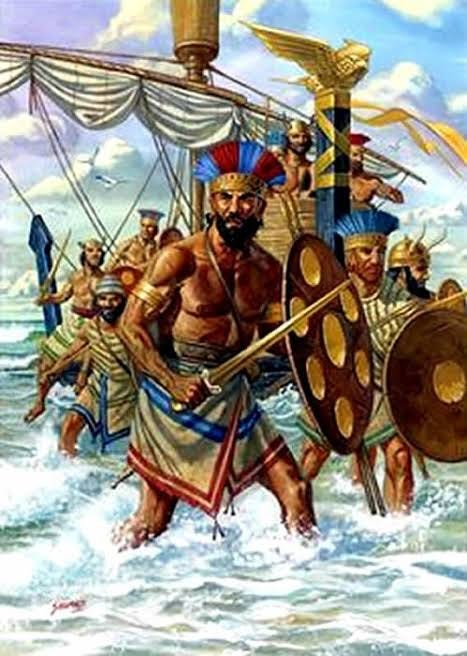
Medinet Habu Inscriptions (c. 1175 BCE): The mortuary temple of Ramesses III at Medinet Habu provides extensive reliefs and textual records of the Sea Peoples' second major invasion during his eighth year. The text lists groups including the Peleset, Tjeker, Denyen, and Weshesh.
The Peleset Connection: Most historians associate the Peleset with the Philistines, who subsequently settled in the southern Levant (modern-day Gaza).
2. The Confederation and Proposed Origins
The Sea Peoples were likely a disparate group of displaced peoples, mercenaries, and raiders rather than a single unified ethnicity. Historians and linguists trace them to several different regions across the Mediterranean:
The Aegean & Anatolia: Many scholars note the linguistic and material similarities between groups like the Denyen (possibly the Danaans/Mycenaean Greeks) and the Lukka (from southwestern Anatolia).
The Western Mediterranean: Names like the Sherden and Shekelesh share phonetic similarities with Sardinia (Sardana) and Sicily (Sikels), suggesting that the confederation drew from far-flung origins.
Economic Refugees: Some recent archaeological models suggest the confederation was composed of groups displaced by broader climate shifts, widespread drought, and famine in the Mediterranean.
3. The Archaeological Debate: Cause or Symptom?
The role of the Sea Peoples in the Bronze Age collapse has been heavily debated by modern Near Eastern professionals and archaeologists.
The Instigator Theory: Early 20th-century scholarship viewed the Sea Peoples as an invading army that deliberately dismantled the Late Bronze Age palace economies (such as destroying Hattusa, Ugarit, and Mycenaean centers).
The Symptom Theory: Contemporary archaeologists argue that the collapse was primarily driven by a "perfect storm" of environmental, economic, and social stressors (such as prolonged drought and earthquakes). In this view, the Sea Peoples were as much a symptom of the collapsing system as they were its cause—desperate, migrating refugees who turned to piracy and pillaging when their domestic systems failed.