Roman Pompeii: New Discoveries in the Insula of the Chaste Lovers
The Insula of the Chaste Lovers (Insula dei Casti Amanti, located in Regio IX) is one of the most significant and dynamic excavation projects in the Pompeii Archaeological Park. Recent excavations, structural stabilization, and the addition of a suspended walkway network have brought extraordinary new details to light, offering an intimate glimpse into the final hours of the city's inhabitants.
1. The Insula Complex
The insula is a complete city block spanning over 1,500 square meters. Its name originates from a detailed fresco in the dining room depicting a couple sharing a tender, chaste kiss during a banquet. The complex consists of several interconnected structures used for both commercial and residential purposes:
The House of the Chaste Lovers: A luxurious domus featuring well-preserved triclinium walls and beautiful decorations.
The House of the Painters at Work: A property named for the painting tools, pigment cups, and unfinished frescoes that were frozen in time as workers rushed to evacuate.
The House of the Colonnaded Cenacle: Named for the peristyle inner courtyard surrounded by columns.
2. Recent Archaeological Discoveries
Ongoing investigations, maintenance, and safety work along the block's perimeter have revealed remarkable new archaeological layers:
Syn-eruptive Earthquakes: In a utility room, archaeologists discovered the skeletons of two men over the age of 55 who died not from ash inhalation or pyroclastic flow, but from the severe earthquakes that accompanied the eruption. The walls of the room detached and collapsed, crushing the individuals as they sought shelter.
Intact Artifacts: Alongside the victims, researchers found stacked vessels, bowls, jugs, and a bundle wrapped in fabric containing coins and glass-paste necklace beads.
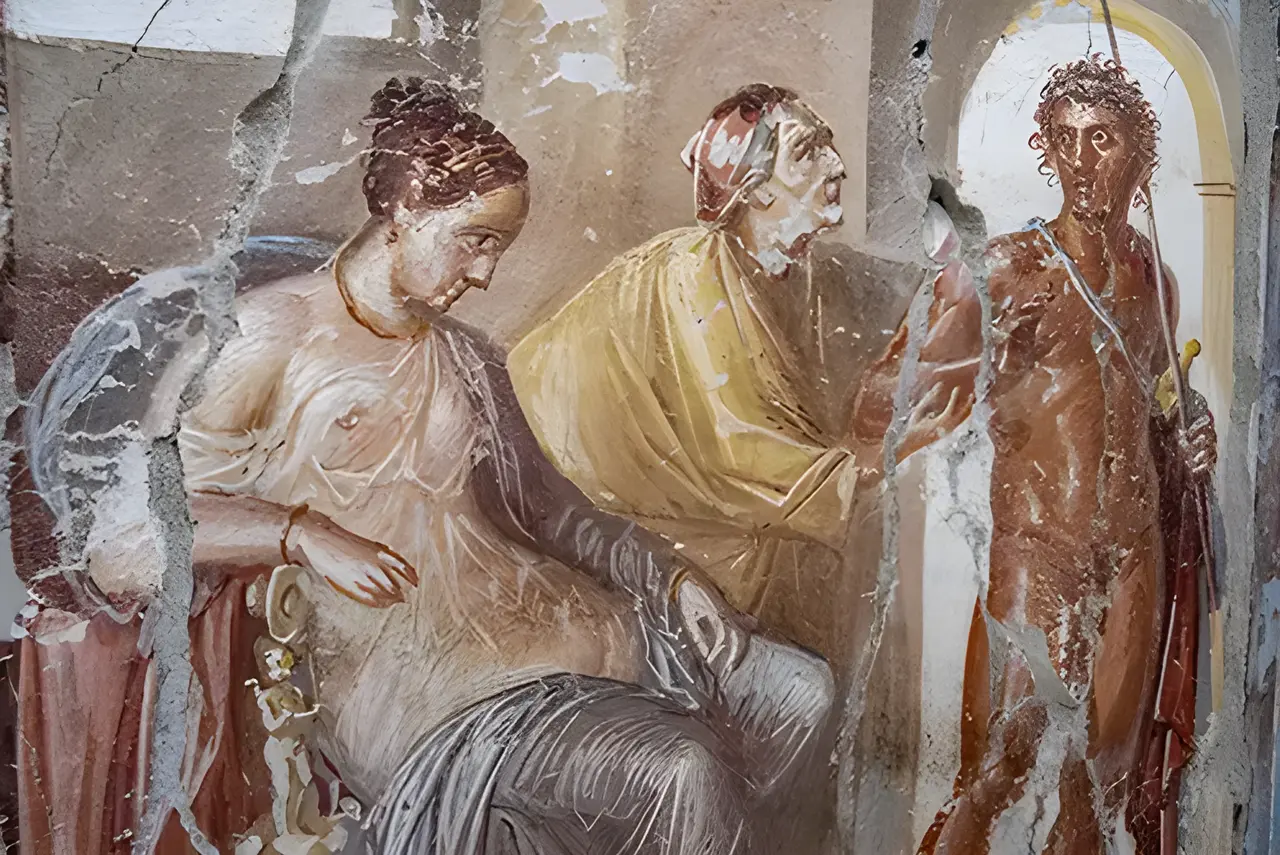
The "House of Phaedra": Excavators uncovered a small residence deviating from the traditional atrium plan, decorated with vibrant Fourth-Style mythological frescoes depicting the myth of Hippolytus and Phaedra, Venus and Adonis, and a scene of a satyr and nymph.
The Black Salon: A formal banqueting room with elegant black walls decorated with mythological subjects inspired by the Trojan War, featuring the inscription hic et ubique and still-life paintings of fish and game.
3. Insights into Daily Life and Commerce
The findings demonstrate a bustling commercial and domestic space undergoing renovation when Mount Vesuvius erupted in 79 CE.
Interrupted Craftsmanship: Cups still full of pigment and preparatory wall drawings provide unique evidence of the construction work taking place in the last days of the city.
A Working Bakery: The complex includes a large, functioning bakery with stone millstones, stables that housed the remains of draft animals, and a large oven.