The Kingdom of Kush: The Royal Pyramids of Meroë and Their Secrets
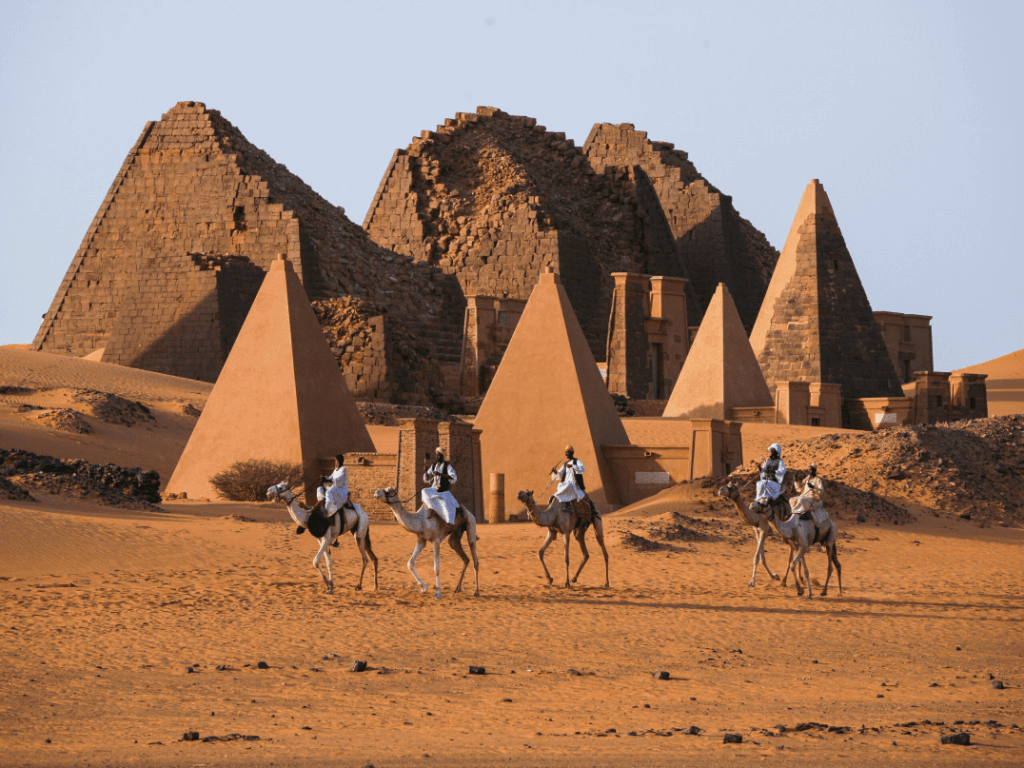
The desert plains of Sudan hold an archaeological wonder that frequently surprises those who associate pyramids solely with Egypt. Meroë, the final capital of the ancient Kingdom of Kush, is home to more than 200 pyramids—making it the largest concentration of pyramids in the world. Built over a thousand years after the last Egyptian pyramids, these monuments represent an incredible feat of engineering and a testament to an African civilization that engaged in trade spanning from the Mediterranean to India and China.
1. The Distinctive Architecture of Meroë
The pyramids of Meroë, built between 270 BCE and 320 CE, differ significantly in style and scale from their Egyptian predecessors.
Steep Angles: The Kushite pyramids are much narrower at the base relative to their height, giving them a distinct, steep slope. They range from 6 to 30 meters (20 to nearly 100 feet) in height.
Integrated Chapels: Unlike Egyptian tombs, attached to the eastern face of a Meroitic pyramid is a small, dedicated offering chapel or temple. These chapels often feature prominent pylon (tapering gateway) structures and carved stelae.
Solid Construction: The pyramid itself acts as a solid monument rather than a hollow vault; the outer layers of dressed sandstone encase an internal core of packed rubble and dirt.
2. The Hidden Tombs Beneath
The most fascinating secrets of Meroë lie hidden beneath the sand rather than inside the stone superstructure itself.
Underground Tombs: A narrow, buried staircase descends from the surface in front of the chapel, leading into a sequence of two or three underground burial chambers cut directly into the bedrock.
Vibrant Frescoes: The underground walls are adorned with brightly colored painted murals and gypsum reliefs depicting both Kushite and Egyptian deities, such as Isis and Osiris, reflecting their blended religious traditions.
The Ba Statues: The offering chapels once held distinctive, carved statues of the ba—the aspect of the human soul depicted as a human-headed bird—designed to allow the deceased to journey between the physical and spiritual worlds.
3. Advanced Construction Techniques
Kushite engineers successfully sustained a monumental building boom over centuries by combining local iron-age technology with borrowed methods.
The Shaduf Lever: Excavations and archaeological finds have revealed the use of the shaduf—a counterweighted lever or wooden crane—anchored at the center of the structure, used to lift sandstone blocks and red bricks into place.
Finish and Form: Originally, the structures were faced with white or red plaster and featured striking decorative capstones (like solar discs) made of sandstone or bronze, catching the reflection of the desert sun.
4. The Black Pharaohs and Powerful Queens
Meroë was the seat of a wealthy, independent culture that had its own writing system (Meroitic script) and a society with high female political participation.
The 25th Dynasty: Kushite kings conquered Egypt in the 8th century BCE and ruled as the "Black Pharaohs," reviving the tradition of pyramid building during their reign.
Queen Mothers (Kandakes): Meroitic society elevated royal women to positions of sovereign power. Queens such as Amanirenas and Amanishakheto are depicted on their pyramid walls as strong leaders, sometimes wearing armor and participating in the protection of the state.