Introduction
Fortifications are often associated with large castles, royal armies, and major wars. Yet pre-modern Europe also contained smaller defensive structures built on hills, rocky outcrops, ridges, and other locally advantageous positions.
These modest fortifications may have protected settlements, controlled routes, guarded livestock, sheltered residents during raids, or served as centers of local authority. Some were constructed during periods of political instability, while others may have been used intermittently over long periods.
The relationship between small fortifications and local feuds is particularly interesting. Local disputes could involve land, inheritance, trade, political allegiance, or access to resources. However, the existence of a defensive structure does not prove that a feud occurred at that location. Archaeologists must establish the structure's chronology, function, and relationship to the surrounding settlement.
What Counts as a Small-Scale Fortification?
Small-scale fortifications vary widely in design and size.
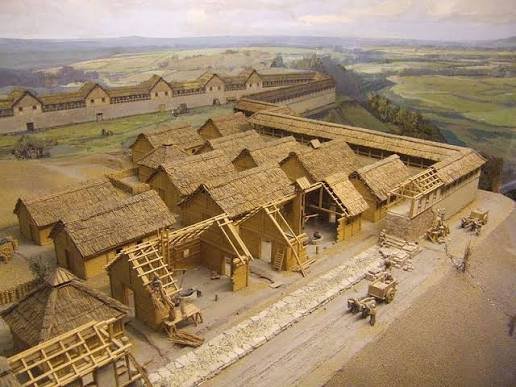
They may include earth banks, ditches, stone walls, timber palisades, small towers, defended enclosures, and compact hilltop strongholds.
Some structures were permanent, while others were built quickly or reused existing landscape features.
A hillock could offer a defensive advantage because it provides visibility and makes direct access more difficult. Even a relatively small structure might allow a limited group to monitor movement along a road, valley, river crossing, or agricultural area.
However, not every enclosed hilltop was a fortification. Some sites served as settlements, religious locations, animal enclosures, or places of refuge without being designed primarily for combat.
Why Build on a Hillock?
Elevated positions can improve visibility and provide natural protection.
A small rise may allow defenders to observe approaching people or animals. Steep slopes can restrict access, while nearby valleys or passes may provide strategic control over movement.
The practical value of a hillock depends on its surroundings. A low rise overlooking an important route may be more useful than a taller hill located far from settlement or communication networks.
Researchers must reconstruct the landscape as it existed when the structure was used. Modern roads, vegetation, and construction may have changed the visibility and accessibility of the site.
Construction Methods
Small fortifications could be built using locally available materials.
Earthworks might consist of a bank and ditch. Timber defenses could leave postholes or traces of palisades. Stone walls might use dry-stone construction or mortar, depending on local traditions and the period.
The choice of construction materials affected how quickly a fortification could be built and how long it could survive.
Some structures may have been repaired repeatedly, creating several construction phases. Others were temporary and left only subtle archaeological traces.
Architectural analysis and excavation can help distinguish the original structure from later alterations.
Local Feuds and Political Fragmentation
In some pre-modern settings, local conflict arose from disputes over land, inheritance, taxation, jurisdiction, trade, or political allegiance.
Small fortifications could provide protection for a household, village, estate, or local authority. They might also serve as visible statements of control over a territory.
Yet a defensive structure could have several purposes. It might protect residents from raiders, provide a refuge during wider conflict, or monitor movement along a route without being directly connected to a specific feud.
To link a fortification with local conflict, researchers need evidence such as destruction layers, weapons, historical documents, or a broader pattern of conflict-related sites.
Archaeological Evidence of Defense
Several features can support a defensive interpretation.
A ditch or bank may restrict movement. A wall may be positioned to protect the most accessible side of a hill. Gates or narrow entrances may control access, while elevated platforms may provide observation points.
The location of these features matters. A wall that blocks a practical approach to a site may have had a defensive purpose, although it could also function as a boundary.
Researchers compare the construction with known examples and examine whether the layout makes sense for defense.
No single feature proves that fighting took place there.
Weapons and Destruction Layers
Weapons and ammunition may be found at fortified sites, but their interpretation requires caution.
A projectile point, blade, or other weapon could have been lost, stored, traded, or deposited during a later period. Its presence does not necessarily indicate a battle.
Destruction layers can provide stronger evidence when they include burning, collapsed structures, damaged objects, and a clear chronological relationship to the fortification.
Even then, fire may result from accidental events rather than conflict.
Archaeologists investigate the pattern of damage, the condition of artifacts, and historical context before attributing destruction to an attack.
Controlling Roads and Resources
Small fortifications may have been positioned near routes, bridges, river crossings, grazing lands, or agricultural resources.
Such locations could allow a group to monitor movement and protect valuable assets.
A fortification overlooking a narrow pass might have helped control access, while a structure near farmland could have provided refuge during raids.
However, strategic location alone does not prove that a site controlled trade or collected tolls. Researchers need additional evidence, such as associated settlements, storage features, historical records, or patterns of movement.
Settlement Relationships
A fortification should be studied in relation to nearby habitation.
Archaeologists may investigate whether houses, workshops, storage areas, or animal enclosures were located within or around the defended area.
A compact hilltop structure might have protected a small settlement, while another could have served as a refuge for residents living in the surrounding countryside.
The distinction is important because a fortification used only during emergencies may leave a different archaeological signature from one occupied continuously.
Artifact distributions and occupation layers can help distinguish these possibilities.
Dating and Reuse
Small defensive sites may have long and complicated histories.
A structure built during one period might be reused during later conflict or incorporated into a new settlement. Its present form may therefore combine several phases of activity.
Dating may rely on pottery, coins, building techniques, radiocarbon samples, or other evidence associated with construction and occupation.
The date of an artifact found on the site does not automatically establish the construction date of the fortification. The object may have been deposited long after the original structure was built.
Careful stratigraphic analysis is essential for reconstructing the site's chronology.
Comparing Archaeology with Historical Records
Written documents can identify local conflicts, land disputes, or defensive responsibilities.
Court records, estate documents, chronicles, and administrative accounts may describe raids, fortification work, or disputes between neighboring authorities.
However, the historical record is often uneven. Some communities generated extensive documentation, while others left little written evidence.
A lack of written references does not prove that a fortification was unrelated to conflict. Conversely, a nearby record of a feud does not automatically connect the event with a particular structure.
Archaeology and documentary history should be used together while keeping their uncertainties visible.
The Limits of the Feud Interpretation
The term local feud can suggest a personal or family conflict, but the causes of pre-modern violence were diverse.
A small fortification might have been used during a wider war, a raid, a period of insecurity, or a dispute over territory. Its construction may have been precautionary rather than a response to a specific attack.
Researchers should therefore avoid presenting every small defensive structure as evidence of violent rivalry.
The strongest interpretation is the one that explains the archaeological evidence while considering alternative purposes and the broader historical setting.
Conservation of Small Fortifications
Small earthworks and hilltop defenses can be vulnerable to agriculture, road construction, erosion, vegetation growth, and unauthorized excavation.
Their low profiles make them difficult to recognize, especially where modern land use has altered the terrain.
Survey, mapping, remote sensing, and limited excavation can document their condition and preserve information about their layout.
Conservation efforts should also consider the site's relationship with the surrounding landscape. A fortification's strategic value may only be understandable when its views, routes, and neighboring settlements are considered.
Conclusion
Small-scale fortifications provide valuable evidence for local defense, territorial control, and political relationships in pre-modern Europe. Hillock defenses, earthworks, walls, ditches, and compact enclosures can reveal how communities responded to insecurity and made use of the landscape.
However, a defensive structure does not automatically prove that a local feud occurred. Its purpose may have included refuge, surveillance, protection of resources, or participation in wider military activity.
Reliable interpretations depend on dating, architectural analysis, associated artifacts, settlement patterns, and historical records. By examining these structures within their regional context, archaeologists can better understand how local communities organized defense and responded to the changing pressures of pre-modern life.