Introduction
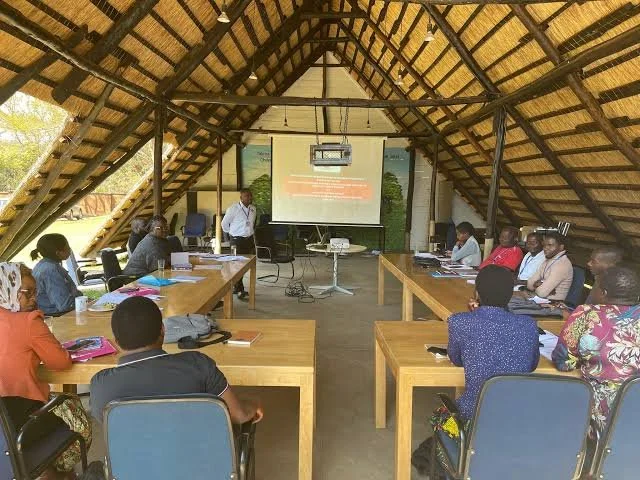
In rural societies, communal decision-making often depended on spaces where people could gather, exchange information, resolve disagreements, and organize shared responsibilities. These spaces did not always take the form of monumental public buildings. Many communities relied on relatively small meeting halls, modest structures, or multipurpose buildings that served as centers of local social life.
The archaeological study of small meeting halls offers an opportunity to understand how rural communities organized authority, participation, and collective activity.
Their architectural features, internal arrangements, entrances, seating areas, and relationships with surrounding settlements may reveal how people used space to express social relationships.
This article explores the possible functions of small meeting halls and the archaeological methods used to investigate their spatial organization.
1. Understanding Small Communal Buildings
A small meeting hall can be understood as a structure used primarily or periodically for gatherings involving members of a community.
Such buildings might have been used for discussions, dispute resolution, communal planning, religious activities, or the organization of agricultural work.
Their size and construction varied according to local resources, population, and social traditions.
Some were purpose-built communal structures, while others may have been ordinary buildings adapted for meetings.
Archaeologists must therefore avoid assuming that every large room or centrally located building served as a formal assembly hall.
2. Location Within Rural Settlements
The position of a communal building can reveal important information about settlement organization.
A meeting hall located near the center of a village may have provided relatively convenient access for residents. A building positioned near a crossroads or shared open space might have supported gatherings involving people from neighboring settlements.
Other structures may have been located near religious buildings, agricultural facilities, or administrative centers.
Researchers examine the relationship between these buildings and surrounding houses, paths, boundaries, and public spaces to understand their possible role within the community.
3. Architectural Features and Interior Layout
The internal arrangement of a meeting hall could influence how gatherings took place.
A relatively open central area might have allowed participants to assemble in groups. Fixed benches, raised platforms, partitions, or separate entrances could indicate more structured patterns of use.
The presence of a hearth might suggest that the building was used during colder periods or for gatherings involving food preparation.
However, individual features rarely establish a building's function independently. Their significance depends on the overall architectural arrangement and associated archaeological evidence.
4. Seating and Social Hierarchy
Seating arrangements can provide clues about social relationships.
A raised platform or prominent seating position might have been intended for a leader, official, religious figure, or guest of importance.
Benches arranged around the walls could have supported group discussion, while an open floor may have allowed participants to stand or move during meetings.
Yet archaeologists must be cautious when interpreting hierarchy from architecture. A raised surface may have served practical purposes, such as storage or sleeping, rather than representing formal authority.
Comparisons with historical descriptions and regional building traditions can help clarify possible meanings.
5. Entrances and Patterns of Access
The location and number of entrances can influence how people entered and occupied a communal space.
A single entrance might have concentrated movement through one controlled point. Multiple entrances could have allowed easier circulation during larger gatherings.
Doorways may also have been positioned to provide access from central paths or shared outdoor areas.
Researchers examine wear patterns, thresholds, surrounding surfaces, and associated architectural features to investigate how people moved through the building.
6. Material Culture and Communal Activities
Artifacts found inside a meeting hall can help reveal its function.
Pottery fragments, food remains, tools, writing materials, gaming objects, and personal ornaments may indicate activities associated with gatherings.
Concentrations of cooking equipment could suggest communal meals, while administrative objects might indicate recordkeeping or organized decision-making.
However, the archaeological deposit may include materials from several different periods of use. Careful stratigraphic analysis is necessary to determine which objects belong to the same activity phase.
7. Meeting Halls and Rural Governance
Small communal buildings may have played an important role in local governance.
They could have provided places where residents discussed shared resources, agricultural schedules, boundary disputes, labor obligations, and local regulations.
In some societies, community meetings may have involved household representatives, elders, landholders, or other recognized authorities.
The archaeological evidence rarely reveals the precise rules governing participation. However, building size, accessibility, and spatial organization can contribute to broader interpretations of social organization.
8. Multipurpose Use and Changing Functions
A communal building may have served several purposes over its lifetime.
A meeting hall could also function as a dining space, temporary shelter, storage building, religious gathering place, or location for seasonal activities.
Changes in floor surfaces, internal partitions, hearth positions, and artifact distributions may indicate alterations in use.
Researchers should therefore avoid treating a building as having one fixed purpose throughout its entire existence.
9. Reconstructing Social Space Through Archaeology
The spatial study of meeting halls combines architectural recording with artifact distribution and settlement analysis.
GIS mapping can show how buildings relate to paths, houses, agricultural areas, and other communal structures.
Photogrammetry and three-dimensional reconstruction can help visualize the building's internal arrangement and possible circulation patterns.
Archaeologists may also compare rural meeting halls with known examples from nearby regions, while accounting for differences in chronology and cultural context.
Ethnographic research can provide additional perspectives on communal architecture, although modern practices should not be assumed to reproduce ancient social arrangements exactly.
Conclusion
Small meeting halls provide a valuable perspective on the organization of rural societies. Their locations, architectural features, and interior arrangements may reveal how communities created spaces for discussion, cooperation, governance, and shared activities.
Although their precise functions can be difficult to establish, the combination of spatial analysis, artifact study, and architectural reconstruction helps researchers investigate the social importance of modest communal buildings.
These structures remind us that the organization of ancient communities depended not only on monumental institutions but also on smaller spaces where everyday collective decisions were made.