Introduction
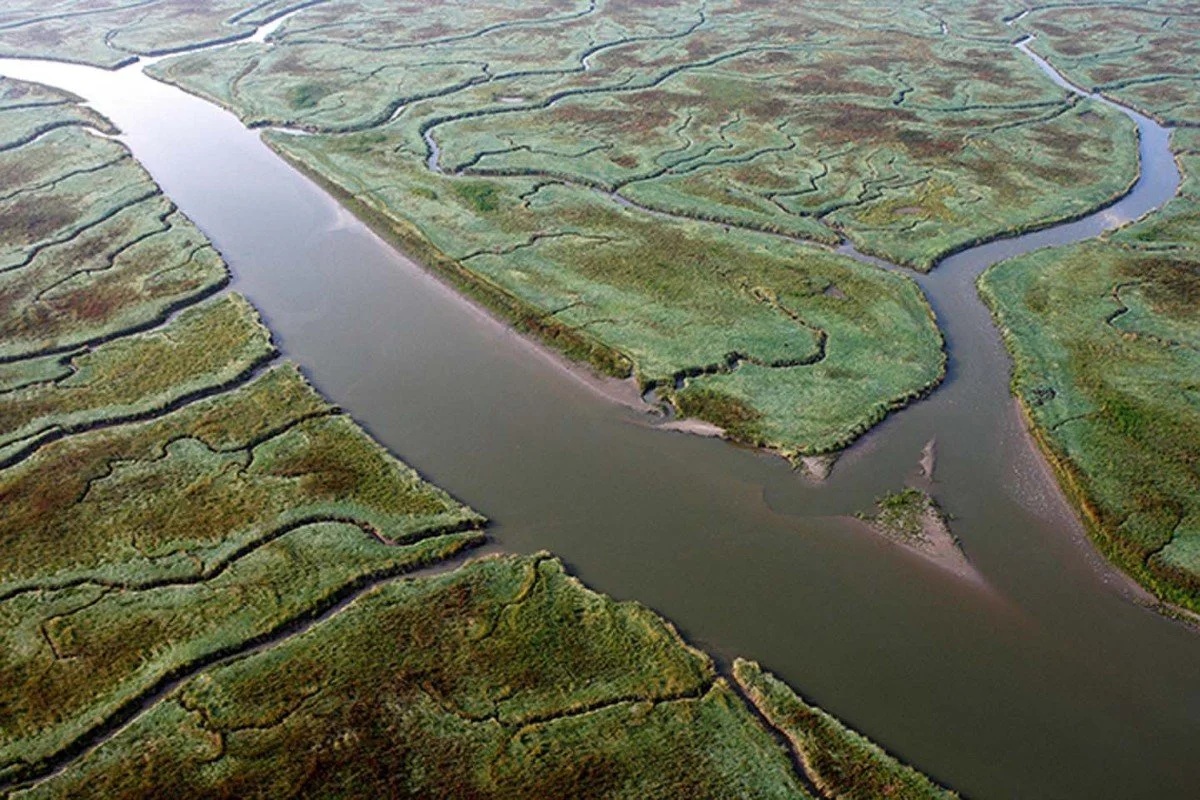
Tidal river estuaries are highly productive environments where freshwater and seawater interact. Their changing water levels, sediment movement, and seasonal fish migrations have supported human communities for thousands of years.
One traditional method of exploiting these environments involved constructing fish traps from wood, stones, woven branches, and other locally available materials.
Rather than relying on individual fishing devices, some communities developed interconnected systems of barriers and enclosures that guided fish into restricted spaces during changing tidal conditions.
Submerged fishtrap networks are archaeologically significant because they reveal detailed knowledge of water movement, animal behavior, and landscape management.
This article examines the construction, operation, preservation, and archaeological interpretation of fishtrap networks in tidal estuaries.
1. Understanding Tidal Fishtraps
A fishtrap is a structure designed to capture fish through the controlled movement of water and animals.
Traditional examples may use fences, stakes, woven panels, stone barriers, or enclosed spaces positioned along waterways.
In tidal environments, fishtraps can take advantage of rising and falling water levels. Fish entering an area during high tide may become concentrated in an enclosure as the water recedes.
The precise design depends on local currents, tidal range, fish species, and available construction materials.
2. Why Estuaries Were Important Fishing Environments
Estuaries provide diverse habitats for fish, crustaceans, and other aquatic organisms.
They often contain sheltered channels, mudflats, marshes, and shallow areas that support feeding, breeding, and migration.
The mixing of freshwater and seawater produces changing environmental conditions that influence the distribution of aquatic species.
For communities living near these environments, estuaries could provide reliable food resources and opportunities for seasonal fishing.
3. Construction Materials and Techniques
Fishtrap networks could be constructed from several materials.
Wooden stakes might be driven into the sediment to create barriers. Flexible branches could be woven between them to form fences, while stones could be arranged into walls or guiding structures.
Some traps used funnel-shaped entrances that directed fish into enclosed spaces. Others relied on long barriers positioned to intercept movement through tidal channels.
Construction required detailed knowledge of local currents and the behavior of target species.
4. How Networks of Fishtraps Operated
A network could include several individual traps positioned along a river channel, tidal flat, or marsh edge.
The structures might guide fish from wider waterways toward narrower collection areas.
During high tide, fish could move through the channels and enter the trapping system. As water levels declined, the arrangement of barriers could restrict their escape.
Some systems may have been designed for particular seasons or species, while others could have supported repeated fishing throughout the year.
However, reconstructing the exact operation of an archaeological network requires evidence about its original height, orientation, and relationship to historic water levels.
5. Archaeological Evidence of Submerged Fishtraps
Submerged fishtraps may survive as lines of wooden stakes, stone alignments, or preserved woven structures.
Archaeologists investigate whether these features form deliberate patterns rather than natural accumulations of wood or stone.
The spacing and orientation of stakes can indicate how a barrier was constructed. Repeated sections may suggest repairs or extensions to an existing system.
Associated fish bones, processing areas, and settlement remains can provide additional evidence of fishing activity.
6. Dating and Environmental Reconstruction
Radiocarbon dating can establish the approximate age of preserved wooden stakes or associated organic materials.
Dendrochronology may provide more precise dates when the wood preserves sufficient growth rings and a regional reference chronology is available.
Sediment analysis can reveal whether a fishtrap was constructed in a river channel, tidal flat, or marsh environment.
Researchers also reconstruct historical water levels and shoreline positions to understand how the structures functioned when they were active.
A modern fishtrap that appears submerged may originally have been built in a much shallower environment.
7. Fish Remains and Dietary Evidence
Fish bones provide important information about the species captured and the broader fishing economy.
The size and age distribution of fish remains may indicate selective harvesting or the use of particular trapping techniques.
Seasonal patterns can sometimes be investigated through growth structures in fish bones or other biological evidence.
However, fish remains found near a fishtrap may come from domestic consumption, natural accumulation, or later activities. Their association with the structure must be established carefully.
8. Community Organization and Resource Management
Constructing and maintaining a network of fishtraps could require coordinated labor.
Communities may have needed agreements about access, maintenance, ownership, and the timing of fishing activities.
Some traps may have been controlled by individual households, while larger systems could have involved collective construction and management.
The distribution of fishtraps across an estuary may reveal how different groups used particular channels and fishing grounds.
These interpretations can be strengthened through comparisons with settlement patterns, historical records, and local environmental knowledge.
9. Preservation and Threats to Submerged Networks
Submerged wooden fishtraps can survive in waterlogged sediment, particularly where oxygen levels are low.
However, erosion, dredging, boat traffic, construction, and changing tidal conditions can damage these fragile structures.
Saltwater exposure and biological activity may also accelerate the deterioration of wood.
Underwater recording, environmental monitoring, and careful management of coastal development are important for protecting these archaeological remains.
Conclusion
Submerged fishtrap networks demonstrate how communities adapted fishing technology to the changing conditions of tidal river estuaries.
Their construction required practical knowledge of currents, water levels, fish behavior, and local materials. Archaeological remains can reveal not only fishing methods but also patterns of cooperation, resource management, and settlement organization.
By combining underwater survey, timber analysis, fish-bone studies, and environmental reconstruction, researchers can better understand the role of traditional fishing systems in the development of coastal societies.