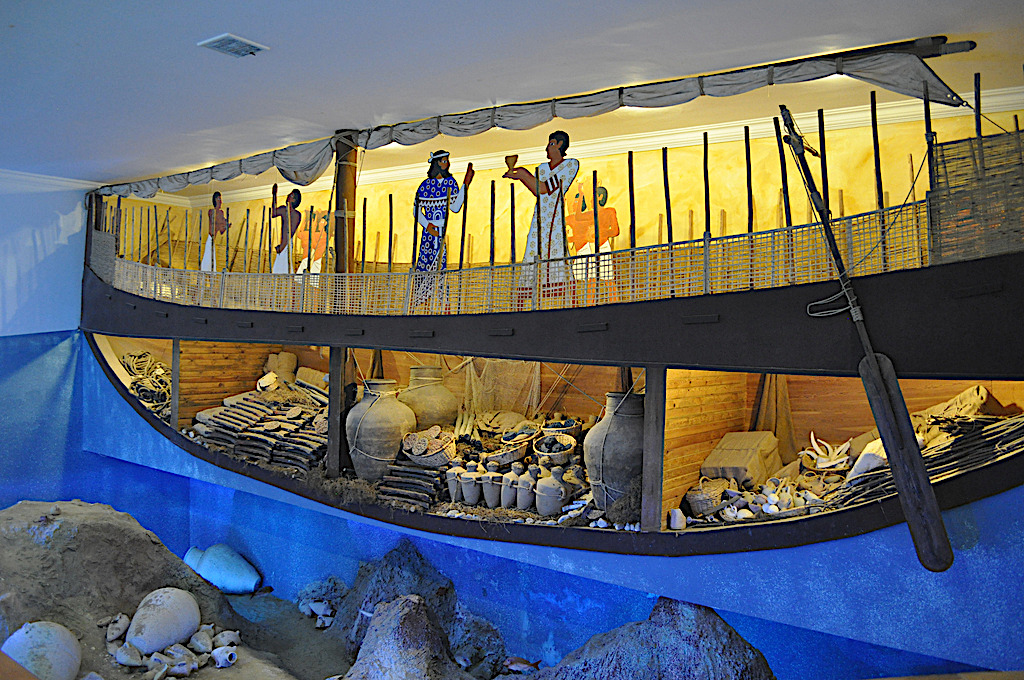
The Uluburun Shipwreck: A Time Capsule of Late Bronze Age Trade
The discovery of the Uluburun Shipwreck is one of the most important finds in underwater archaeology. Dating to the late 14th century BCE, this shipwreck offers a rare and detailed glimpse into the complex trade networks of the Late Bronze Age. Found off the coast of Turkey, it carried a rich cargo that reveals how interconnected ancient civilizations truly were.
1. Discovery of the Shipwreck
The shipwreck was discovered by chance but quickly became a major archaeological project.
1982 Discovery: Found by a sponge diver near Uluburun.
Excavation: Led by the Institute of Nautical Archaeology.
Depth: Located about 50 meters underwater.
Excavation Period: Took over a decade to fully recover artifacts.
The careful excavation preserved thousands of items, making it one of the most studied shipwrecks in history.
2. The Ship and Its Journey
Although the ship itself was mostly destroyed, researchers reconstructed key details.
Wooden Vessel: Likely built using ancient shipbuilding techniques.
Trade Route: Possibly traveled between the eastern Mediterranean and Aegean regions.
Multicultural Crew: May have included sailors from different regions.
Destination Unknown: The exact route and final destination remain a mystery.
The ship represents a moving link between ancient civilizations.
3. Cargo: A Floating Marketplace
The Uluburun ship carried a wide variety of goods, showing extensive trade connections.
Copper Ingots: About 10 tons, likely from Cyprus.
Tin Ingots: Essential for making bronze.
Glass Ingots: Some of the earliest known examples.
Ivory and Ebony: Luxury goods from Africa.
Jewelry and Gold: High-value items, including a gold scarab linked to Nefertiti.
Spices and Resins: Possibly used for perfume or rituals.
Pottery: From different regions, showing cultural exchange.
This cargo reflects trade between Egypt, the Levant, Mesopotamia, and the Aegean.
4. Evidence of a Globalized Ancient World
The shipwreck proves that long-distance trade was highly developed.
International Trade: Goods from at least seven different cultures.
Economic Complexity: Organized systems for production and exchange.
Diplomatic Gifts: Some items may have been royal exchanges.
Standardized Materials: Ingots shaped for easy transport and trade.
This challenges the idea that globalization is only a modern concept.
5. Daily Life on Board
Artifacts also reveal insights into life aboard the ship.
Tools and Weapons: Used for maintenance and defense.
Personal Items: Jewelry, weights, and everyday objects.
Food Remains: Evidence of diet during the voyage.
Balance Weights: Suggest trade transactions happened onboard.
These findings humanize the sailors and traders behind the cargo.
6. The Shipwreck’s Significance
The Uluburun shipwreck is often described as a “time capsule.”
Preserved Moment: Captures a single journey frozen in time.
Trade Network Map: Shows connections across continents.
Cultural Exchange: Evidence of interaction between distant societies.
Historical Insight: Helps scholars understand the Late Bronze Age economy.
It is one of the richest sources of information about ancient maritime trade.
7. What Caused the Shipwreck?
The exact reason for the sinking is unknown.
Storms: Rough seas may have caused the ship to sink.
Overloaded Cargo: Heavy goods could have destabilized the vessel.
Navigation Errors: Possible misjudgment near rocky coastlines.
Regardless of the cause, the sinking preserved a unique historical record.
Conclusion
The Uluburun Shipwreck reveals a world that was far more connected than we might expect for such an early period. Through its cargo, we see evidence of trade, diplomacy, and cultural exchange spanning thousands of kilometers.
It reminds us that even in ancient times, civilizations were not isolated—they were part of a dynamic and interconnected global system.