A Monument That Reveals the Secrets of Ancient Egyptian Engineering
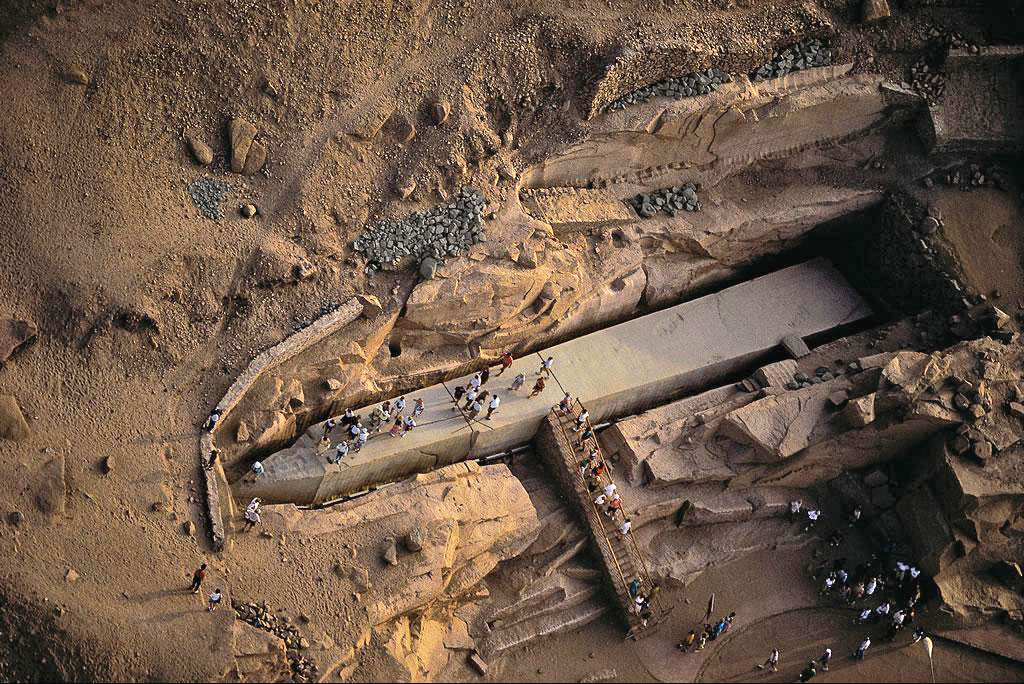
At a quarry in Aswan lies one of the most fascinating monuments of ancient Egypt not because it stands tall, but because it was never completed. The Unfinished Obelisk offers a rare glimpse into how Egyptians carved, shaped, and prepared enormous stone monuments.
A Grand Ambition in Stone
Commissioned during the reign of Queen Hatshepsut, the Unfinished Obelisk was intended to be the tallest and heaviest obelisk ever created. If completed, it would have weighed more than 1,000 tons. Instead, it remains attached to the bedrock where artisans began shaping it thousands of years ago.
Why the Obelisk Was Abandoned
During the carving process, ancient workers discovered deep cracks running through the granite. These flaws made it impossible to safely lift and transport the monument. Rather than risk disaster or waste resources, the workers abandoned the project entirely.
This decision preserved a unique archaeological treasure: a snapshot of stone-carving techniques frozen in time.
What the Obelisk Reveals About Ancient Technology
The unfinished structure shows clear tool marks, drill holes, and channels, demonstrating how workers used dolerite stone hammers to chip away at the granite. It also suggests a highly organized workforce capable of planning massive projects with precision.
The site offers proof that ancient Egyptians possessed advanced engineering knowledge even without steel tools or modern machinery.
A Monument to Human Skill and Limits
The Unfinished Obelisk stands as a testament to Egyptian craftsmanship, ambition, and practicality. Though never raised to the sky, it continues to teach us about the techniques behind some of Egypt’s most iconic monuments.