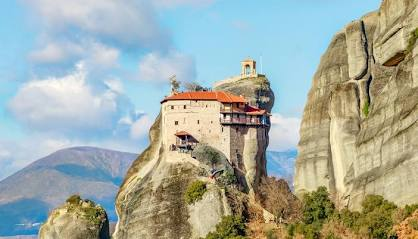
Rising dramatically from the flat plains of Thessaly in central Greece, the monolithic sandstone rock pillars of Meteora (literally meaning "suspended in the air") host one of the most spectacular and architecturally daring monastic complexes in Eastern Orthodox Christendom. Beginning in the 11th century, hermit monks sought absolute isolation from the world, carving out small cave dwellings high up the sheer, vertical rock faces.
Architectural Defiance of Gravity: As the Byzantine Empire collapsed in the 14th century and Ottoman Turkish incursions intensified, these isolated hermits banded together for security. They began constructing monumental stone monasteries directly on top of the narrow, inaccessible summits of the stone pillars, some rising over 400 meters above the valley floor.
Built Without Roads: To construct these architectural marvels, every single stone, wooden beam, mortar bucket, and human worker had to be hauled up the vertical cliffs using an elaborate, terrifying system of long wooden ladders tied together, folding scaffolding, and manual windlasses operating heavy rope nets. Of the 24 original medieval monasteries built under these extreme conditions, only six remain active today.
The Engineering of Survival: The internal layout of a Meteora monastery was a masterpiece of space optimization. Due to the tiny, uneven surface areas of the rock tops, the buildings were constructed vertically. They featured multi-story monk cells, hidden subterranean granaries, rain-collecting cisterns carved deep into the sandstone, and beautiful, cross-in-square Byzantine churches (Catholika) adorned with vibrant, post-Byzantine frescoes. These frescos often depicted graphic scenes of martyrdom, reflecting the monks' constant psychological state of siege and their absolute devotion to spiritual survival in the face of worldly destruction.