Introduction
Feasting has played an important role in many societies. Shared meals can strengthen social relationships, mark religious occasions, establish political alliances, and demonstrate wealth or generosity. Archaeological evidence for feasting may include large quantities of animal bones, specialized serving vessels, unusual food deposits, and structures associated with communal gatherings.
A more complex possibility concerns the deliberate restriction of animal food before a feast. In certain settings, animals might have been kept on limited diets or raised under conditions that affected their growth before being slaughtered for a ceremonial event. Such practices could have resulted from seasonal resource constraints, ritual requirements, or practical livestock management.
However, deliberate underfeeding is difficult to establish archaeologically. Poor animal growth can result from disease, harsh weather, limited pasture, or ordinary herd management. Researchers must therefore distinguish evidence of nutritional stress from proof that scarcity was intentionally created for ritual purposes.
Understanding Feasting Archaeologically
A feast generally involves a meal that differs from ordinary daily consumption in scale, social organization, or symbolic importance.
Archaeologists may identify possible feasting contexts through large concentrations of animal remains, unusually diverse food resources, special serving equipment, and evidence of communal preparation or consumption.
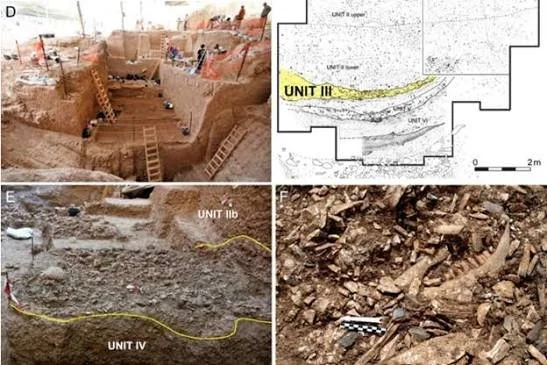
A deposit containing many animal bones does not automatically indicate a feast. It may represent a butcher's workshop, a refuse dump, a long period of ordinary meals, or a place where carcasses were processed.
The strongest interpretations combine the quantity and type of food remains with the structure of the site, the chronology of the deposit, and comparisons with everyday domestic assemblages.
What Does Animal Underfeeding Mean?
Underfeeding occurs when an animal receives insufficient food to meet its nutritional needs. It may affect body growth, fat reserves, reproduction, immune function, and survival.
In archaeological research, underfeeding cannot usually be observed directly. Instead, researchers look for indirect evidence such as reduced growth, skeletal changes, unusual age profiles, and patterns in the condition of animal remains.
These indicators are not specific to underfeeding. Disease, injury, seasonal nutritional stress, and environmental conditions can produce overlapping effects.
For that reason, the term deliberate animal underfeeding should be used only when evidence supports intentional management rather than simply poor animal condition.
Skeletal Indicators of Nutritional Stress
Animal bones preserve information about growth and development.
Researchers can examine long-bone size, tooth development, skeletal proportions, and other features to investigate whether animals experienced stress during growth.
Dental development is particularly useful for estimating age, although the interpretation depends on species and reference data.
Growth differences may reveal that animals experienced different conditions, but they rarely identify the cause by themselves.
An animal that grew slowly might have received limited food, lived in a poor pasture, suffered illness, or belonged to a naturally smaller population.
Animal Fat and Body Condition
The distribution of animal ages and the characteristics of recovered bones may provide additional information about livestock management.
In some cases, slaughter patterns can indicate whether animals were raised primarily for meat, milk, wool, or breeding.
However, body fat does not normally survive as a direct archaeological indicator. Researchers may infer aspects of animal condition from skeletal evidence, but such reconstructions are uncertain.
A claim that animals were intentionally kept thin before a ritual feast would require unusually strong supporting evidence.
Why Would a Community Restrict Animal Food?
Several hypotheses could explain intentional restriction of animal feeding, but each must be demonstrated rather than assumed.
A community might have reduced feed because stored fodder was limited. Animals might have been kept in a particular condition for reasons associated with local ritual practice, although this would require direct evidence from the relevant cultural context.
Alternatively, apparent nutritional stress could reflect the ordinary seasonal cycle of pastoralism, in which animals experienced reduced access to food during dry or cold periods.
Researchers should not invent ritual motives simply because animal remains show signs of stress.
Scarcity and the Timing of Feasts
Feasts may occur during periods when resources are seasonally available.
A community might slaughter animals after a successful breeding season, during a harvest celebration, or when a large group gathered for a ceremony.
Seasonal resource constraints can affect animal growth and feeding conditions, making it difficult to separate environmental scarcity from intentional management.
Researchers can investigate seasonality through animal tooth development, plant remains, isotope analysis, and the age structure of livestock.
These methods may help establish when animals were slaughtered, but they do not automatically reveal why a feast occurred at that time.
Feasting as Social Communication
Large meals can communicate social relationships.
A host may demonstrate the ability to mobilize resources, provide food, and bring people together. Shared consumption can also establish obligations between families, political groups, or communities.
Animal remains may reveal which species were selected and how carcasses were distributed.
If particular animals were reserved for special events, their representation in ceremonial deposits may differ from everyday food remains.
Nevertheless, social interpretations depend on context. A large deposit of livestock bones does not automatically demonstrate elite power, ritual sacrifice, or deliberate deprivation.
Isotopic Analysis and Diet
Stable isotopes can provide information about animal diets and environments.
Carbon and nitrogen isotope values in suitable tissues may reflect aspects of the plants animals consumed and the environments in which they lived.
When preserved samples are available, researchers can compare animals from different contexts to investigate dietary differences.
However, isotope values do not directly measure the amount of food an animal received. They may be influenced by vegetation, climate, physiology, and other factors.
A dietary difference between animals from a ceremonial deposit and those from ordinary refuse would not, by itself, prove underfeeding.
Distinguishing Ritual Deposits from Ordinary Waste
Animal bones from a possible feast should be examined for butchery marks, burning, breakage, species composition, and skeletal-part representation.
A ceremonial deposit may differ from domestic refuse in the selection of animals, the treatment of carcasses, or the location of deposition.
Yet the same patterns can result from specialized processing or waste-disposal practices.
Comparing multiple deposits from the same settlement can help establish whether a particular assemblage was unusual.
Ethical and Interpretive Challenges
The idea of ritual scarcity can be compelling, but it carries a risk of sensational interpretation.
Archaeologists should avoid presenting animals as deliberately starved for ceremonial reasons unless the evidence is strong. Such a claim involves both animal management and cultural meaning, two areas where indirect evidence can be ambiguous.
Research should also recognize that ancient livestock practices were shaped by practical constraints. A community facing limited pasture may have had little choice about the condition of its animals.
Conclusion
The study of possible animal underfeeding in feasting contexts raises important questions about ritual practice, food production, and social organization. Animal bones, age profiles, growth patterns, isotopes, and depositional evidence can help researchers investigate livestock condition and the timing of communal meals.
However, identifying nutritional stress is not the same as proving deliberate deprivation. Environmental conditions, disease, and ordinary seasonal management can produce similar evidence.
A convincing interpretation requires multiple independent indicators connecting animal condition with a specific feasting context and a plausible management strategy. Until such evidence is available, deliberate underfeeding should remain a hypothesis rather than an established explanation.
By approaching the subject carefully, archaeologists can investigate the complex relationships between animals, food, ritual, and resource management without assigning motives that the material record cannot support.