Introduction
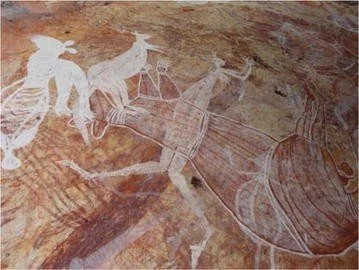
Rock art is one of the most visible forms of ancient artistic expression, yet the materials used to create it can be difficult to reconstruct. Paintings and markings may survive on exposed rock for centuries or millennia, while their original pigments undergo chemical changes caused by sunlight, water, minerals, and biological growth.
The Rock-Art Chemistry Project represents a useful research framework for examining how scientific analysis can reveal pigment composition, manufacturing choices, and possible sources of raw materials. By studying the chemistry of painted surfaces, researchers can investigate whether artists used locally available minerals, transported materials from elsewhere, or developed specialized recipes.
Such research also raises important questions about preservation and cultural heritage. Sampling can damage fragile artwork, and the presence of a chemical compound does not automatically reveal the artist's intention or the exact recipe used.
What Are Rock-Art Pigments?
Pigments are materials that provide color when applied to a surface. Ancient rock artists used a variety of mineral and organic substances, depending on local resources and artistic traditions.
Common pigment categories include iron-rich materials that produce red, yellow, and brown colors; manganese-rich materials that can produce dark pigments; and carbon-based substances such as charcoal.
White pigments may derive from minerals such as calcium carbonate or other light-colored materials. Other colors can occur in particular geological settings.
The actual palette varies considerably across regions. It is therefore inaccurate to assume that every rock-art tradition used the same materials or preparation methods.
Pigment Recipes and Binders
A painted surface may contain more than a color-producing substance.
Artists can mix pigments with binders or other materials to improve adhesion, change texture, or influence how the paint spreads. Possible binders include plant-derived substances, animal products, or other organic materials, although their survival and identification are challenging.
A pigment recipe may also involve grinding, heating, mixing, or selecting particular particle sizes.
Chemical analysis can identify some components, but reconstructing a complete recipe requires several lines of evidence. The presence of an iron-rich mineral, for example, does not reveal whether it was mixed with a binder or applied directly to the rock.
Sampling Painted Surfaces
Researchers must choose sampling strategies carefully.
Some analyses can be conducted with minimal or no removal of material, while others require tiny samples taken from the painted layer. Sampling should be justified by the research question and permitted under relevant heritage regulations.
Before sampling, researchers document the artwork's condition, surface structure, and surrounding environment.
They may also collect samples from nearby unpainted rock. These comparisons are important because some minerals detected in the paint may naturally occur in the rock itself.
Without a suitable background sample, natural mineral composition can be mistaken for an ingredient deliberately added by the artist.
Scientific Techniques
Several analytical methods can contribute to rock-art chemistry.
X-ray fluorescence can identify many elements in a sample or surface, although it does not independently identify every mineral compound.
Raman spectroscopy can help identify molecular and crystalline structures associated with pigments.
X-ray diffraction can identify crystalline mineral phases.
Scanning electron microscopy with elemental analysis can reveal particle structure and elemental composition at a small scale.
Infrared methods can sometimes help identify organic materials and chemical differences between layers.
No technique answers every question. Combining methods generally produces a more reliable understanding of pigment composition.
Sourcing Pigment Materials
Sourcing studies investigate where raw materials may have originated.
Researchers compare the chemical and mineralogical characteristics of pigments with geological samples from potential source areas.
If the pigment contains a distinctive combination of minerals that matches a local deposit, the result may support local procurement. If it differs from nearby geology but matches a distant source, researchers may investigate exchange or transport.
However, many mineral deposits have similar compositions. A chemical match may identify a broad geological region rather than a specific quarry.
Sourcing claims must reflect the level of precision that the data can support.
Local Knowledge and Artistic Choice
The selection of pigments may have involved practical, cultural, and aesthetic considerations.
An artist might use a nearby mineral because it was easy to obtain. Another might choose a particular color because it carried cultural meaning or produced a desired visual effect.
Some pigments may have required specialist preparation, while others could be applied with little processing.
Chemical analysis cannot independently recover the artist's intentions. To investigate symbolism, researchers need to consider the imagery, location, archaeological context, oral traditions where available, and comparisons with related artistic practices.
Layers and Repainting
Rock art may have been created in several phases.
One image might overlap another, or a painted surface may show evidence of repeated application. Chemical analysis can help distinguish different pigment compositions across these layers.
Such differences may indicate changes in raw materials, artistic practice, or the source of pigment.
Yet different compositions do not automatically establish different artists or communities. A single artist might use several pigments, and later repairs may introduce new materials.
Chronological interpretations require additional evidence from superimposition, stylistic comparison, dating methods where appropriate, and the surrounding archaeological context.
Pigment Chemistry and Dating
Pigment composition rarely provides a direct date for a rock painting.
Some materials can offer chronological clues if their use began or ended within a well-established period, but this approach has limitations. Mineral pigments can remain available for thousands of years.
Organic binders may sometimes be suitable for radiocarbon analysis, although contamination, conservation treatments, and the small size of samples can complicate results.
Researchers must distinguish between the age of the pigment material, the time when it was applied, and the age of the rock surface itself.
Weathering and Conservation
Rock-art surfaces are exposed to moisture, temperature changes, salts, biological growth, and physical erosion.
These processes can change pigment composition and weaken the bond between paint and rock.
Salt crystallization may damage the surface, while water can transport dissolved minerals through cracks. Lichens and other organisms may obscure imagery or affect the rock's chemistry.
Conservation decisions should be based on a clear understanding of the site's condition. Cleaning or sampling without proper assessment can remove evidence or accelerate deterioration.
Ethics and Cultural Heritage
Rock art may hold continuing significance for Indigenous communities and other cultural groups.
Scientific research should therefore involve consultation with relevant custodians and comply with legal and ethical requirements.
Researchers should avoid assuming that every image is available for unrestricted documentation or publication. Some locations or interpretations may be culturally sensitive.
The project should also consider how scientific findings are communicated, ensuring that community perspectives are not overshadowed by laboratory results.
Conclusion
The chemistry of rock-art pigments can reveal how artists selected minerals, prepared colorants, and potentially obtained materials from local or distant sources. Microscopic analysis and chemical characterization provide evidence that cannot be recovered through visual inspection alone.
However, chemical composition does not automatically reveal an exact recipe, date, or symbolic meaning. Reliable interpretations require comparison with surrounding rock, geological sources, archaeological context, and the limitations of each analytical method.
A carefully designed Rock-Art Chemistry Project can therefore connect laboratory science with cultural history. By investigating both the physical materials and the contexts in which they were used, researchers can better understand the technical knowledge, artistic choices, and environmental relationships behind ancient rock imagery.