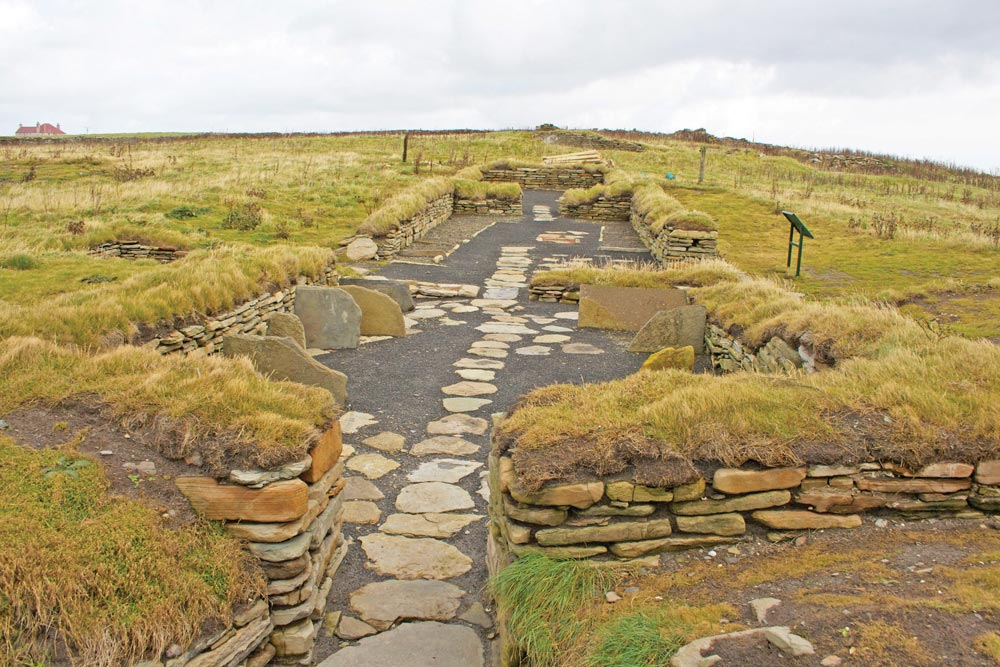
Tuquoy, on the island of Westray in Orkney, forms part of one of the richest Norse archaeological landscapes in Scotland.
The site provides evidence for Viking-Age and medieval settlement and helps demonstrate how Westray became integrated into the Norse world.
Westray and the Norse World
Westray is one of Orkney's northern islands.
Its location provided access to important maritime routes.
During the Viking Age, the island became part of the Norse cultural and political sphere.
Settlement
Archaeological sites such as Tuquoy provide evidence for long-term occupation.
Buildings in Orkney were frequently constructed from stone.
This was an effective response to the local environment, where timber was less abundant than in many Scandinavian regions.
Farming and Subsistence
Norse communities depended heavily on agriculture.
They raised livestock including:
cattle;
sheep;
goats;
pigs;
and horses.
Marine resources supplemented farming.
Fishing and the collection of shellfish and seabirds were especially important in coastal communities.
Maritime Connections
Westray's location made the sea a major transportation network.
Rather than separating communities, the sea connected them.
Boats could link Westray with:
mainland Orkney;
Shetland;
Caithness;
the Hebrides;
and Scandinavia.
Christianization
The Norse settlement of Orkney eventually became Christian.
This transformation can be observed archaeologically through churches, graves, crosses, and changing burial customs.
Christianization did not necessarily eliminate earlier traditions immediately.
Instead, religious change occurred gradually.
Archaeological Evidence
Settlement archaeology can reveal everyday life through:
animal bones;
hearths;
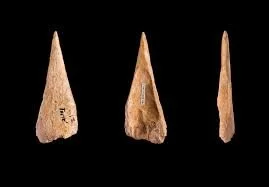
tools;
pottery;
stone objects;
and imported materials.
These finds help reconstruct diet, technology, trade, and domestic activities.
Westray's Wider Archaeological Importance
Westray is exceptionally important because it contains evidence from multiple periods.
Prehistoric settlements, Neolithic monuments, Iron Age structures, Viking sites, and medieval remains demonstrate that the island was repeatedly occupied and transformed.
Conclusion
Tuquoy: Westray's Viking Age Site illustrates the integration of northern Orkney into the Norse world.
Its importance lies not only in individual artifacts or buildings but in what the site reveals about farming, maritime connections, settlement organization, and the gradual transformation of Norse society into medieval Christian communities.