Vestrafiold is associated with the Viking and Norse archaeological landscape of Orkney, a region that became one of the most important Scandinavian settlements in the North Atlantic. The islands preserve an extraordinary concentration of evidence for Norse farming, burial, trade, political organization, and religious change.
Although the landscape has undergone extensive modification over centuries, archaeological mounds and settlement remains provide valuable clues about how Norse communities adapted to life in the Orkney Islands.
Orkney's Viking Transformation
Orkney occupied a strategically important position between Scotland and Scandinavia.
During the Viking Age, Norse settlers established themselves throughout the islands. Orkney eventually became part of a powerful Norse earldom whose influence extended across much of the northern Scottish and North Atlantic world.
The islands were attractive because they offered:
fertile agricultural land;
extensive grazing;
marine resources;
sheltered harbors;
and access to maritime trade routes.
The Farmstead Economy
Norse society in Orkney was heavily dependent upon farming.
A typical farmstead could combine agriculture with:
cattle raising;
sheep and goat herding;
fishing;
seabird exploitation;
craft production;
and maritime trade.
Cattle were particularly important because they provided meat, milk, hides, and labor.
Sheep supplied wool, while horses were useful for transportation and agricultural work.
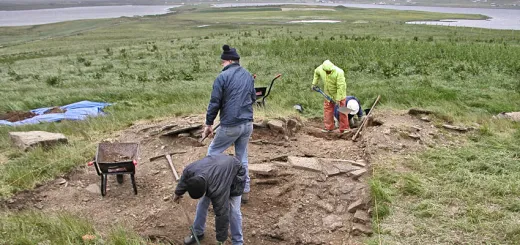
Understanding Farm Mounds
Archaeological mounds can represent accumulated remains from long-term occupation.
Layers of:
stone;
soil;
charcoal;
animal bone;
pottery;
and building debris
can accumulate gradually as buildings are constructed, repaired, abandoned, and rebuilt.
Such deposits can provide a chronological record of occupation.
Viking-Age Material Culture
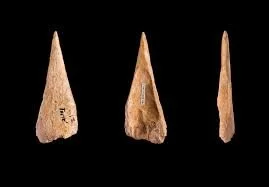
Archaeological discoveries from Orkney's Norse settlements frequently include objects associated with domestic and agricultural life.
These can include:
spindle whorls;
loom weights;
knives;
whetstones;
iron tools;
pottery;
fishing equipment;
and personal ornaments.
Together, these objects reveal a society that was both agricultural and maritime.
Norse Environmental Adaptation
The Norse settlers did not simply reproduce Scandinavian life unchanged.
They adapted to Orkney's environment.
Stone became an important construction material because suitable timber was comparatively limited.
Buildings could therefore be constructed with thick stone walls that provided insulation against the cold and windy climate.
Farm, Family, and Status
A Norse farmstead was more than an economic unit.
It was also a center of family life and social identity.
Large and prosperous farms could belong to influential households.
The size and quality of buildings, access to imported objects, and ownership of livestock could all reflect differences in wealth and status.
The Wider Norse Landscape
Vestrafiold should be considered within the larger archaeological landscape of Orkney.
Nearby farms, churches, burial sites, political centers, and harbors demonstrate that Norse society was highly interconnected.
Conclusion
Vestrafiold: Orkney's Viking Farm Mound represents the broader archaeological story of Norse settlement and agricultural life in Orkney.
The evidence from farm mounds demonstrates how Viking-Age communities combined farming, animal husbandry, maritime activity, and trade.
These settlements were the foundation upon which Norse society in Orkney developed for centuries.