Stepping Into a Living Past
For centuries, the ancient world has been reconstructed through books, ruins, and imagination. Today, however, technology is allowing people to go far beyond observation—offering the chance to experience history in an entirely new way. Through virtual reality (VR), users can now walk the streets of Athens during its golden age, witnessing the city as it once stood more than 2,400 years ago.
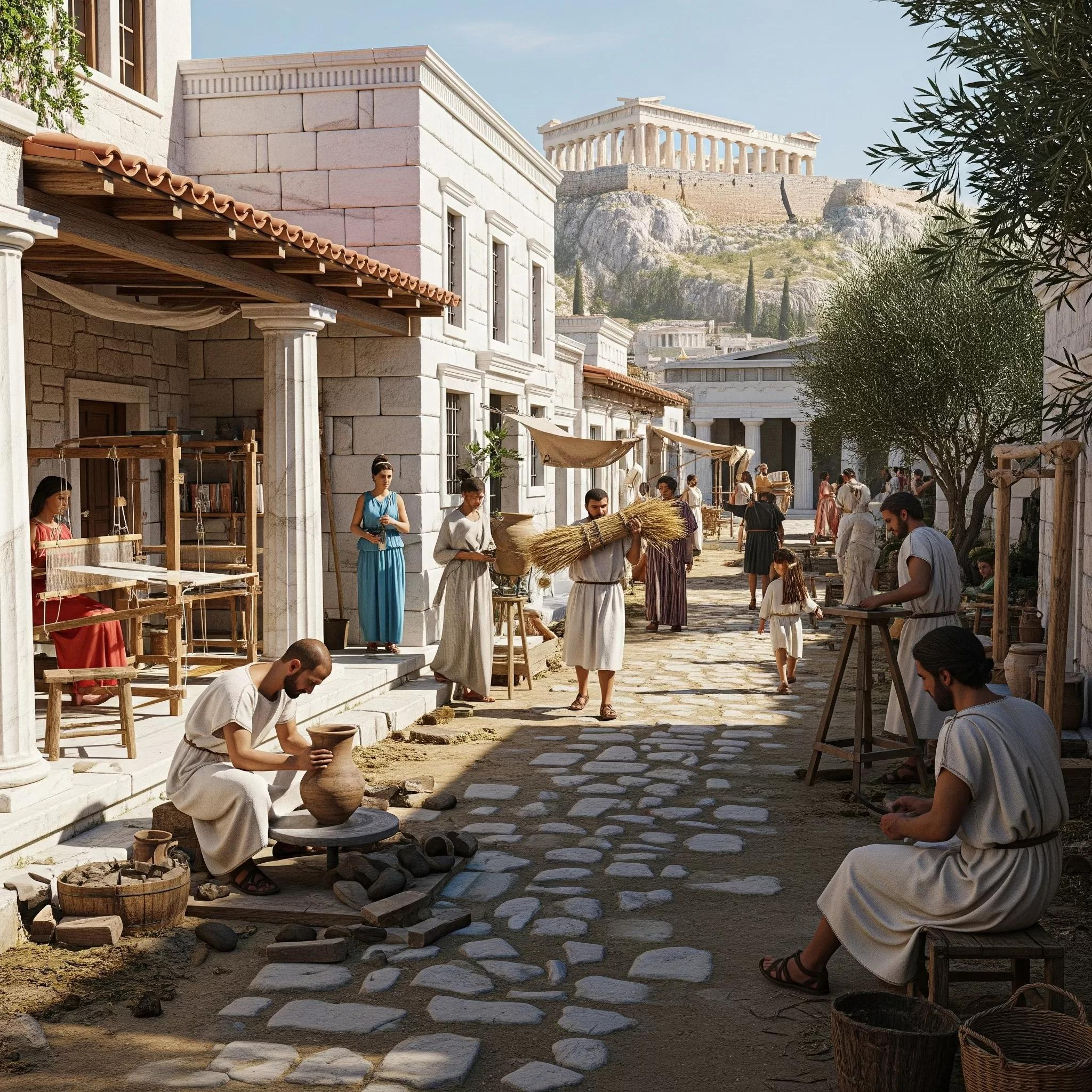
Instead of viewing broken columns and weathered stones, VR places users in a fully reconstructed environment—where temples are complete, colors are vibrant, and the city is alive with movement.
Rebuilding Athens in Digital Detail
Creating a virtual version of ancient Athens is no simple task. It requires the collaboration of archaeologists, historians, architects, and digital designers. Every structure—especially iconic landmarks like the Acropolis and the Parthenon—is carefully reconstructed using archaeological evidence.
These reconstructions are based on:
Excavation data and site measurements
Ancient texts and historical descriptions
Artistic depictions, such as pottery and reliefs
Scientific analysis of pigments and materials
Even small details matter. The Parthenon, for example, was once brightly painted, not the white marble structure people often imagine today. VR recreations restore these lost colors, offering a more accurate vision of the past.
More Than a Visual Experience
What sets VR apart from traditional media is immersion. Instead of watching a documentary, users become part of the environment.
In a VR reconstruction of ancient Athens, you can:
Walk through bustling marketplaces filled with merchants and citizens
Enter temples and observe religious rituals
Explore residential neighborhoods and public spaces
Hear ambient sounds like conversations, footsteps, and city life
This multisensory experience creates a deeper emotional connection to history. It transforms learning from passive observation into active participation.
Education Without Boundaries
One of the most powerful aspects of VR heritage is accessibility. Not everyone has the opportunity to travel to Greece or visit archaeological sites. Even for those who do, modern ruins can only tell part of the story.
VR removes these limitations. Students, researchers, and the general public can explore ancient environments from anywhere in the world.
This technology is already being used in:
Classrooms, to enhance history lessons
Museums, to provide interactive exhibits
Research institutions, to test architectural theories
It allows users to understand not just what ancient Athens looked like—but how it functioned as a living city.
Preserving What Time is Erasing
Archaeological sites are constantly under threat from natural decay, climate change, and human activity. Over time, even the most famous landmarks may lose more of their original structure.
Virtual reconstruction offers a form of preservation that goes beyond physical conservation. By digitizing sites, researchers can:
Capture their current state in high detail
Reconstruct missing elements based on evidence
Preserve knowledge for future generations
In this sense, VR acts as a digital archive—ensuring that even if the physical site changes, its historical form is not lost.
A New Relationship with History
Virtual reality is changing how people interact with the past. It shifts history from something distant and abstract into something immediate and tangible.
Instead of imagining ancient Athens, users can stand within it. They can look up at towering temples, walk along crowded streets, and experience the scale and complexity of one of the world’s most influential cities.
The Future of Immersive Archaeology
As technology continues to improve, VR experiences will become even more realistic and interactive. Future developments may include:
AI-driven characters that respond to users
Real-time historical simulations
Fully interactive environments where users can influence events
These advancements will further blur the line between education and experience.
Bringing the Ancient World Home
Virtual reality is doing more than recreating ancient cities—it is redefining how we connect with history. By allowing people to step inside the past, it transforms learning into something personal, memorable, and deeply engaging.
In the case of ancient Athens, VR does not just show us a lost civilization—it brings it back to life.