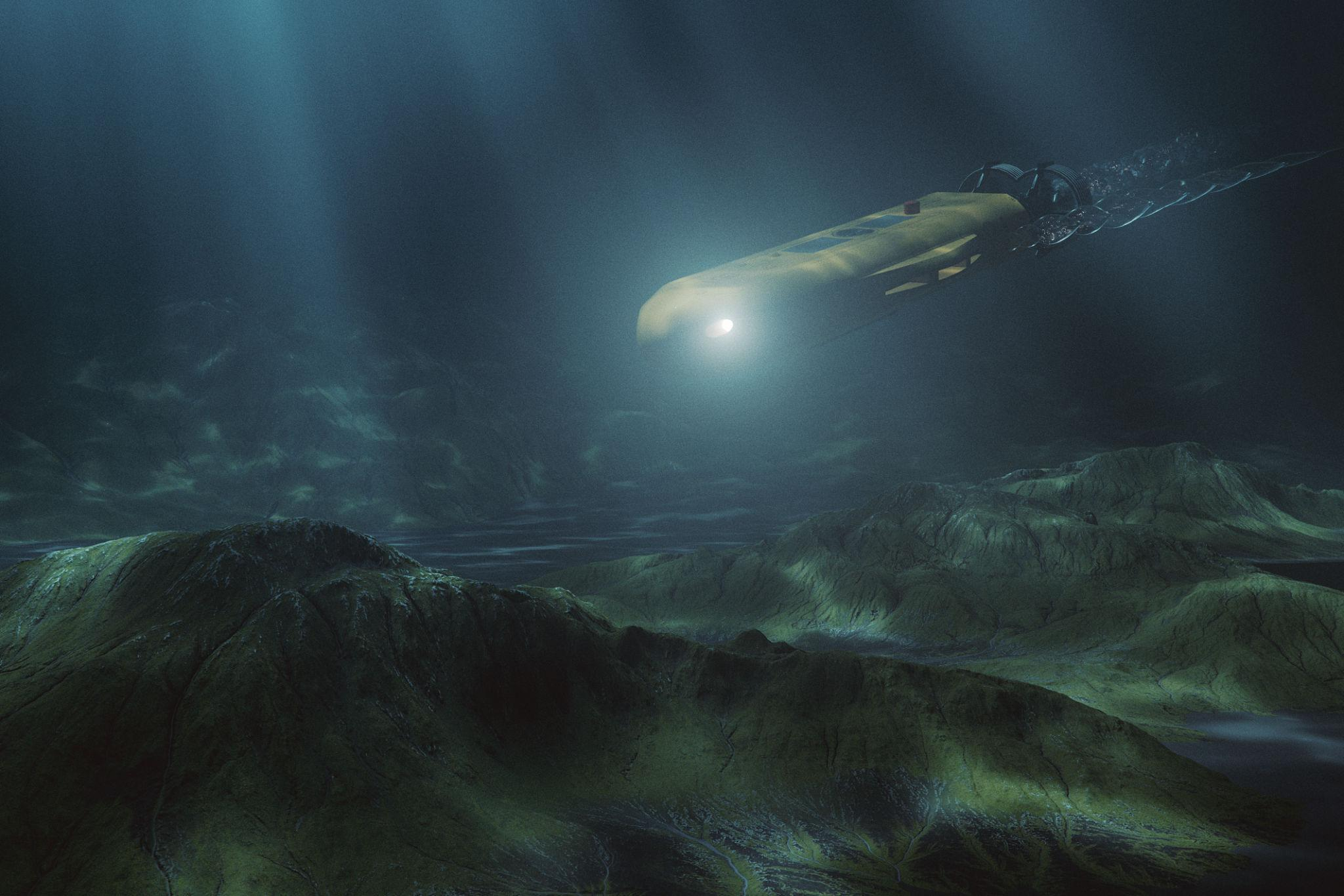
Much of this underwater world exists in what scientists call the “midnight zone,” where sunlight cannot penetrate and conditions are extreme. For decades, these depths were nearly impossible to explore.
Enter the Underwater Drone
Modern technology has changed that. Remotely Operated Vehicles (ROVs), commonly known as underwater drones, have revolutionized marine archaeology.
These machines are designed to operate in environments that would be dangerous—or impossible—for human divers. Equipped with cameras, lights, and robotic arms, they can navigate deep waters with precision.
How the Technology Works
Underwater drones are typically controlled from a ship at the surface. They are connected by cables that transmit power and data in real time.
Key features include:
High-definition cameras for detailed imaging
Powerful lights to illuminate dark environments
Robotic arms for handling objects
Sensors to measure depth, temperature, and pressure
This allows archaeologists to explore sites in incredible detail without disturbing them.
Discovering Lost History
Underwater drones have uncovered a wide range of archaeological treasures, including:
Ancient shipwrecks carrying trade goods
Submerged cities lost to rising sea levels
Artifacts preserved in oxygen-poor environments
Shipwrecks are particularly valuable because they act as time capsules. Many contain cargo, tools, and personal belongings that provide insight into daily life and trade.
Why the Ocean Preserves So Much
In some cases, underwater environments preserve materials better than land. Low oxygen levels can slow decay, allowing organic materials like wood, rope, and even textiles to survive.
This makes underwater archaeology uniquely valuable. It offers access to types of artifacts that are rarely preserved elsewhere.
Challenges of the Deep
Despite the advantages of underwater drones, exploring the ocean remains difficult.
Challenges include:
Extreme pressure at great depths
Limited visibility
Strong currents
High operational costs
Even with advanced technology, each mission requires careful planning and expertise.
A New Frontier for Archaeology
The use of underwater drones has expanded the boundaries of archaeology. Areas that were once inaccessible are now open to exploration.
This has led to major discoveries and continues to reshape our understanding of ancient trade, migration, and exploration.
The Future of Ocean Exploration
As technology improves, underwater drones are becoming more advanced and more accessible. Future developments may include:
Autonomous drones that operate without direct control
AI systems that identify artifacts automatically
Enhanced imaging for 3D reconstruction of sites
These innovations will allow archaeologists to explore even deeper and more complex environments.
Unlocking the Ocean’s Secrets
The ocean remains one of the last great frontiers of human exploration. With the help of underwater drones, archaeologists are beginning to uncover its hidden history—one discovery at a time.
From ancient shipwrecks to submerged cities, the past is waiting beneath the waves. And thanks to modern technology, we are finally able to reach it.