• MAIN PAGE
  • LATEST NEWS
    • Lost Cities
    • Archaeology's Greatest Finds
    • Underwater Discoveries
    • Greatest Inventions
    • Studies
    • Blog
  • PHILOSOPHY
  • HISTORY
  • RELIGIONS
    • Africa
    • Anatolia
    • Arabian Peninsula
    • Balkan Region
    • China - East Asia
    • Europe
    • Eurasian Steppe
    • Levant
    • Mesopotamia
    • Oceania - SE Asia
    • Pre-Columbian Civilizations of America
    • Iranian Plateau - Central Asia
    • Indus Valley - South Asia
    • Japan
    • The Archaeologist Editor Group
    • Scientific Studies
    • Aegean Prehistory
    • Historical Period
    • Byzantine Middle Ages
    • Predynastic Period
    • Dynastic Period
    • Greco-Roman Egypt
  • Rome
  • PALEONTOLOGY
  • About us
Menu

The Archaeologist

  • MAIN PAGE
  • LATEST NEWS
  • DISCOVERIES
    • Lost Cities
    • Archaeology's Greatest Finds
    • Underwater Discoveries
    • Greatest Inventions
    • Studies
    • Blog
  • PHILOSOPHY
  • HISTORY
  • RELIGIONS
  • World Civilizations
    • Africa
    • Anatolia
    • Arabian Peninsula
    • Balkan Region
    • China - East Asia
    • Europe
    • Eurasian Steppe
    • Levant
    • Mesopotamia
    • Oceania - SE Asia
    • Pre-Columbian Civilizations of America
    • Iranian Plateau - Central Asia
    • Indus Valley - South Asia
    • Japan
    • The Archaeologist Editor Group
    • Scientific Studies
  • GREECE
    • Aegean Prehistory
    • Historical Period
    • Byzantine Middle Ages
  • Egypt
    • Predynastic Period
    • Dynastic Period
    • Greco-Roman Egypt
  • Rome
  • PALEONTOLOGY
  • About us

What Actually Is Fire? The Answer Is Stranger Than You'd Think

December 30, 2025

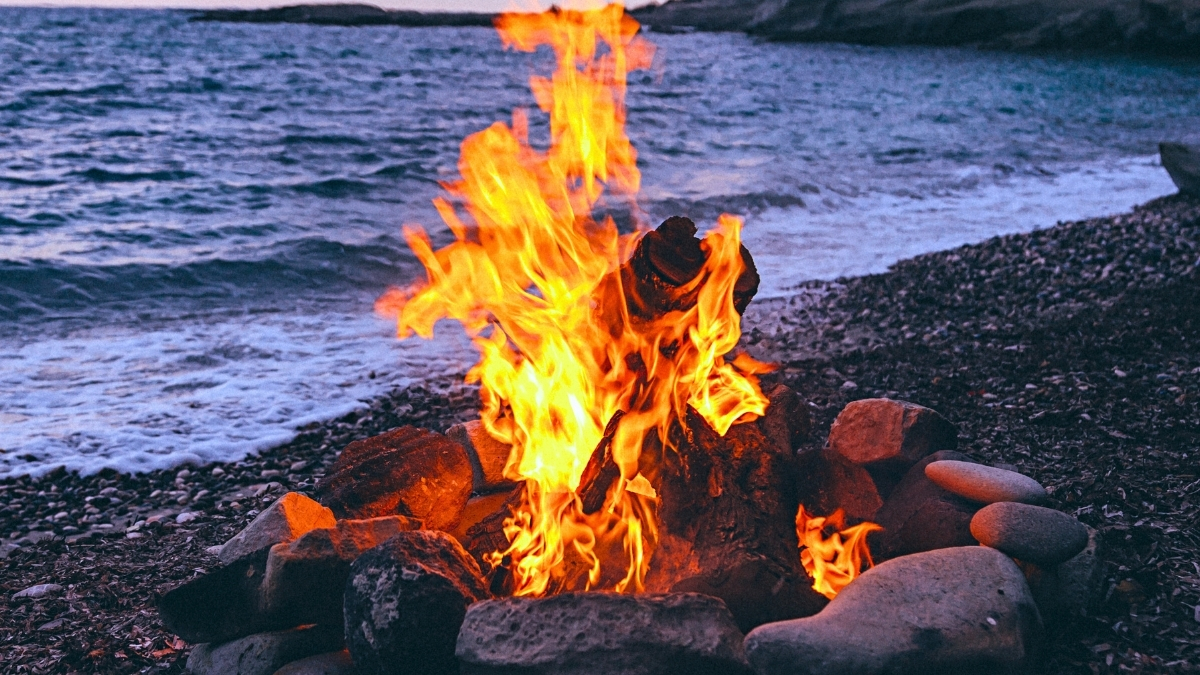
Fire is an ancient technology that has played a key role in human evolution. Early humans relied on it for protection, cooking, and food preservation. People gathered around fires to tell stories, share traditions, and strengthen social bonds.

In the modern world, fire remains a vital industrial tool and is still deeply embedded in everyday life and rituals, such as blowing out candles on a birthday cake.

Just as it did millions of years ago, fire continues to shape landscapes, with the ability to both destroy and renew entire ecosystems. Although fire is very familiar, it can be surprisingly difficult to define. So what exactly is fire?

Let’s start with a simpler question.

What are the components needed for fire?
To start a fire, three elements are required: fuel (a material that can burn), oxygen, and an initial source of heat or spark. This combination is known as the fire triangle. Fuel and oxygen can also be referred to as “reactants,” while the initial heat is called “activation energy.”

In the case of a bushfire, organic materials such as wood act as the fuel. Oxygen is present in the air, and the activation energy may come from sources like lightning or human activity.

If one of these elements is removed, the fire cannot continue burning. Bushfires can be extinguished by removing heat, such as by pouring water on the flames. The water turns into steam, which also helps smother the fire by pushing away oxygen. Fuel may be consumed by the fire itself or deliberately reduced beforehand through hazard-reduction or cultural burning practices.
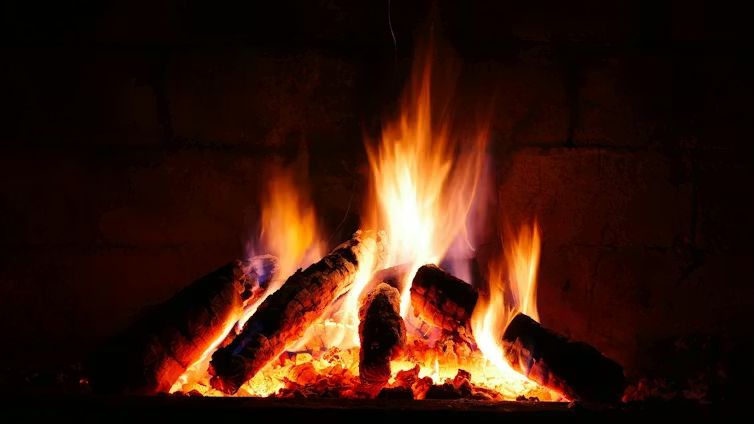
Fire can be hard to define.

Fire is essentially a chemical reaction called combustion, not a form of matter. Its main products are energy, carbon dioxide, and water vapour, though incomplete burning—like in a bushfire—can also produce soot, tiny partially burned carbon particles. The warmth we feel comes from energy radiating as heat, while the hot gases rise, carrying glowing soot that forms the visible flames. Flames extend beyond what we see, emitting invisible light like infrared as they rise and cool.

Fire is not a solid, liquid, or gas. While flames consist of hot gases, they only exist while the fire is burning and cannot be contained like CO₂ or water. Fire is also not plasma, though the hottest parts of intense fires can contain weak, ionised regions. Plasma requires a stable soup of charged particles, which fire does not maintain.

What makes fire unique is that it is a process—a chemical reaction—rather than a physical substance. Visible, oxygen-fuelled flames like those on Earth are rare in the universe. Earth’s stable supply of oxygen, produced by life, is what makes fire possible here. As far as we know, fire in this form only exists on our planet.
← Archaeologists Are Using Lasers to Clean Decades of Grime Off a Towering 1,800-Year-Old Marble Column in Rome3,000 BC find takes archaeologists by surprise →
Featured
image_2025-12-31_002257277.png
Dec 30, 2025
Silver necklace depicting Assyrian goddess Ishtar unearthed in southwestern Türkiye
Dec 30, 2025
Read More →
Dec 30, 2025
image_2025-12-31_001924708.png
Dec 30, 2025
Humans cared for wolves long before dogs emerged, study finds
Dec 30, 2025
Read More →
Dec 30, 2025
image_2025-12-31_000800442.png
Dec 30, 2025
Ancient Buddhist Site Unearthed in Kashmir’s Baramulla District Highlights Region’s Kushan-Era Past
Dec 30, 2025
Read More →
Dec 30, 2025
image_2025-12-31_000438961.png
Dec 30, 2025
Horrifically Disfigured Skeleton Known As “The Prince” Was Likely Mauled To Death By A Bear 27,000 Years Ago
Dec 30, 2025
Read More →
Dec 30, 2025
image_2025-12-30_235800075.png
Dec 30, 2025
An Ancient Portal to the Underworld Was Found in Denver
Dec 30, 2025
Read More →
Dec 30, 2025
image_2025-12-30_235042591.png
Dec 30, 2025
Rare Roman-Era enamelled fibula found near Grudziądz
Dec 30, 2025
Read More →
Dec 30, 2025
read more

Powered by The archaeologist