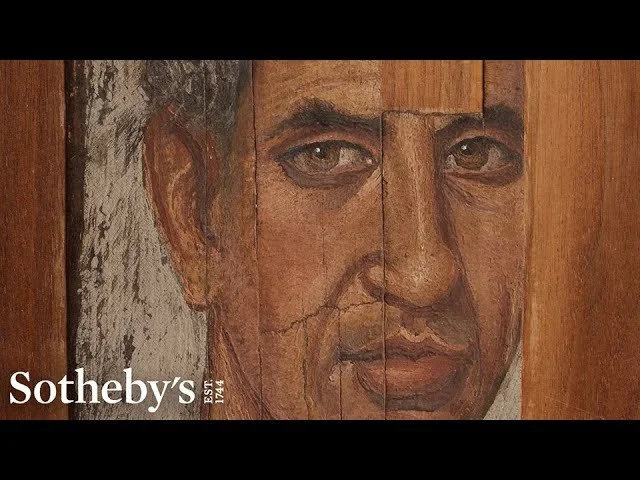
Nearly two thousand years old, this Roman-period Egyptian mummy portrait is a striking testament to the artistry and humanism of the ancient world. Painted in encaustic, a technique using hot beeswax and pigment, the portrait once rested over the face of a mummified body, creating a unique bridge between Egyptian funerary tradition and Greco-Roman naturalism.
What makes this portrait so remarkable is its startling realism. Wrinkles, graying hair, a receding hairline, and penetrating hazel eyes are rendered with an honesty rarely associated with antiquity. Unlike many ancient depictions that idealized their subjects, this likeness embraces imperfection and individuality, offering a rare, intimate glimpse into the life behind the mask.
Though the sitter’s name has been lost to history, the portrait preserves something far deeper than identity. Its extraordinary realism anticipates the long arc of Western portraiture — an enduring drive to capture not only appearance, but presence, emotion, and inner life. Standing before it today, it’s impossible not to feel the centuries collapse, replaced by the uncanny sensation that someone from the ancient world is quietly meeting your gaze — human, familiar, and unmistakably alive.
This piece reminds us that art has always been about more than technique; it is a bridge across time, connecting hearts, stories, and souls that might otherwise be lost to history.