• MAIN PAGE
  • LATEST NEWS
    • Lost Cities
    • Archaeology's Greatest Finds
    • Underwater Discoveries
    • Greatest Inventions
    • Studies
    • Blog
  • PHILOSOPHY
  • HISTORY
  • RELIGIONS
    • Africa
    • Anatolia
    • Arabian Peninsula
    • Balkan Region
    • China - East Asia
    • Europe
    • Eurasian Steppe
    • Levant
    • Mesopotamia
    • Oceania - SE Asia
    • Pre-Columbian Civilizations of America
    • Iranian Plateau - Central Asia
    • Indus Valley - South Asia
    • Japan
    • The Archaeologist Editor Group
    • Scientific Studies
    • Aegean Prehistory
    • Historical Period
    • Byzantine Middle Ages
    • Predynastic Period
    • Dynastic Period
    • Greco-Roman Egypt
  • Rome
  • PALEONTOLOGY
  • About us
Menu

The Archaeologist

  • MAIN PAGE
  • LATEST NEWS
  • DISCOVERIES
    • Lost Cities
    • Archaeology's Greatest Finds
    • Underwater Discoveries
    • Greatest Inventions
    • Studies
    • Blog
  • PHILOSOPHY
  • HISTORY
  • RELIGIONS
  • World Civilizations
    • Africa
    • Anatolia
    • Arabian Peninsula
    • Balkan Region
    • China - East Asia
    • Europe
    • Eurasian Steppe
    • Levant
    • Mesopotamia
    • Oceania - SE Asia
    • Pre-Columbian Civilizations of America
    • Iranian Plateau - Central Asia
    • Indus Valley - South Asia
    • Japan
    • The Archaeologist Editor Group
    • Scientific Studies
  • GREECE
    • Aegean Prehistory
    • Historical Period
    • Byzantine Middle Ages
  • Egypt
    • Predynastic Period
    • Dynastic Period
    • Greco-Roman Egypt
  • Rome
  • PALEONTOLOGY
  • About us

The study documented human settlement at the site dating back about 13,500 years.

Northern Arabia Archaeological Site Reveals 13,500-Year-Old Human Settlement

March 18, 2026

Early Human Settlements Discovered in Northern Arabia

Groundbreaking research led by the Saudi Heritage Commission has uncovered compelling evidence of early human settlement in northern Arabia—reshaping our understanding of how ancient communities lived and moved across the region. The study, published in Nature, highlights discoveries from the Sahout site.

A Strategic Desert Crossroads

The Sahout site lies along the southern edge of the Nefud Desert, between the Arnan and Al-Misma mountains. Its location made it a crucial link between desert environments and broader settlement networks connected to the Levant.

This positioning suggests the area played a key role in human migration and cultural exchange during the late Ice Age and early Holocene period.

Evidence of Life 13,500 Years Ago

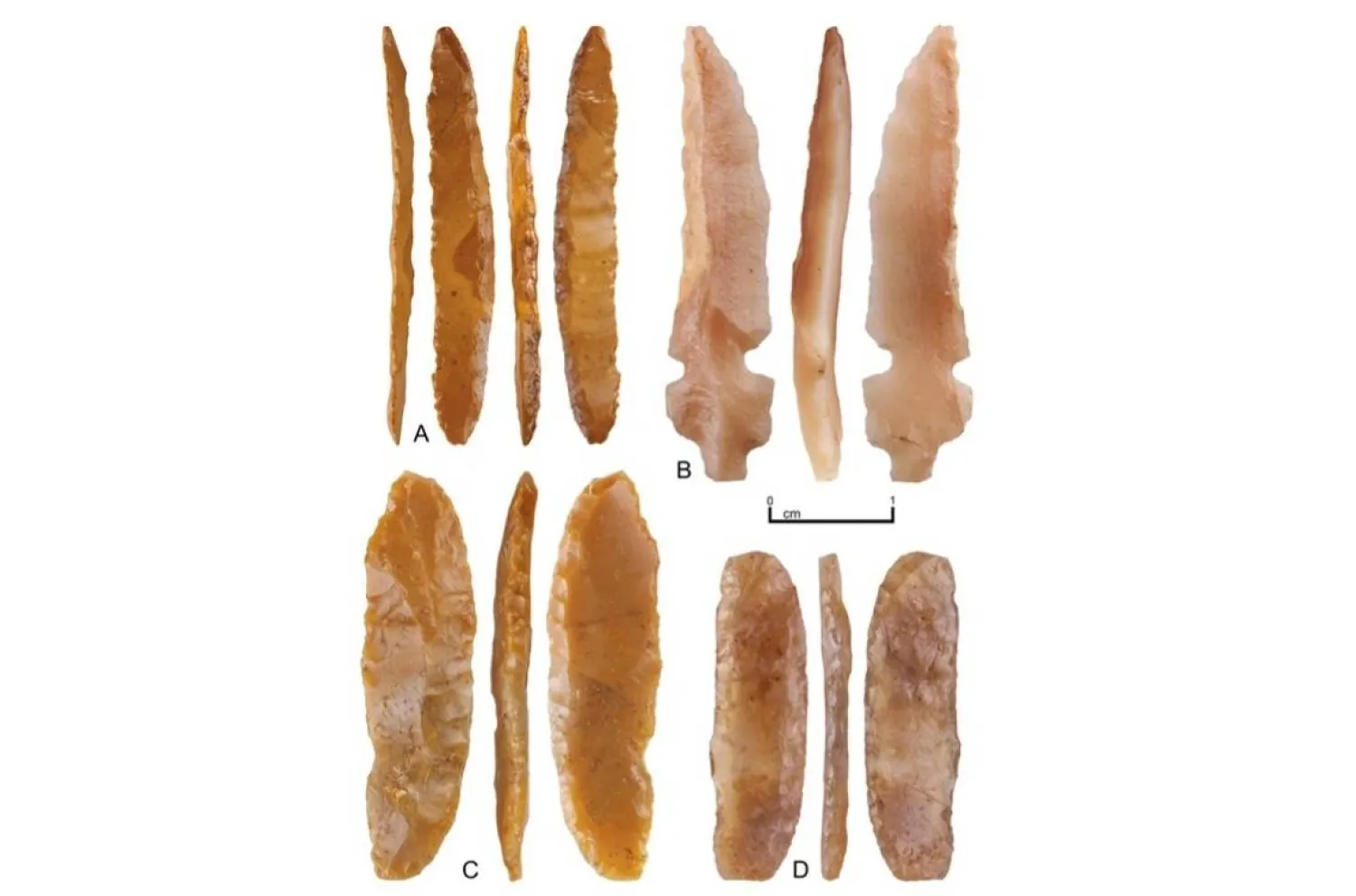
Archaeologists uncovered clear signs of human activity dating back 13,500 years, including distinctive stone tools such as:

  • Helwan bladelets – finely crafted implements used as arrowheads or hunting tools

These tools are closely associated with the Natufian culture, indicating that advanced human groups reached deep into northern Arabia much earlier than previously confirmed.

Growth in the Neolithic Period

A second phase of settlement, dating from about 10,300 to 8,700 years ago, shows:

  • Increased population density

  • More advanced stone tool technologies

  • Discovery of Abu Salem points, sophisticated arrowheads used for hunting

This phase reflects the transition into the Pre-Pottery Neolithic, when human societies became more organized and technologically skilled.

Long-Distance Trade and Mobility

Geochemical analysis revealed that obsidian used at the site originated from Jabal Al-Abyad, located about 190 km away.

This shows that early communities:

  • Traveled long distances

  • Maintained exchange networks

  • Had advanced knowledge of resources and landscapes

Art and Culture in the Desert

The site also revealed a direct connection between daily life and artistic expression. Archaeologists found carving tools alongside rock art depicting:

  • Life-size camels

  • Human figures

This provides one of the clearest timelines linking human settlement with early artistic activity in northern Arabia.

Why This Discovery Matters

These findings transform our understanding of prehistoric Arabia, showing it was not an isolated desert but a dynamic hub of human activity. The discoveries demonstrate:

  • Early adaptation to harsh desert environments

  • Strong cultural links with neighboring regions

  • Advanced technology and social organization

Ultimately, the Sahout site reveals that northern Arabia was a vital crossroads of human history, where innovation, movement, and culture flourished thousands of years ago.


← 2,400-Year-Old Submerged Structures Captured Beneath Turkey’s Dicle Dam WatersAncient star opens window to early days of the universe →
Featured
image_2026-03-16_222009550.png
Mar 18, 2026
Ancient Metal Artifacts With Unknown Origins
Mar 18, 2026
Read More →
Mar 18, 2026
image_2026-03-18_002518866.png
Mar 18, 2026
2,400-Year-Old Submerged Structures Captured Beneath Turkey’s Dicle Dam Waters
Mar 18, 2026
Read More →
Mar 18, 2026
image_2026-03-18_002243247.png
Mar 18, 2026
Northern Arabia Archaeological Site Reveals 13,500-Year-Old Human Settlement
Mar 18, 2026
Read More →
Mar 18, 2026
image_2026-03-18_002037500.png
Mar 18, 2026
Ancient star opens window to early days of the universe
Mar 18, 2026
Read More →
Mar 18, 2026
image_2026-03-18_001657389.png
Mar 18, 2026
Neanderthal prey: elephant teeth preserve 125,000-year-old record of movement and diet
Mar 18, 2026
Read More →
Mar 18, 2026
image_2026-03-18_001431220.png
Mar 18, 2026
Thousands of Ostracons Unearthed in Egypt
Mar 18, 2026
Read More →
Mar 18, 2026
read more

Powered by The archaeologist