Could mammoths have walked among us just 2,000 years ago?
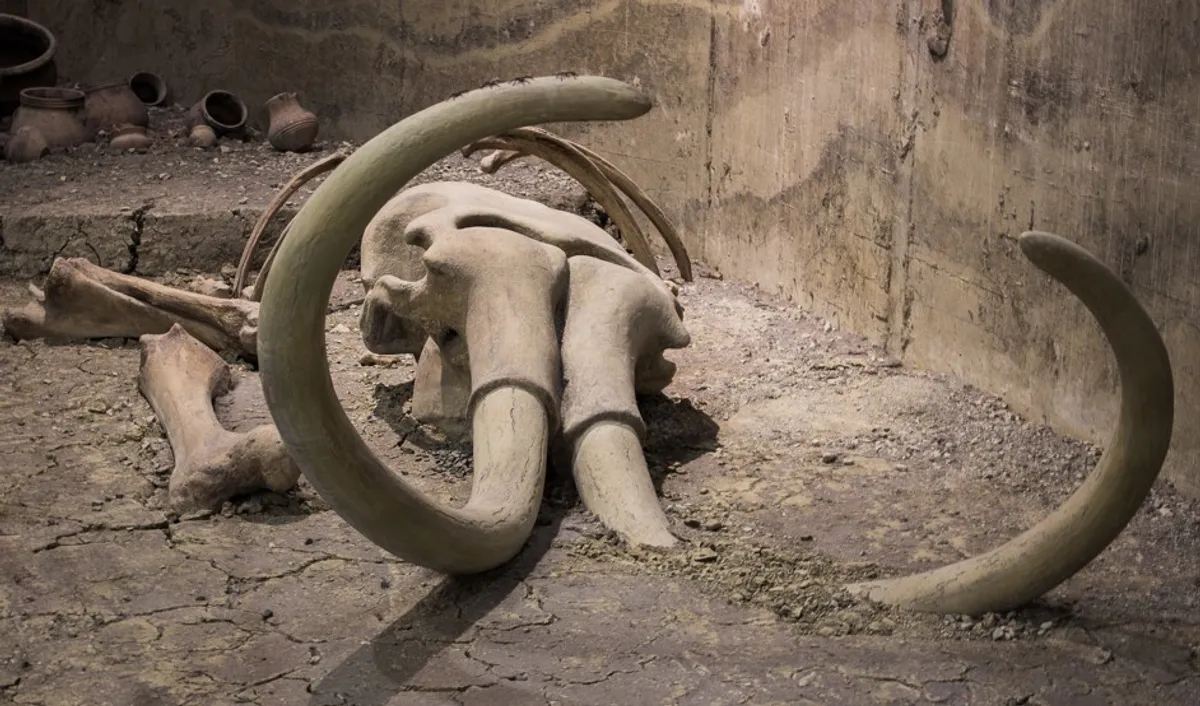
Mammoths disappeared from Beringia 13,000 years ago.
A pair of vertebrae long believed to be woolly mammoth bones from Alaska has been reidentified as whale fossils, overturning decades of assumptions about the region’s prehistoric fauna.
The bones were originally collected in the early 1950s by German explorer and naturalist Otto Geist near Fairbanks, hundreds of kilometers from the ocean. They were cataloged at the University of Alaska Museum of the North as mammoth vertebral plates. In 2022, radiocarbon dating suggested the fossils were between 1,900 and 2,700 years old, an extraordinary result given that mammoths are thought to have gone extinct in interior Alaska around 13,000 years ago.
Skeptical of such a remarkable finding, researchers conducted isotopic and DNA analyses. Nitrogen isotope levels hinted at a marine diet, inconsistent with a land-dwelling proboscidean. DNA testing confirmed the bones actually belonged to a common minke whale and a Northern Pacific right whale. This revelation ended decades of mistaken identity.
The discovery also raised a puzzling question: how did the bones of ocean-going whales end up over 400 kilometers inland? The creek near Fairbanks where they were found could never have supported such large animals, and it’s unlikely scavengers transported them. One theory suggests ancient hunter-gatherers may have carried the bones inland for symbolic or practical purposes, as whale bones were sometimes used in toolmaking , although inland evidence for this practice is sparse.
Another likely explanation involves a museum cataloging error. Geist collected both inland and coastal fossils (from Norton Bay), and the whale bones may have been misfiled with his Fairbanks collection, leading to seven decades of confusion.