A recent study reveals that Roman military officers stationed in Egypt kept pet monkeys imported all the way from India, using them as a display of wealth. This insight comes from the analysis of an ancient animal cemetery containing the remains of dozens of macaques.
The cemetery, located in Berenike on Egypt’s east coast, was first discovered in 2011. Researchers have since excavated nearly 800 burials at the site. Among these, one of the most notable discoveries was a group of 35 monkeys buried just outside the urban area of the ancient port.
Dating of the primate remains places them in the first and second centuries AD, coinciding with the period when high-ranking Roman military officers resided in the region. Bone analysis revealed that most of these primates were Indian macaques, providing the first concrete evidence of live animal trade between India and Roman Egypt.
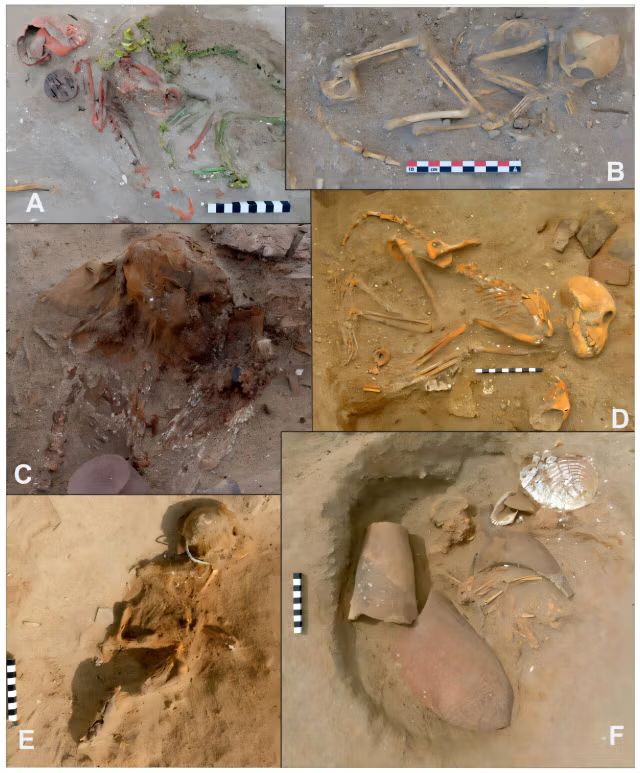
Monkey burials from the Berenike pet cemetery
Archaeologists uncovered additional evidence suggesting that the monkeys were kept as pets by high-ranking Romans. Buried alongside the macaques were objects such as restraining collars, food, and luxury items like iridescent shells. Intriguingly, some monkeys even had their own companion animals, such as piglets or kittens, interred with them.
Approximately 40% of the monkey burials included grave goods, a much higher proportion than observed in the burials of cats and dogs, highlighting “the special status of these primates among other buried companion animals.” Researchers noted that owning monkeys may have served as a symbol of identity and elite status in local Roman society.
However, not all monkeys appear to have been well cared for. Some macaque skulls showed signs of malnutrition, likely due to a diet deficient in fruits and vegetables.
Overall, the discovery provides the most comprehensive evidence yet of Romans in Egypt keeping exotic pets, indicating a resident Roman elite, possibly linked to legionary officers stationed at the harbor, maintained them.