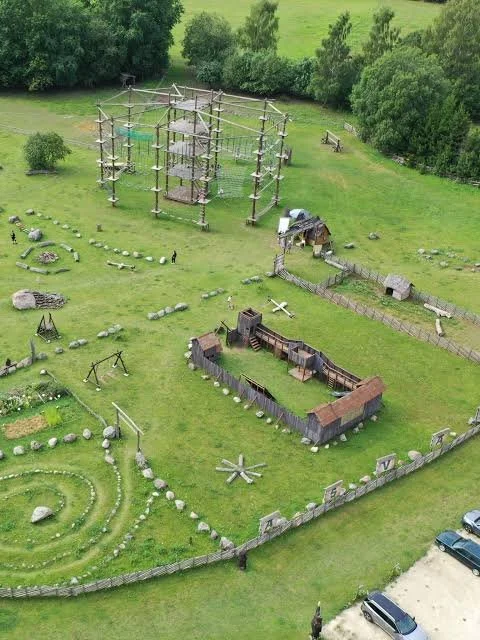
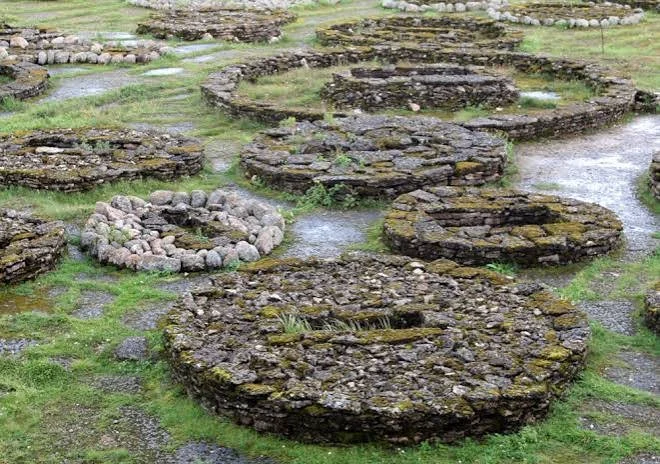
The act of finding treasure is probably more important than when you find that treasure, but treasures found recently tend to be more exciting! Fortunately, we’re not short of stories in that department. The past few years have been exceptionally kind to the world’s treasure hunters - both the amateurs and the professionals - and we’ve collected some of their best stories for you in the making of this video!
What a Camera Captures in Mexico Shocked the Whole World
Mexico is truly an amazing place full of beauty, wonder, and maybe a bit of danger. You could catch a picture of lightning bolt over a pyramid, or maybe find a rare exotic fish! There’s even a chance you’ll stumble upon a cursed omen or a secret cave. Whatever surprises you might find, be sure to look out for these 15 Shocking Things Recently Discovered in Mexico!
Archaeologists In Egypt Made A Startling Discovery That Could Unlock The Secrets Of Mummification
Deep beneath an ancient Egyptian burial site, a team of archaeologists are exploring tombs that were first excavated over a century earlier. This time around, though, they discover something truly incredible: an all-too-rare insight into the enigmatic process of mummification. Yes, the find promises new revelations about the methodology behind this mysterious and long-forgotten rite.
The Most Strange And Dangerous Victorian Era Beauty Trends
In this video, we'll be taking a look at the bizarre and often dangerous beauty practices that were popular during the Victorian era. From toxic cosmetics to painful fashion choices, the Victorians were willing to go to great lengths to achieve the perfect appearance. So buckle up, because we're about to dive into the weird and wild world of Victorian beauty trends!
The Mysterious Horned Helmets of Bronze Age Europe
Figures wearing horned helmets are depicted in Scandinavian rock art, on stelae in the Iberian Peninsula, and menhirs on Corsica. And horned helmets feature on statuettes from Zealand, Sardinia, and Cyprus, on wall decorations of the Sea People on reliefs in Egypt before the Bronze Age collapse, and on the Mycenaean Warrior Vase.
Clearly, horned helmets were widely distributed during this period of the Bronze Age.
But why? What do they mean? And are they connected in some way?
In this video we’re taking an epic voyage through the European Bronze Age in the 12th century BC from Scandinavia to the Iberian Peninsula and across the Mediterranean to the east in search of the horned helmets of traders, warriors, kings, and gods.

Theories on The Spread of the Indo-Europeans
The question of how the Indo-European languages spread across vast regions of Europe and Asia remains one of the most intriguing and debated topics in historical linguistics and archaeology. Greek, Latin, Persian, and Sanskrit are just a few of the numerous Indo-European languages that make up a family with common linguistic characteristics. Understanding the spread of these languages is crucial to deciphering the movements and influences of the people who spoke them. This article delves into various theories proposed to explain this enigmatic dispersion, each contributing a unique perspective to our understanding of ancient human migrations.
The Steppe Hypothesis
Perhaps the most widely accepted theory is the Steppe Hypothesis, also known as the Kurgan Hypothesis, proposed by Lithuanian-American archaeologist Marija Gimbutas in the 1950s. This theory suggests that the Proto-Indo-European language (PIE) originated in the Pontic-Caspian steppe, the vast grassland stretching from the Black Sea to the Caspian Sea, around 4000–3000 BCE. The speakers of PIE, identified with the Kurgan culture, are thought to have spread their language through a series of migrations and cultural diffusions. Key to this hypothesis is the domestication of the horse and the invention of the wheel, which significantly increased mobility, allowing for the rapid expansion of these Indo-European speakers.
The Anatolian Hypothesis
In contrast, the Anatolian Hypothesis, put forward by Colin Renfrew in 1987, posits that the diffusion of Indo-European languages was a result of the spread of agriculture from Anatolia (modern-day Turkey) around 7000–6000 BCE. This theory suggests a much earlier dispersal, tied closely to the Neolithic Revolution. Proponents argue that as agriculture spread into Europe, so too did the languages of the Anatolian farmers, gradually replacing the languages of the hunter-gatherer communities in Europe.

The Armenian Hypothesis
Gamkrelidze and Ivanov proposed the Armenian Hypothesis in the 1980s, which is another intriguing theory. This theory suggests that the Indo-European languages originated in the Armenian Highlands around 4000 BCE. This theory contends that the development of the Proto-Indo-European culture, which the Kurgan Hypothesis identifies, took place as these early speakers migrated to the Balkans and then onto the Pontic steppe.
The Out of India Theory
A less widely accepted but still noteworthy theory is the Out of India Theory. Proponents of this view argue that the Indo-European languages originated on the Indian subcontinent and spread westward. This theory is based on the premise that the Indo-European languages show signs of a common origin with the ancient languages of India, such as Sanskrit. However, this theory faces significant challenges, particularly in the form of genetic evidence and the archaeological record.
The spread of the Indo-Europeans remains a topic of considerable debate and fascination. Each theory offers a unique lens through which to view the movements of these ancient peoples. The Steppe Hypothesis currently enjoys widespread support among scholars, primarily due to genetic evidence and its alignment with archaeological findings. However, the debate is far from settled, and ongoing research in genetics, archaeology, and linguistics continues to provide new insights into this complex historical puzzle. Understanding the spread of the Indo-Europeans is not just an academic exercise; it is a quest to uncover the roots of many modern cultures and languages, a journey that takes us back to the dawn of civilization.
When Europeans Were Slaves: History Of The Barbary Slave Trade
The Barbary Slave Trade thrived off piracy in the Mediterranean. Pirates operated off the coast of North Africa preyed on European coastal settlements and ships; enslaving Europeans who were subsequently brought back to port cities in Morocco and Algeria among other places. Historians have speculated that from the 16th to the early 19th century, as much as 1 million Christian Europeans were enslaved by the Barbary pirates.
"Unbreakable Alien Ring" Found In Geode? (Among Others)
There has been a wealth of documented artifacts found within very ancient sediments, coal seams, minerals and even stones. Watch the video to find out more!
The Hell where Youth and Laughter go - WWII German cemetery exhumation
A hundred and fifty two German soldiers killed on the Eastern Front are exhumed from a village cemetery where they had been lying in unmarked and forgotten graves since 1945. Of note were two bodies with amputations, some bodies with splints and tourniquets, bodies with severe war wounds, numerous ID tags as well as a few wedding or military rings. The bodies were exhumed in order to be reburied in a large centralised German military cemetery under the care of the Volksbund.
Archaeologists Were Digging In The Heart Of Rome When They Unearthed A Mysterious Marble Head
Archaeologists in the heart of Italy’s culture-rich capital are about to excavate a new structure. In fact, they’re planning to hack away at a wall that dates back to the latter part of the medieval period. But before they begin, they notice something. There’s a section of this construction that stands out – and once uncovered, its wonders will be fully revealed.
Impressive Desert Discoveries That Will Shock You
In today’s video we will investigate impressive desert discoveries. Watch the video and enjoy!
The Worst Punishments Throughout Human History
These are the Worst Punishments Throughout Human History that have been inflicted on human beings. Some of these methods of punishment are so brutal and inhuman, it's hard to believe they were ever used. Watch the video for more!
Incredible well preserved baby mammoth discovered in Canada
In the video below we will talk about well preserved baby mammoth that got discovered in Canada. Enjoy!
Physicists Claims That Advanced Civilizations Have Been Leaving Us Message In This Region Of Space
Physicists claims that advanced civilizations have been leaving us message in this region of space. Today, we take a look at what this physicists revealed is in the stars.
Space has often been called the final frontier. Its wonders have spawned entirely new branches of science for centuries. And despite everything we know about the galaxies, nebulae, and supernovae that surround us, discoveries can still be made every day. What we have learned about our final frontier has told us more about our past, present, and future, setting our greatest minds to work, daring them to go further and tell us more about the mysteries of our universe.
A 110 Million Year Old Dinosaur Mummy Has Just Been Found! What Have Archaeologists Found?
The mighty dinosaurs ruled our earth for 170 million years. Although the era of primeval giants is long over, new fossil discvoeries keep giving us spectacular insights into the age of the giant lizards. Today we would like to open the door to days long past with you and take a close look at some unique dinosaur discoveries from the recent past!
Epikratis' tombstone was repatriated to Greece from the UK
The pedimented tombstone, work of an Attic workshop of the 4th c. BC, it is made of white fine-grained Pentelian marble.
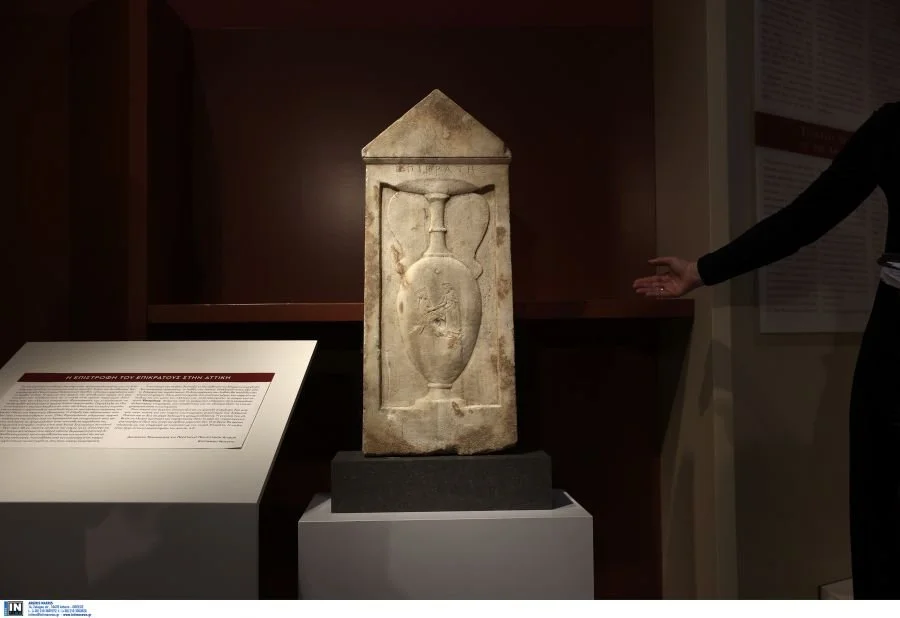
At the Epigraphic Museum was presented nine days ago by the Greek Minister of Culture and Sports, Lina Mendoni, a tombstone, which had been identified in an auction list in the United Kingdom and was repatriated.
As the Minister of Culture and Sports Lina Mendoni said, "The Ministry of Culture, especially in recent years, attaches great importance to the repatriation of any cultural asset that is inextricably linked to our homeland. This is a policy which the Archaeological Service follows consistently and systematically, with a commitment to the repatriation of antiquities, which has yielded very important results.

There is no universal rule to be followed for all repatriation cases. Each case of return and repatriation of cultural property is separate and dealt with ad hoc. Every ancient work of art, which is illegally located outside the Greek Territory, must be examined with the relevant data available to the Service. In this particular case of the stele, the documentary material was there and the stele was returned exactly one year. Other claims often do not have a happy ending, precisely because there are not the necessary elements that document the origin and the illegal act per se. Each case requires a separate treatment. I want to thank the Directorate of Documentation and Protection of Cultural Property for its contribution to all repatriations without exception and I wish that next year we will have even more returns of cultural property and successes for the Ministry and its Services".

As stated by the head of the Directorate of Documentation and Protection of Cultural Properties Vasso Papageorgiou, "The marble inscribed tombstone of the 4th c. BC, which ends in a simple triangular pediment, had been identified in the Christie's online auction catalog, scheduled for December 8, 2021. During the control of this particular auction by the competent Department of the DTPPA, it was identified by an archaeologist of the Department, the column was classified as suspicious. After a check, it was found that the tombstone of the auction was a product of illegal trafficking from the Greek Territory, as it is identical to an object that appears in three photographs directly connected to antiquarian activity, from a confiscated photographic file (Bekina file) that is in the possession of the Service from in 2006. However, the most important element, decisive for its assertion with claims, was the fact that the inscribed tombstone is included in the list of movable monuments for which, based on the 2017 Decision of the Fourth Five-Member Court of Appeal of Athens, which became irrevocable in 2020, the antiquities dealer G.B. has been declared guilty because he illegally appropriated them".

Following many months of discussions between the representatives of the Auction House, who were also designated as representatives of the alleged owners, and the Greek side represented by the Police Association of the Greek Embassy in London, Mrs. Elizabeth Toufa, and with the assistance of the Art and Antiques Unit of the Metropolitan Police and of course the instructions of the YPPOA through the DTPPA, the owners of the column agreed to hand it over to the Greek State voluntarily.

The pedimented tombstone, the work of an Attic workshop of the 4th c. BC, it is made of white fine-grained Pentelian marble. It is 88 cm high, 37-35 cm wide and 10 cm thick. It is crowned by a free triangular pediment that once bore a painted floral decoration. A horizontal written band also demarcated the rule of the pediment at the base of the epitaph. The transition from the crown to the body of the column is achieved with an Ionic wave, which was also painted.
On its body, a relief bath-amphora dominates within a rectangular partition, the handles of which are completed outside the partition of the representation. The details of the handles would also be rendered in color. Above the vase, in the upper part of the body of the column and in the middle of its width, the name of the deceased is engraved: Epikratis. Between the letters there are traces of letters of an older inscription, which was scraped off to facilitate the reuse of the monument.

On the belly of the vessel two figures are depicted in low relief in the gesture of reception typical of funerary iconography. They both step on a shallowly carved ground line. The woman seated in a reclining position to the left of the scene shakes hands with a young barren robed man standing in front of her. The man should, according to the inscription, be identified with the dead Epikratis.
12 Mоst Ancient Archaeological Discoveries Scientists Still Can't Explain
Our ancient ancestors didn’t deliberately go around leaving puzzles for us to find thousands of years later - as amusing a thought as that might be. Instead, we simply don’t have the relevant knowledge to properly understand some of the things that they left behind. There are countless mysterious objects and places all over the world that scientists, palaeontologists and archaeologists have never quite solved the riddles of - and we’re about to see some of them here.
5 Out Of Place Artifacts That Will BLOW Your Mind
Out-of-place artifacts also called part, are very interesting because they are found in a place or time that doesn't fit with what we know about history. People are fascinated by things that shouldn't be possible, and interest is always high when we don't understand something.
The more we learn about our place's artifacts, the less we know. It's an exciting discovery that leaves us with more questions than answers. Make sure you watch the video below to get intrigued!
Archaeologists May Have Found the LOST TOMB of Queen Cleopatra
For over 1,000 years, Queen Cleopatra’s tomb has eluded every expert in the field of archaeology. The list of places that it could be are small. But despite this, no one has managed to pinpoint its exact whereabouts. But some people today believe they may be on the trail to uncovering one of history's greatest mysteries.
The Most Mysterious Angels & Demons
In today’s video we will talk about the most mysterious angels and demons of history. Watch the video below and enjoy!