Introduction
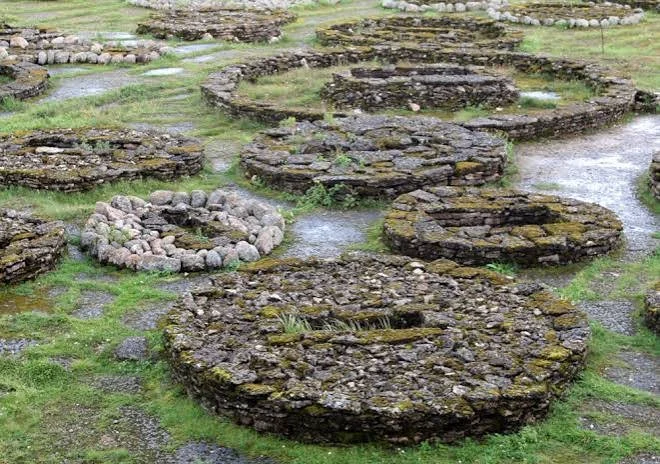
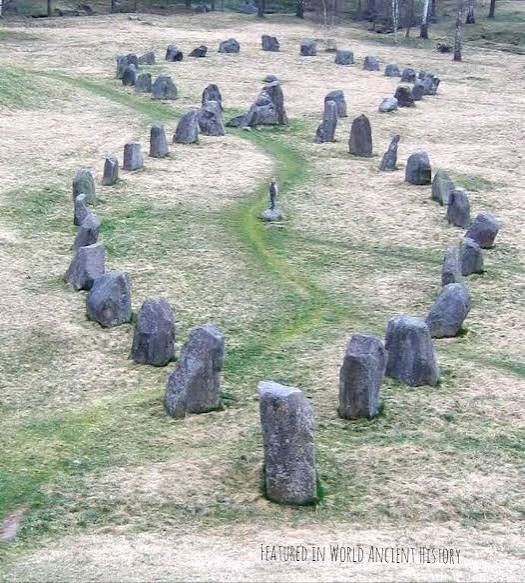
The cemetery at Vendel in central Sweden is one of the most important archaeological sites for understanding the society that existed immediately before the Viking Age.
Its boat burials, richly equipped graves, elaborate helmets, weapons, shields, riding equipment, and imported objects reveal an elite culture of extraordinary complexity.
The cemetery is particularly significant because it provides a bridge between the Migration Period and the Viking Age.
The people buried at Vendel lived in a society characterized by long-distance connections, warrior aristocracies, specialized craftsmanship, and increasingly sophisticated political organization.
The Vendel Period
The archaeological period known as the Vendel Period generally dates from approximately the sixth to eighth centuries CE.
It precedes the Viking Age.
The period witnessed major developments in Scandinavian political organization and material culture.
Warrior elites became increasingly prominent.
Long-distance trade expanded.
Animal-style art became highly sophisticated.
Weaponry and protective equipment became increasingly elaborate.
Vendel cemetery provides some of the clearest archaeological evidence for these developments.
Boat Burials
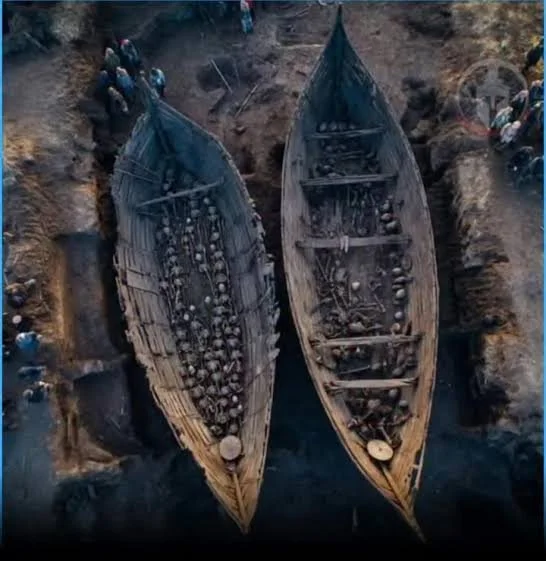
One of the cemetery's most famous features is its boat burials.
The deceased were placed in boats together with equipment representing their social identity.
Boats were more than transportation.
They were symbols of mobility, wealth, warfare, and status.
A boat burial could therefore communicate that the deceased belonged to a powerful maritime culture.
The practice also anticipated the famous Viking Age ship burials found elsewhere in Scandinavia.
Warrior Equipment
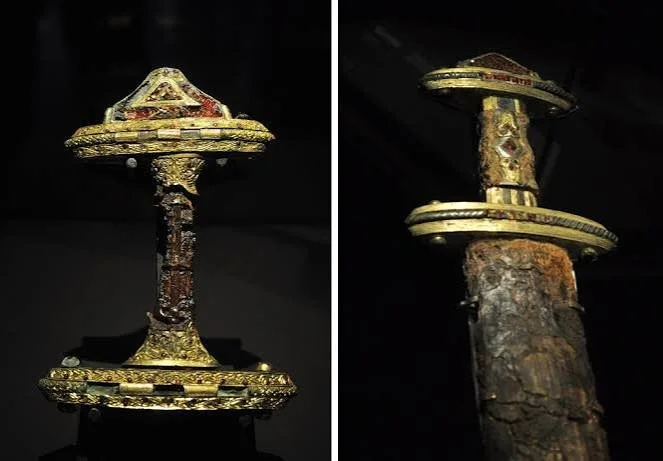
The graves contained extraordinary quantities of military equipment.
Among the objects were:
swords;
spears;
shields;
helmets;
axes;
riding equipment;
decorated fittings.
These objects demonstrate that warfare was central to elite identity.
However, the presence of weapons does not mean that every buried individual was simply a battlefield warrior.
Weapons could also function as symbols of rank.
They communicated social status, authority, and membership in an elite warrior culture.
The Famous Helmets
Vendel is particularly famous for its helmets.
These helmets were technologically sophisticated objects consisting of multiple components.
They offered protection while also serving as displays of prestige.
Some featured decorative elements associated with animals and mythological imagery.
The helmet therefore combined practical military technology with symbolic communication.
A warrior entering battle could be physically protected while simultaneously presenting an unmistakable statement of identity.
Shields and Defensive Equipment
Shields were another important element of the burials.
Shield boards were usually constructed from wood, while bosses and fittings were made of metal.
The metal components often survived archaeologically even when the wooden shield disappeared.
Decorated fittings reveal the importance of craftsmanship.
A shield was both a weapon of defense and a visible component of warrior identity.
Horses and Elite Mobility
Some burials included riding equipment.
Horses represented more than transportation.
In elite society, ownership of horses could symbolize wealth, mobility, and social status.
Mounted movement allowed elites to travel between settlements and political centers.
Horses could also play roles in warfare and ceremony.
The inclusion of riding equipment in graves therefore reinforces the impression of a socially powerful warrior aristocracy.
Animal-Style Art
Vendel's objects are famous for their intricate animal ornamentation.
Intertwined creatures, gripping beasts, serpentine bodies, and stylized animals cover many objects.
This artistic tradition is characteristic of Scandinavian elite culture during the period.
The imagery was not merely decorative.
Animals could have symbolic meanings connected with strength, supernatural protection, mythology, or elite identity.
Because written explanations are limited, archaeologists must reconstruct meaning through comparisons between artifacts and later Scandinavian traditions.
International Connections
Vendel's archaeological material demonstrates that Scandinavian elites participated in international exchange.
Some objects or materials show connections with regions beyond Sweden.
Trade routes crossed the Baltic Sea and connected Scandinavia with eastern and western Europe.
The presence of imported goods demonstrates that elite power depended partly upon access to international networks.
Luxury objects could be acquired through trade, diplomatic exchange, warfare, or gift giving.
Burial as Political Performance
A wealthy burial was a public statement.
Funerals allowed communities to display the status of the deceased.
The amount of labor required to construct a grave and prepare its equipment could reinforce the family's prestige.
The ceremony itself could include feasting, ritual activity, speeches, and displays of wealth.
The dead could therefore become instruments through which living elites negotiated social power.
What the Graves Tell Us About Society
Vendel demonstrates that Scandinavian society was highly stratified.
Some individuals possessed enormous quantities of valuable equipment.
Others must have lived far more modestly.
This inequality likely reflected differences in wealth, political authority, military influence, and access to trade.
The cemetery therefore provides archaeological evidence for the emergence of elite institutions that later became characteristic of Viking Age kingdoms.
The Connection to the Viking Age
The similarities between Vendel and Viking Age burials are striking.
Boat burials, warrior equipment, animal-style art, imported goods, and elaborate funerary displays all continued into the Viking Age.
The Viking world did not appear suddenly in the late eighth century.
Many of its cultural foundations were already developing during the Vendel Period.
Vendel therefore helps archaeologists understand the Viking Age as part of a longer process.
Conclusion
Vendel Cemetery is one of Scandinavia's great archaeological windows into the centuries before the Vikings.
Its boats, helmets, weapons, shields, horses, and ornamented objects reveal an elite society in which warfare, mobility, craftsmanship, religion, and political authority were closely interconnected.
The graves demonstrate that Viking Age culture had deep roots.
Long before Scandinavian raiders appeared in the chronicles of western Europe, elite communities in Sweden were already constructing sophisticated military identities, maintaining international connections, and expressing their status through extraordinary material culture.
Vendel is therefore not simply a cemetery.
It is evidence for the world that created the Vikings.