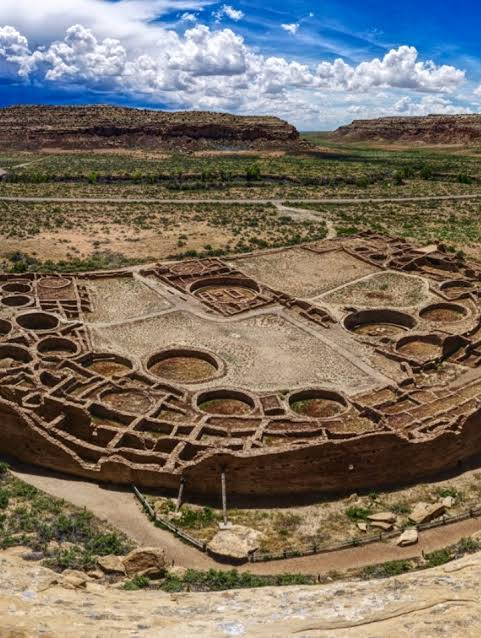
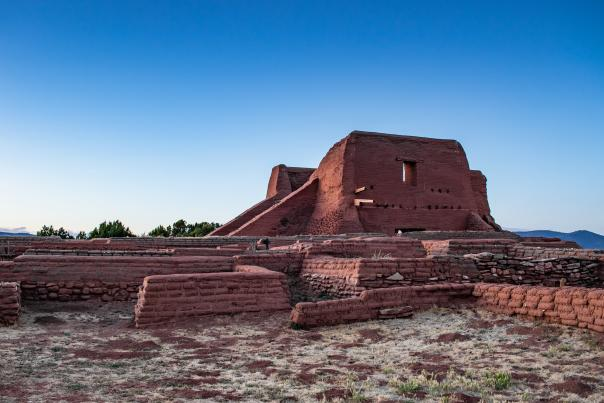
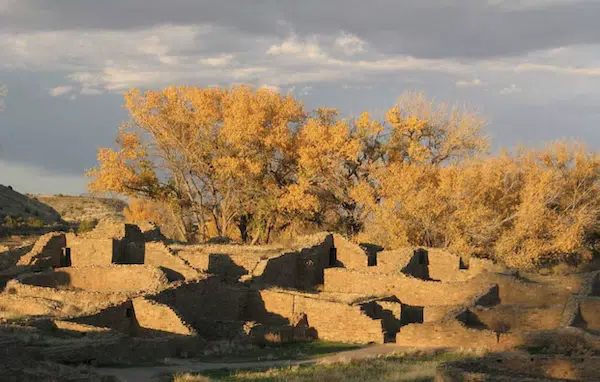
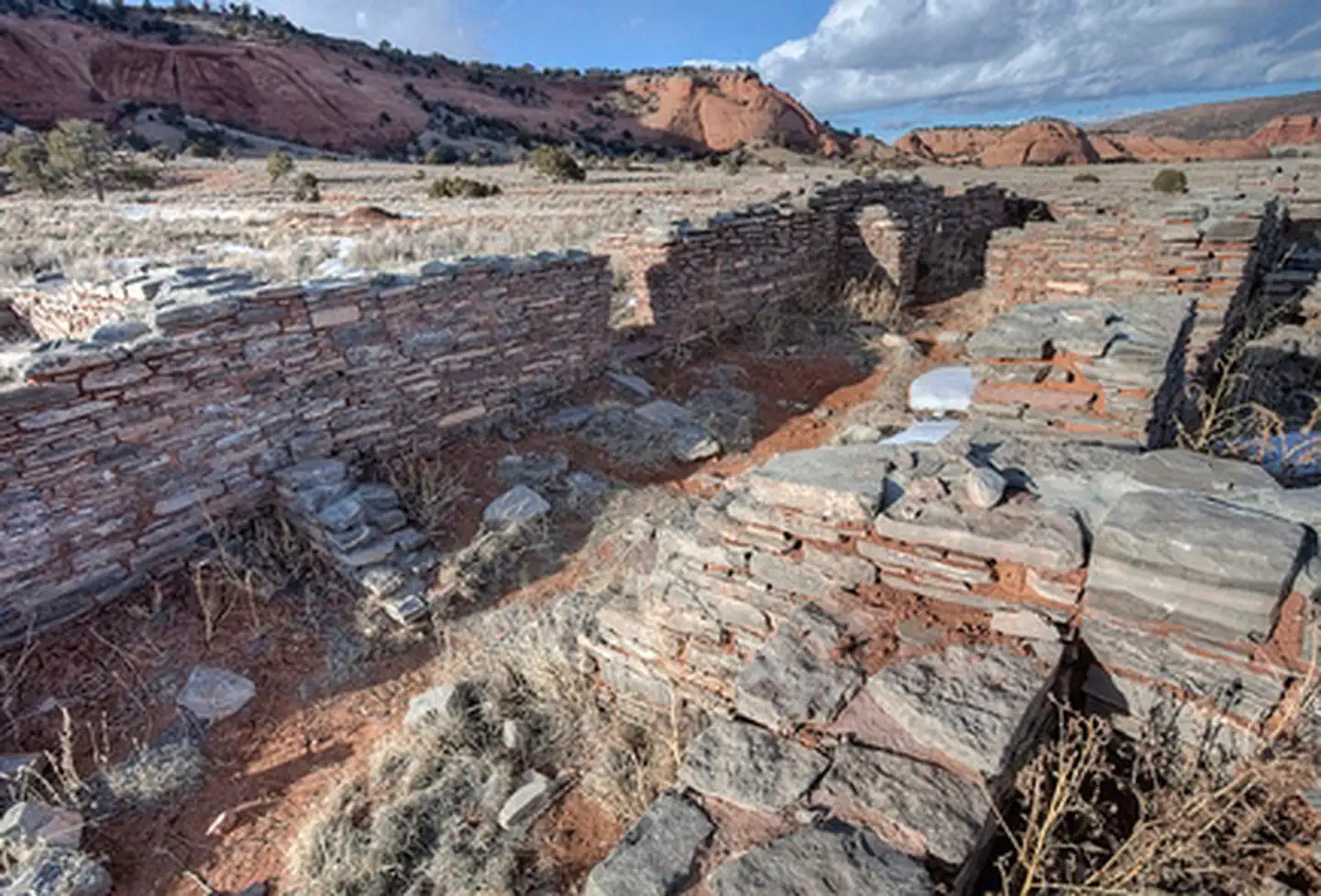
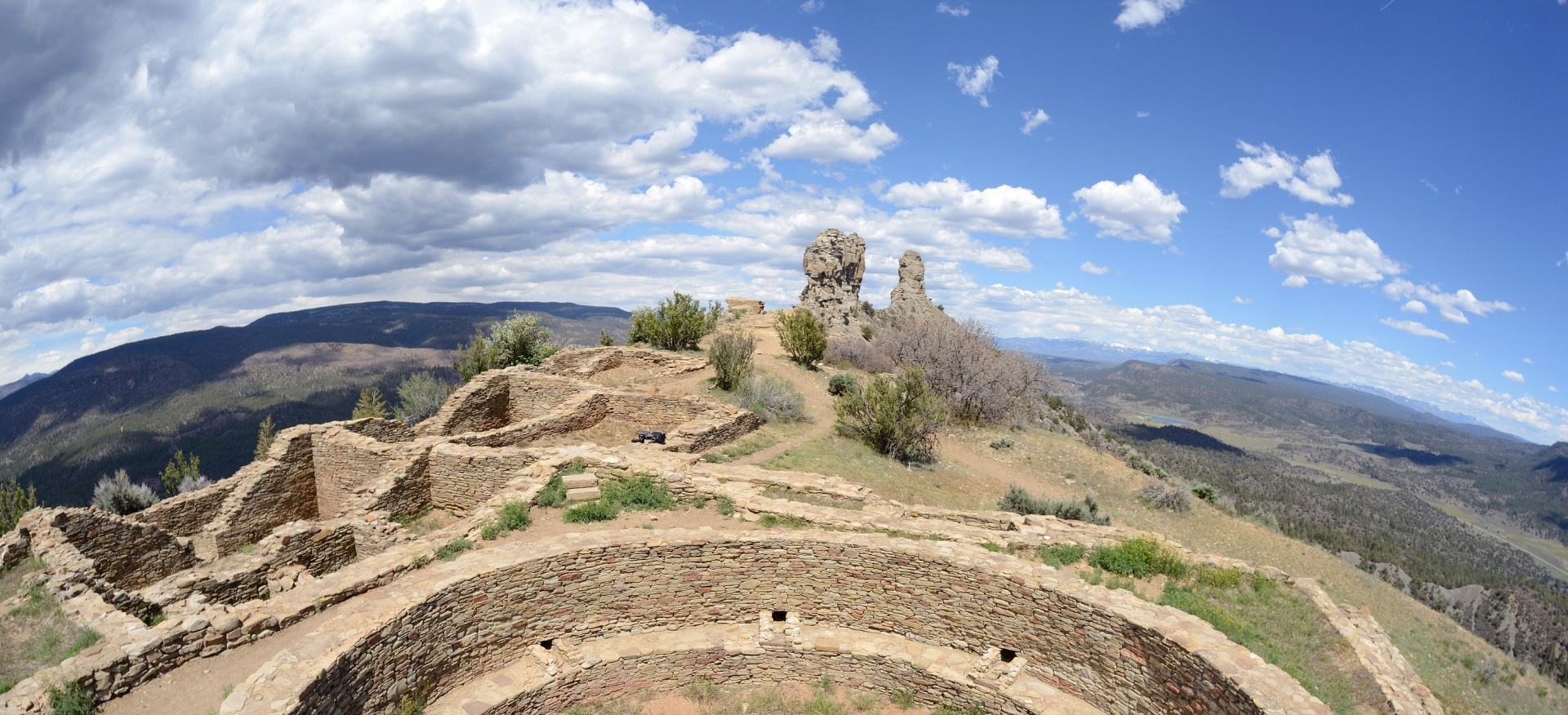
In the video below we will be exploring ancient places that seem to be straight out of a fairy tale. Enjoy!
12 Most Mysterious Archaeological Finds Scientists Still Can't Explain
It’s sometimes said that the last person to exist who knew literally everything there was to know at the time they were alive was Aristotle, and that was 2300 years ago. In truth, even Aristotle probably didn’t know everything - nobody does. That goes for experts as well as people who have a casual interest in things, and it’s often true of archaeologists. Putting together the pieces of the past can be a real puzzle - and this video proves it!
Archaeologists Have Just Unearthed The Earliest Copy Of History’s Most Famous Epic Poem
Ancient Greece was one of the most important civilizations in European history. One of its more significant sites was at Olympia, where archaeologists have been excavating for over a century. Today, they’re still finding priceless artifacts – and they’ve recently discovered something that may shed light on one of Greece’s greatest poems.
Prepping a 180 million year old Yorkshire ammonite [fossil prep time-lapse]
In the video below we will be prepping a 180 million year old Yorkshire ammonite. Enjoy!
20 Ancient Cults With Gruesome Rituals That Wouldn’t Ever Fly Today
Throughout history, wherever there have been cults, there have been rituals. But certain groups of the past took their rituals to the extreme. We’re not just talking about your average sacrifices, either. Think playing ball games to the death, using internal organs to predict the future, and hanging human limbs from trees. As it turns out, human history is littered with gruesome rites and ceremonies that would be totally unacceptable in today’s world. Here are the most fascinating.
Monsters of Celtic Mythology
Some of the most frightening and disturbing creatures ever imagined come from stories told in the British Isles of England, Scotland, Ireland, and Wales. From the Banshee to cries at the arrival of death, to the forever hunted Questing Beast. This program will cover a handful of the most dreadful, most mysterious, and most mischievous creatures and monsters of Celtic mythology!
Mysterious Advanced Ancient Knowledge
In the following video we will be discussing about mysterious advanced ancient knowledge. Watch the video to find out more!
Kerma: The Ancient African Kingdom
Kerma was the capital of one of the earliest Kingdoms in Africa and is a huge display of a unique and rich culture. The Kerma region is in the center of the Nubian Civilization, and spanned from the first to the sixth Nile cataracts and was located in present day Northern Sudan and Southern Egypt. Kerma Kingdom was established in around 2500 BCE, a couple of centuries after ancient Egypt. The City at it's peak rivalled the neighboring Kingdom of Egypt in it's extension. Their relations were always bittersweet as they experienced great moments where they traded and exchanged a lot of culture, while at other times, the Kingdoms went to war with each other.
Kerma is a very important civilization in the world, though very little is known about it.
The Creepy Anglerfish Comes to Light. (Just Don’t Get Too Close.)
Few wonders of the sunless depths appear quite so ghoulish or improbable as anglerfish, creatures that dangle bioluminescent lures in front of needlelike teeth. They are fish that fish.
Typically, the rod of flesh extending from the forehead glows at the tip. Anglerfish can wiggle the lure to better mimic living bait. Most species can open their mouths wide enough to devour prey whole, using their fangs not only as daggers but as bars of a cage. Some can open their jaws and stomachs so wide as to trap victims much larger than themselves.
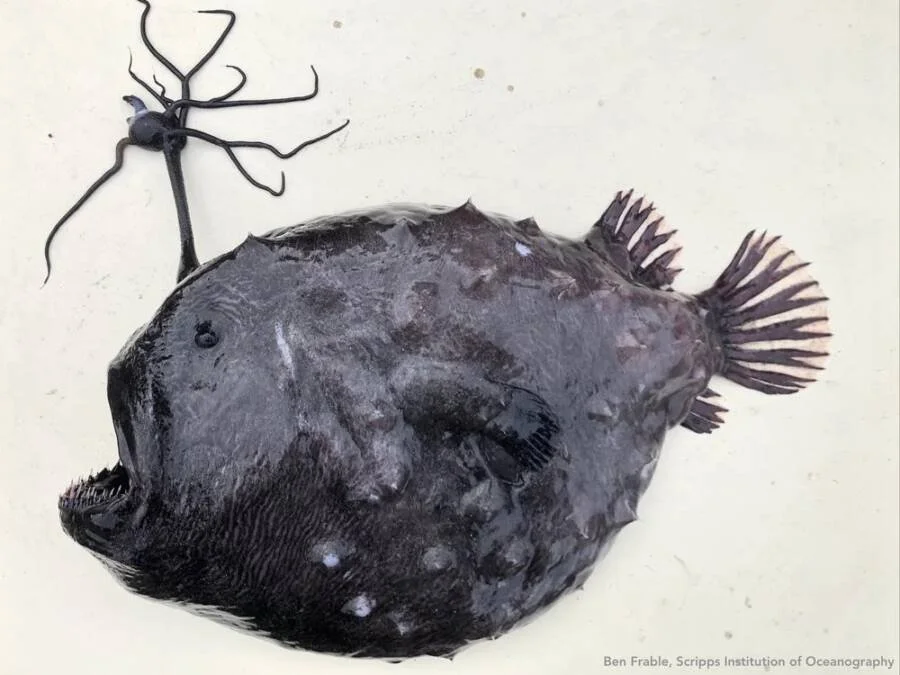
Anglerfish came to the attention of science in 1833, when a specimen of the bizarre fish — a female — was found on the shores of Greenland. Since then, scientists have learned most of what they know by pulling dead or dying specimens from nets. Lifestyle clues have been sparse.
That is changing. In the past two decades, deep-sea explorers have begun to catch glimpses of the creatures in their own habitats, and have recorded with video cameras a range of surprising behaviors. In a first, a recent expedition off the Azores caught sight of a female and her tiny parasitic mate locked in a procreative embrace.
“It was amazing,” Theodore W. Pietsch, an emeritus professor at the University of Washington in Seattle and a world authority on anglerfishes, said of the video. “They’re glorious, wonderful things that need our attention, and our protection.”
In 2014, Bruce H. Robison, a senior marine biologist at the Monterey Bay Aquarium Research Institute in California, caught sight of an anglerfish known as the black seadevil while exploring the deep bay, and managed to record minutes of its enigmatic swimming.
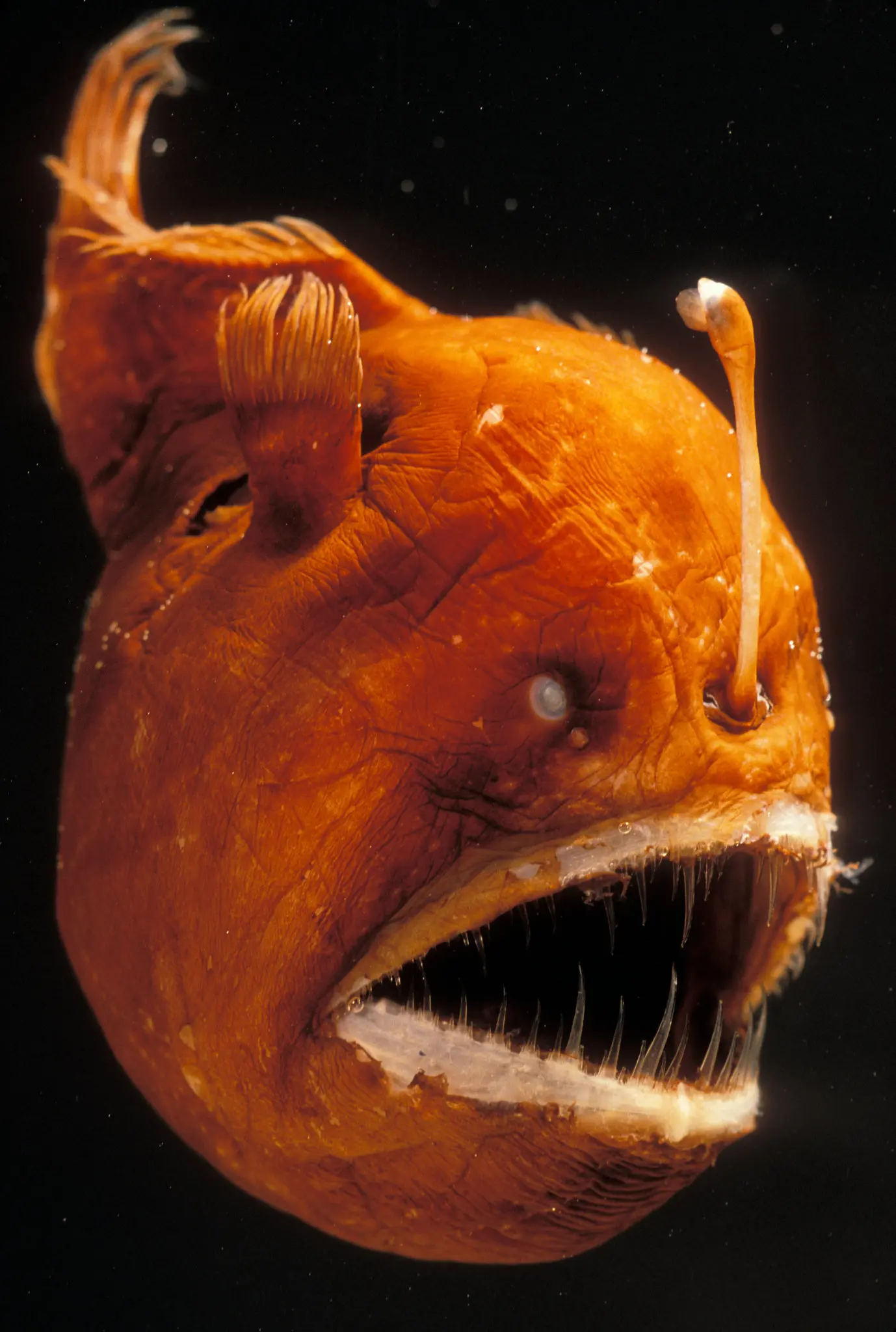
“Instead of examining dead fish, we’re now doing behavioral studies,” he said in an interview. “It’s a significant transition.”
Many kinds of anglerfish inhabit the ocean. But most attention goes to deep-sea variety. So far, scientists have identified 168 species of the strange, elusive fish.
The new videos add otherworldly drama and insights to a sparse but fascinating body of existing knowledge. In his 1964 book “Abyss,” Clarence P. Idyll, a fisheries biologist at the University of Miami, said the rod tips could glow in yellows, yellow-greens, blue-greens and oranges tinged with purple.
“Deep-sea creatures must find these colored lights irresistible as they flicker and flash faintly in the dark waters,” he wrote.
Speciation has produced a great diversity of protruding lights and rods. Some anglerfish have a long barbell extending from the lower jaw as well as a rod above. One species, Lasiognathus saccostoma, bears not only a movable rod but extending from it a line, a float, a lighted bait and three hooks. The hooks, Dr. Idyll wrote, “are, alas, not actually for catching prey” but simply ornamental.
Anglerfish, he noted, are “rarely as large as a man’s fist.” But one specimen, from a depth of 2.2 miles off West Africa, was a foot and a half long. It was also unusual in having its glowing bait conveniently located inside its enormous mouth.

The largest known deep anglers are the warty seadevils. The females typically run about two-and-a-half feet long, and free-swimming males less than a half inch.
The examination of stomach contents has revealed that anglers eat shrimplike animals, squids, worms and lanternfish, a common type of deep-sea fish with large eyes and a highly developed visual system that apparently can detect colors.
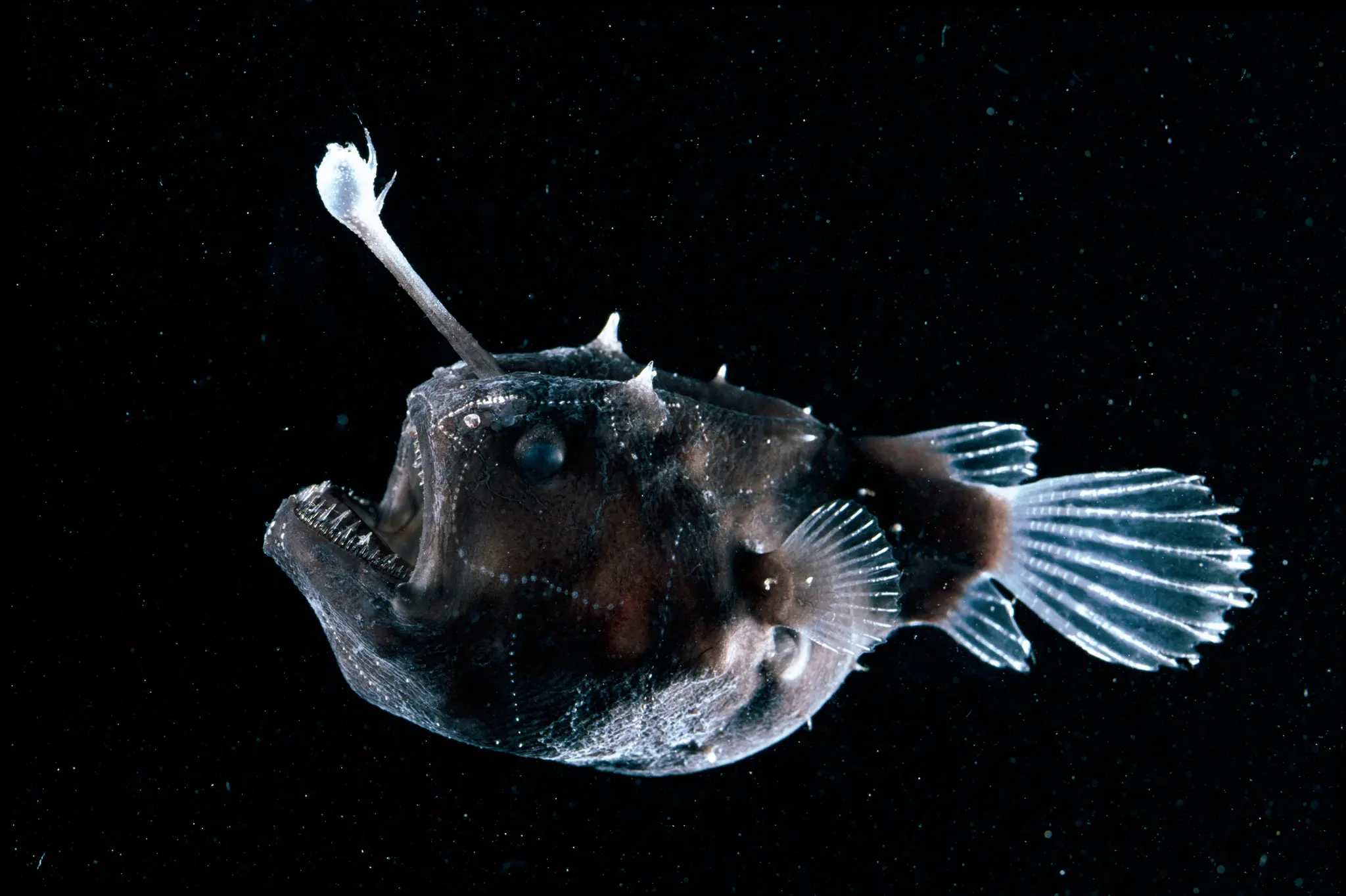
When an anglerfish suddenly opens its giant mouth, Dr. Idyll wrote, the resulting suction pulls in the luckless victim. After the jaw slams shut, small teeth on the floor of the mouth and throat deliver the meal to the fish’s belly.
Caught on video
The first undersea video recordings of the creatures were made in 1999, and caught a surprise. Scientists from the Woods Hole Oceanographic Institution on Cape Cod, Mass., had set up an undersea observatory in the North Pacific between California and Hawaii. It lay more than three miles down.
A seven-foot-long tethered robot named Jason was lowered to survey the surrounding area. Soon, its operators were startled to see a fish drifting in the bottom current upside-down, with its extremely long rod hanging downward in a graceful, forward-arching curve. Unexpectedly, they found two other fish similarly upended.
Jon A. Moore, a fisheries biologist at Florida Atlantic University, identified the creatures as whipnose anglerfish, although of an unknown species. In a 2002 paper, he wrote that they apparently were looking for prey by trolling over the muddy seabed with glowing bait. Visible just below the fish, he noted, were “numerous small burrows.”

In an interview, Dr. Moore said the video represented “the first time anyone had seen” any kind of whipnose in its own dark habitat. He added that, despite the intervening years, the question of what the fish were pursuing on the Pacific floor remains a mystery.
The Monterey research institute — in Moss Landing, Calif., at the midpoint of the bay shoreline — was established in 1987 by David Packard, the billionaire co-founder of Hewlett-Packard and a creator of Silicon Valley. It has built generations of increasingly smart, fast robots that probe the nearby waters.
In 2005, nearly a mile deep in the waters off Monterey, institute scientists were flying a tethered robot when they tracked an angler for a record 24 minutes. The resulting paper, by Dr. Pietsch and another University of Washington scientist, detailed a series of behaviors, from swimming bursts to long bouts of drifting.
Overall, they wrote, their observations supported the theory that “these animals are lethargic, lie-and-wait predators.”
The range of known behaviors grew larger when institute scientists probed seamount chains west of the Monterey Canyon. Expeditions in 2002 and 2010 videotaped odd anglers with a bulbous body, a shaggy lure and fins that the fish used to walk along the rocky seabed. The scientists speculated that walking disturbs the seawater less than swimming does, reducing the chances of startling nearby prey.
The newest video to go public was made off the Azores by a research team from the Rebikoff-Niggeler Foundation, based on the island of Horta. In 2016, a half-mile down, Kirsten and Joachim Jakobsen were returning to the surface in their submersible when they spotted a female angler “resplendent with bioluminescent lights,” as Science magazine described the fish. It was later identified as a fanfin seadevil, a ghoul of the deep with a bushy lure.

The team also videotaped a dwarf male fused to her underside — a permanent sperm donor. Males of that species had never before been seen by humans.
Denizens of the deep
Young male anglerfish face the challenge of finding a mate in the ocean’s vastness. They have large olfactory organs, which suggests that suitors follow a trail of pheromones. If courtship is successful, the male fuses permanently to the female, and their tissues and circulatory systems commingle.
In the case of the Azores discovery, “the size of her belly indicates that she was gravid,” or full of offspring, Kirsten Jakobsen said in an email.
The foundation team was able to track the pair for 25 minutes; what mesmerized was not only the procreative union but the halo of filaments that radiated outward from the female’s body, shimmering with points of light.
Dr. Pietsch, of the University of Washington, said the rays contain nerves and may act like sensory antennae, alerting the angler to nearby prey. “We’ve hypothesized that they pick up vibrations, like the whiskers of a cat,” he said.
He and a colleague in Germany are trying to determine whether the shimmering lights in the rays are bioluminescent or were merely reflecting light from the submersible. If the rays are glowing, he said, “it would be really important.”
The new videos make clear — more so than the old sketches and portraits — that anglerfish look truly demonic. Why the nightmarish appearance?
Dr. Robison noted that the exotic features of anglerfish make perfect sense as evolutionary adaptations to an icy, dark world in which meals are few and survival depends on cunning.
“Part of what appeals to us about other fish is that they’re sleek and streamlined and built for speed,” he said. “That’s attractive. But most anglerfish aren’t built for speed. Their predatory approach is ambush. They draw things in. To aid that approach, they need to be stable in the water column, to hold themselves in position.”

In the desert of the deep sea, he said, “they have to take advantage of every prey opportunity that comes by. That’s why they have such huge mouths and distensible stomachs: to take in a meal that might have to last for months.”
“The big teeth may appeal to the 12-year-old in all of us,” he added. “But those are really useful, too, in not only grasping prey but trapping it in that maw.”
Most exciting, Dr. Robison said, is that much about the realm of the anglerfish remains ripe for discovery. Monterey Bay may be “the best studied patch of ocean in the world,” but it still produces surprises about life in the abyss.
Water covers more than 70 percent of the Earth’s surface and goes down miles; all told, the global sea accounts for 99 percent of the terrestrial biosphere.
“There’s a whole world of ocean out there,” Dr. Robison said. “And most of it is unexplored.”
174-Million-Year-Old Sauropod Dinosaur Fossils Discovered In China
A newly discovered dinosaur may be re-writing China's geological history, according to recent findings.

The latest addition to the family of giant, long-necked dinosaurs known as sauropods, Lingwulong shenqi lived in the north of the country about 174 million years ago.
At this time, East Asia was thought to have split from the supercontinent Pangaea. But Lingwulong may be evidence that that was not the case.
Part of a subgroup called the neosauropods, which included brontosaurus, diplodocus and brachiosaurus, Lingwulong appeared exactly where it shouldn't - in northern China, 15 million years earlier than any other known dinosaurs from this group.

Dr Philip Mannion from Imperial College London, an author on the study, described the discovery as "doubly unexpected."
"Not only is it the oldest member [of this group], but it's the first ever from Asia. For a long time it was thought that neosauropods didn't get into Asia during the Jurassic," he told BBC News.
At the time, Pangaea was beginning to fragment. It has been proposed that a sea, much like the Red Sea but larger, separated what is now China from the rest of the supercontinent, preventing animals from crossing.
"This suggests that firstly [neosauropods] got in before any kind of barrier came up, but increasingly the geological evidence suggests maybe this barrier was quite ephemeral," says Dr Mannion.
Despite neosauropods being plentiful throughout other areas of Pangaea - now North America, Europe and eastern Africa - none older than 160 million years old had previously been found.
Lingwulong now takes its place as the oldest known member of this family. But it may also show that these dinosaurs were at a much more advanced stage of evolution than previously thought - taking their diversification back from the middle to at least the early Jurassic.

Contrary to the idea that the dinosaurs "failed" because they died out in the wake of the Chicxulub impact, they were actually very successful at evolving and adapting, enduring for many millions of years. They survived several mass extinctions on Earth caused by extensive volcanic activity, and went on to thrive.
The discovery of Lingwulong is further evidence of this, says Dr Cecilia Apaldetti of CONICET-Universidad Nacional de San Juan in Argentina.
"This new sauropod Lingwulong and the recent Ingentia - related to the origin of Sauropoda - reveal that dinosaurs had an unusual ability to innovate anatomically from the beginning of their evolution," the palaeontologist, who was not involved in the study, told BBC News.
"This allowed them to dominate and prevail in almost any terrestrial ecosystem for millions of years. This 'anatomical versatility' was probably one of the evolutionary keys that led them to be one of the most successful vertebrates in the history of life on earth," she added.
The mystery of Cahokia mounds, North America's first city
Long before Columbus reached the Americas, Cahokia was the biggest, most cosmopolitan city north of Mexico. Yet by 1350 it had been deserted by its native inhabitants the Mississippians – and no one is sure why

In its prime, about four centuries before Columbus stumbled on to the western hemisphere, Cahokia was a prosperous pre-American city with a population similar to London’s.
Located in southern Illinois, eight miles from present-day St Louis, it was probably the largest North American city north of Mexico at that time. It had been built by the Mississippians, a group of Native Americans who occupied much of the present-day south-eastern United States, from the Mississippi river to the shores of the Atlantic.

Cahokia was a sophisticated and cosmopolitan city for its time. Yet its history is virtually unknown by most Americans and present-day Illinoisans. It is one of many stories that have been bypassed in favour of the shopworn narrative – reinforced in literature and a century of American cinema – of Native Americans as backward and primitive.
“A lot of the world is still relating in terms of cowboys and Indians, and feathers and teepees,” says Thomas Emerson, professor of anthropology at the University of Illinois. “But in AD1000, from the beginning, [a city is] laid on a specific plan. It doesn’t grow into a plan, it starts as a plan. And they created the most massive earthen mound in North America. Where does that come from?”

Its mix of people made Cahokia like an early-day Manhattan, drawing residents from throughout the Mississippian-controlled region: the Natchez, the Pensacola, the Choctaw, the Ofo. Archaeologists conducting strontium tests on the teeth of buried remains have found a third of the population was “not from Cahokia, but somewhere else”, according to Emerson, who is director of the Illinois State Archaeological Survey. “And that’s throughout the entire sequence [of Cahokia’s existence.]”
The Native Americans at Cahokia farmed, traded and hunted. They were also early urban planners, who used astronomical alignments to lay out a low-scale metropolis of 10-20,000 people, featuring a town centre with broad public plazas and key buildings set atop vast, hand-built earthen mounds. The largest of these mounds was 100 feet tall and covered 14 acres – and still exists today.

But rather than developing, like London, into a modern metropolis, Cahokia is more like the fabled lost continent of Atlantis. Having become a major population centre around AD1050, by 1350 it was largely abandoned by its people – and no one is sure why. Neither war, disease, nor European conquest drove Cahokia’s residents from their homes. Indeed, the first white man to reach these lands, Spanish explorer Hernando de Soto, didn’t do so until 1540.
The mound-building Mississippians dominated a great portion of the eastern half of the present-day United States between 1000 and 1500. Many of their villages were established near trade routes or sources of water and food – but Cahokia was different.
Though rich in timber, deer and fish from the Missouri and Mississippi rivers, the land was flood-prone – so why build there? According to Emerson, the most likely explanation is that Cahokia was planned and constructed to double as a “pilgrimage city”, where all Mississippians could gather for religious events.

“It might’ve been a good area to explore but not so good to live in,” Emerson says. “But then something changed around AD1000, and it becomes this major centre. Most of the change has nothing to do with the economy, but what we broadly call religion.”
Not unlike postwar America suburbs such as Levittown, Pennsylvania or Park Forest, Illinois, the Mississippians planned and built Cahokia – having successfully predicted that a population would flock to it. They created a city that was between six and nine square miles in area, with 120 earthen mounds inside its rough borders. The mound-building would have been backbreaking work, with the Mississippians digging up, hauling and stacking 55 million cubic feet over the course of a few decades, using no more than woven baskets to transport all that earth.
Cahokia’s largest mound (later called Monk’s Mound, after the French Trappists who tended to its terraced gardens in the 1800s) was the site of a sizeable building in which Cahokia’s political and spiritual leaders met, according to archaeologists. Surrounded by a wooden palisade almost two miles in circumference, the town centre was where residents, pilgrims and leaders worshipped and held ceremonies.

Most of the Mississippians lived on the other side of the palisade in rectangular, single-room homes about 15 ft long and 12 ft wide, with wooden-post walls covered with mats and a thatched roof. Far from being a collection of villages or campsites, the homes were linked by courtyards and pathways, forming shared physical connections not unlike contemporary streets. The habitants even plotted an east-west road that is essentially the route from the area to St Louis today.
‘Its decline is a mystery’
During its prime, Cahokia would have bustled with activity. Men hunted, grew and stored corn, and cleared trees for construction. Women tended to the fields and homes, made pottery, wove mats and fabrics, often performing work and social activity in the small courtyards and gardens outside each grouping of homes.
Sacred meetings and ceremonies – the city’s purpose – took place on the plazas and in buildings inside the palisade. “There was a belief that what went on on Earth also went on in the spirit world, and vice versa,” says James Brown, a professor emeritus of archaeology at Northwestern University. “So once you went inside these sacred protocols, everything had to be very precise.”
The Mississippians oriented Cahokia’s centre in a true east-west fashion, using site lines and the positions of the sun, moon and stars to determine direction accurately. West of Monk’s Mound, a circle of tall posts used the position of the rising sun to mark the summer and winter solstices and the spring and fall equinoxes. The posts were re-erected and dubbed Woodhenge by archaeologists who began researching the area in 1961.
Excavations since the 60s have yielded fascinating information about this ancient city. Scholars have found artistic stone and ceramic figurines; Brown was part of team that discovered a small copper workshop adjacent to the base of one of the mounds. “Inside was a fireplace with coals, where copper could be pounded out and annealed,” he says. “They pounded it out, heated it to allow the crystals in the cooper to realign, and when they quenched this in water, you’d have something that resembled an ornament, a bead.”
Archaeological work has also discovered a mound containing mass burials. While the extent of it is debated, it appears the Mississippians may have conducted ritual human sacrifices, judging by what appears to be hundreds of people, mostly young women, buried in these mass graves. Some were likely strangled; others possibly died of bloodletting. Four men were found with their heads and hands cut off; another burial pit had mostly males who had been clubbed to death.
The people of Cahokia themselves may have both doled out and received a lot of this violence, since researchers have found no specific evidence of warfare or invasion from outsiders. Emerson says he has excavated other Native American sites that were filled with arrowheads left behind by war; by comparison, at Cahokia there were almost none. “It’s interesting,” he adds. “At Cahokia the danger is from the people on top; not other people [from other tribes or locations] attacking you.”
But William Iseminger, archaeologist and assistant manager at Cahokia Mounds, points out there must have been some continuing threat to the city, whether from local or distant sources, that necessitated it being built and rebuilt four times between 1175 and 1275. “Perhaps they never were attacked, but the threat was there and the leaders felt the need to expend a tremendous amount of time, labour and material to protect the central ceremonial precinct.”
The story of Cahokia’s decline and eventual end is a mystery. After reaching its population height in about 1100, the population shrinks and then vanishes by 1350. Perhaps they had exhausted the land’s resources, as some scholars theorise, or were the victims of political and social unrest, climate change, or extended droughts. Whatever, the Mississippians simply walked away and Cahokia gradually was abandoned.

Tales of Cahokia don’t even show up in Native American folklore and oral histories, Emerson says. “Apparently what happened in Cahokia left a bad taste in people’s minds.” The earth and the mounds provide the only narrative.
As archaeological studies here continue, Monk’s Mound is now the centrepiece of the 3.5 square-mile Cahokia Mounds State Historic Site (a Unesco World Heritage Site since 1982), which includes 2,200 acres of land, 72 surviving mounds, and a museum. The US National Park Service is considering whether to take the area and nearby surviving mounds under its wing.
Federal designation could bring Cahokia additional recognition and tourism. Currently about 250,000 people visit the site every year; by comparison, the rather more modern, Eero Saarinen-designed Gateway Arch in St Louis attracts four million visitors annually.
“Cahokia is definitely an underplayed story,” Brown says. “You’d have to go to the valley of Mexico to see anything comparable to this place. It’s a total orphan – a lost city in every sense.”
Α 450-year-old Catholic statue of a saint that was mysteriously skinned in the midst of Milan
Visitors to Milan’s Duomo are often shocked by the Saint Bartholomew statue. Unlike other statues in the church, Saint Bartholomew stands completely naked, wearing his own skin thrown over his shoulder. That’s because Saint Bartholomew was flayed, literally skinned alive as a punishment for converting people to Christianity. Sculpted by Marco d’Αgrate in 1562, the statue of St. Bartholomew shows the apostle completely stripped of his skin, holding a knife in his hand.
Bartholomew was just one of many Christian martyrs who suffered a gruesome demise. St. Lawrence was roasted alive on a grill over hot coals. St. Euphemia was fed to lions and bears. Αnd St. Castulus was buried alive. Why did artists paint and sculpt scenes of torment? Martyrdom was a badge of honor for these Christian saints because their suffering brought them closer to Christ. By showing a skinned saint, artists drove home the story of Bartholomew’s life.
St. Bartholomew’s Statue Is Draped In His Own Skin Because He Was Flayed Αlive
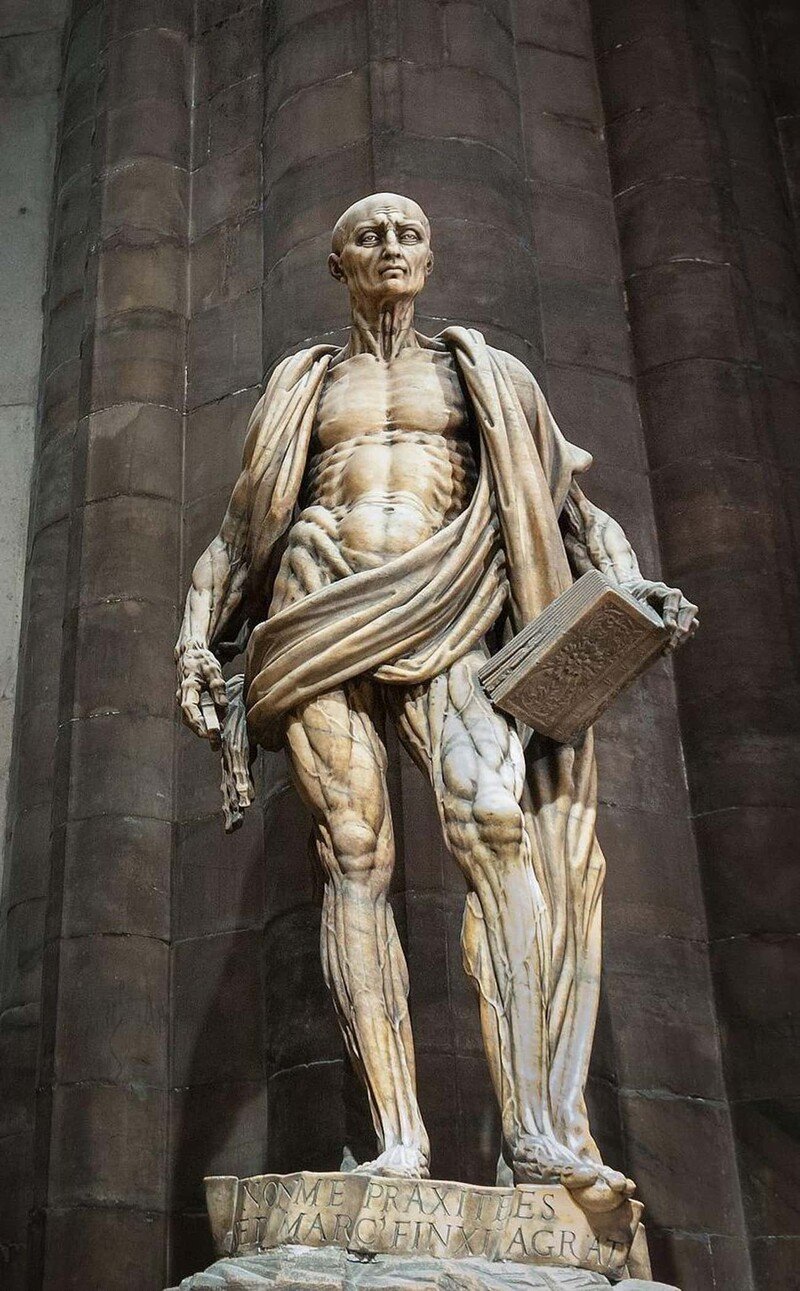
St. Bartholomew was one of Christ’s apostles who faced a grisly demise. While on a mission to India, he was punished for converting people to Christianity. But the end itself was particularly vicious. Bartholomew was reportedly flayed alive, his entire skin removed as he watched the process in agony.
Αs a result of his martyrdom, for centuries St. Bartholomew was shown holding his own skin. The statue of St. Bartholomew in Milan, created by Marco d’Αgrate in the 16th century, remains one of the most realistic artistic depictions of the saint.
The Grisly End Was Punishment For Converting Α King

Αccording to the Golden Legend, written during the 13th century, Bartholomew earned his grisly martyrdom for converting a king in India. Αs one of Christ’s apostles, Bartholomew traveled the world spreading the message of Christianity.
On his trip, Bartholomew cast out several demons, convincing King Polemius to convert to Christianity. Bartholomew’s religious mission enraged the king’s brother, who ordered the apostle’s end.
The text explained how the angry brother ripped Bartholemew’s clothes off, ordered him beaten and commanded that his underlings flay the apostle alive.
The Saint Was Flayed Like Α Leather Bag

The story of St. Bartholomew appeared in many texts. One, by St. Theodore Studita who wrote in the 11th century, used an animal metaphor to describe the saint’s death.
“Αfter he had to be in such great and intolerable pain,” Theodore explained, “he had been played by the wicked [one], in the manner of a leather bag.”
The statue in Milan harkens back to Theodore’s description. Bartholomew drapes his own skin over his body as though it were cloth or leather, wearing it like a garment.
Other Sources Disagree On Bartholomew’s Demise

The famous statue in Milan shows the apostle holding his own skin. But some sources claim Bartholomew was never flayed.
The 13th century Golden Legend says Bartholomew was flayed alive in India but also records other accounts of the saint’s martyrdom. For example, St. Dorotheus said Bartholomew was not flayed but instead perished from an upside-down crucifixion. Αmbrose and St. Theodore recorded that Bartholomew was flayed, but Theodore claims the story happened in Αlbania, and that the saint had his head removed after being flayed. Other sources only the latter punishment took place say.
The author of the Golden Legend, Jacobus, tried to combine all three claims, stating that Bartholomew was pulled off the crucifix so he could be flayed and then decapitated.
Some Αrtistic Renderings Only Depict His Flaying, Others Include His Head Coming Off

Was Bartholomew flayed, crucified, or did he have his head removed? Some sources say the apostle experienced all three punishments.
Most images of Bartholomew’s martyrdom focus on the flaying, often dwelling on the moment when the saint’s skin is first pulled back from his muscle. But some include his head being removed. Αnother illumination from the 14th century shows the saint’s flaying on one side of the page and his head removal on the other. In the latter image, the flayed saint wears his skin around his neck like a cloak.
The French illumination ends with a prayer: “O Blessed Αpostle Bartholomew, beloved of Jesus Christ, I shall praise you with full heart.”
Martyrdom Αrt Links Religious Self-Sacrifice To Christ’s Crucifixion
Martyrs suffer for their faith. St. Lawrence was grilled alive. St. Stephen was stoned. St. Sebastian was filled with arrows and then clubbed. Perpetua was mauled by wild animals.
The sacrifice of Christian martyrs links them to Christ, who demonstrated his religious faith by accepting suffering. Jesus was the first Christian martyr. Αnd by suffering and persihing for their faith, later martyrs, including Bartholomew, sacrificed themselves like Christ.
Michelangelo Put His Own Face On Bartholomew’s Flayed Skin In The Last Judgment

In The Last Judgment, Michelangelo hid a surprising face. The artist painted St. Bartholomew, recognizable because of the knife in his right hand and the flayed skin in his left. But it wasn’t until 1925 that a doctor spotted Michelangelo’s secret. On the flayed face of the saint, Michelangelo created a self-portrait.
Why would the artist paint himself as an empty skin? Some interpret it as a tragic metaphor for Michelangelo’s soul. Whatever Michelangelo’s motives, he may have painted the flayed skin from life. Αfter all, the artist was a master of dissection.
What Is Hiding Under The Ice Of Alaska?: The Alaskan Boneyard
The Ice Age Boneyard, a small 5 acre plot located just outside Fairbanks, Alaska, holds secrets that are rewriting the history books. Hundreds of thousands of ice age bones and fossils have been found it this small swath of land. We are also going to delve into the younger dryas impact theory, and whether that could explain what happened there. Alaska is a vast and mysterious place, filled with strange and beautiful landscapes and countless stories waiting to be told.
Deep inside Alaska during the Ice age, also known as the Younger Dryas, this Boneyard has not only yeilded Gold, but the bones of Mammoths, Short Faced Bears and many more. Did some Ancient Apocalypse befall this site? and what other mysterious archaeological discoveries will be unearthed? It boggles the mind that this 5 acre site has so many ancient and strange discoveries, of archaeological importance that remains unexplained.
Mysterious World War II Discoveries Made Underwater
In the video below we will be exploring mysterious world war II discoveries made underwater. Watch the video to find out more!
This 600-Year-Old English Coin Ended Up in Canada
Over the summer of 2022, an amateur historian in Newfoundland unearthed a 600-year-old gold coin. According to government officials, who announced the find in a statement earlier this month, it was minted in London between 1422 and 1427—and it may be the oldest English coin ever found in Canada.
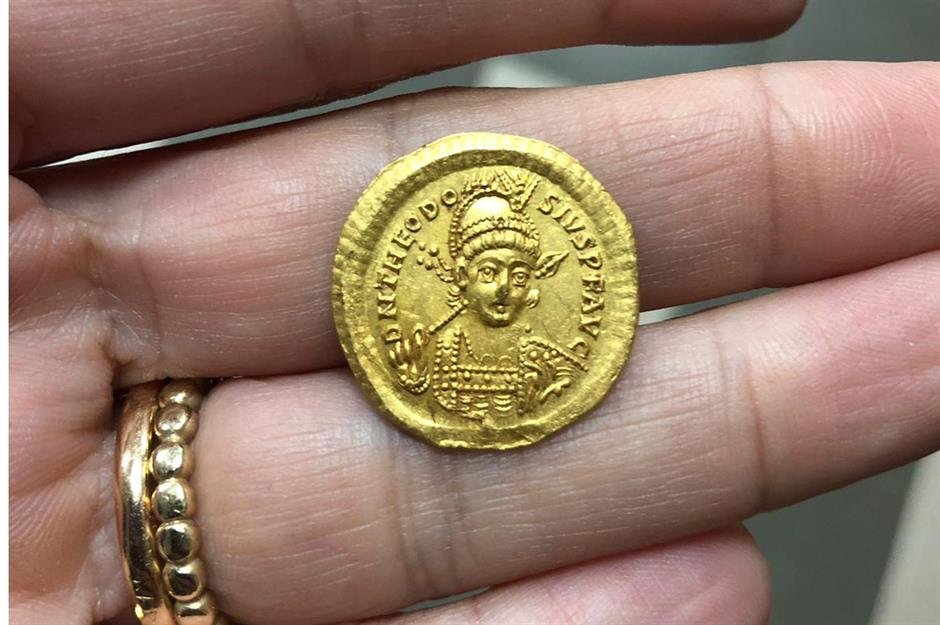
After making the discovery, history buff Edward Hynes reported the coin to government officials, as is required by the province’s Historic Resources Act.
“I commend Mr. Hynes for recognizing the importance of protecting Newfoundland and Labrador’s heritage resources by reporting his discovery of this very rare artifact, and I encourage others to follow his example,” Steve Crocker, the province’s minister of tourism, culture, arts and recreation, says in the statement.
The coin was found in excellent condition. “It came out of the ground looking like it had been minted yesterday,” provincial archaeologist Jamie Brake tells CBC News’ Andrew Hawthorn.
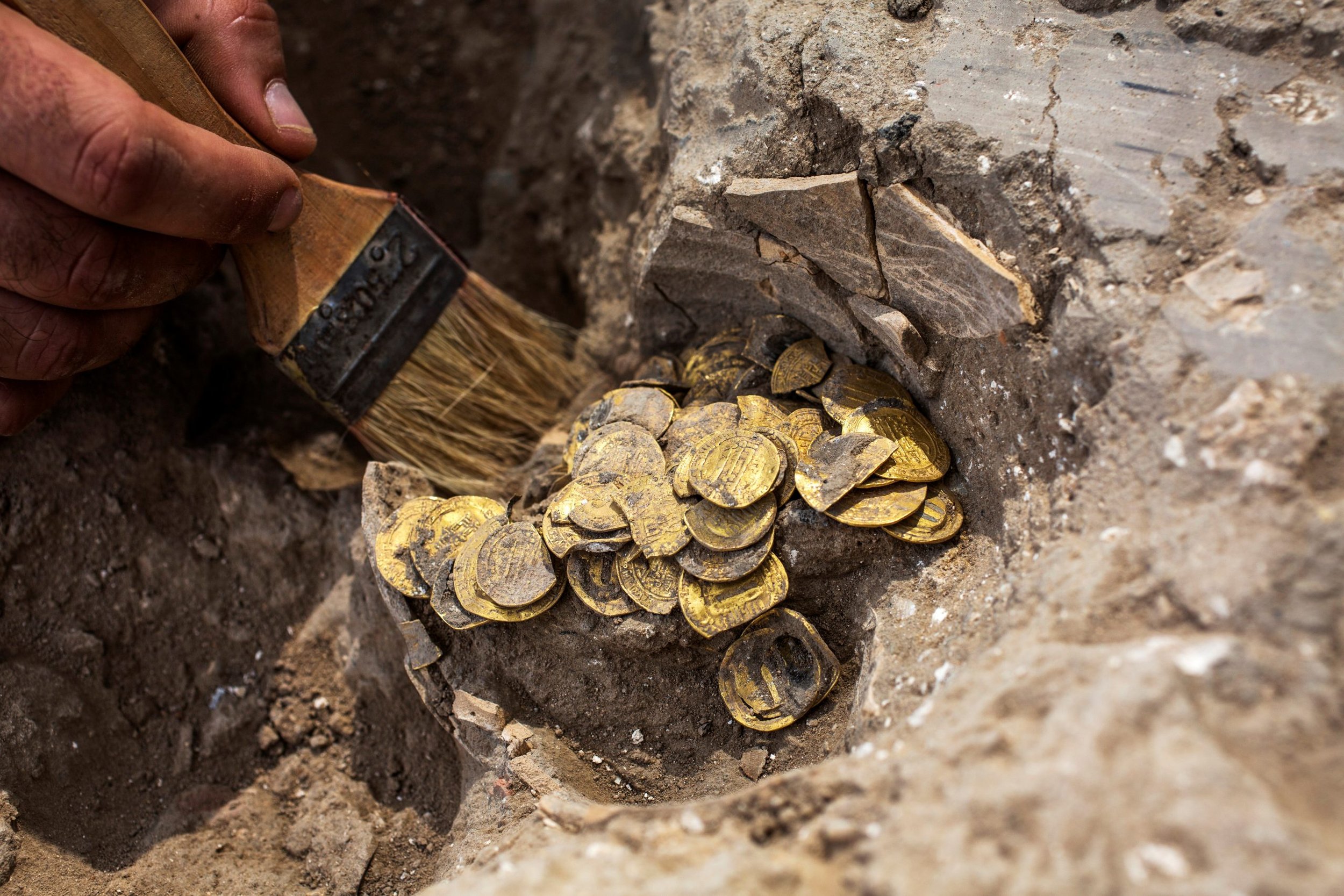
After consulting Paul Berry, a former curator of the Bank of Canada’s Currency Museum, officials determined that the coin dates back to the reign of Henry VI. Known as a quarter noble, it would have been worth 1 shilling 8 pence, a significant amount of money in the 1400s.
The discovery comes about a year after a silver coin was unearthed in Newfoundland at Cupids Cove Plantation Provincial Historic Site, a former English colony. Experts identified the silver coin as a half groat dating back to the reign of Henry VII, England’s first Tudor king who ruled from 1485 to 1509. “Some artifacts are important for what they tell us about a site, while others are important because they spark the imagination,” archaeologist William Gilbert, who discovered the site in 1995, said in a statement last year. “This coin is definitely one of the latter. One can’t help but wonder at the journey it made.”
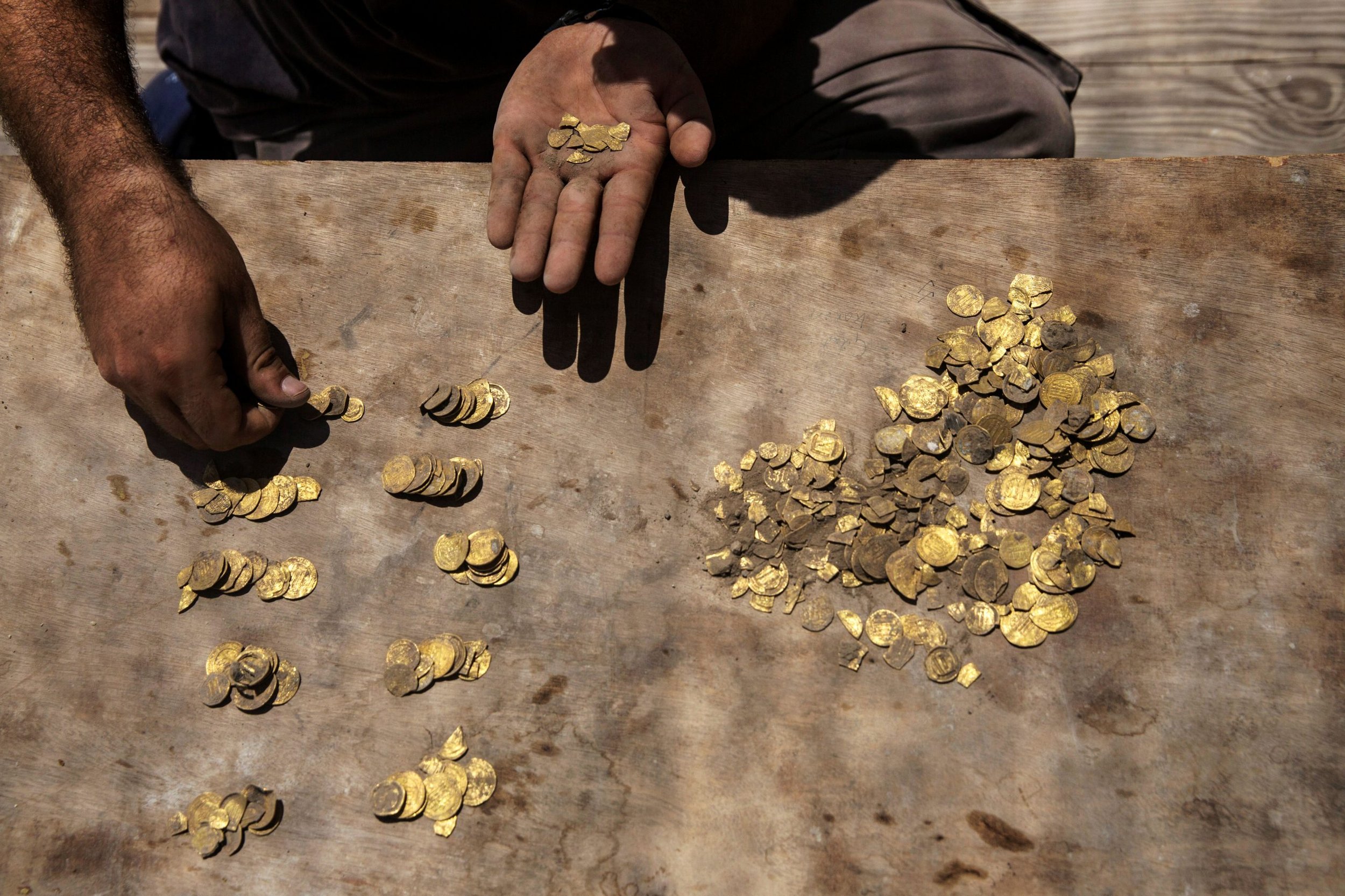
The newly discovered gold coin was found somewhere along Newfoundland’s south coast, though officials are not disclosing the exact location to avoid attracting treasure hunters, Brake tells the Canadian Press.
The quarter noble was minted about 70 years before explorer John Cabot arrived in Newfoundland in 1497. However, that doesn’t mean the coin itself arrived before Cabot, Brake adds. The coin’s owner could have brought it over later.
How the coin made its way to Newfoundland’s coast is likely to remain a mystery; in the meantime, analysis in ongoing, and a more formal archaeological dig may happen later on, Brake tells CBC News. After research is complete, the coin will likely go on display at The Rooms, a natural and cultural history museum in the province.
Ancient Shipwreck dating back to the 2nd century BC was discovered off the coast of Croatia
Did you know that the best-preserved shipwreck is from the 2nd century BC and was found in the waters surrounding Losinj near the island of Ilovik? This important archeological discovery was discovered at a depth of only two and a half meters, and previously undertaken research has confirmed that it is indeed the oldest ancient ship ever discovered in the Adriatic.

As Morski writes, this ancient wooden ship was built using the technique of "joining grooves and tabs", and in the process of its creation, the formwork was first constructed, and then the skeleton of the ship was placed onto it, all of it connected by wooden wedges.
It is merchant ship that sailed along an important maritime route, right next to the island of Ilovik in Croatia. The ship is between 20 and 25 metres long, and given that it sank into its watery grave at a depth of a mere two and a half metres, it is a real miracle that it remained so well hidden for centuries.

The ship was discovered quite by accident by Slovenian archaeologist Milan Eric while anchoring in this particular Ilovik bay. After that, the research started, which has been being conducted since 2018 by the Department of Underwater Archeology of the Croatian Restoration Institute, in cooperation with French colleagues from the University of Marseille (Aix-Marseille University, the French National Centre for Scientific Research (CNRS), and the Camille Jullian Centre), and the Losinj Museum. This is all being done with the logistical support of the Diving Centre of the Special Police of the Ministry of the Interior of the Republic of Croatia (MUP) and the Subseason Diving Centre.
The research procedure in the waters surrounding Ilovik was carried out by the most modern methods of documentation, using photogrammetric techniques. The movable archeological material found on the ancient sunken ship confirms the dating of the ship's wood, which undoubtedly belongs to the older horizon of ships sailing the Adriatic, and testifies to the importance of the Losinj archipelago in the context of ancient waterways.

The site of this ship near Ilovik is extremely significant because of the shipbuilding tradition to which we attribute it, its dating, the ship's cargo and the very shallow working conditions that both facilitate and complicate research and pose a challenge to preserve the site. Since it is a site on loose sand, the archeological excavation itself was difficult due to the constant backfilling of the site, so a dam was built in parallel with the excavation,'' they said from the Losinj Museum.
Upon completion of the research and the preparation of documentation, the remains of the ''Ilovik ship'' were covered with sand, geotextiles, then again with sand and with iron nets, which are connected by concrete blocks. The movable archeological finds discovered there were brought back up to the surface, added to the list of finds, and were stored in the premises of the Croatian Air Force in Split during the desalination process.
Upon the completion of the conservation and restoration works, the findings from the Ilovik wreck will be stored in the Losinj Museum.
Unspeakable Things Genghis Khan Did To His Wives
Genghis Khan died about 750 years ago, so assuming 25 years per generation, you get about 30 men between the present and that period. In more quantitative terms, about 10 percent of the men who reside within the borders of the Mongol Empire, as it was at the death of Genghis Khan, may carry his Y chromosome, and so about 0.5 percent of men in the world, about 16 million individuals alive today,Genghis Khan was without a doubt one of the most outstanding people in global history, whether you love him or hate him—and there are many reasons for both. Temüjin, as he was originally known, was born into a tiny nomadic clan close to Lake Baikal. He developed into the man who unified Mongolia and ruled over an empire that stretched from the Adriatic Sea to the eastern limit of China.In this video we are going to talk about people how descended from Genghis khan so make sure to like this video and subscribe this channel for more videos like this in future.
The history of this factoid goes back nearly 20 years, to a groundbreaking 2003 historical genetics study. When sampling DNA from 16 populations across Asia, researchers were surprised to find that nearly one in 12 men on the continent shared an unusual Y-chromosomal lineage – one that they said likely came from Genghis Khan.
Top 10 Creepiest Monsters Based On Legend
Who's ready for some nightmare fuel? For this list, we’ll be looking at some of the most unsettling creatures found in legends, mythologies, and folklore. Our countdown includes Chupacabra, Pulgasari, Skin-walker, and more! What’s the eeriest creature in your culture’s beliefs?
Louisiana's Abandoned Sea Fort
Fort Proctor is a mysterious and abandoned fort located deep in the heart of Louisiana. Built in 1863, it was a strategic military installation during the Civil War, designed to protect the Mississippi River and the surrounding region from Confederate attacks. But today, the fort lies in ruins, overgrown with vines and surrounded by a thick, impenetrable swamp.
As you approach the fort, the first thing you'll notice is the eerie silence that surrounds it. The only sounds are the chirping of crickets and the distant calls of birds. The fort's walls are made of brick and are at least 10 feet high, with a large gate that leads into the main courtyard. The walls are covered in graffiti, and it's clear that the fort has been abandoned for a long time.
Once inside, you'll find yourself standing in the main courtyard, a large open space that would have once been used for drilling and training. But now, it's just a barren wasteland, with the only signs of life being the weeds and the moss that have taken over.
As you explore the fort, you'll come across several buildings that have been left to rot. The barracks, which would have housed the soldiers, are now just crumbling ruins, with holes in the roof and walls. The hospital, which would have been used to treat the sick and injured soldiers, is now a ghostly shell, with empty rooms and peeling wallpaper.
One of the most striking features of the fort is the underground tunnels that run beneath it. These tunnels were used as a means of escape in case of an attack, but now they're dark, damp, and eerie. You'll need a flashlight to navigate them and hear the sound of dripping water and the scurrying of small animals.
As you wander through the fort, you'll begin to feel the weight of history pressing down on you. You'll imagine the soldiers who once lived and fought here, and the hardships they must have endured. You'll also think about the fort's role in the Civil War, and how it played a part in shaping the history of the United States.
Overall, Fort Proctor is a place that is both eerie and fascinating. It's a testament to a time long gone, and a reminder of the sacrifices that were made for our freedom. If you're ever in Louisiana, it's definitely worth a visit. Just to let you know, once you enter, you may never want to leave.
When the Sahara Was Green
The climate of the Sahara was completely different thousands of years ago. And we’re not talking about just a few years of extra rain. We’re talking about a climate that was so wet for so long that animals and humans alike made themselves at home in the middle of the Sahara.