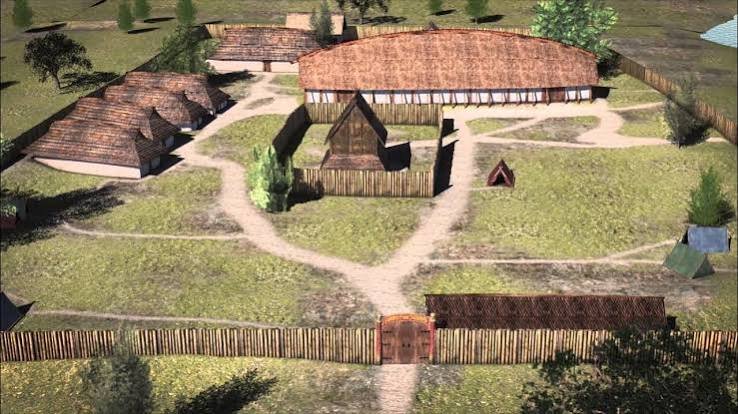
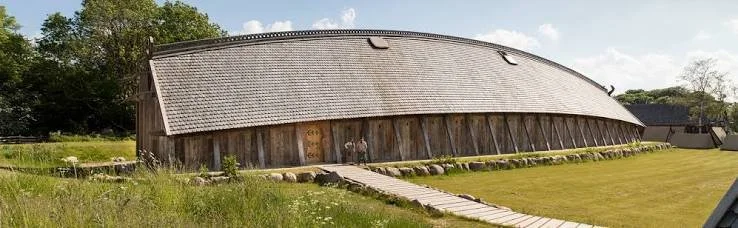
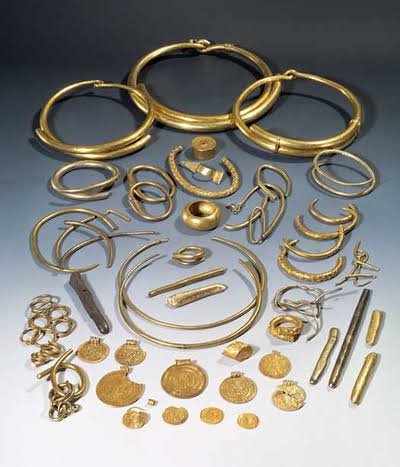
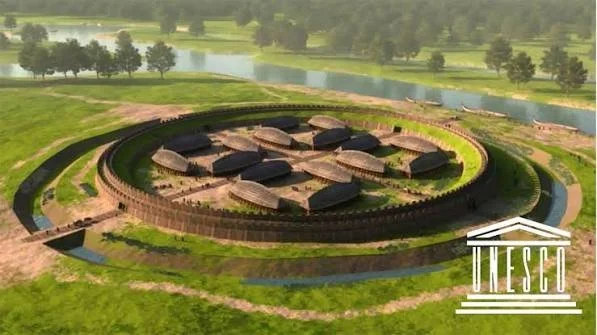
This video covers the origin hypothesis, culture, religion, society, economy, and military of the ancient Germanic peoples and their first clashes with Rome - the Cimbrian War and the battle of the Teutoburg Forest. Enjoy!
9 Most Amazing Recent Discoveries
From new species of animals to what space sounds like, here are 9 amazing recent discoveries. Watch the video to find out more!
Earliest Depictions of Jesus in Art
In the following video we will be exploring the earliest depictions of Jesus in Art. Watch the video to find out more!
Shaka Zulu & The History of the Zulu Kingdom (Documentary)
In today’s documentary we will be talking about Shaka Zulu and the history of the Zulu kingdom. Watch the video below to find out more!
The Antikythera Mechanism
More than 21 centuries ago, a mechanism of fabulous ingenuity was created in Greece, a device capable of indicating exactly how the sky would look for decades to come -- the position of the moon and sun, lunar phases and even eclipses. But this incredible invention would be drowned in the sea and its secret forgotten for two thousand years.
This video is a tribute from Swiss clock-maker Hublot and film-maker Philippe Nicolet to this device, known as the Antikythera Mechanism, or the world's "first computer". The fragments of the Mechanism were discovered in 1901 by sponge divers near the island of Antikythera. It is kept since then at the National Archaeological Museum in Athens, Greece.
For more than a century, researchers were trying to understand its functions. Since 2005, a pluridisciplinary research team, the "Antikythera Mechanism Research Project", is studying the Mechanism with the latest high tech available.
The results of this ongoing research has enabled the construction of many models. Amongst them, the unique mechanism of a watch, designed by Hublot as a tribute to the Mechanism, is incorporating the known functions of this mysterious and fascinating ancient Mechanism.
A model of the Antikythera Mechanism, built by the Aristotle University in Greece, together with the mechanism of the watch and this film in 3D are featuring in an exhibition about the Mechanism that is taking place in Paris, at the Musée des Arts et Métiers.
The original fragments of the Mechanism, its main models and the watch designed by Hublot are on display at the National Archaeological Museum in Athens, Greece.
10 Reasons Why The Egypt Pyramids Terrify Scientists
Ancient Egypt holds many mysteries that archaeologists are trying to figure out. The mysterious history of Egypt is why it interests scientists. Watch the video below to find out more!
10 Mummy Discoveries That Scared Archaeologists
Here are 10 mummy discoveries that scared archaeologists! The history of ancient Egypt has left many scientists confused. Mummies in Egypt have also been a hot topic between Egypt archaeologists.
A Day In the Life of a Medieval Executioner
The daily life of a medieval executioner was not easy. They did more than simply chop off heads and break prisoners on the wheel. Trying to uphold justice and set an example for their community was only one part of an executioner's duties; they also served as medical professionals and sometimes as spiritual guides, helping the condemned accept their fate and beg forgiveness before God. Occasionally, other villagers ostracized executioners for having a grim job, and yet, as they say, “It’s a job and somebody has to do it.”
What are the secrets behind Antarctica?
What do you know about Antarctica which is a desolate place covered with thick ice? The continent is one of the world's least explored and most mysterious places with blood falls beside the singing ice phenomenon. As such, it lends itself to many conspiracy theories. Find out all you really need to know about exploring Antarctica in this video.
10 Most Mysterious Recent Archaeological Discoveries
In the following video we will be analyze the 10 most mysterious recent archaeological discoveries. Watch the video below for more information!
How were the Pyramids of Egypt really built?
If limestone blocks were dragged up a mud brick ramp to be placed at the top of the Great Pyramid, where is the evidence of this huge ramp? How could materials such as wooden rollers and mud bricks take the strain put on them by tons of stone? Thousands of men are supposed to have dragged the building blocks across the desert in the searing heat - how did the ancient project managers keep morale up amongst the dusty and tired workforce?
In this video we will investigate how the Pyramids were really built. Enjoy!
The New Discovery in Egypt That Scares Scientists
Even if the really big finds of archaeology may already belong to the past, experts are all over the world looking for traces of former civilizations and their remains. In the process, small and large things are found every day that help to establish connections and better understand the origins of today's civilization. Again and again, archaeologists come across treasures whose meaning and contents they almost can't believe at first. The following finds are about things that you either never expected or where you were amazed to find such treasures even after so many years of excavations.
12 Most Incredible Finds in Egypt That Scare Scientists
The ancient Egyptians were one of the most remarkable cultures of the old world. In terms of art, architecture and science, they were light years ahead of almost everybody else - so much so that modern-day historians can't understand where their knowledge came from! Even now, there are many ancient Egyptian discoveries that historians and scientists struggle to rationalise - and you're going to see them in this video.
A Day In The Life Of A Roman Slave
The Roman Empire ran on slaves. Slavery was such a necessary part of its ecosystem that a massive 1 in 5 citizens in the Roman Empire were enslaved.
It was so common in fact, that Emperor Nero was once told by his advisor Seneca that “a proposal was once made in the senate to distinguish slaves from free men by their dress,” but “it then became apparent how great would be the impending danger if our slaves should begin to count our number.”
In essence, if slaves were to realize how large in number they were, then they could easily rise up against their masters.
The Roman Empire is one of the greatest civilizations of all time. It gave us poetry, music, art and stories still told today. It produced new sciences, medicines and works of great minds like the ancient Greek philosophers: Socrates, Hippocrates, Plato, Aristotle… to mention a few.
When we think of Ancient Rome, we think of the decadence and luxury of a civilization living lavishly. What we don’t think of is the slavery that made this all possible.
Mysterious Forbidden Historical Secrets
In the following video we will explore and try to explain mysterious forbidden historical secrets. Watch the video to find out more!
Victims of the Brazen Bull: Most Painful Torture Device in History
The Brazen Bull, a torture device so depraved only a madman could have created it. Find out the history of the Bull and some of its most unfortunate victims in today's insane video!
Scientists Terrifying New Discovery Under Antarctica's Ice Changes Everything
In the video below we will be exploring scientists’ terrifying new discovery under Antarctica’s Ice that changes everything. Enjoy!
360 Video: Inside the Tomb of St. Peter at the Vatican
In this video we will be exploring the inside of the Vatican Grottos, a series of chapels and papal tombs located directly beneath the famous St. Peter’s Basilica in Vatican City. In 360 degrees, the final resting places of popes dating back to the Middle Ages can be viewed on a virtual tour narrated by Yahoo Global News Anchor Katie Couric.
Of the 266 Popes throughout history, approximately 100 of them are buried below the basilica. On the tour, viewers will see monuments to Pope Nicholas the Fifth, Pope Innocent the Seventh, and Pope Paul the Second, among others.
In an exclusive and stunning conclusion to the tour, Yahoo News filmed the tomb of St. Peter, the man Catholics call the “First Pope,” one of the twelve Apostles of Jesus Christ. The remains of Peter are located directly beneath the altar where Pope Francis celebrates Mass, and create a literal foundation for the Church and its deep and storied history.
Virtual Egypt 4K: What Did the Pyramids Look Like?
What did the Pyramids of Egypt look like 4500 years ago? In this video we take a tour of the Giza Plateau and the Pyramids in a way you've never seen before.
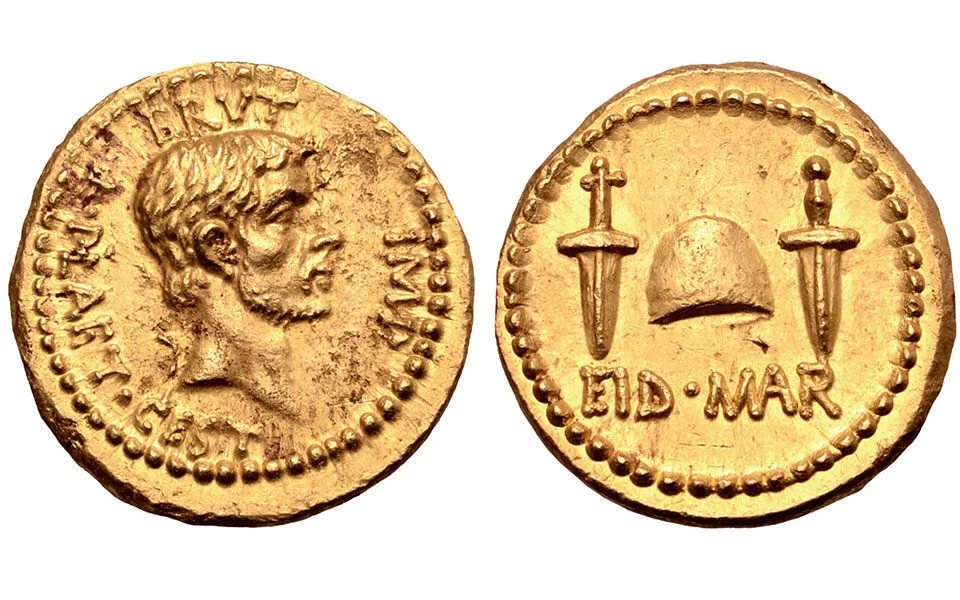
The rare coin that Brutus produced to commemorate Caesar's death is returned to Greece
Investigators in New York returned that priceless ancient gold coin to the Greek government after concluding that it had been stolen and unlawfully offered for auction in 2020.
Unquestionably the greatest piece of ancient coinage is the Eid Mar.
The coin, which is worth $4.2 million, depicts the portrait of Marcus Junius Brutus, a former ally and friend of Julius Caesar who was assassinated on the Ides of March in 44 B.C. among other Roman senators.
Historians and specialists claim that Brutus had the coins struck in gold and silver to celebrate Caesar's death and to pay his soldiers during the civil war that ensued.
The coin, one of 29 antiquities retrieved to Greek authorities, was turned up earlier this year by an unnamed American millionaire who, according to investigators, had purchased it in good faith in 2020.

The murder of Caesar on the Ides of March in 44 BC.
According to officials, the British dealer who assisted in organizing the sale was detained in January, and the currency itself was found in February.
The coin, which was produced two years after Caesar's death, is one of just three known to exist and is around the size of a nickel and weighs about 8 grams, according to experts.
There were also 100 of the coin's silver counterparts, which are confirmed to exist.
They can be sold for between $200,000 and $400,000.
According to experts, the coin was probably found more than ten years ago in a location in modern-day Greece where Gaius Cassius Longinus, Brutus' ally in the civil war, and their army were camped.
The Latin inscriptions "BRVT IMP" and "L PLAET CEST" are carved alongside an image of Brutus from the side on the coin's front, or obverse.
According to experts, the first one stands for "Brutus, Imperator," with imperator denoting commander rather than emperor.
The latter is an acronym for Lucius Plaetorius Cestianus, who served as Brutus's de facto treasurer and oversaw the coinage's minting and assaying.
On the reverse, a pileus-shaped cap is flanked by two daggers.
According to scholars, the daggers represent Brutus and Cassius and represent the manner of Caesar's execution, while the cap represents freedom and was worn by emancipated slaves.
The overall message of the painting is to commemorate the murder as the action that freed Rome from Caesar's rule.
The Latin inscription "EID MAR" appears beneath the symbols, designating the Ides of March, or March 15, 44 B.C., the momentous day when the conspirators left Caesar dead on the Roman Senate floor.