Introduction
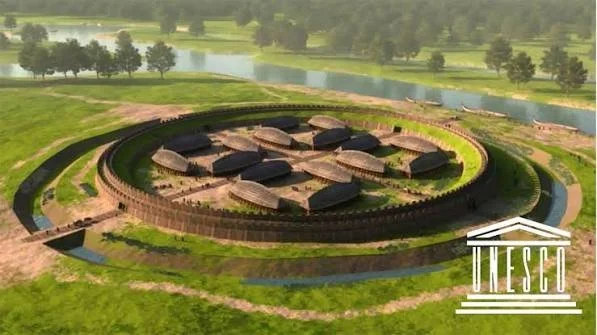
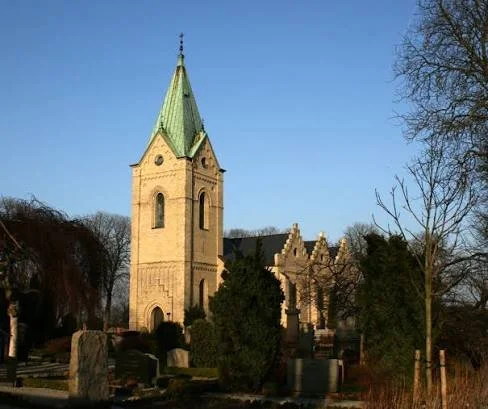
Uppåkra was one of the most important settlements in Iron Age Scandinavia.
Located in southern Sweden near modern Lund, the site was occupied for many centuries and developed into a major political, economic, religious, and cultural center.
Its enormous archaeological record contains hundreds of thousands of artifacts.
This makes Uppåkra one of the richest archaeological sites for understanding the transformation of southern Scandinavia from the Iron Age into the Viking Age.
Long Occupation
Uppåkra was occupied for approximately a millennium.
This long sequence allows archaeologists to study social change over generations.
Rather than providing a snapshot of one moment, the site records continuous transformation.
Political Power
The settlement appears to have been an important elite center.
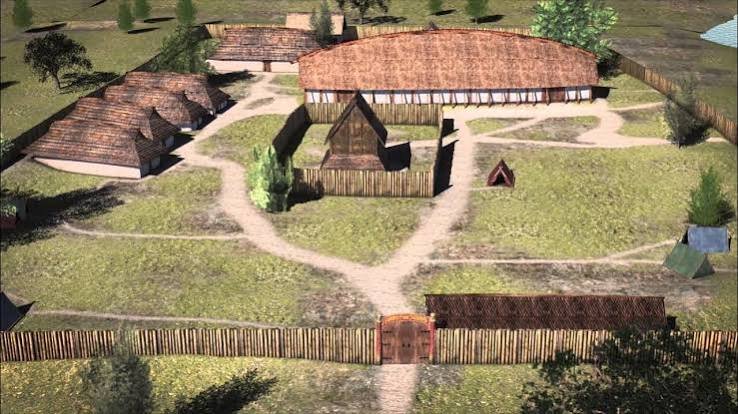
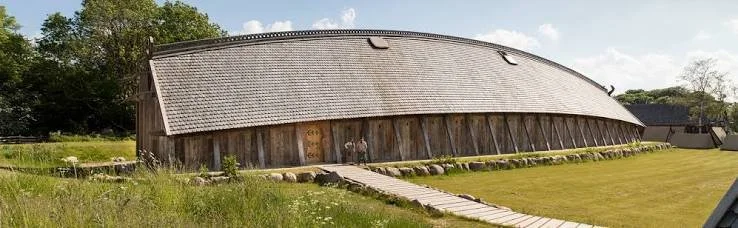
Large halls and high-status objects demonstrate concentrated wealth.
Political leaders could use the site to control surrounding communities and economic resources.
The Cult House
One of Uppåkra's most famous discoveries is a small but highly significant ritual building.
The structure is generally interpreted as a cult house.
Its architectural form and associated artifacts indicate that religious ceremonies took place there.
Religious Artifacts
Archaeologists have discovered numerous objects with religious significance.
These include figurines, decorated objects, and ritual deposits.
They provide evidence for pre-Christian Scandinavian beliefs.
Craft Production
Uppåkra was also a major manufacturing center.
Metalworking, jewelry production, and other specialized crafts occurred there.
Craftspeople required access to raw materials and elite patrons.
International Connections
Imported objects demonstrate that Uppåkra participated in long-distance trade.
Connections extended across Scandinavia and continental Europe.
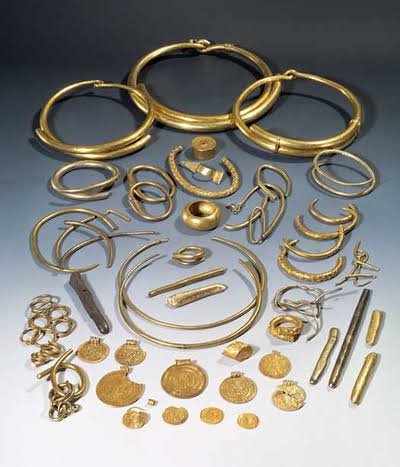
Luxury objects provided elites with ways to demonstrate wealth and status.
The Gold Foils
Small decorative gold objects known as gold foils are among the site's most remarkable finds.
They often depict human figures.
Their exact meanings remain debated, but they are widely associated with elite or religious contexts.
Warfare
Weapons found at Uppåkra demonstrate that military power was part of elite society.
Weapons could function both practically and symbolically.
A warrior's equipment communicated social status as well as battlefield capability.
The Move to Lund
Around the end of the Viking Age, the center of settlement shifted toward Lund.
This transformation probably reflected changes in political organization and Christian urban development.
The transition demonstrates the emergence of medieval towns and new forms of royal administration.
Conclusion
Uppåkra was a major Iron Age center of power whose importance extended across centuries.
Its halls, ritual structures, gold objects, workshops, weapons, and imported goods reveal a society characterized by wealth, craftsmanship, political authority, and religious complexity.
The site's long history makes it particularly valuable because it demonstrates how Viking Age and medieval Scandinavian society emerged from earlier Iron Age traditions.
Uppåkra was not simply an ancient settlement.
It was a political and cultural heartland that helped shape the development of southern Scandinavia.