Introduction
Birka was one of the most important trading centers in Viking Age Scandinavia.
Located on the island of Björkö in Lake Mälaren, Sweden, Birka connected the Scandinavian world with extensive commercial networks extending across the Baltic, eastern Europe, the Islamic world, and western Europe.
The settlement became a major center of commerce, craftsmanship, cultural exchange, and political activity.
Its archaeological remains provide some of the richest evidence for Viking Age urban life.
The Island Location
Birka's position on an island within Lake Mälaren offered both advantages and challenges.
Waterways provided efficient transportation.
The surrounding islands created a protected maritime environment.
At the same time, controlling access to the settlement required ships and knowledge of local waterways.
International Trade
Birka's greatest importance came from trade.
Archaeologists have recovered objects originating from distant parts of the world.
These include:
Islamic silver coins;
beads;
textiles;
glass;
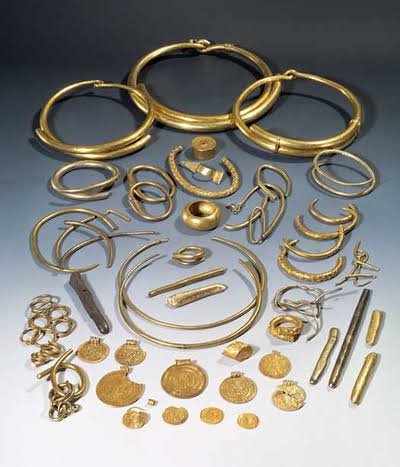
jewelry;
weapons;
ceramics;
exotic materials.
Such discoveries demonstrate that Viking Age Scandinavia was connected to enormous trade networks.
Islamic Silver
One of Birka's most famous archaeological characteristics is the large number of Islamic silver coins.
Many came from the Islamic world through eastern European trade routes.
Their presence demonstrates that Scandinavian merchants participated in long-distance exchange extending deep into Eurasia.
Craft Production
Birka was also a major manufacturing center.
Craftspeople produced jewelry, weapons, textiles, beads, and other objects.
The settlement therefore did not simply redistribute imported goods.
It transformed raw materials into new products.
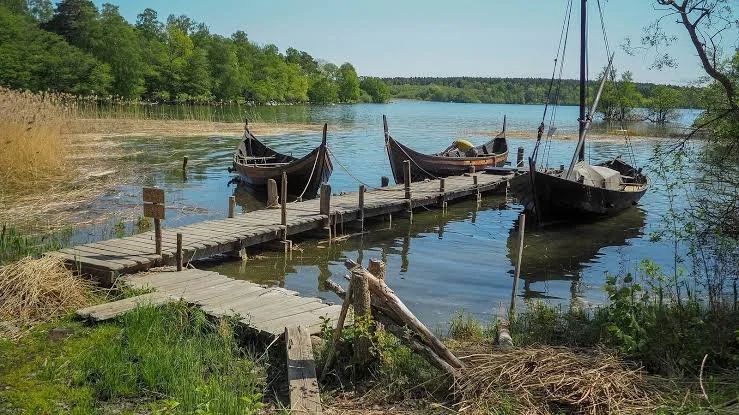
The Harbor
Ships were essential to Birka.
The harbor allowed merchants to unload cargo and transport goods throughout the Baltic region.
Maritime technology was therefore central to the settlement's economic success.
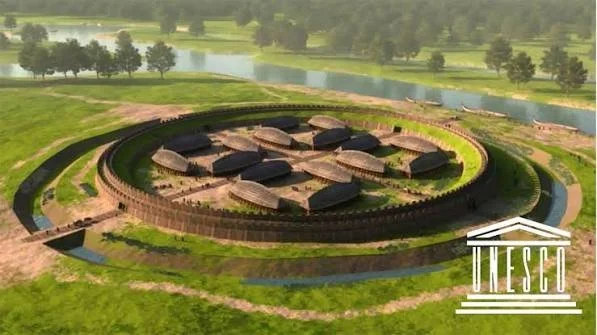
Defensive Structures
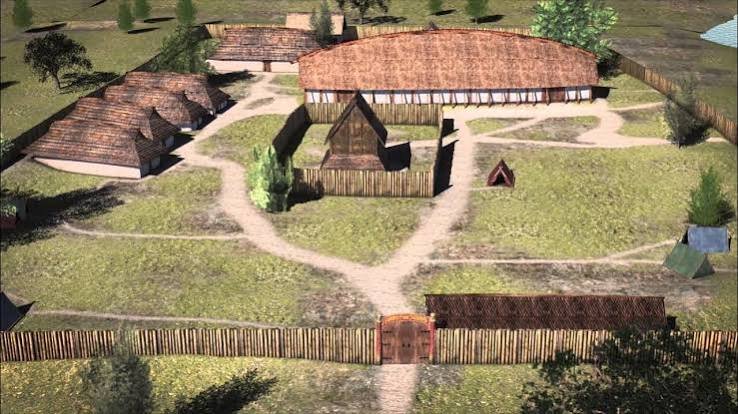
Birka was protected by defensive works.
Fortifications helped safeguard the settlement and its wealth.
They also demonstrate that trade centers required security.
A marketplace containing valuable goods would naturally become an important strategic target.
Burials
Birka is famous for its extensive cemeteries.
Thousands of graves provide evidence about the population.
Burials contain weapons, jewelry, tools, clothing accessories, and other objects.
These materials allow archaeologists to investigate social identity, gender roles, wealth, trade, and religious beliefs.
The Famous Warrior Burial
One burial at Birka became especially famous because it was originally interpreted as belonging to a male warrior.
Later osteological and DNA research demonstrated that the individual was biologically female.
This discovery stimulated major discussions about gender, identity, and warfare in Viking Age society.
It also demonstrates why archaeological interpretations must remain open to revision as scientific methods improve.
Christianity
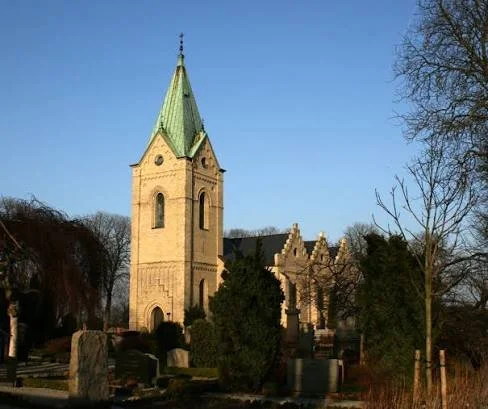
Christian influence reached Birka relatively early.
Missionaries visited the settlement, including Ansgar in the ninth century.
Christianity initially existed alongside traditional Norse religious beliefs.
This makes Birka valuable for studying religious transition.
Social Diversity
Birka's international trade likely brought people from different regions.
Merchants, artisans, farmers, warriors, slaves, travelers, and political representatives could all participate in the settlement's economy.
This made Birka one of the most cosmopolitan environments in Viking Age Scandinavia.
Decline
Birka eventually lost its importance.
Changes in waterways, political organization, trade routes, and economic geography contributed to its decline.
Nearby Sigtuna later became a more important Scandinavian center.
Archaeological Importance
Birka is indispensable for understanding Viking Age commerce.
Its artifacts demonstrate connections between Scandinavia and regions separated by thousands of kilometers.
The settlement also provides evidence for urban life, craftsmanship, religion, burial practices, social organization, and political power.
Conclusion
Birka was one of the great commercial centers of the Viking Age.
Its island location, harbor, workshops, cemeteries, imported goods, and enormous collection of silver coins reveal a society deeply connected to the wider medieval world.
The settlement challenges the image of Viking Scandinavia as isolated and rural.
Birka was cosmopolitan, commercially sophisticated, technologically capable, and culturally diverse.
Its archaeological remains demonstrate that the Viking Age was fundamentally an age of movement—of ships, merchants, metals, technologies, beliefs, and people crossing the waterways of northern Europe and connecting Scandinavia to distant civilizations.