In Egypt’s Assasseef valley, close to Luxor, archaeologists have made an incredible discovery. The team have uncovered two sarcophagi within the depths of a tomb that’s thought to be around 3500 years old. And after opening these stone coffins, the researchers find something astonishing: impeccably preserved remains.
Amazing Discoveries Made By Accident
In today’s video we will be exploring some of the most incredible accidental discoveries. Enjoy!
2,700-year-old cemetery full of cultural relics unearthed in China
According to experts, a public cemetery from long ago in China has been found, containing graves and cultural artifacts.

A total of 328 cultural artifacts, including porcelain, pottery, bronze, and jade objects, as well as 77 graves, 45 of which date to the Western Zhou dynasty, were found, according to experts with the Baoji Municipal Institute of Archaeology.
According to the institute, the location, also known as the Dongshahe West Road cemetery, served as a public burial ground throughout the Western Zhou dynasty, which, according to Britannica, lasted from 1046 B.C. to 771 B.C. Based on the shape, style, and inscription on the tombs, archaeologists were able to calculate the antiquity of the cemetery.

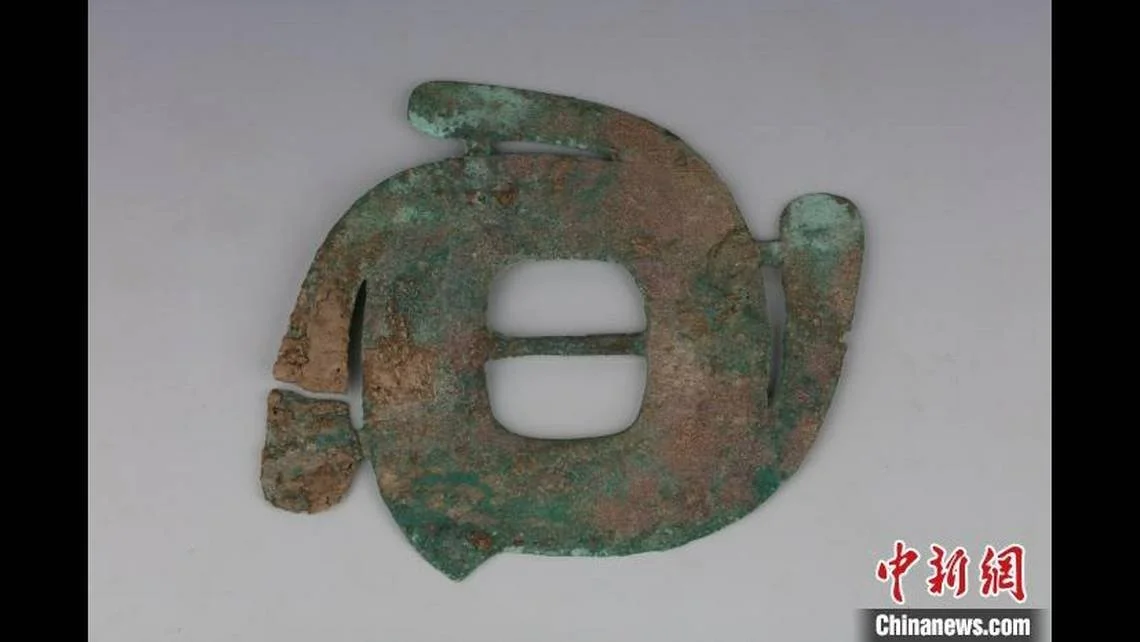
According to specialists, the artifacts included painted ceramics, jade used in religious rituals, and a bronze disk for astronomy. The artifacts exhibit characteristics that are similar to other cultures that were present in China at the period, demonstrating a substantial degree of cultural diffusion.
Cultural Expansion and Migration in Ancient China
As per documented migration routes, the Zhou people were not thought to have interacted with any ancient cultures in the east, but scientists claimed the recently unearthed artifacts suggest otherwise.
The Dawenkou ceramic design may be seen on several of the pottery jars discovered at the cemetery, for instance, according to the institute. According to Britannica, the Dawenkou civilisation was a Chinese Neolithic culture that existed between 4500 and 2700 B.C.

The Dawenkou civilization and the Western Zhou site share a "cultural relationship," according to archaeologist Xue Feng, who also found a bronze xuanji, a tool used for astronomy.
The Liangzhu culture, another Neolithic kingdom that lived on China's southeast coast from about 3,300 B.C. to 2,300 B.C., was also connected to the site, according to this institution.
Another instance of how ancient Chinese civilization spread to the west is a jade cong that was found at the Western Zhou site and had Liangzhu origins. The Global Times claims that cong were employed in religious rituals.
Hu Wanglin, an associate researcher at the Baoji Institute of Archaeology, told the Global Times that the Liangzhu culture expanded northward to meet the Dawenkou culture, and the Dawenkou culture then expanded further westward. The jade cong found in the tomb at Baoji "shows the 'westward' evolution of Chinese culture."
Ancient burial grounds yielded a sword used to ward off "bad spirits" that was 1,600 years old
An ancient burial site contained a sword that was 1,600 years old, which astounded a team of experts.
In November 2022, a gigantic seven-foot-long iron sword was discovered in Nara, Japan.

The dak sword, which had a snake-like design and was thought to have been intended to ward off evil spirits, was utilized.
The group also found a shield-shaped mirror that was two feet broad and one foot tall, weighing 124 pounds, which was likewise thought to have warded off evil spirits.
The artifacts, according to archaeologists, were buried as part of military burial customs and were significant in both military and ritualistic concerns.
Naohiro Toyoshima, an archaeology professor at Nara University, stated in a statement to local media that "[these swords] are prestigious objects of high society."

During the Tomio Maruyama burial mound excavations, the antiquated artifacts were found.
The 4th century, during the Kofun era, is when the burial mound is thought to have been constructed.
The Kofun period, which followed the Yayoi period and lasted roughly from 300 to 538 CE, was a crucial era in Japanese history.
The use of burial mounts, built primarily for the elite and coming in a variety of sizes and designs, is a common way to identify the time period.
With a diameter of 357 feet, the location is the largest circular burial mound in Japan.
The 2.3-inch-wide blade is reportedly the largest iron sword in Japan and one of the oldest examples of a meandering sword.
The enormous sword is one of about 80 identical artifacts that have been found in Japan.
The mirror, however, is thought to be the first of its sort to be found.
The larger swords are thought to have more abilities to shield the dead from evil spirits.

The swords were probably not used in combat.
The discoveries are greater than anything Kosaku Okabayashi, the deputy director of Nara Prefecture's Archaeological Institute of Kashihara, could have ever anticipated.
According to him, the Kofun period's technology (300–710 CE) was more advanced than previously thought.
They represent the pinnacle of that time period's metalwork.
The last known sabertooth skull was discovered in Iowa, researchers say
Researchers believe that a well-preserved skull of a sabertooth cat, one of the last of its kind to roam the earth as glaciers retreated and temperatures rose, was discovered in southwest Iowa.

According to Matthew Hil, an associate professor of archaeology at Iowa State and specialist in animal bones, radiocarbon dating reveals that the male cat perished at the end of the Ice Age between 13,605 and 13,460 years ago before being interred in the East Nishnabotna River.
David Easterla, an emeritus biology professor at Northwest Missouri State University, and Hill examined the specimen. Quaternary Science Reviews just released their research findings.
He continued, "The skull is a tremendously major deal. "Findings of this species are dispersed widely and typically consist of a single tooth or bone. This East Nishnabotna River skull is in very pristine condition. It's beautiful."
The skull provides proof that the animal was 2 to 3 years old and well over 500 pounds when it died. This shows that the sabertooth cat may have been larger than the majority of cats found in southern California, according to the university.

Hill and Easterla believe that southwest Iowa at this time resembled central Canada today in that it was a parkland with patches of trees scattered across grassland spaces.
The dire wolf, enormous short-faced bear, long-nosed peccary, flat-headed peccary, stag-moose, muskox, giant ground sloth, and possibly some bison and mammoth would have all coexisted with the cat, according to the expert.
A shattered canine on the skull may provide a hint as to how the sabertooth cat perished, according to researchers. Hill and Easterla suggest that the animal was fatally wounded by the prey, which resulted in a serious injury.
"These kinds of fossils can teach us a lot. They contain information on the ecology of the animals and how they react to a changing climate, as well as the advent of new predators and competitors, such as people "explained Hill.

Hill stated that he intends to use chemical markers in the fossil itself to discover more about the diets of animals in Iowa.
According to him, Iowa is an excellent place to conduct research on extinct Ice Period creatures and the people who were only beginning to coexist with them.
Ancient "Chewing Gum" from 5,700 years ago reveals details about ancient people and bacteria
The whole human genome was successfully retrieved from "chewing gum" produced thousands of years ago by scientists at the University of Copenhagen. The scientists claim that it is a fresh, unexplored supply of ancient DNA.

The Danish Stone Age woman's private details were revealed by a 5,700-year-old lump of pitch tar, and "chewing gum" gives new light on the evolution of our species.
The DNA in a piece of well preserved Paleolithic chewing gum from an island famed for its mud allowed researchers to identify the skin, hair, and eye colors as well as the pathogen profile, dental health, nutrition, and other characteristics.
Her whole genome as well as the genomes of other species that lived in her mouth were collected by scientists on the spot. She was a carrier of the viral virus that many of us have today, was lactose intolerant, and appeared to prefer wild food over everyday grain goods.
The research's principal investigator, Associate Professor Hannes Schroeder of the Globe Institute, University of Copenhagen, said, "It is astounding to have recovered a whole ancient human genome from anything other than bone."
Furthermore, he continues, "we also recovered DNA from oral microorganisms and numerous significant human illnesses, making this a highly rich source of ancient DNA, especially for times where we do not have human remains."
Sealed in mud
The fact that this person, "Lola," was called after the island where the gum was discovered and had dark complexion suggests that northern Europeans' lighter skin evolved considerably later and was more adapted. She was able to chew birch bark gum for a variety of reasons.
Birch pitch has been used since the Paleolithic, according to historical records. The resin of different trees, which served as the principal Stone Age adhesive, becomes more malleable the more it is heated, and chewing may have been a method of keeping it malleable as it cools when heated. She might have chewed the gum because of its antibacterial capabilities to help with her toothache, or she might have done so because she likes the monotonous biting that many of us love when we chew gum these days.

The birch pitch was found during an archaeological dig in southern Denmark's Syltholm, which is east of Rdbyhavn.
“Syltholm is totally distinctive. The preservation of organic remains is really extraordinary because almost everything is sealed in mud”, according to Theis Jensen, a postdoc at the Globe Institute who worked on the topic for his Doctorate and also took part in the excavations at Syltholm.
The archaeological findings indicate that the site's inhabitants continued to heavily utilize wild resources far into the Neolithic, which is when farming and tamed animals were first introduced into southern Scandinavia. It is the largest Stone Age site in Denmark, he continues.
Lola lived in a time when farmers and hunters-gatherers coexisted in the same regions, which wasn't always thought to be likely. This argument is supported by her preference for mallard duck and hazelnuts while other Paleo-Danes consumed their crops, as well as by her intolerance to lactose, which is frequently observed in northern Europeans after domestication of animals.
The Villum Foundation and the EU's Horizon 2020 research initiative through the Marie Curie Actions funded the study.
Maya Archaeological site for sale on Facebook has stirred controversy in Yucatán and across Mexico
The sale of more than 249 hectares of land on Facebook Marketplace has generated debate in Yucatan and throughout Mexico.

Inside the Xkipche Archaeological Zone, a listed monument in the state of Yucatán's Archaeological Atlas, the property, which was marketed on social media, features the remnants of historic Maya buildings.
The National Institute of Anthropology and History (INAH) is suing the private seller of the Yucatan peninsula of Mexico's Mayan monuments in response to this sale.
The location is being sold as a "ranch," with "18 paddocks," and is "placed ten minutes from the archaeological zone of Uxmal and contains pyramids," according to a Facebook group post by the current owners of the land.

Also, they claimed that between 1990 and 1997, academic institutions had previously researched the area, as did archaeologists from Germany's Bonn University who had collaborated with INAH from 2002 to 2004.
The asking price of the property is 18 million pesos, or nearly $1 million USD.
Yucatán Magazine reports that the INAH is currently preparing to file a lawsuit to block the sale and maybe expropriate the property.
The INAH Yucatán Center's director, José Arturo Chab Cárdenas, announced that the owners of the property in question will face legal action for commercializing historical sites.
According to the advertisement, the sale would set a precedent, allowing for the private selling of archaeological sites for profit, and putting the country's cultural heritage in peril. This fury was expressed on social media and in national headlines throughout Mexico.
Reconstruction work on the Xkipche site began in the late 1990s, and it was finished by the INAH in 2004 with the aid of archaeologists from Germany's Bonn University.

Although it is not against the law to own property that contains archaeological relics in Mexico, it is not possible to sell any relics because they are all federal government property and cannot be sold. The same holds true for areas of land with rivers, lakes, or cenotes because, according to Mexican law, all waterways are considered to be public property.
There are many well-known archaeological sites in the Puuc region that are accessible to the general public, such as Uxmal, Kabah, Sayil, and Labna, but there are also many others, the majority of which are on private or ejido land.
The Centurion who fought on his own against the Praetorian Guard
As the Praetorian Guard closed in, the lone centurion stood his ground, determined to protect what he believed was right. This is the story of the centurion who dared to fight against the powerful elite Roman soldiers alone. Today we will explore the incredible story of the Centurion who fought on his own against the Praetorian Guard!
Builders of the Ancient Mysteries (Full Documentary)
What if ancient civilizations were not what we imagined? Discover the history of the world's greatest wonders in the video below. Enjoy!
World's Tallest statue size comparison | 3d Animation Full-Scale Sizes
What is the biggest statue in size? Ever wondered how tall the Statue of Liberty is? Or what about the Statue of Unity ? Well, let’s take a look at some of the biggest statues arround the world ranked by their size. In this comparison video we will show the Real Scale representation and the height of the tallest and biggest statues ever.
The Roman Pantheon Explained
Today we delve into the history of this dynamic monument, which is the most impressive building that the Romans ever built, and perhaps the most influential building in the history of architecture. Enjoy!
Caesar in Gaul - Roman History Documentary
In today’s documentary we will cover the war between the Romans and the Celts in modern France, and the battles of Bibracte, Vosges, Axona, Sabis, Gergovia, Alesia, alongside Caesars invasions of Britain and Germany. In these battles, Caesar and his legionaries fought against Helvetii led by Divico, Suebi led by Ariovistus, Belgae led by Galba, Nervii led by Boduognatus, Britons led by Cassivellaunus, Eburones led by Ambiorix and Arverni led by Vercingetorix. The Roman Civil war against Pompey is just around the corner.
Jericho Unearthed: The Archaeology of Jericho Explained
The experts agree--the city walls of Jericho fell down. But does archaeology agree with the Biblical account of Joshua and Jericho? Watch this video as Joel interviews key archaeologists and explains the archaeology of Jericho.
Rome Empire from the Future with Midjourney AI
In today’s video we will be be turning the Roman Empire into futuristic images using Midjourney AI technology. Enjoy!
The Most Hated Pharaoh | Akhenaten
Akhenaten and his queen Nefertiti attempted to upend centuries of tradition by forcing the people of Egypt to abandon their pantheon of gods in favor of worshipping a single deity, Aten. Despite being labeled a heretic and a rebel, Akhenaten forever changed the course of history!
Recreating a 4000 Year Old Battery - Was Electricity Used in Ancient Times?
In this videowe will show you the recreation of an electric battery, which was used in Ancient India. This battery was described by a sage called Agastya who lived at least 4000 years ago, and what we are making is according to what's being described in the ancient text called Agastya Samhita.
Lost Mythical Mega-Metropolis Found Deep Inside Jungle?
Could a mythical mega-metropolis have been found deep inside the jungle? Watch the video to find out more!
100,000 Year-Old Submerged Pyramid Found In Azores?
In the following video we will investigate whether a 100,000 year old pyramid has been submerged in Azores. Enjoy!
Temple Discovered Beneath Prehistoric Lava Flow?
Could a temple really have been discovered beneath prehistoric lava flow? Watch the video below to find out!
Ancient Alien Tomb Discovered & Covered-Up?
In the following video we will investigate whether an ancient alien tomb has been discovered and covered-up. Watch the video to find out more!