The Secret Tomb Of Cleopatra Is Finally Found

Do you ever ponder what mysteries the past may still hold for us? One of the greatest riddles of all time may have been solved after almost two decades of investigation by a team of archaeologists. An ancient tunnel, buried beneath a temple in Egypt, is suspected by some to be the way to Cleopatra and Mark Antony's lost tomb. Join us as we investigate this remarkable discovery and uncover the truth behind one of the world's greatest legends.

Egyptian queen is famous in history and theater as Julius Caesar's lover and later as Mark Antony's wife. After her father, Ptolemy XII, died in 51 BCE, she became queen and governed with her two brothers, Ptolemy XIII and Ptolemy XIV, and her son, Ptolemy XV Caesar. After Octavian's Roman army beat their united forces, Antony and Cleopatra committed suicide, and Egypt fell under Roman control. Cleopatra actively affected Roman politics during a critical moment, and she became the paradigm of the romantic femme fatale, as no other woman in antiquity had.

The TRUTH About LGBTQ+ in Ancient Greece - Once and for all

We often time hear this notion that ancient Greece was basically an lgbtq+ paradise where everything same sex related, was accepted and even encouraged. But what do the historical sources actually tell us about this? Let's find out.

Scientists Have Just Confirmed A Biblical Story After This Was Buried Inside Mount Kilimanjaro

Scientists have just confirmed a biblical story after this was buried inside Mount Kilimanjaro. Today, we take a look at what scientists found inside Mount Kilimanjaro.

Mount Kilimanjaro, Africa's highest peak and the world's tallest free-standing mountain, has long been a source of fascination for explorers, geologists, and historians alike.

Its diverse ecosystems, unique geological features, and storied history have made it a prominent subject of scientific research and exploration.

In recent years, a team of archaeologists and historians uncovered a remarkable biblical secret buried within the slopes of Mount Kilimanjaro.

12 Most Mysterious Ancient Technologies Scientists Still Can't Explain

The innovative prowess of our ancient ancestors was as impressive as that of anyone alive in modern times. Their inventions from millennia ago paved the way for the continued development of new technologies today. Such was their ingenuity that some of their most bizarre and extraordinary creations still elude our full understanding. Seeing is believing, or so they say, so let's check some of them out!

15 Scary Secrets Archaeologists Discover in Ancient Egypt’s Sphinx

Have you ever wondered how something so old can be so mighty?

Well you're not alone, many before you have pondered the same question. Egypt's Great Sphinx is one such monument - at a towering 20 meters high and 73 meters long, it's easy to understand why we have such a hard time figuring out how ancient civilizations could construct such a thing.

In today’s video, we will be discussing the top 15 scariest secrets Egypt's mighty Sphinx has buried in its mysterious past.

Horrific life of ancient Spartans

Imagine you were a warrior from the moment you were born, loyal, only to the State. Whilst Athen s will always be remembered as the Greek centre of the arts, philosophy, and education, Sparta was home to the ancient world's most elite warriors.

If you were born ill or handicapped in Sparta, you'd be thrown into the wilderness, and life got even harsher as you grew.. but how difficult was it really to live as a Spartan? And would you have survived these treacherous conditions?

Genghis Khans most Horrific punishments

The Mongols were once the largest land empire in human history. What made them such a fearsome empire was not their numbers. Instead, it was their strategy to build a fearsome reputation.

They did so by committing fear-inspiring acts, making an example of their enemies by executing them through suffocation, or by sending horses to trample them alive.

Terror was their policy to conquer other groups by lowering their morale to fight back. Chief among the terrifying Mongols was Genghis Khan, known by some as the Great Khan.

Why was Genghis Khan known as one of the bloodiest conquerors in the history of humanity?

Archaeologists Create Plaster Molds of Pompeii Victims Petrified in Ash

The volcanic eruption that hit Pompeii in 79 CE destroyed the bustling Roman city and covered it in ash. This ash ultimately preserved the city, which remained untouched until the 19th century, thus giving us the unique opportunity to see what an ancient Roman city looked like. But aside from preserving buildings, the ash also preserved the bodies of the 2,000 people living in Pompeii who were killed when Mount Vesuvius erupted.

The organic matter of these bodies had long since deteriorated by the time excavations began; however, in 1863, Italian archaeologist Giuseppe Fiorelli discovered human-shaped voids in the ash. The shape of the corpses was retained in the ash, and archeologists began making casts of the bodies. Today, many of these casts are displayed on site in Pompeii, giving the public a unique perspective on this catastrophic event.

Over 100 casts were made, showing the exact position of the bodies at the time of their deaths. Some were hugging, others were faced down with their hands covering their faces, and some appeared to have been sound asleep at the time that they met their fate. Of late, researchers have been using scans and DNA tests to try and discover more about the victims of Mount Vesuvius. The results have been interesting.

The Largest Impact Crater on the Planet; Hidden in Antarctica & 300 Miles Wide

Hidden under ice in Antarctica is a massive 300 mile or 480 kilometer wide impact crater. Although its existence is still not definitively proven, more evidence has recently suggested that Earth's largest remaining impact crater does truly exist here. What makes this all the more interesting is this feature known as the Wilkes Land Crater is located on the exact opposite side of the planet called an antipode to where the Siberian Traps erupted 252 million years ago. Since the Siberian Traps caused the Permian Triassic Extinction event, the question must be asked if this impact crater with an unknown age generated the Siberian Traps, thus meaning this mass extinction was caused by an impact event?

The Unbelievable Story of the Ahom Kingdom: a Northeast Indian Superpower

The history of the Ahom Kingdom, and Northeast India more broadly, is often neglected. In fact, most people don't know that the Ahom was actually a Southeast Asian (Tai) power for most of its history, with close ties to its homeland in modern-day Yunnan.

In this video, we aim to cover in brief the story of the Ahom, from their original migration into India, to their conflicts with the Mughals, and much, much more.

Secret Tomb In Egypt HIDDEN From The Public Reveals Shocking Truth

Egypt is the land of magnificent architecture and artifacts. Archeologists have been exploring Egypt for years, and fortunately, they always find jaw-dropping antiquities. All of us know one of the tremendous discoveries of Egypt is the Pyramids of Giza and the great sphinx but do you know a discovery is stealing the spotlight of the most famous Egyptian discoveries? Yes, archeologists have found something even more fascinating.

12 Most Incredible Archaeological Finds

As fans of archaeology, we're certain that you love hearing about fascinating discoveries just as much as we do, or else why would you be checking out our channel? Our team takes great pleasure in unearthing tales of remarkable finds from far-flung locales and bygone eras, and this particular video is no different. We won’t keep you waiting - let's delve straight into the story and leave no word wasted!

What Is Found After The Euphrates River Dried Up Shocked Scientists

For thousands of years, the Euphrates River has been a vital source of life and sustenance for the people of the Middle East. However, in recent times, the river has been slowly dwindling, causing concern and anxiety for those who rely on it. But in a shocking turn of events, the Euphrates River has finally dried up, revealing something that has been hidden for centuries. Interested to know more? Let's get straight into the video!

Turkey, Syria, Iraq, and Saudi Arabia are among the modern-day nations that are located within the watershed of the Euphrates River. The snowmelt that happens in the eastern highlands of Turkey during the late spring and early summer is responsible for around 90 percent of the runoff that comes from the basin. These highlands are located in Turkey's southeast. At this point, flood levels are often at their highest along the length of the River.

According to recent studies, indigenous people used horses much earlier than previously believed

According to recent research published in the journal Science, Native Americans used horses in the American West much earlier than previously believed. A University of Wyoming (UW) graduate's own research has made significant contributions to the research. UW is where Cassidee Thornhill obtained both her undergraduate and graduate degrees in anthropology. Thornhill discussed her research with Kamila Kudelska of Wyoming Public Radio.

Kamila Kudelska: What was the legend around Native Americans and horses?

Cassidee Thornhill: We already knew that the introduction of horses into Indigenous cultures had a significant impact on daily living, travel distances, and conflict. Numerous aspects of Native American lifeways were altered. We were aware that many Plains tribes, in particular, really came to identify strongly as a horse country. However, the majority of what we do know about how the relationship got started comes from historical writings and recordings, which is obviously somewhat biased. Only from the perspective of European Americans.

KK: What kind of study did you conduct?

CT: When I first got interested in it, I spoke with Danny Walker, a zoo archaeologist. He served as the state's assistant archaeologist. He was also able to direct me to the Blacks Fork River horse in particular because he had performed the original analysis on that animal. The only other horse from this era that is currently known to be without a certain not Euro-American is only a skull fragment, and it is located just outside of Casper. And just being aware that there were only two in all of Wyoming throughout this time period suggests further research is necessary, in my opinion.

KK: How did you approach that, then?

CT: Due to its completeness, I determined that the Blacks Fork River horse was a really good example that could use re-analysis and additional analysis of the remains. As I have stated, the skull in Casper is really a fragment—just the skull's base. That really doesn't give us very much to work with. And across the Plains, a great number of horses are like this.

I wanted to re-establish the horse's age, which is about in line with what they had discovered in the initial examination and is between five and six months. Because fortunately some other department members were conducting research on differentiating between stone and metal cut marks, I made the decision to take a closer look at the human modifications, the cut and chop marks. I therefore wanted to particularly apply that research to this.

The most crucial step, in my opinion, was resubmitting some radiocarbon dates because the first ones they provided were too broad and didn't really provide us a clear picture of when this horse had passed away. The other date then simply came back as "modern," which is also not very helpful for determining when the horse had passed away. To try to recreate it using more modern techniques, in my opinion, is the most crucial item that can be added.

KK: What did your findings indicate?

CT: On the spine, on the ribs, and on the femurs, there were numerous cut and chop marks, primarily chalk marks. The cut and chop marks on these horses, however, are completely different from the ones we typically see on other animals and horses in other areas of the world that are being eaten for food. Aside from the possibility that it was simply ritually buried, it appears that this horse was partially disarticulated before being placed. There is little to no evidence of any kind of de-fleshing, skinning, or anything else that would suggest that it was being used in any way. Three coyote skulls had also been buried with it.

Because no other artifacts were discovered with it, it is crucial that I was able to determine that all of the cut and chop marks were made by metal tools. The horses are also much earlier than we would ordinarily expect, and there are no artifacts made of chipped stone or even of metal. For Wyoming at the period, the use of metal tools is also very recent.

The medium date, which is 1640, was returned, which is a little early. Based on rock art, which is notoriously difficult to date, as well as what we could learn from historical documents and oral histories, it was first believed that horses arrived in Wyoming around 1600. However, 1640 places the timeline a little bit earlier, which is important because in the original account of how horses spread throughout the Plains, it was believed that horses couldn't have escaped from the Spanish before 1680, which is when the Pueblo Revolt took place in New Mexico. However, 1640 is not absurdly early, but it does place the timeline a little bit earlier.

The initial hypothesis was that after the revolution, the Pueblo people were able to acquire these horses and subsequently spread them out more widely across the Plains. However, the 1640 date indicates that they were likely transmitted through non-European transmission by Indigenous peoples earlier than we had previously assumed, giving Indigenous peoples more agency.

Rachael Shimek

KK: The study that was recently published in Science adds to the body of evidence supporting what you just said. Can you now elaborate on how the additional research influenced what you discovered?

CT: With the help of new Science research, various aspects of the morphology of the skull could be discussed in more detail. The horse's skull was injured when I conducted the analysis, but Will Taylor, the lead author of the Science publication, was able to examine it more closely and saw that it had almost healed, which may have been the result of veterinary care. The horse was therefore hurt in some way—likely by being booted by another horse—and at least temporarily taken care of.

The study includes a number of different horses. The article includes a lot of talk on another horse that is from Kansas. Furthermore, it shares a similar age with the Black Forks horse. It displays proof that a metal bit was used. I believe both the Kansas horse and the Black Forks horse underwent isotopic study. They observed indications that the Kansas horse may have received grain or maize in addition to whatever else was in its diet, most likely during the winter.

They were able to determine that the isotope levels for the Black Forks horse corresponded with other isotope levels for that particular region of Wyoming, indicating that the horse was likely born and raised there exclusively until it was five or six months old and that its mother had likely been there for a short while. These two horses, along with some of the other data mentioned in that article, demonstrate that the spread of horses is not an accident. The Blacks Fork horse is the digital evidence that, indeed, horses did spread from the Southwest before the Pueblo Revolt, most likely through the networks of trade that Indigenous people had established.

KK: Why does that matter?

CT: I suppose it's noteworthy because the original story doesn't really emphasize how quickly horses spread among Indigenous people or how they assimilated them. A common early myth is that they couldn't have obtained horses before the Pueblo Revolt, however this is probably untrue.

According to certain sources, some parties were likely raiding Spanish and Pueblo populations in the southwest. They may have taken and transported horses with them to the north, where they were disseminated through trade networks. The fact that many of the narratives up to this point have been heavily biased in favor of Euro-American records, in my opinion, is what is most important. This only serves to demonstrate how much more nuanced the tale is than we first believed.

The Blacks Fork horse, in particular, provides proof of the Comanche people; their ancestors were Shoshone speakers and came from that region of Wyoming. They were once believed to have relocated to the south in order to get horses. The Blacks Fork horse, however, suggests that this is most likely untrue; it suggests that they had horses before they moved south and that they used their equine expertise and exceptional horsemanship to colonize a sizable portion of the southern plains and eventually build an empire based on horses and bison.

Source: https://www.wyomingpublicmedia.org/open-sp...

What They Just Discovered In The Sahara Desert TERRIFIES Scientists!

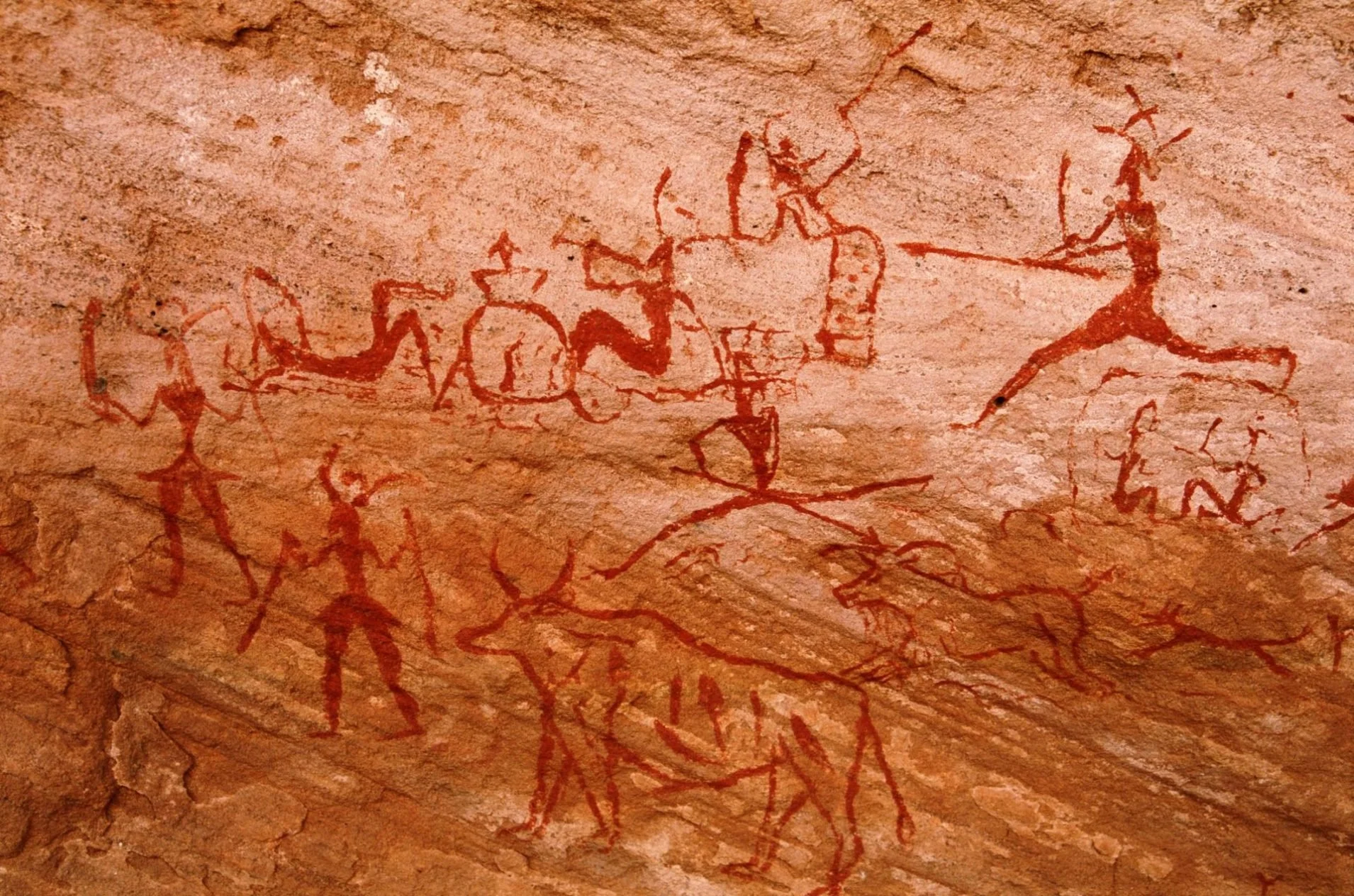
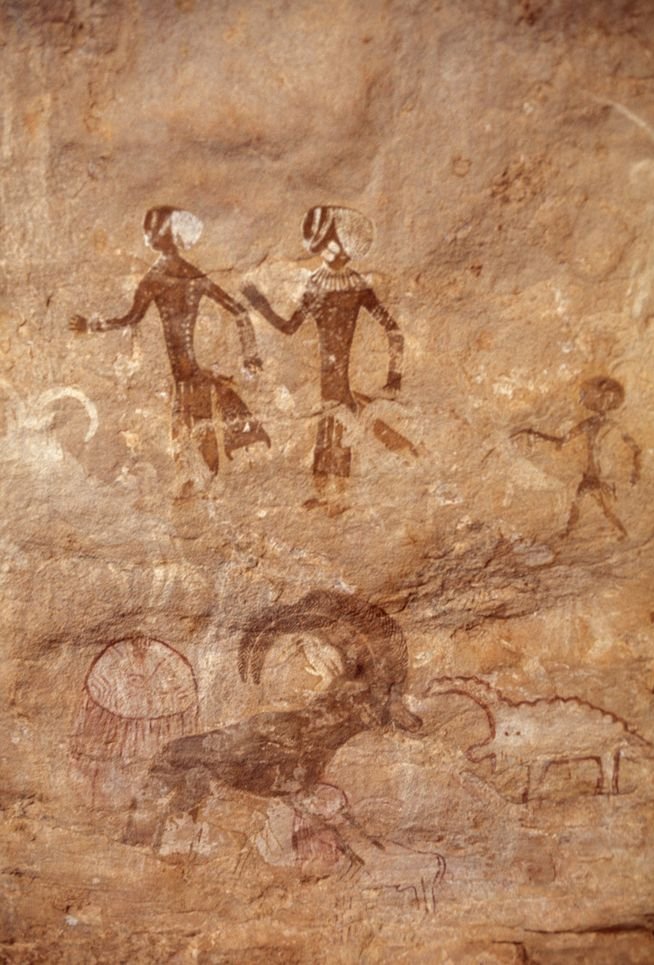
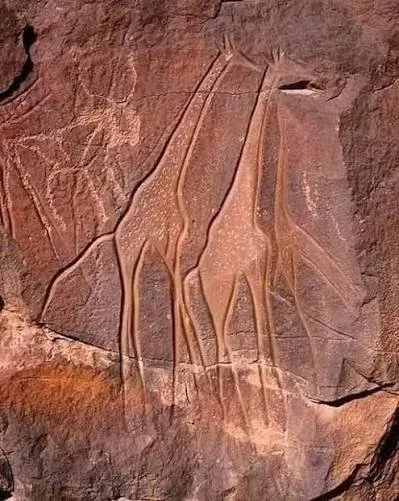
There was a time when the Sahara Desert was a lush, green savanna with plenty of vegetation. But that changed around 5,000 years ago when the climate became drier, and temperatures began to rise. Today, vast stretches of sand dunes dominate the landscape – making it one of the harshest environments on earth. Gone are the days when lush grasslands and wild animals could be found in abundance. But the sparsely populated desert still holds secrets and treasures, from the world's oldest cave art to centuries-old monuments. So while it may be a desolate place now, there are new discoveries researchers make every day that tell us more about the past. It's a harsh, unforgiving environment – but there is still much to learn from this amazing desert. Join us as we talk about one of the craziest discoveries ever made in the Sahara desert, and how it might just change everything.

But before we do that, let’s take a closer look at the course of events that led up to the eventual discovery that scared scientists.

This New Discovery on the Edge of Antarctica Scares Scientists

Antarctica is one of the most mysterious places on Earth. It’s a continent that’s almost entirely covered in ice and is home to some of the most extreme conditions on the planet. Although it’s a barren and remote place, Antarctica is teeming with life. Underneath the ice, there are entire ecosystems that we’re only just beginning to understand. From a Shackleton's lost whiskey to Zombie virus, here are the 15 Scariest Things Found In Antarctica.