Inside Libya's Acacus Mountains Lies One of Humanity's Oldest and Most Extraordinary Art Galleries
The Acacus Mountains, also known as the Tadrart Acacus, form one of the most important prehistoric cultural landscapes in North Africa.
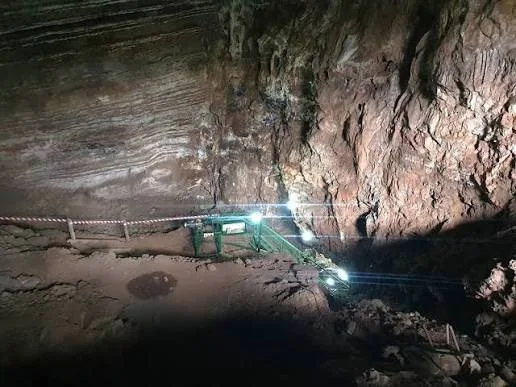
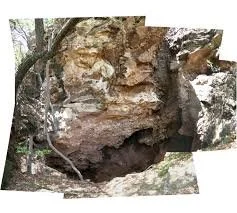
Located in southwestern Libya, the region contains dramatic sandstone formations shaped by erosion into arches, cliffs, valleys, and natural shelters.
But the geological beauty of the Acacus is only part of its importance.
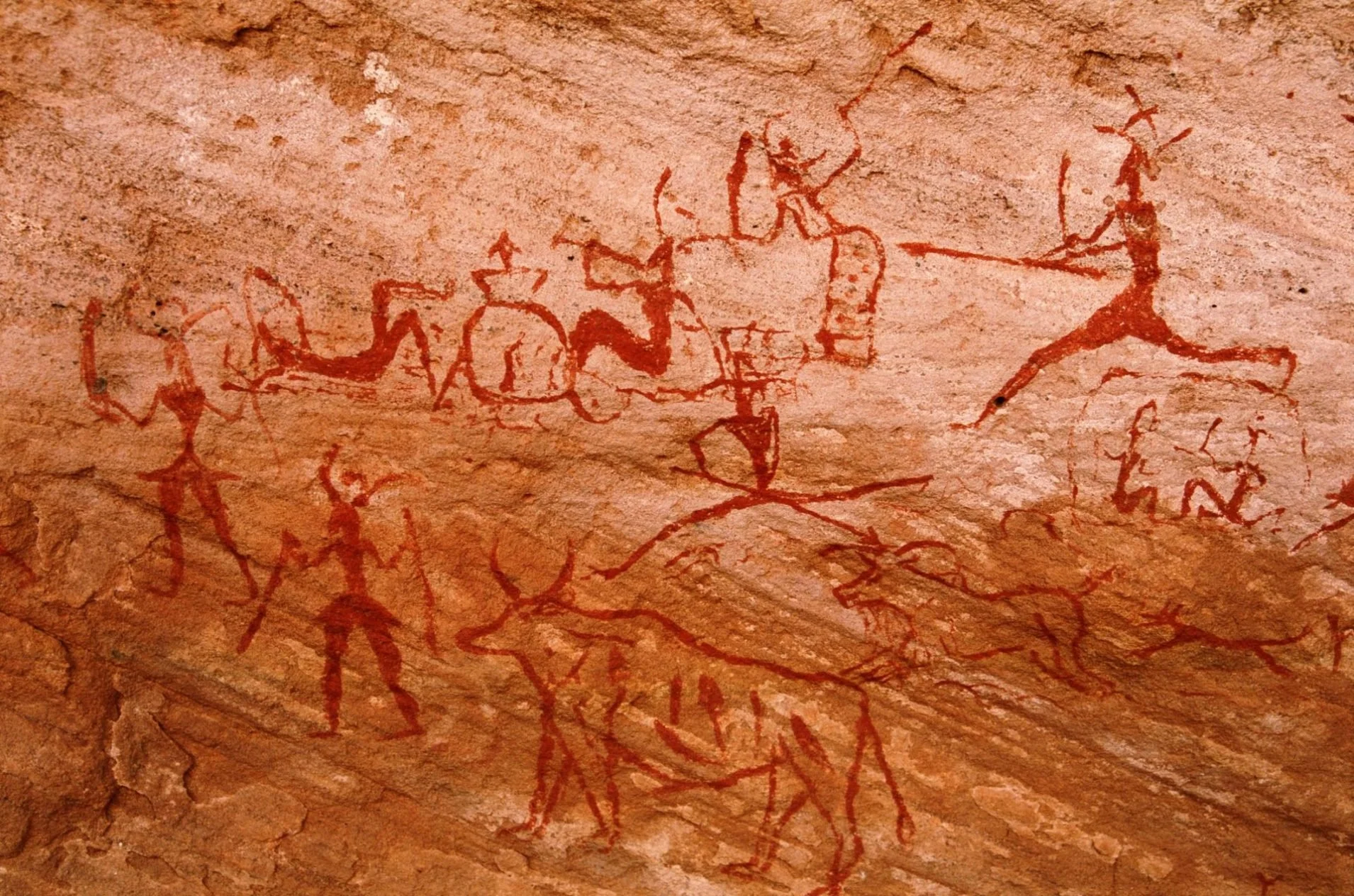
Within caves and rock shelters, prehistoric communities created thousands of paintings and engravings.
The art preserves evidence of human life across enormous periods of environmental and cultural change.
The earliest artistic traditions associated with the wider region extend back many thousands of years, while later images document the transition from hunting societies to pastoral communities and eventually to cultures familiar with horses and camels.
The Acacus is therefore not simply an archaeological site.
It is a visual timeline of Saharan civilization.
The Landscape of Stone
The mountains provided ideal conditions for preserving prehistoric art.
Erosion created:
Caves.
Rock shelters.
Overhangs.
Narrow valleys.
Protected surfaces.
These spaces offered prehistoric artists locations where images could survive longer than they would on fully exposed rock.
The landscape also provided shelter and access to resources.
14,000 Years of Human History?
The phrase “14,000-year rock art” should be understood as referring to the great antiquity of the region's prehistoric cultural sequence.
Dating individual works remains difficult.
Not every painting can be assigned a precise age.
Nevertheless, archaeological and stylistic evidence demonstrates that the Acacus preserves artistic traditions extending across many millennia.
This makes it one of the most important long-term records of human cultural change in Africa.
The Hunters
Some of the earliest artistic traditions emphasize wild animals and hunting.
Human communities lived in an environment with far greater biological diversity than the modern Sahara.
The art may depict:
Wild animals.
Hunters.
Weapons.
Human groups.
These images preserve evidence of economies based heavily on the exploitation of natural resources.
The Pastoral Transformation
Over time, cattle became increasingly important.
Pastoral art depicts herds and human relationships with domesticated animals.
This transformation represents one of the great economic changes in prehistoric Africa.
The movement from primarily hunting and gathering toward pastoralism changed:
Settlement patterns.
Mobility.
Food systems.
Social relationships.
Cultural identity.
The Acacus preserves visual evidence of this transition.
Horses Enter the Story
Later artistic traditions include imagery associated with horses and horse-drawn transport.
The arrival of horses transformed mobility and warfare across North Africa.
Their appearance in rock art can therefore provide evidence for changing historical connections.
Camels and the Desert World
Later still, camel imagery becomes significant.
The camel was particularly suited to increasingly arid environments.
Its appearance reflects another major transformation.
The landscape that once supported cattle and large wild animals became progressively more desert-like.
Human societies adapted.
The camel became one of the defining animals of Saharan transport.
The Art and Climate Change
The Acacus Mountains provide a visual record of environmental transformation.
The sequence can be simplified into a dramatic narrative:
A greener Sahara supported hunters.
Then pastoral communities managed cattle.
Later societies adapted to increasingly dry conditions.
Horses and eventually camels became part of the cultural landscape.
The art therefore records both human history and climate history.
The Artists Were Sophisticated Observers
The images often demonstrate detailed knowledge of animals and human movement.
Artists understood:
Anatomy.
Proportion.
Motion.
Group composition.
Some scenes contain multiple figures interacting with each other.
This required artistic planning.
The paintings demonstrate symbolic thought and visual communication.
A UNESCO Cultural Landscape
The importance of Tadrart Acacus has been internationally recognized because of the combination of:
Geological features.
Prehistoric archaeology.
Rock art.
Environmental significance.
However, recognition does not eliminate threats.
Remote archaeological sites can be damaged by:
Vandalism.
Graffiti.
Uncontrolled tourism.
Conflict.
Natural weathering.
Some damage is irreversible.
Why the Acacus Mountains Matter
The Acacus tells a story that written history cannot.
Its artists lived thousands of years before the development of historical records in the region.
They left no known kings lists.
No official chronicles.
No written archives.
Instead, they painted.
And those paintings became their history.
The Acacus Mountains preserve the memory of people who watched the Sahara transform around them.
Their world changed from green landscapes filled with wildlife to the dry desert known today.
Their paintings survived the transformation.
And that makes the Acacus one of humanity's most extraordinary prehistoric archives.