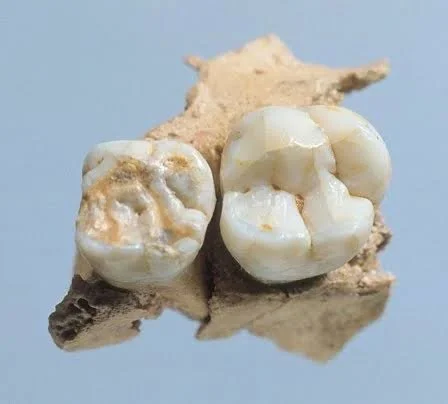
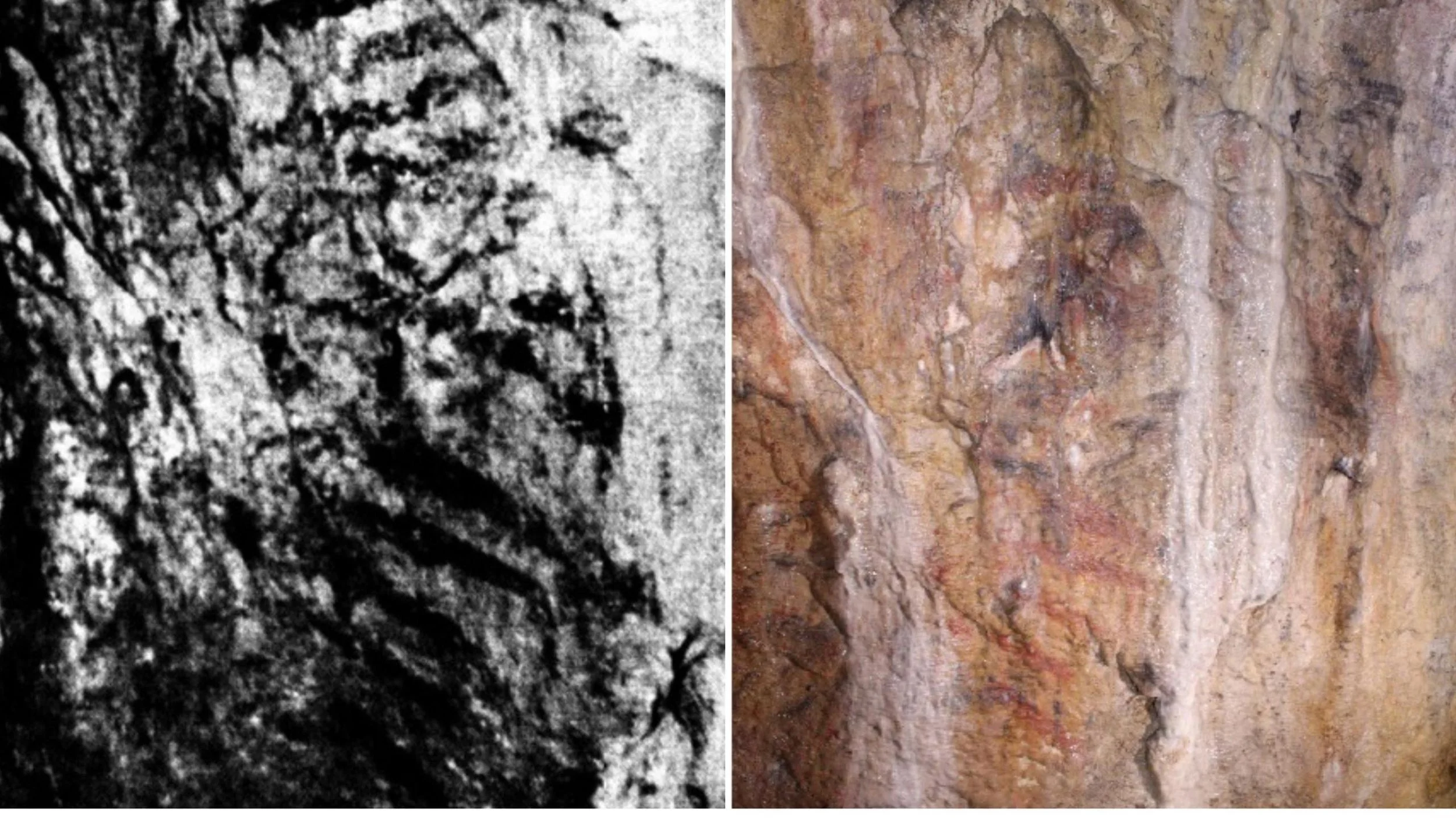
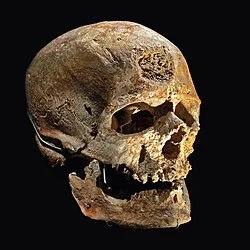
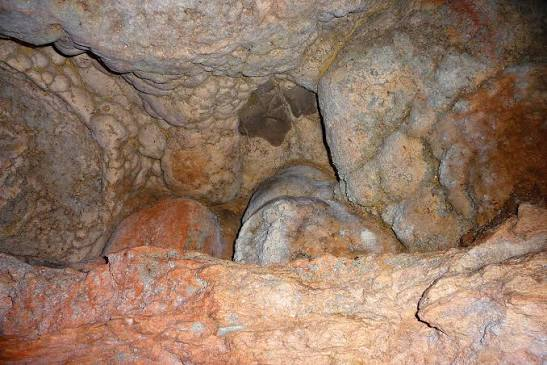
An expert group has been looking into the acropolis near Cairo, and their efforts are about to pay off. This finding will truly be groundbreaking. Watch the video below for more!
How Neanderthals Vanished: Scientists Surprising New Discovery
Did you know that Neanderthals did not go extinct as previously thought? In a recent study, scientists found traces of Neanderthal DNA in modern-day people. This news has many people reconsidering the extinction of Neanderthals. This discovery has sparked a lot of debate, and scientists are still working to determine if Neanderthals were a threat to Homo sapiens or if they were just another species in the world. However, this new information is sure to change the way we think about Neanderthals and the evolution of humans!
Around 600,000 years ago, Europe was invaded by large-brained hominins using Acheulean stone tools. They were probably African immigrants, because similar fossils and tools occur earlier in Africa. They have been called archaic Homo sapiens, Homo heidelbergensis, and early Neanderthals, yet they remain mysterious. They may have been ancestors of Neanderthals and modern humans, or ancestors of Neanderthals only, or an evolutionary dead end.
16 Unbelievably Beautiful Abandoned Places
Have you ever explored an abandoned place? We have gathered a list of 16 unbelievable abandoned places you will be sure to visit. Enjoy!
Orangutans have their own "dialects," just like us, making them "more human than we thought"
It's possible that orangutans and their recognizable reddish-orange fur are synonymous due to word association or overexposure in popular culture. However, the "orang" sound in their name has nothing to do with their distinctive coloring; in fact, the name orangutan literally translates to "person of the forest" in Malay. We may have underestimated how true the nickname is.

Dr. Adriano Lameira told Salon that they are "extremely intelligent, very similar to us, have cultures, and exhibit prototypical behaviors that are thought to be the ancestors of language."
Orangutans, one of our closest living relatives, have 96.4% of our genes. These highly endangered giant apes have a propensity for communication as well. Indeed, orangutans and other big apes have long been recognized as having advanced cognitive abilities. Despite their solitary nature, they are able to remember and communicate facts about the past or the future to others.
Currently, research shows that social dynamics influence linguistic communication among orangutans. The findings refute the widely held belief that orangutans have an innate ability to vocalize. They discovered that orangutan communication style is strikingly comparable to human expressiveness and depends on social impact.
It's interesting to note that orangutans in heavily crowded regions had greater individuality in verbal communication. Lameira compared the outcome to a city's array of available fashion options.
"There seems to be a premium on novelty," he said. "They frequently look for fresh options in the audio spectrum that they may employ. They constantly choose different word choices and inflections, almost as a display of personality to stand out. The problem is that because everyone tries to be original all the time, there is actually very little repertory that all people share.
It was, in his words, "a bit of a cacophony." The vocalizations of isolated orangutans were more likely to be recognizable, much as how longtime friends can fall rely on inside jokes or recognized phrases. In addition, isolation led to the emergence of more sophisticated repertoires.
"Like us, when great apes are exposed to different social settings, this molds how they communicate — which is basically what happens when a person is learning a new language, whether as a child or an infant learning the mother tongue or later as an adult learning a second language," Lameira explained.
Lameira was careful not to refer to the verbal abilities of orangutans or other large apes as a "language." However, the results of his team's research, which were published in Nature Ecology & Evolution, indicate that the ability to generate language is not unique to humans. We were the first to arrive.
The secret to unraveling the origins of language in humans is to study giant apes. According to long-held theories, humanity's extraordinary evolutionary advancement over other hominids, excluding supernatural intervention, was the result of some enormous genetic jackpot. According to Lameira, there is increasing evidence, such as this report, suggesting the changeover was gradual.
Lameira continued, "We prefer to think of ourselves as superior to the rest of the animal kingdom, but it begs the question of how our language-using ability, which was a game-changer, came to be. The only possibility left by this conventional theory is that there was a significant jump that was abrupt, seemingly random, and unpredictable.
The paper even goes so far as to advocate the idea that big apes should have the same rights as people. In fact, Lameira said, these discoveries go beyond simply explaining human evolution. They should serve as a reminder to show more respect for what is really an additional branch of the same evolutionary tree.
He said, "There's not much that separates humans from these creatures. If they are susceptible to social pressure in the same way that we are, either they are slightly more human than we believed, or we are slightly closer to apes than we would want to accept.
In stark contrast to the human superiority complex, the poor living conditions of orangutans and other big apes in the wild demonstrate how poorly humans have managed our planet. Humanity has directly contributed to the debate of whether they even exist. Their declining population is a result of deforestation, hunting, and illicit wildlife trading. According to the World Wildlife Fund, there are only around 120,000 orangutans left in the wild, and they can only be found in the Bornean and Sumatran rainforests.
Creepy Things That Were Normal in Constantinople
In the fabled city of Constantinople, where the Byzantine Empire once flourished, the ghostly whispers of its enigmatic past echo through the aged stones. Creepy things that were normal in this imperial metropolis still send eerie echoes through the corridors of time. The formidable Byzantine walls reverberate with the terror of Mehmed II's cannons, the spine-chilling specter of the Ottoman Empire looming in the shadows. The chilling tales of the Bashi-Bazouks, Ottoman irregular soldiers, still cause shivers and goosebumps. From the specter of the devastating Greek Fire to the hushed silence of the destroyed great Imperial Library, the spine-tingling memories of these daunting artifacts and their chilling role in the fall of Constantinople under the Ottomans never cease to intrigue. Come, step into the spectral shadows of history and unearth the ghastly past of a city that was once the jewel of the world.
The Mysterious Location That Should Have Never Existed
After those weird couple of years of confinement, it seems like there’s a renewed energy for travel with a lot of people. It’s hardly surprising, we have so much exploration time to make up for. And one of the latest trends in travel is to go to increasingly strange and remote places where others have never set foot. And people have been uncovering some really weird stuff as they explore the rarest parts of our planet. From the waterfall that is actually underwater to the hot spring that looks like an acid trip, here’s 20 Unbelievable Places That Actually Exist. Enjoy!
Scientist Discovers Secrets Inside Chambers of Egypt’s Pyramids
Buried within the enigmatic sketches and cryptic writings of Leonardo da Vinci, a profound warning has lain dormant, a presage entwined with the mysteries of ancient Egypt and the imposing Pyramid of Giza. In the heart of the Giza Plateau, the time-worn tomb of Pharaoh Khufu is more than a testament to a bygone era; it's a bastion of untold secrets that the Renaissance maestro believed needed to be unearthed. The indomitable Sphinx, the concealed King's Chamber, the hidden tale of Menkaure, all come under the relentless scrutiny of da Vinci's brilliant mind. His private discourse with the Sultan of Cairo hints the possibility of a startling discovery regarding the secrets of the Giza Pyramid. What might have happened in such a remarkable conversation you might ask? This narrative weaves the fabric of Leonardo Da Vinci's Egypt - an unexplored tapestry that promises to reveal the hidden truths behind history's most fascinating monument.
Scientists Unearthed A Meteorite In Siberia, And Inside They Made An Extraterrestrial Discovery
As Princeton scientists examine tiny fragments of a meteorite that landed on Earth some 15,000 years ago, they find something astonishing. To begin with, the experts discover that pieces of the rock are composed of an incredibly rare mineral called khatyrkite – which in itself is rather remarkable. But as it happens, that’s not the only surprise in store. You see, the khatyrkite contains a crystalline structure that seems to defy the laws of Earthly physics. In fact, it looks rather alien.
The Most Bizarre Prehistoric Creature Discoveries
From Panthera Atrox to Tyrannosaurus Rex, in the video below we will analyze the most bizarre prehistoric discoveries. Watch the video for more!
12 Most Incredible Archaeological Finds
In the following video we will analyze the 12 most incredible archaeological finds. Watch the video to find out more and enjoy!
The Assyrians - Empire of Iron
In the lowlands of Northern Iraq, a series of enormous cities lie crumbling in ruins...
In this video, find out about one of the most remarkable ancient civilizations: the society known today as the neo-Assyrian Empire. Discover how the Assyrians built their empire out of the ashes of the Bronze Age, and built an empire of iron that lasted for centuries. Explore the extraordinary flourishing of art and technology that they fostered. And finally, discover what happened to cause their final, devastating collapse.
Unusually Well-Preserved 17th-Century Ship Discovered in the Dark Baltic Sea Waters
While probing the Baltic Sea's depths, Finnish divers uncovered an unexpected find: an extraordinarily well-preserved wreckage that dates back approximately 400 years.

The discovery of what seems to be a fully undamaged Dutch merchant ship from the 17th century by volunteer divers from the non-profit Badewanne team was a great surprise because they typically find destroyed 20th century artifacts lost during the maritime battles of World War I and WWII.
The vessel, a Dutch "fluit" (or "fluyt"), was discovered in the easternmost Baltic Sea seas close to the mouth of the Gulf of Finland.
The Badewanne diving crew found this Dutch time capsule lying on the bottom, nearly entirely intact and maintained, at a depth of about 85 meters (about 280 feet).
The ship is otherwise frozen in a kind of 17th century stasis, the team claims, thanks to the characteristics of the water in this part of the sea, where a combination of low levels of salinity, temperature, and light can enable sunk wrecks to survive virtually unchanged for hundreds of years. The ship shows only minor damage sustained from subsequent pelagic trawling with fishing nets.

In warmer seas, wood-boring animals proliferate and can cause great harm to artifacts like this, but in this case, the Baltic's chemistry and the mystery surrounding the fluit's sinking have left us with a magnificent artifact.
The divers claim that even the ship's holds are full, still holding its store of supplies and goods from the time when Dutch cargo ships predominated seaborne trade in this region of the world, in part because of the innovative developments displayed by the fluit itself.
These vessels, which initially appeared in the 16th century, made all kinds of sacrifices for their vital cargo. The three-masted fluit bore a cost-effective and spacious design that was fully meant to maximize cargo capacity, unlike other boats of the era that could alternate between duty as commerce ships and war vessels.
Because of this, it could carry up to twice as much cargo than competitors' ships, and cutting-edge rigging technologies made sure that even tiny crews could master the fluit's nimble sailing talents. This also made the fluit a more profitable ship to sail.
Despite the design's popularity and success during the 16th and 18th centuries, only a small number of fluits still exist today. Additional research on this particular find might turn out valuable information on these priceless artifacts.

"The wreck reveals many of the fluit's characteristics but also some unique features, not least the construction of the stern," claims maritime anthropologist Niklas Eriksson from the University of Stockholm in Sweden, who will collaborate with Finnish authorities and others to research the discovery.
"It's possible that this is a prototype for the design. Thus, the wreck presents a rare chance to study the evolution of a ship type that sailed all over the world and served as the instrument that created early modern globalization."
The results of deciphering Neanderthal and Denisovan blood groups are surprising
If we're to comprehend how these vanished creatures are related to modern humans, we need to learn more about the Neanderthals and Denisovans. The blood types of Neanderthals and Denisovans have finally been analyzed, and the findings are somewhat unexpected and provide new insight into the evolution of humans.

Left: An old Neanderthal woman. Credit: Fährtenleser - CC BY-SA 4.0 - Right: A Neanderthal man. Credit: Hiarash - CC BY-SA 4.0
Between 300,000 and 40,000 years ago, the extinct human lineages of the Neandertals and Denisovans inhabited all of Eurasia. The research of the genes underlying blood types had previously been disregarded despite the sequencing of roughly 15 Neandertal and Denisovan individuals in the past. However, the earliest indicators employed by anthropologists to retrace the beginnings of hominin communities, their migrations, and their interbreeding were blood group systems.
In a recent study, researchers from the CNRS, Aix-Marseille University, and the French Blood Establishment (EFS) analyzed the previously sequenced genomes of one Denisovan and three Neandertal females who lived 100,000 to 40,000 years ago to determine their blood groups and to speculate about what they might reveal about the evolution of humans.
The team focused on the seven most often used blood group systems—the ABO (which identifies the A, B, AB, and O blood types) and Rh systems—out of the approximately 40 recognized blood group systems.
The results provide new surprises while also supporting earlier assumptions. As with chimpanzees, who are all type A, and gorillas, who are all type B, it was long believed that Neandertals were all type O. However, the researchers showed that these prehistoric hominins already exhibited the complete spectrum of ABO variability seen in modern humans. A thorough investigation of additional blood group systems revealed alleles that support Neandertal and Denisovan origins in Africa.

The geographic origin, blood group, and dating of the individuals studied. Credit: © Stéphane Mazières - (photos: Douka et al. / Mafessoni et al. / Prüfer et al. / Green et al.)
The finding that Neandertals had a rare Rh allele present in them is particularly surprising, with the significant exclusions of one Aboriginal Australian and one Papuan. Do these two people provide evidence that modern humans and Neandertals interbred before the latter migrated to Southeast Asia?
Finally, this research clarifies Neandertal demographics. It confirms that these prehistoric hominins had very little genetic diversity and may have been susceptible to erythroblastosis fetalis, a hemolytic disease of the fetus and newborn, in cases where Neandertal mothers carried the offspring of Homo sapiens or Denisovan mates due to maternofetal Rh incompatibility.
These hints support the theory that limited genetic diversity and poor reproductive success were factors in the extinction of the Neandertals.
10 Craziest Conspiracy Theories In Joe Rogan History (Copy)
In the following video we will analyze the 10 craziest conspiracy theories from the Joe Rogan Experience podcast. Watch the video for more!
What Was Earth Like 4 Billion Years Ago?
In this video below we will be explaining what Earth was like 4 billion years ago. Watch the video to find out more!
7th-Century ROCK INSCRIPTIONS Debunk Islam!
Rock Inscriptions, because they are made out of rocks which don't disintegrate or deteriorate over the centuries, are excellent pieces of evidence from the 7th century to give us a window into what was happening in that part of the world and at that time.
So far researchers have located over 100,000 Rock inscriptions with 30,000 of them catalogued and surveyed across Arabia, the Negev, the Trans-Jordan, and Syria. Another 70,000 more have yet to be catalogued.
One would expect Muhammad’s name, or references to Islam, or to Muslims, or even references to the Qur'an and Mecca on these inscriptions, all of which are located along the Haj routes, yet we don’t find one inscription with any of these references on them until after 690 AD, a full 60 years after Muhammad supposedly died.
The Arabic used in these inscriptions are all chiselled in the Nabataean-Aramaic script which was the same Arabic which is later used in the earliest Qur'anic manuscripts. If they had been created in the Hijaz part of Arabia (i.e. the central Western area), as Muslims tell us, they would have used the southern Sabain script which was used in what is today Yemen and Oman, a script which had been created in 600 BC, and continued for 1200 years in southern and central Arabia.
Ironically, the Sabaic script contained all the needed vowels and consonants required for a religious text, unlike the 7th century Arabic text which was used for the earliest Qur'anic manuscripts, which only employed between 14 - 16 consonantal letters, but without any of the 5 diacritical dots, nor the 3 vowels, all of which had to be created in the 8th and 9th centuries in order for people to understand what they were reading in the Qur'an.
Furthermore, in the 7th century there were no rock inscriptions in the central part of Western Arabia, because there were too few people living there, due to the desert environment of that area. Without water, you cannot have many people, and without large numbers of people, just like the coins, you aren't going to have many rock inscriptions.
Dr Ilka Lindstedt, in his research of rock inscriptions between the years 640 AD - 740 AD (which is roughly the Umayyad Period) found that almost all of the 7th century rock inscriptions were located in the north (i.e. around what is today Jordan, Israel, Lebanon, and Syria), and in the far south (i.e. around what is today Yemen).
Unbelievable Ancient Mysteries We Still Can't Explain
In this captivating video, we delve into the realm of ancient civilizations, uncovering unbelievable phenomena that still puzzle us to this day. From unexplained artifacts to lost cities, prepare to be amazed as we reveal the secrets that have remained hidden for centuries. Enjoy!
What was Rome like after Alaric's Sack in 410 AD?
Rome’s best-preserved ancient church rose from the ashes of a brutal barbarian sack... Watch the video below to find out more!
What if Neanderthals Didn't Go Extinct?
Neanderthals lived for 300,000 years in Europe. We will never know much about their behavior because they went extinct 40,000 years ago. We know they were intelligent and had many human characteristics. So what would happen if Neanderthals never went extinct?
Historical Artifacts We Still Haven’t Found
Cleopatra's Tomb, Honjō Masamune, Scepter of Dagobert & More! Join us on a thrilling quest as we explore the mystery behind these priceless artifacts and the search to recover them. Enjoy!