A first look into the world of ancient China, examining, recreating the soldier's faces in the Terracotta army, that was buried 2221 years ago to protect the first emperor of China, Qin Shi Huang in the afterlife. Done with digital painting and the help of several animation software. Enjoy!
Exposing a difficult crab fossil - 25 hours of work in 4 minutes of video
In the following 4 minutes video we will be showing you 25 hours of work on exposing a difficult crab fossil. Enjoy!
India's 3,000-year-old martial art still practiced today
Kalaripayattu, also known simply as Kalari, is an Indian martial art that originated in modern-day Kerala, a state on the southwestern coast of India.
It is believed to be the oldest surviving martial art in the world, with a history spanning over 3,000 years. We explore its legendary origins, philosophy and step-by-step technique and practice.
Unseen Drone & Satellite Images of North Sentinel Island
These are some of the Unseen Photos and Images of the North Sentinel Island and the Lifestyle of Sentinelese Tribes. They are Untouched from last 60,000 Years. They are Living in this North Sentinel Island and totally unaware of the Other part of the World.
These Images are so rare that Hardly you will find in the Web. Indian Govt. Flies Drone above the North Sentinel Island time to time to Check whether these Tribes are okay. These Images are taken from those Operations and Exclusively bring for you.
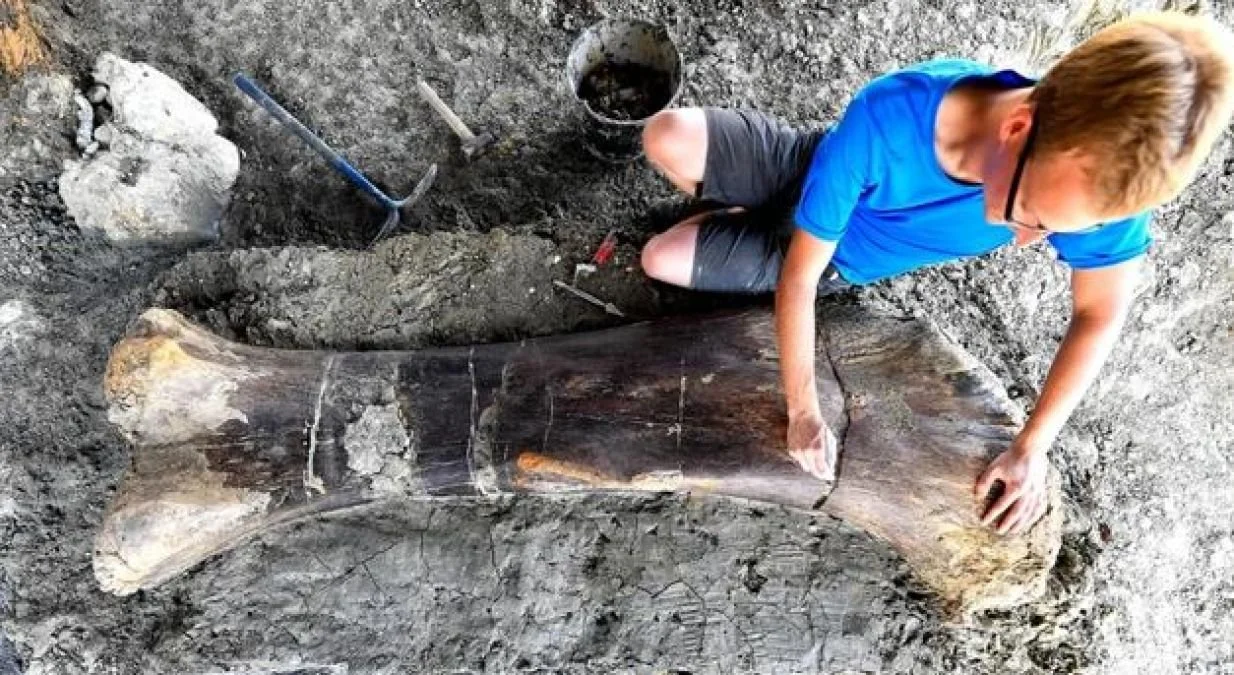
Massive 1,100-pound bone of ‘world’s biggest dinosaur’ found
Now, this is one bone you don't want to pick with.

Paleontologists have unearthed a 140-million-year-old dinosaur bone, 6.5 feet in length, weighing 1,100 pounds in France. The thigh bone was discovered in Charente, an area that dates back 140 million years and has been a treasure trove for researchers in the past.
“This is a major discovery,” Ronan Allain, a paleontologist at the National History Museum of Paris said in an interview with Reuters. “I was especially amazed by the state of preservation of that femur.”

“These are animals that probably weighed 40 to 50 tons," Allain added.
More than 7,500 fossils have been found in Charente since 2010, including those from 40 different species. It's unclear exactly what sauropod the bone belongs to just yet, but the group includes brachiosaurus and brontosaurus, seen famously in "Jurassic Park."
"This femur is huge! And in an exceptional state of conservation," Angouleme Museum curator Jean-François Tournepiche told The Local.
Allain added that it is "very rare" to find fossils this size, as they usually collapse on themselves and break up into fragments.
The giant sauropod femur is not the only dinosaur discovery to make headlines this week. In the badlands of North Dakota, a California college student found the 65-million-year-old fossil of a partial Triceratops skull among plant fossils from the Cretaceous period.
USA Today reported that the skull was found in the Hell's Creek formation, which spans Montana, North Dakota, South Dakota and Wyoming.
Lantern Found Burning In Tomb?
Could a lantern have been found burning in a tomb? Watch the video below to find out more!
Did Giant Ancient Humans Once Roam The Earth?
Have you ever wondered if there was some sort of giant human species that once roamed the earth? Well, according to some scientists, this may have been the case! In this video, we'll discuss the theory that a giant human species once existed on earth, and We'll investigate the evidence and see if the theory holds any water. After watching this video, do you believe in the existence of a giant human species?
In this video, we're discussing whether or not giant ancient humans once roamed the Earth. There is a lot of speculation around this topic, but based on the evidence we have, it seems like giant ancient humans may have actually existed! So what do you think? Did giant ancient humans once roam the Earth? Let us know in the comments! One of the leading archaeologists in the world has repeatedly claimed that there was a species of human, sometimes called the 'African Neanderthal', walking the earth that was over 7-feet-tall! In this video we are going to examine what the evidence shows.
What happened In The First Minutes After The Dinosaurs Disappeared?
Today we’re going to visit a planet that humans haven’t yet set foot on. A planet that was almost destroyed by a meteor strike. You‘ll find out which of the ancient inhabitants of the Earth died immediately. You‘ll see who managed to survive. You‘ll learn what climate changes they had to face, and how the Earth was recovering from a monstrous disaster.
Archaeologists were alarmed by a sinful mummy’s head discovered in an ancient Egyptian tomb
All ancient Egyptian tombs are unique, but some pose a greater mystery than others.

In 1905, archaeologists excavating in the Egyptian necropolis of Deir el-Bersha discovered a hidden tomb that contained something unexpected. After 33 days of digging a 30-foot shaft, the archaeological team, led by archaeologists George Reisner and Hanford Lyman Story from the Harvard University-Boston Museum of Fine Arts Expedition entered the 4,000-year-old Egyptian tomb, but they were unprepared for the frightening sight that awaited them. Inside the cramped limestone chamber was a beautifully painted cedar coffin, and on top of it was a mummy's severed head.
Riddle Of The Decapitated Egyptian Mummy
Where was the rest of the mummy? Why was only the head there? Who and why had beheaded the deceased? Decapitation was not an ancient Egyptian burial practice anyone was familiar with at the time. The researchers had encountered a mystery, and it would take 104 years before modern forensic experts could shed some light on this peculiar story.
As archaeologists continued to explore the secrets of the hidden tomb, they realized this was no ordinary burial site.

Tomb 10A was the largest burial assemblage of the Middle Kingdom (2040-1640 B.C.) ever discovered. Scientists found magnificent cedarwood coffins inside the chamber, personal items such as jewelry, written religious chants, and an astounding flotilla of reassembled model boats. As the investigation of tomb 10A continued, researchers were eventually able to determine this was the final resting place for a governor named Djehutynakh and his wife.
"At some point during the couple's 4,000-year-long slumber, grave robbers ransacked their burial chamber and plundered its gold and jewels. The looters tossed a headless, limbless mummified torso into a corner before attempting to set the room on fire to cover their tracks."
The archaeologists felt lucky because they could recover many magnificent ancient objects that had survived the raid and sent them to the Museum of Fine Arts, Boston, in 1921.

According to the Museum of Fine Arts, Boston, tomb 10 A "contained four beautifully painted coffins, one of which (detail, shown above), the famous "Bersha coffin" (the outer coffin of the governor), is arguably the finest painted coffin Egypt produced and a masterpiece of panel painting. The tomb also included Djehutynakht's walking sticks, pottery, canopic jar, and miniature wooden models that were made for the burial but reflect life on Djehutynakht's estate, including some 58 model boats and nearly three dozen models of daily life such as individual shops for carpenters, weavers, brick-makers, bakers, and brewers. Of these, the best known is the exquisitely carved "Bersha procession" of a male priest leading female offering bearers."
The transportation of these ancient items was dramatic because the ship caught fire. Still fortunately, the crew had the situation under control, and the precious ancient Egyptian artifacts suffered only slight water damage.

After arriving in Boston, the Museum put the Deir el-Bersha coffin and procession on view in the galleries, but most of the other objects were not revealed to the public.
In 2009, the Museum of Boston decided to put the stored artifacts on display, but the staff encountered a rather embarring problem. "Though the torso remained in Egypt, the decapitated head became the star of the showcase. With its painted-on eyebrows, somber expression, and wavy brown hair peeking through its tattered bandages, the mummy's noggin brought viewers face-to-face with a mystery." 1
Whose Head Was It And Why Was It Missing Cheek bones?
Suddenly the Museum realized no-one knew whether the mummified head belonged to Djehutynakh or his wife. Only a DNA analysis could answer this question, but extracting DNA from a 4,000-year-old mummy is easier said than done.

The Boston Museum contacted the Federal Bureau of Investigation (F.B.I.), asking for help solving this ancient mystery.
While examining the head, scientists discovered something puzzling. The mummified head was missing cheekbones and part of its jaw hinge. How could the missing facial bones be explained?
According to Dr. Rajiv Gupta, a neuroradiologist at Massachusetts General, "all the muscles that are involved in chewing and closing the mouth, the attachment sites of those muscles had been taken out."

This had been caused by the opening of the mouth ceremony, an ancient Egyptian ritual described in funerary texts such as the Pyramid Texts. "The Opening of the Mouth Ceremony allowed statues of deities and the dead to regain their senses, to see thereby into the realm of the living." 3
However, the ritual was also performed so the deceased could eat, drink and breathe in the afterlife.
By extracting the mummy's molar and studying the genetic material, F.B.I specialists could determine the mummified severed head had belonged to governor Djehutynakht.
What is still unknown and may never be solved is why Governor Djehutynakht had been decapitated and by whom. Had the ancient Egyptian governor been a hated man? Did looters deliberately cut off his head to prevent him from entering the afterlife, or was his body destroyed by workers before the tomb was sealed?
Insane Story About Finding Real Prehistoric Meat
Joe Rogan and John Reeves discuss what it's like eating Mammoth meat, including stories about what happens when you find something like this.
John Reeves is an Alaskan gold miner who first came to public prominence on the 2012 National Geographic docu-series "Goldfathers." More recently, his ongoing search for gold uncovered the remains of thousands of Ice Age animals lying beneath the permafrost on his property. The discovery is featurted in the 2019 documentary "Boneyard Alaska".
Your Geography Teacher Lied to You
In the following video we will be explaining why they have lied to you about Mount Everest being the… tallest mountain on Earth. Watch the video below to find out more!
A Bizarre Discovery Was Made After Euphrates River Dried Up
One of the world's oldest and most significant rivers is the Euphrates. At this river, a lot of history was created. Western Asia is traversed by the Euphrates River. While traveling through Syria and Iraq, the Euphrates River originates in Turkey. Before emptying into the Persian Gulf, the river merges with the Tigris. Its length is around 1,700 miles, and the average area of the basin is 190,000 square miles. The longest river in western Asia is this one.
How would the world look if Rome never fell?
In the video below we will investigate how the world would look like if Rome never fell. Watch the video to find out more!
What Scientists Found in a Forbidden Tomb in Egypt Shocked the Whole World
There are a lot of things to say about Ancient Egypt. It was a civilization surrounded by myths and legends. They are among the most powerful empires that rose in the history of mankind, and they remain one of the most fascinating people in history. There is much more to Egypt than the pyramids in Giza.
In this video, we’ll take a look at the most amazing finds in Egypt that puzzle archeologists to this day. From a dream discovery, to a mysterious pregnant mummy, here are the 15 strangest things discovered in Egypt!
Bizarre & Mysterious Discoveries
In today’s video we will be exploring some bizarre and mysterious discoveries. Watch the video below to find out more!
Unexplained Ancient Mysteries That Still Baffle Scientists Today
In the following video we will investigate unexplained ancient mysteries that still baffle scientists today. Watch the video to find out more!
Ice Age Graveyard Discovered Containing 22 Giant Sloths Preserved In Their Own Feces
The fossil remains of 22 Ice Age sloths the size of elephants have been found preserved in asphalt in Ecuador, researchers have reported.
The specimens — which include 15 adults, 5 juveniles and two newborns or fetuses — were unearthed from the Tanque Loma site on the country's Santa Elena peninsula.

Weighing in at several tons, the sloths — of species Eremotherium laurillardi — had the ability to walk on two legs and move fast, unlike their languid modern relatives.
Instead of falling into a tar pit and getting stuck, experts believe the giant animals died 20,000 years ago from drinking water contaminated by their own faeces.
They were then preserved by being coated in seeping asphalt, along with an ancient horse, a deer, an armadillo-like pampathere, and an elephant-like gomphothere.
The study of the fossilised remains has been led by University of California Los Angeles palaeontologist Emily Lindsey, who is also an assistant curator and excavation site director at the famous La Brea Tar Pits.
'For years, everyone has thought of the classic scenario at the La Brea Tar Pits, where a large herbivore would get stuck in asphalt, then a bunch of carnivores would be attracted to the trapped animal and get stuck… etc,' Dr Lindsey told Gizmodo.
'Nothing got stuck at Tanque Loma! The animals died in an aquatic setting like many other fossil sites, and the bones just fortuitously got preserved by seeping asphalt.

'It blew my mind when I first realised that,' she added.
The dig site was first excavated by a local oil film in 2003, at the edge of hill on which today stands various oil tanks and containers — hence the name, 'Tanque Loma', or 'Tank Hill'.
According the the researchers, the nature of the sediments at Tanque Loma indicates that the area was a marsh some 20,000 years ago.
However, a few shells aside, no aquatic fossils have been found at the site. Instead, the team found an abundance of tiny, broken-up plant remains.
These were all smaller than the distance between the ridges of the ancient sloths' teeth — suggesting, rather gruesomely, that these plants had come from the giant animals' faeces, which likely contaminated the drinking water and killed them.
There is a precedent for such a tragedy — in the seventies, scientists observed 140 hippos that gathered around a watering hole in Tanzania's Selous Game Reserve at the beginning of the dry season.
As time passed, the waterhole shrunk while the excrement left by the mammals mounted alongside and in the water — helping to poison them.
By the end of the season, only 40 of the animals remained, with the corpses of the rest lying where they had fallen around the faeces-riddled water.
Despite the most unfortunate manner of their death, the sloths' tragedy is science's gain, as the death assemblage has shined light on the animal's social nature.
'Tanque Loma presents a rare accumulation of fossils that provides highly relevant data,' palaeontologist José Luis Román-Carrión of the Escuela Politécnica Nacional university — who was not involved in the present study — told Gizmodo.
'Now we know that Eremotherium lived in groups and that it had parental behaviour […] we also have this type of evidence from another giant ground sloth, Oreomylodon wegneri, from the [capital city of Ecuador] Quito’s valley.'
The researchers are working to try to persuade the Ecuadorian government to protect the region around Tanque Loma — which is known as the 'Arroyo Seco'.

'There is definitely more of the fossil deposit left to excavate at Tanque Loma. We really don’t know how far it extends yet,' Dr Lindsey told Gizmodo.
'There’s a lot of material that we have excavated that hasn’t been fully prepared and curated yet.'
The team have many more studies in mind at the site, she added, 'like looking at how these giant sloths grew (since we have such a range of sizes and ages), types of pathologies, and more radiocarbon dating of the deposit.'
'But one of the most intriguing aspects of the site for me are the layers of microfauna-rich sediments a meter or so above the asphaltic megafauna deposit.'

'These contain thousands of bones of small birds, lizards, snakes, and rodents that have real potential to tell a story of past environmental change in this region.'
The full findings of the study were published in the journal Palaeogeography, Palaeoclimatology, Palaeoecology.
Lost Civilizations: Jerash, the Wonder of Jordan (Full Documentary)
Jerash was founded during the Hellenistic period by veterans from Alexander the Great’s army. In 63 B.C., the city felt o Rome and became one of the most important cities in the Roman Empire. A large number of monuments survive. Watch the video to find out more!
12 Most Amazing Recent Archaeological Finds
What makes an ancient artefact discovery truly remarkable? Is it the monetary value? The age of the object? Its rarity? The truth is, it can encompass all of these aspects and even more, or perhaps none of them at all! Fantastic artefact finds have a story to tell, but they can't speak for themselves, so allow us to speak on their behalf in this video.
Who are the Moroccans - DNA History
In the video below we will explain who the Moroccans are. Watch the video to find out more!