Priests and nuns in the Catholic Church are required to be celibate, although many find this difficult. Many of the sex acts they engage in, with both priests and parishioners, are voluntary, however, some are forced upon them. One of the most significant sacrifices a priest or nun makes for the church is celibacy. Nuns regard Christ as their spouse. They choose to devote themselves to God rather than take a human partner. But many nuns find it difficult to uphold their religious beliefs and vows on a daily basis. The Catholic Church has had a fair share of monastic scandals despite its demands for holiness and celibacy. So, what makes the history of nuns an infamous and suspicious one? What examples do we have of some heinous acts? You will get to know this and plenty more in this video.
The MOST DISGUSTING "Kinky" Sex Lives of the Cherokee Tribe
Nestled in the southeastern United States, the Cherokee tribe captivates with its rich history and unique cultural practices. Revered for their agricultural expertise, crafting skills, and spiritual connection with nature, what truly sets them apart are their enigmatic merit-based activities. From the ancient art of stickball, a fast-paced and fiercely competitive game often dubbed "the little brother of war," to the revered tradition of storytelling that weaves together history, wisdom, and values, the Cherokee's extraordinary activities have thrived for centuries. Their captivating world of mystery and resilience continues to intrigue us, inviting us to explore the depths of a culture that holds its secrets close, yet entices us to unravel the wonders that lie within
The Cherokee Tribe's historical roots date back to pre-Columbian times when they settled in the southeastern region of the United States. The Cherokee were a sizable and powerful tribe that had originally migrated from the Great Lakes region to the southern Appalachian Mountains. They now inhabit a vast area that is split between the states of Western North and South Carolina, Northern Georgia, Southwest Virginia, Tennessee, Kentucky, Northern Alabama, Alabama, Mississippi, and the westernmost part of Florida. The major crops grown by the farmers and hunters of the Cherokee nation were corn, beans, and squash. Their ancestors were part of the ancient Mississippian culture, which flourished around 800 to 1600 CE. This rich heritage influenced their spiritual beliefs and practices, leading to the development of animism - a belief system that attributes spiritual essence to all living beings and natural elements.
Within the Cherokee Tribe, nature played a profound role in their lives. They considered the land, water, animals, and plants as sacred entities, each possessing a spirit that is interconnected with their own. This interconnectedness instilled a deep sense of responsibility towards the environment and each other.
Insects Evolution Story | The Chosen One favored by God | Evolution Story
In this video, we explore the fascinating evolutionary history of insects, a group of animals that appears to have been favored by a higher power throughout their journey. While other animal groups faced numerous struggles and hardships, insects repeatedly defied extinction and flourished.
We delve into their origins around 440 million years ago during the Silurian period, when terrestrial ecosystems were just forming. Alongside their arthropod relatives, insects coevolved and adapted to the emerging land environment.
Despite initially lagging behind other arthropods like spiders and millipedes, insects eventually took flight during the Carboniferous period, becoming the dominant group in the skies for the next 100 million years. The abundance of tall trees and high oxygen levels facilitated their success, allowing them to grow to impressive sizes, such as the giant dragonflies of the time.
Additionally, we discuss the remarkable phenomenon of complete metamorphosis, or holometabolism, which further enhanced insects' evolutionary capabilities. The development of different organs from scattered imaginal discs during pupation provided them with unparalleled flexibility and adaptability.
Furthermore, we explore how insects played a crucial role in ecological balance by aiding in the decomposition of decaying wood and mitigating the effects of excessive plant growth.
Overall, this video highlights the incredible resilience, adaptability, and unique evolutionary trajectory of insects, suggesting a sense of favor or destiny in their survival and success throughout Earth's history.
Boiling in Water and Oil - The Most Inhumane Execution in Human History
This video will teach us about the most INHUMANE execution in human history. We'll see how boiling in water and oil is the inhumane way to be executed and how it was used as a form of execution throughout the Middle Ages.
The oldest archaeological site in the world
What's the oldest archaeological site in the world and what can it tell us about our evolution? Watch the video to find out more!
Shocking Greek ORIGINS To Genesis
The Genesis creation account usually gets compared to the mythological world of Mesopotamia for good reasons, but so does the Greek creation myths such as Hesiod's Theogony. The shocking part about this documentary is how we explain why Genesis demythologizes it's creation account in Genesis 1 while going mythological in Genesis 2-3 which has better parallels to Plato's Timaeus rather than the Babylonian, Assyrian or just Mesopotamian world. We explain why the Greek origins better explain the two accounts which often times gets attributed to two different authors centuries apart in the Documentary Hypothesis. Russell Gmirkin has a revolutionary hypothesis that explains why the God Elohim in Genesis 1 has a different name from YHWH in Genesis 2-3. His answer resides in Plato's Timaeus. Plato has two creation accounts, one more scientific and done by the demiurge or crafter while the other account is done by the children of the creator such as Prometheus or Athena. Genesis & Plato have shocking comparisons from the lesser deities creating humanity from clay and breathing life into them to the Generations of Ouranous and Gaia in both creations. You won't want to miss this documentary.
One of the earliest, most renowned, and authoritative theogonies preserved in written form is Hesiod's Theogony, which dates back to around 700 BCE in ancient Greece. However, the concept of anthropomorphic family groups of gods extends far beyond Greece, spanning across various civilizations in the Ancient Near East.
In Egypt, we witness the portrayal of gods in anthropomorphic family structures, as exemplified in Plutarch's work on Isis and Osiris. Babylonia presents its own version of divine lineage in the Enuma Elish, while Assyria depicts these dynamics through the Assyrian redaction of the Enuma Elish, featuring Ashur as the replacement for Marduk. The Hurrians and Hittites contribute to this rich tradition with their epic of Kumarbi, and the Phoenicians, as evidenced by Philo of Byblos, add their unique perspective. The "Canaanite" Ugaritic texts of Ras Shamra, particularly in the Baal Cycle, implicitly reveal similar themes of divine family connections.
Notably, the "Canaanite" tradition of El and his seventy sons directly influences the biblical text. Here, the god of the children of Israel is often associated with either El, the ruler of the divine council, or one of El's sons. These echoes of divine familial relationships resonate throughout biblical narratives.
For further exploration and detailed sources on the topics discussed in this video, we recommend referring to Gmirkin's book. It serves as a valuable resource, shedding light on the origins and interconnectedness of these ancient texts.
Spartan Rules For Life - The Philosophy of Sparta
The Spartans have been referenced time and time again as a nation of hardened, resilient and Stoic warriors, with a simple philosophy of life.
As a nation Sparta was feared for it's soldiers, and respected for its way of life. In modern say, the Spartans are still held in high regard, and the Spartan helmet and shield still used as a symbol to reflect their values almost 2000 years later.
These quotes help to explain the Spartan philosophy and the mindset of Sparta, a mindset that helps us remain calm, collected and resilient in the face of hardship, adversity, and events that threaten to invade our peace of mind.
Top 10 Greatest Archaeological Discoveries Ever!
The discipline of archaeology, which investigates past societies by excavating and analyzing objects and buildings, has helped us learn much about our history. Several extraordinary archaeological findings over decades have significantly altered our perspective on history. Discoveries of forgotten towns, royal burial sites, and antique artworks all provide windows into the rich fabric of human history. In this video, we will talk about the 10 top archaeological finds, highlighting the extraordinary work of investigators and the invaluable artifacts they have unearthed.
The Kandahar Giant - is it Truth? Or Myth?
In the following video we will investigate whether the Kandahar Giant was truth or myth. Watch the video to find out!
Virtual Egypt: The Biggest Egyptian Temple
What did the enormous Temple of Karnak look like 3000 years ago? In this video we take a tour of the Temple of Amun-Ra in Karnak, the biggest Egyptian Temple that was ever constructed in Ancient Egypt.
Eros and Psyche: When the God of Love falls in Love
In the following video we will explore the story of Eros and Psyche and how the god of love fell in love. Enjoy!
How Rome Conquered Greece - Roman History Documentary
In this video we will cover the first Roman intervention into Greece during the First Macedonian War, followed by the Second Macedonian War, Seleucid War, Aetolian War, Third Macedonian War, Fourth Macedonian War, and the Achaean War, featuring famous battles like Pydna, Cynoscephalae, Aous, Magnesia, Thermopylae, Callinicus, and the prominent generals like Titus Quinctius Flamininus, Philip V, Perseus, Eumenes II, Antioch III, Hannibal, Publius Cornelius Scipio Africanus, Lucius Cornelius Scipio Asiaticus and others.
Ares and Aphrodite: The Hephaestus Net
In the following video we will be talking about Ares and Aphrodite. Watch the video to find out more!
Ireland and the Druids
In today’s video we take a deep dive into the Druids of Irish mythology, and contrast them not only with their brethren on Britain and Gaul, but with later accounts by Church writers in the early medieval period. Enjoy!
The Worst Demons of Judeo-Christian Culture - Angels and Demons
In the following video we will be talking about the worst demons of Judeo-Christian culture. Watch the video to find out more!
This Painting Has a Disturbing Plot Twist
The piece is called The Roses of Heliogabalus by British-Dutch artist Sir Lawrence Alma-Tadema. This painting depicts a banquet put on by Roman Emperor Heliogabalus, also known as Elagabalus. Although this piece was created in 1888, the scene took place in the early 200s A.D. Roses and rose petals are being released from a faux ceiling above. But if you look closely at the faces of the guest in the foreground, things begin to take a turn. This painting is not as enchanting as it seems…
El Dorado: How Legends are Made
In the video below we will be talking about El Dorado. Watch the video to find out more!
Tarbosaurus I. The Mightiest Ever
70 million years ago dinosaurs ruled the Korean Peninsula the same way they ruled the rest of the earth. At that time the part of the land now known as Jeonnam Yeosu was the forest habitat of numerous dinosaur species: Tarbosaurus. he youngest of a family of Tarbosaurs, Spotty is a curious and playful child. Along with his mother and siblings, he lives happily in the forest, waiting patiently to learn to hunt...
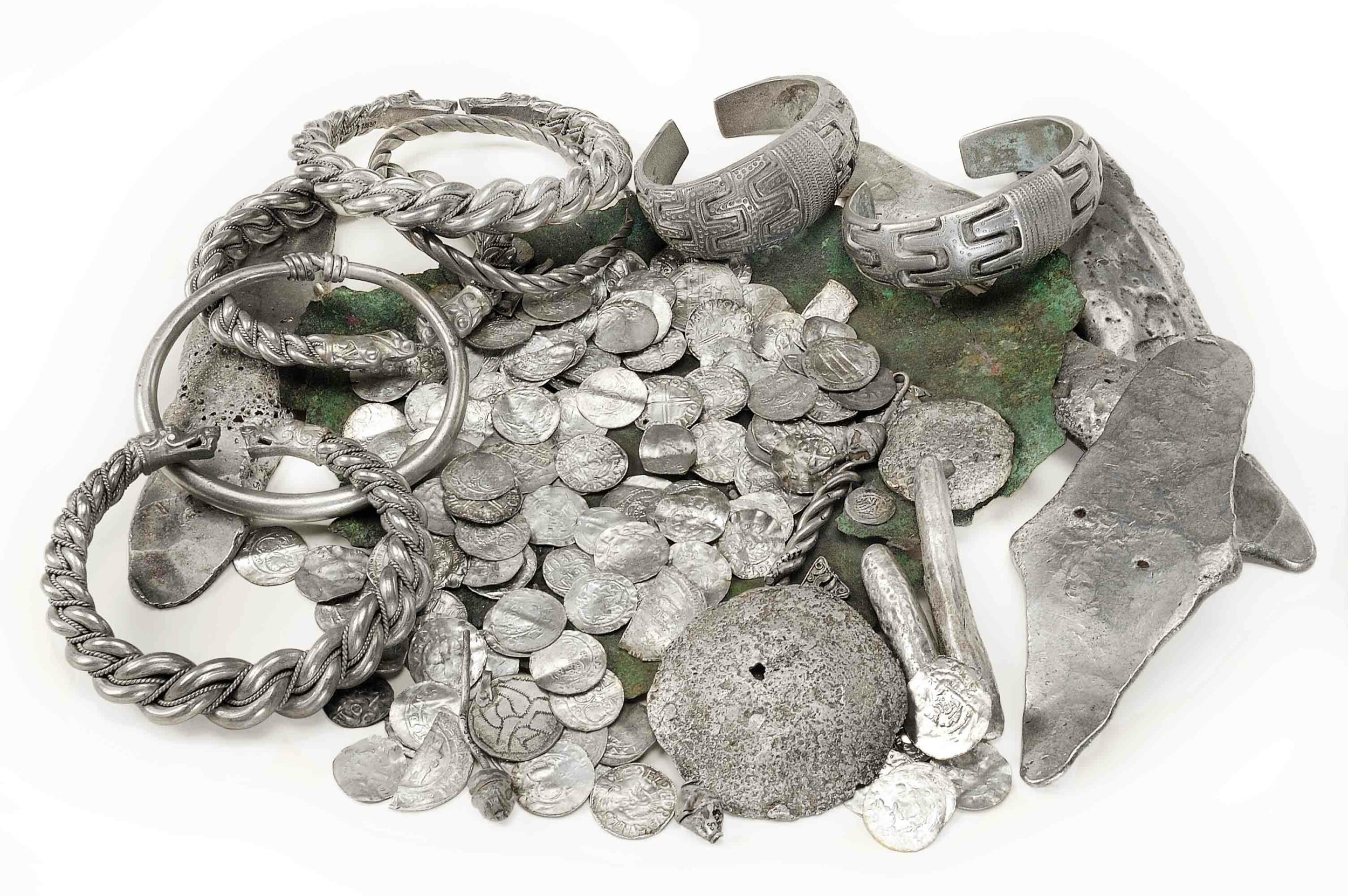
The Last Viking - The Campaigns of Harald Hardrada
Harald Hardrada was one of the most legendary vikings of the age with campaigns fought from Arabia to England! This is the full documentary of his story! Enjoy!
The Black tribes of Asia, Pacific and Aaustralia
In the following video we will analyze the black tribes of Asia, Pacific and Australia, like the Pacific Islanders, the Negritos, the Aborigines, the Papuans and many more. Enjoy!