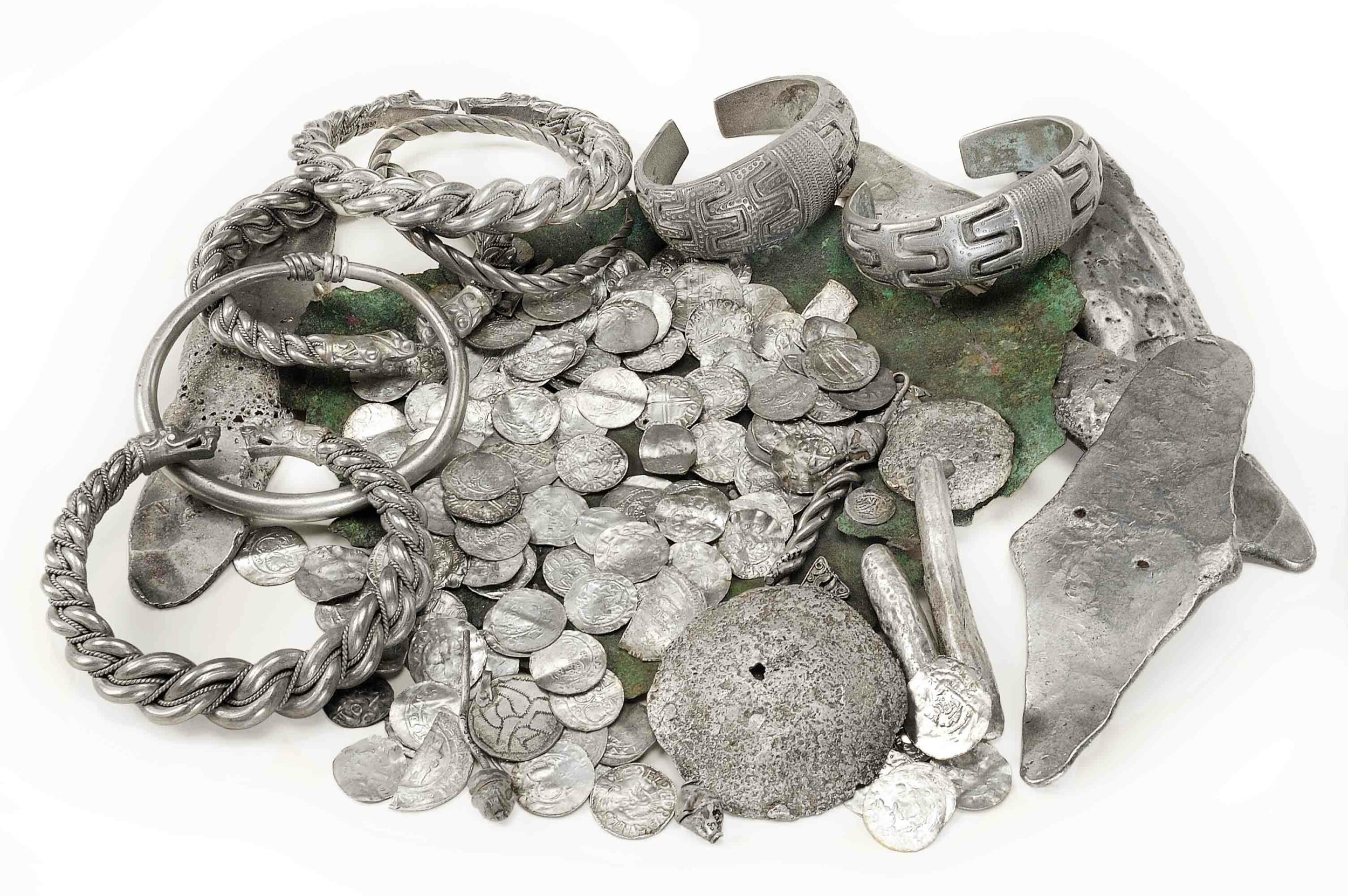
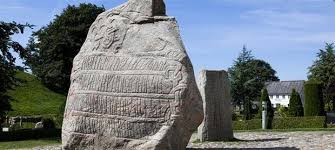
In the video below we will be talking about Björn Ironside, the legendary Viking king of Sweden. Enjoy!
Thucydides detailed account of the Battle of Mantinea | Sparta vs Athens | 418 BC
In this account left to us by Thucydides, he describes to us in great detail how the events of the battle of Mantinea unfolded. This was one of the most important battles of the Peloponnesian war and Thucydides account gives us details on the tactics, manoeuvres of the day and ultimately how the battle was won.
Archaeologists Conduct Project To Conserve Costa Rica’s Stone Spheres
A team from the National Institute of Anthropology and History, and the National School of Conservation, Restoration and Museography, have undertaken a project to conserve Costa Rica’s stone spheres.
Over 300 stone Petrospheres, often referred to as the Diquís Spheres, have been found on the small island of Isla del Caño and the Diquís Delta in Costa Rica.
The spheres are attributed to the now extinct Diquís culture, a people that first emerged in the Valley of the Rio Grande de Térraba during the Synancra period around 1,500 to 300 BC.
We Asked Google's Bard AI Chatbot About The Roman-Era!
Sure, the Roman era is a period in history that began in 753 BC with the founding of Rome and lasted until 476 AD with the fall of the Western Roman Empire. The Roman era is known for its military, political, and social institutions, as well as its engineering achievements.
The Romans conquered vast amounts of land in Europe and northern Africa, built roads and aqueducts, and spread Latin, their language, far and wide. They also developed a complex legal system, a system of government, and a sophisticated culture.
Some of the most famous Roman landmarks include the Colosseum, the Roman Forum, and the Pantheon. These structures are still standing today and are a testament to the ingenuity and engineering skills of the ancient Romans.
The Roman era had a profound impact on the development of Western civilization. The Roman legal system, language, and engineering techniques were all adopted by later cultures, and they continue to influence our world today.
The Nordic Bronze Age / Ancient History Documentary
In the following video we will be talking about the Nordic Bronze Age. Watch the documentary to find out more!
Discoveries That Could Change History
In the following video we will analyze discoveries that could change history. Watch the video to find out more!
Fort William Henry Massacre - True story behind Last of the Mohicans
During the French and Indian War, Fort William Henry was under siege. After 6 long days the British troops surrendered, and were attacked by the French allied Indians. This historic battle inspired "The Last of the Mohicans".
This video recounts the events at Fort William Henry, through historic journals and letters written by the men who were there.
During the siege of Fort William Henry, the French army bombarded the fort with their artillery, while their Indian allies attacked the British soldiers in the adjacent encampment. On August 9, 1757 the men in Fort William Henry raised the white flag, and asked to capitulate.
The French negotiated the terms of surrender, without consulting their Indian allies. As part of the agreement, the British would be allowed to keep their belongings, and march south to nearby Fort Edward.
The Indians were angered by this agreement. They had been promised the spoils of war if they fought on the side of the French. As soon as the surrender was signed, the Indians entered the fort and began taking what they were promised. Eventually the French were able to restrain their allies.
The following day, August 10, 1757 was the day the British began their march to Fort Edward. As they began to leave fort William Henry, on Lake George, the Native Americans resumed taking their belongings. Panic struck the British, and fueled the confusion.
British soldiers, and provincials ran in all directions as the Indians pursued them. Some sought refuge with the French, while others fled into the woods.
It is this scene of chaos that inspired James Fenimore Cooper to write, "The Last of the Mohicans." Initial reports of the massacre gave casualty numbers as high as 1,000 people killed. More modern estimates, are much lower.
Fossilized Teeth Reveal the Fierce Predator That Ruled Icy Alaska!
In the video below we will be talking about how fossilized teeth reveal the fierce predator that ruled icy Alaska. Watch the video to find out more!
Ancient Dragon Houses of Greece: A Megalithic Mystery
These megalithic marvels are known as Dragon Houses and there are 23 of them on the island, mostly in the regions of Mount Oche and Styra in Euboea.
These mortar-fee constructions are thought to date back to the Preclassical period of Ancient Greece, the classical period beginning around 490 BC. They have stood, pretty much intact, for more than two millennia but their origins and purpose are a true ancient megalithic mystery. Watch the video for more!
The Naked Truth About Roman Baths
Roman love of bathing did not begin with the empire, but as the Principate consolidated its authority, monumental public baths were erected across the city. So why did Agrippa, Nero, Titus, Trajan, Decius, Caracalla, Diocletian and Constantine all choose to spend massive public resources to construct these buildings?
This video outlines why Romans were drawn to the baths and how this pastime more than almost any other has come to define our conception of their cultural extravagance.
Filthy Secrets of Mary Magdalene
Throughout the annals of history, countless figures emerge, cloaked in an aura of intrigue and enigma. One such individual stands stark against the canvas of time – Mary Magdalene. Revered as a saint, condemned as a sinner, her life has been a subject of fervent debate for over two millennia. Yet, lurking beneath the layers of conjecture, what dark secrets does this mystifying figure conceal? How did this woman from a fishing village come to be one of the most enigmatic figures in religious history?
Appearing first in the Gospel narratives of the first century in the year of the Lord, Mary of Magdala has been cast in varied roles - a repentant sinner, an intimate companion of Christ, and the "Apostle to the Apostles". But these interpretations are mere fragments of a much larger mosaic.
As we unravel Mary's intricate narrative, we'll draw upon the writings of early Church Fathers, consider the controversial perspectives presented in the Gnostic Gospels. We'll explore the perspectives of figures like Pope Gregory I, whose homilies cemented Mary's reputation as a penitent sinner, and Dan Brown, whose novel The Da Vinci Code proposed startling theories about Mary's role in Christ's life and the evolution of Christianity.
To echo the words of St. Augustine: "The truth is like a lion. You don't have to defend it. Let it loose. It will defend itself." As we unravel Mary Magdalene's story, we allow the truth to emerge, revealing a tale that is both startling and illuminating. Join us on this voyage into the enigmatic life and the alleged darkest and filthy secrets of Mary Magdalene. Welcome to the diary of Julius Caesar.
The Enigmatic Mary Magdalene. Illuminating a Biblical Icon.
In the vibrant tapestry of the New Testament, a particular figure of intrigue and fascination is Mary Magdalene. A first-century Jewish woman, Mary of Magdala, as she is also known, hails from Magdala, a prosperous fishing village on the Sea of Galilee.
Among the followers of Jesus Christ, she is a prominent figure, with her name appearing a dozen times in the canonical gospels, more than most of the apostles. Mary is noted as a devoted disciple of Jesus, who, according to Luke 8:2, was healed of "seven demons," a description perhaps indicating a grave illness or a spiritual struggle, as per the cultural metaphors of that era.
It is critical to recognize that Mary's life, as portrayed in the New Testament, is the life of a devout follower. She was present at key events in the life of Jesus, an unwavering witness to His journey. She stood by His side at the crucifixion, refusing to leave when many had fled. She was there at His burial, and most notably, according to all four gospels, she was the first to witness the resurrected Jesus.
A notable point of speculation surrounding Mary involves her relationship with Jesus. It has been the subject of conjecture, debate, and art for centuries, with some theories suggesting they might have had a special bond or courtship, a topic widely explored in non-canonical texts and later interpretations. However, such theories largely stem from interpretations and extrapolations rather than direct biblical evidence.
Yet, it's important to note that the labeling of Mary as a 'lady of the night' didn't emerge until the Middle Ages, a result of conflations by Pope Gregory I in the 6th century, who inaccurately combined her story with those of other biblical women. This led to a distorted narrative that shaped Mary's image for over a millennium. Historically, Mary's characterization has been a mélange of misconceptions, intertwining her with the unnamed sinner woman in Luke's gospel and Mary of Bethany.
Strikingly, Mary's life and character serve as an embodiment of transformation and redemption, making her an enduring symbol of hope and resilience. She has been embraced as an empowering feminine figure within Christianity, a model of steadfast faith and devotion. Throughout centuries, her image has been painted by the brushes of many renowned artists, from Titian to Caravaggio, often adorned with a red robe or holding a jar of ointment, symbolizing her act of anointing Jesus' feet.
Forest Giants: How did dinosaurs adapt to life in forests?
Forests are not the first place you would think of when it comes to imagining prehistoric times, but dinosaurs were as much a part of forest ecosystems as they were of anything else. These ancient beasts managed to brilliantly adapt to life in the greenery-covered landscapes, developing unique survival strategies in response to the new challenges presented by this environment.
For herbivores like the Brachiosaurus and Triceratops, the increase in plant life provided a bountiful and nutritious food source. Trees were particularly beneficial, and the tall neck of the Brachiosaurus allowed them to forage at heights that other animals could not. Large herbivores could also use their sheer size to clear paths through the forest and create better conditions for reaching food sources.
Carnivores like the T-Rex and Velociraptor, on the other hand, had to adapt their hunting tactics to survive in the dense undergrowth. They learned to use the trees and vegetation as cover, and camouflage was key to their success. Plant life also adapted alongside the dinosaurs, offering new opportunities for herbivores to blend into their surroundings and remain hidden from predators.
Intelligence and communication were also critical to survival in the forest. Some dinosaurs developed social behavior and vocalization, with some evidence suggesting that some species engaged in nesting and roosting behaviors similar to birds. The ability of some bird-like dinosaurs to fly also gave them an even bigger advantage in the forest's complicated terrain.
Of course, there were also challenges. The forest climate was volatile and routinely subjected to evolutionary pressures, which were responded to with various adaptations and forms of natural selection to ensure survival. Some species evolved to be entirely ground-dwelling, while others adapted to clamber up trees and blend in better.
Throughout it all, the dinosaurs' ability to adapt and coexist in the forest highlights the magnificence of nature's diversity. Though eventually, all their adaptations and niches could not protect them from extinction, many of their adaptations live on in modern animals and their genes can still be detected in modern bird species.
Overall, the examples of the forest giants reveal a complex and intricately-balanced ecosystem with dinosaurs at its core. Forests were a challenging environment of endless possibilities, yet these creatures found a way to flourish and survive for millions of years until a massive asteroid put an end to their reign.
The ORIGIN of African According to the BIBLE
In this video, we're going to look at the ORIGIN of Africans according to the BIBLE. We'll explore how the Bible tells the story of Africa and the black people who lived there.
Looking at the history of Africa from a Biblical perspective is a great way to learn about the continent and its people. This video is a great way to start your understanding of African history, and to gain a deeper understanding of the Bible!
TOP 5 Greek Philosophers
Philosophy is the study of general and fundamental questions about the cosmos, about knowledge and science, about existence, values, reason, mind, and language. The father of Philosophy is the Greek Philosopher Thalis who lived around 600 BC in Miletos, a Greek city in Ionia, Western coast of Asia Minor.
Top 10 Ancient Civilizations That Disappeared
Journey through time as we uncover the fascinating stories of ten ancient civilizations that mysteriously disappeared from history. Delve into archaeological sites, ancient artifacts, and historical discoveries to understand the enigmatic vanishings that left behind intriguing questions. Explore the secrets of lost knowledge and unravel the mysteries surrounding these ancient cultures.
A Brief History of Greek Colonisation
In the following video we will have a general look at the Greek Archaic Age of discovery and colonisation. Enjoy!
Socrates' Trial: His Historic Defense in Today's Language
Welcome to a thought-provoking journey, exploring the profound words of Socrates, the legendary philosopher of ancient Greece. In this modernized rendition, we present his powerful speech in a slightly modernized and accessible style, allowing you to fully immerse yourself in his timeless wisdom without the need to decipher archaic language.
Join us as we delve into Socrates' insightful thoughts on self-examination, virtue, critical thinking, and the pursuit of truth. Discover the essence of his teachings as he challenges societal norms, encourages introspection, and provokes deep contemplation on the nature of life, knowledge, and human existence.
Experience the transformative power of Socrates' ideas as we unravel his philosophy in a relatable and engaging manner. Tune in and engage with his words, as we navigate through his impactful discourse, shedding light on the significance of questioning, intellectual curiosity, and the pursuit of wisdom in our modern lives.
Tagaeri: Isolated tribe in the Amazon
Tagae and his followers belonged to the Huaroani family, an Indigenous group from Ecuador's Amazonian region who split up in 1968 after arguing against missionary settlement and have since lived in voluntary isolation. In today's video we look at Isolated Tribes in the World: The Tagaeri.
Archaeologists In Egypt Uncovered A 4400 Year Old Tomb Complete With Perfectly Preserved Paintings
The ancient necropolis of Saqqara in Egypt has long been shrouded in mystery, with its underground chambers falling victim to looting and tourists collecting mummified remains as souvenirs. Auguste Mariette, a French Egyptologist, was the first to bring Saqqara to the world's attention in 1850. Subsequent excavations have revealed a rich tapestry of burials and ceremonial practices spanning over three millennia. However, Saqqara remained overshadowed by the grandeur of Luxor and the iconic Great Pyramids.
Renowned archaeologist Mustafar Wazari, appointed as the director of Egypt's Supreme Council of Antiquities in 2017, led an expedition to Saqqara in search of an untouched relic. His team's calculated risk paid off when they uncovered the tomb of a revered high-ranking priest named Wahtye in December 2018. The tomb presented archaeologists with an unparalleled opportunity to gain insights into the daily existence of ancient Egyptians due to its near-immaculate condition.
Wahtye's tomb was meticulously crafted, adhering to a linear arrangement and comprising three primary sections: the entrance, a brief passage corridor, and the burial shafts. An opulent above-ground chapel, measuring 33 feet in length, 10 feet in width, and 10 feet in height, adorned with painted reliefs, inscriptions, and statues depicting Wahtye himself, cordially welcomed visitors. Within the lavishly decorated visitation chapel, five burial shafts of varying depths were skillfully hewn into the floor, each dedicated to specific family members, ensuring a customized final resting place.
In 2019, archaeologists discovered an ancient tomb attributed to official Khuwy near the Saqqara necropolis in Egypt. The tomb's paintings offered hints about Khuwy's identity, while a breakthrough identification revealed Queen Setibhur. These findings unveiled the secrets of Egypt's ancient past and its extraordinary civilization.
Join us on this interesting adventure into Saqqara's enigmatic underworld and witness the relentless pursuit of knowledge that brings ancient Egypt back to life.
INDIA Shocked the World: Archaeological Discoveries That Couldn't EXIST
India is an infinitely beautiful and mysterious country. The magnificent forts and impregnable citadels are a vivid testament to its tumultuous and rich history. Fortified fortresses that remind us of glorious times. They witnessed epic battles and tragic endings. These palaces still remember the great maharajas. But when you see them, you will ask yourself how the ancient people built Buland Darvazu, Fort Chittorgarh, Bhangarh fort. After all, this is the true apotheosis of architectural thought and technology, which is difficult to repeat even today. So, what's interesting?