What happens when an Empire fails to enforce its rule? Empires FALL! Check out today's epic new video about the great Roman Empire and how a few wrong moves led to the Empire's total collapse!
A 700-Year-Old Mummy Perfectly Preserved In Brown Liquid Appears To Be Only A Few Months Old
These incredible pictures show a 700-year-old mummy, which was discovered by chance - by road workers - in excellent condition in eastern China.
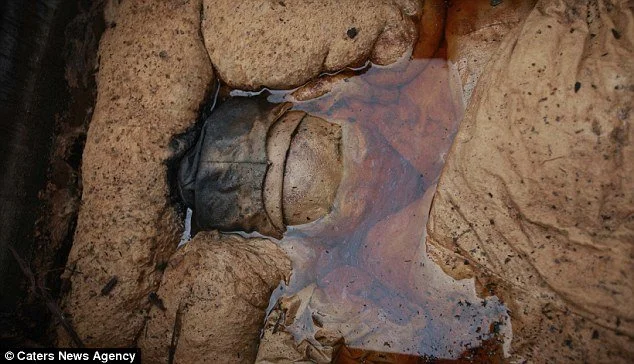
The corpse of the high-ranking woman believed to be from the Ming Dynasty - the ruling power in China between 1368 and 1644 - was stumbled across by a team who were looking to expand a street.
And the mummy, which was found in the city of Taizhou, in the Jiangsu Province, along with two other wooden tombs, offers a fascinating insight into life as it was back then.
Discovered two metres below the road surface, the woman's features - from her head to her shoes - have retained their original condition, and have hardly deteriorated.
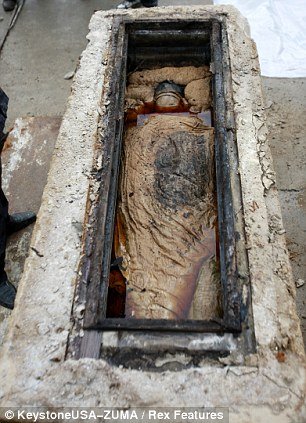
When the discovery was made by the road workers, late last month, Chinese archaeologists, from the nearby Museum of Taizhou, were called into excavate the area, the state agency Xinhua News reported.
They were surprised by the remarkably good condition of the woman's skin, hair, eyelashes and face. It was as though she had only recently died.
Her body, which measures 1.5 metres high, was found at the construction site immersed in a brown liquid inside the coffin.
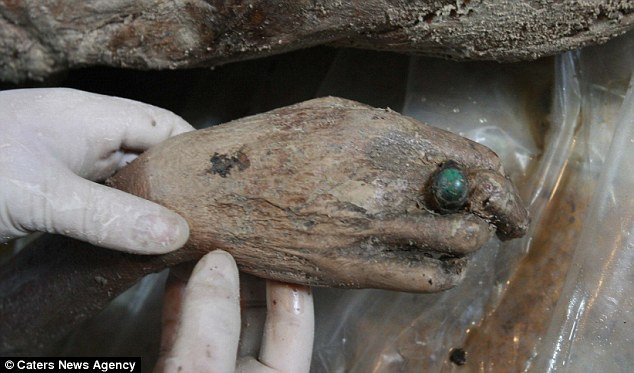
And the coffin was opened earlier this week, on March 1, much to the excitement of the local city - and further afield. And the right hand of the 700-year-old mummy showed her preserved skin, and a ring.
The mummy was wearing traditional Ming dynasty costume, and also in the coffin were bones, ceramics, ancient writings and other relics.
This is the latest discovery after a lull of three years in the area. Indeed, between 1979 and 2008 five mummies were found, all in very good condition.

Those findings raised the interest in learning the techniques to better understand the Ming dynasty's expertise in mummifying as well as their funeral rituals and customs.
Director of the Museum of Taizhou, Wang Weiyin, told Xinhua that the mummy's clothes are made mostly of silk, with a little cotton.
He said usually silk and cotton are very hard to preserve and excavations found that this mummifying technology was used only at very high-profile funerals.

The first finding of the Ming Dynasty in Taizhou dates from May 1979 and led the opening of the museum.
At that time the bodies were also found intact, but due to lack of experience of archaeologists only clothing, belts and clamps could be preserved.
The Ming Dynasty, who built the Forbidden City and restored the Great Wall, was the last in China and marked an era of economic growth and cultural splendour which produced the first commercial contacts with the West.


Bizarre & Mysterious Discoveries
In the following video we will be exploring some bizarre and mysterious discoveries. Watch the video for more and enjoy!
10 Most Mysterious Historical Coincidences!
In the following video we will be analyzing 10 of the most mysterious historical coincidences. Enjoy!
A 2,300-year-old mummy unveiled in Egypt
A superbly maintained 2,300-year-old mummy bearing a golden mask and covered in brightly colored images of gods and goddesses was unveiled Tuesday at Egypt's Saqqara Pyramids complex south of Cairo.
The unidentified mummy, from the 30th pharaonic dynasty, had been closed in a wooden sarcophagus and buried in sand at the bottom of a 20-foot shaft before being discovered recently by an Egyptian-led archaeological team.
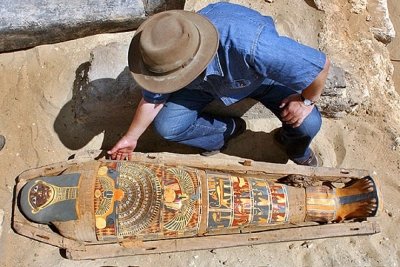
"We have revealed what may be the most beautiful mummy ever found in Egypt," Zahi Hawass, chief of Egypt's Supreme Council of Antiquities, said as he helped excavators remove the sarcophagus' lid to show off the find.
Hawass said experts will use CT scanning technology within the next week to reveal more details about the ancient Egyptian's identity and he had lived and died.
Afterward, the mummy will be displayed at Saqqara's museum of Imhotep, the famed architect who designed the Stepped Pyramid — Egypt's oldest.
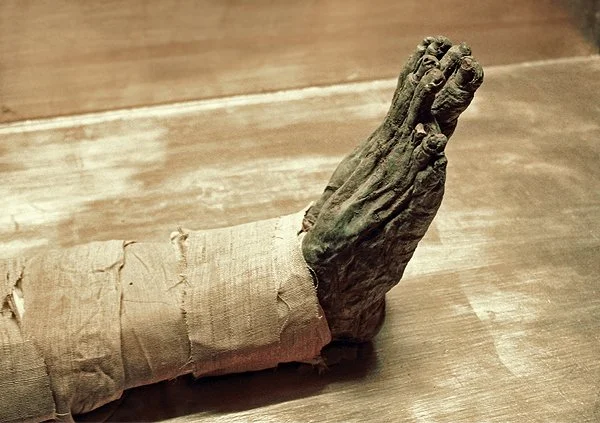
The mummy, found two months ago, was covered from head to toe in brightly colored cartonage burial material depicting a range of graphic scenes, including the Goddess Maat of balance and truth who was shown with outstretched arms that took the shape of feathered wings.
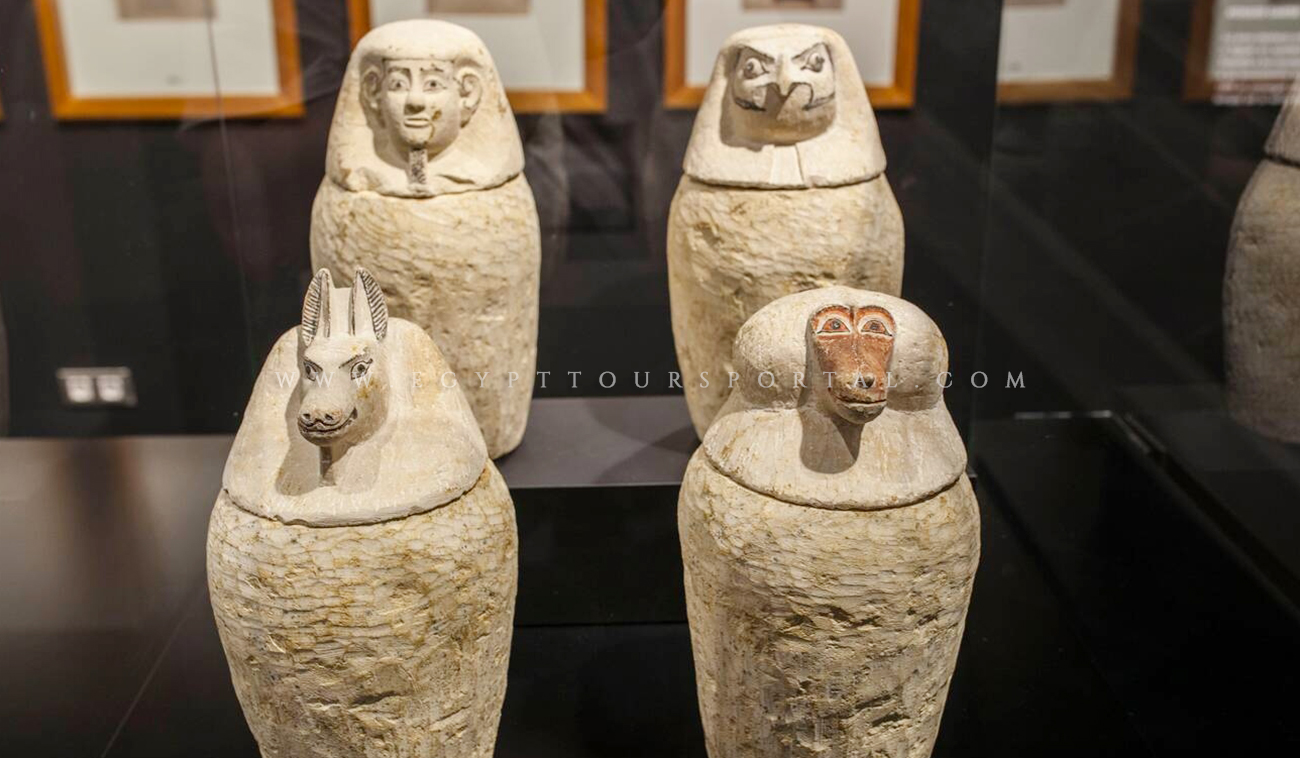
Also shown were the four children of the falcon-headed god, Horus, and the rituals and processes to mummify the person, who Hawass believed must have been wealthy considering his burial location and fine gold used for the mummy's mask.
"The artists who made this mummy more than 2,000 years ago demonstrated the brilliance of the ancient Egyptians by using stunning colors and depicting his face so graphically," Hawass said.

The mummy had been buried within the necropolis of King Teti, a funerary area containing scores of burial chambers, false doors that ancient Egyptians said the souls of the dead would use to leave their tombs, and temples.
The necropolis is built alongside the collapsed pyramid of Teti, who ruled during ancient Egypt's 6th dynasty, more than 4,300 years ago. Hawass said a "lost" pyramid had been located in the Saqqara area and would be uncovered after two months.
Saqqara, located about 12 miles south of Cairo, is one of Egypt's most popular tourist sites and hosts a collection of temples, tombs and funerary complexes.
24,000-Year-Old Animal Found Alive After Being Preserved in Siberian Permafrost
During the Upper Paleolithic era, a multicellular organism was frozen almost the time in history when humans first set foot into North America. About 24,000 years later, it has been found alive after sleeping for millennia.
This turned out to be a very huge discovery and might have changed the theory of how long organisms and perhaps humans can be preserved for generations.

Discovery of Bdelloid Rotifer
Bdelloid rotifer – a freshwater creature – is too tiny to see with the naked eye, measuring around 150 and 700 μm. The microorganism can be found in waters around the world. This animal survived being frozen for many years through a remarkable means of cloning itself multiple times through an asexual reproduction form called parthenogenesis, according to Accuweather.
This discovery, therefore, brought about questions on the reversible standstill lack of life theory or mechanism of the cryptobiosis.
These findings were done by researchers from the Soil Cryology Laboratory in Pushchino, Russia. It was discovered from a soil sample collected from permafrost in northeastern Siberian.
This age discovery was really surprising to the researcher as it felt really unbelievable that the animal was alive and doing well.
The permafrost sample of this creature was collected from the Alazeya River, which flows from Siberia into the Arctic. Researchers also confirmed that there was no movement of the bdelloid rotifer due to the icy nature of the ground.

Research Findings
“The takeaway is that a multicellular organism can be frozen and stored as such for thousands of years and then return back to life – a dream of many fiction writers,” Malvin, an author on this study stated.
He further talked about how big this discovery was and how it has totally changed the ideology of organism preservation.
This discovery might have been revolutionary and has added to the small number of organisms that have been found to be able to survive such extraordinary timespans but more are still yet to be uncovered.
The more complex an organism becomes, the more difficult it is to preserve alive, like in mammals, as per Smithsonian Magazine.
Other Organisms That Survived Extraordinary Timespans
In Russia, a pair of prehistoric nematodes, also called roundworms, were discovered and successfully revived, it is said to have been between 30,000 and 42,000 years old.
Studies have shown that over the years, a lot of organisms have been revived from their frozen state but what makes this new discovery more interesting is that none of these past organisms is as complex as the bdelloid rotifer.
Additionally, there have been discoveries on the dead but frozen larger species like the 20,000-year-old woolly rhino that was discovered by a Siberian farmer in the area of Yakutia in 2021 and the 57,000-year-old Pleistocene grey wolf puppy, the most perfectly preserved animal of its kind.
More research is still to be made on this study. The hope is that insights from these tiny animals will offer clues as to how better to cryo-preserve the cells, tissues, and organs of other animals, including humans.
A student found an ancient Canadian village that’s 10,000 years older than the Pyramids
An ancients village dating back to before the Pyramids era was discovered by a team from Canadian Ph.D. students.
CTV reports that a team of students from the University of Victoria’s archeology department has uncovered the oldest settlement in North America.

This ancient village was discovered when researchers were searching Triquet Island, an island located about 300 miles north of Victoria, British Columbia.
The team found ancient fish hooks and spears, as well as tools for making fires.
However, they really hit the jackpot when they found an ancient cooking hearth, from which they were able to obtain flakes of charcoal burnt by prehistoric Canadians.
Using carbon dating on the charcoal flakes, the researchers were able to determine that the settlement dates back 14,000 years ago, making it significantly older than the pyramids of Ancient Egypt, which were built about 4,700 years ago.
To understand how old that truly is, one has to consider that the ancient ruler of Egypt, Cleopatra lived closer in time to you than she did to the creation of the pyramids.
Even to what we consider ancient people, the Egyptian pyramids were quite old.
This newly discovered settlement dates back more than three times older than the pyramids.
Alisha Gauvreau, a Ph.D. student who helped discover this site said, “I remember when we got the dates back, and we just sat back and said, ‘Holy moly, this is old.’”
She and her team began investigating the area for ancient settlements after hearing the oral history of the indigenous Heiltsuk people, which told of a sliver of land that never froze during the last ice age.

William Housty, a member of the Heiltsuk First Nation, said, “To think about how these stories survived only to be supported by this archeological evidence is just amazing.”
“This find is very important because it reaffirms a lot of the history that our people have been talking about for thousands of years.”
Researchers believe that this settlement indicates a mass human migration down the coast of British Columbia.
“What this is doing, is changing our idea of the way in which North America was first peopled, said Gauvreau.”
The students hope to continue to search nearby islands for more evidence of this migration.
Mythical Creatures That Actually Existed!
Check out these mythical creatures that actually existed! Who knew that animals like griffins, cyclopes, unicorns, dragons, rocs and big foot could actually be real!
Investigating the Iron Plate found in the Great Pyramid - is it legit?
In 1837, a man on Howard Vyse’s expedition at the Great Pyramid of Giza - named J. R. Hill - found a thin iron plate lodged between stones near the opening of the King’s Chamber’s Southern Shaft. This discovery, if contemporary to the building of the pyramids, calls into question what we know about the historical timeline of metalworking. But is there any legitimate evidence for this? And why is this iron plate often omitted from conversations about the Great Pyramid?
Greek Philosophy: Socrates' Life and Methods
Who was Socrates of Athens? Today’s video is an introduction to his life and methods. Enjoy!
Greek Philosophy: Socrates' Philosophy
In this video we will be talking about Socrates' philosophical ideas. Enjoy!
Pompeii The Discovery with Dan Snow - Unveiling the Secrets of the Ancient City
Welcome to historian and presenter Dan Snow's enthralling tour of the historic city of Pompeii! Dan Snow leads us on an unforgettable journey in this episode of "Pompeii The Discovery" as we uncover the long-forgotten secrets of this famous city, providing a unique look into the lives of its citizens and the tragic incidents that altered its course.
Dan Snow delves deeply into the rich history and cultural significance of Pompeii thanks to his exclusive access to the most recent archaeological finds and cutting-edge technology. As we stroll through the beautifully preserved streets, marvel at the lavish homes, temples, and public baths, and discover the daily routines of the people who once flourished in this bustling city, we will be following in the footsteps of the ancient Romans.
But the story doesn't end there. Through captivating interviews with leading experts and historians, Dan Snow reveals the heart-wrenching tale of the catastrophic eruption of Mount Vesuvius that buried Pompeii under a thick layer of volcanic ash, preserving it in time for centuries. Discover the harrowing details of the disaster and its aftermath, and learn how it forever altered the course of history.
Ethiopia’s Chapel in the Sky
If churches were assessed by their risk factor, Abuna Yemata Guh would be our new Sistine Chapel. Perched 650 feet above a steep cliff in Northern Ethiopia, visitors face a 45-minute climb up the cliff’s vertical face in order to access the precariously positioned church. Dating back to the 5th century, history has it that its founder Father Yemata built the chapel to be closer to heavenly spirits; however, others claim it was a strategic move to avoid his enemies.
Megalithic Spain: Incredible 5,500-Year-Old Ancient Architecture
For the British people, Spain is a popular tourist destination and although this summer many of us will be heading to the beautiful Spanish beaches, many of you may not know about the country’s megalithic history.
Thousands of tourists fly into Malaga airport every year, but this city also houses two incredible stone tombs dating back more than 5,000 years. Their origins are still shrouded in mystery and for anyone with an interest in the ancient world, these tombs are certainly worth a visit.
They were discovered between 1903 and 1905 and are called the Dolmen of Viera and the Dolmen of Menga, separated by just 70 metres. These tombs are separated by hundreds of years, but they do show a clear continuation of religion and ritual in prehistoric Spain.
They are part of a wider prehistoric landscape, with an ancient settlement located just a few hundred metres to the east. In this video, we will take a look at the 5,500-year-old ancient megalithic tombs and the surrounding prehistoric landscape, as we give you a brief overview of Megalithic Malaga in Spain.
Mysterious Ancient Places That Hold A Secret
In the video below we will analyze mysterious ancient places that hold a secret. Watch the video to find out more!
37 Bible Characters Found Through Archaeology
In the following video we will analyze 37 Bible characters found through archaeology. Watch the video to find out more!
An excavation at Exeter Cathedral uncovered a crypt and bishops' tombs
Archaeological excavations at Exeter Cathedral, according to the project organizers, have unearthed previously unknown Norman-era features.

The dig at Exeter Cathedral has included work in the quire, or choir, area
The ancient high altar of the cathedral from the early 12th century has been positively identified by experts as having its foundations.
There have also been discoveries of a crypt-like region and tombs.
Before underfloor heating is placed, the excavation in the cathedral's quire [choir] section has been completed.
Entertaining archaeological discovery
In the 12th and 13th centuries, tombs of individuals presumed to be bishops have been discovered.
Bishops William Brewer and Robert Warelwast's remains were relocated in 1320, and two empty tombs have been discovered.
"We have discovered the buried floors of the Norman cathedral with the original high altar," said cathedral archaeologist John Allan. The Norman cathedral was last visible some 700 years ago.
A unusually deep backfilled chamber behind the altar, to the east, is what we believe to be a Norman crypt.
At Exeter Cathedral, this is unquestionably the most exciting archaeological find to date.
The majority of the current structure, which was constructed between the 12th and the 14th centuries, was added to the cathedral after its founding in 1050.
A wall from a Roman town house as well as the ruins of an early Roman roadway and timber structures were found by archaeologists digging in the cathedral's old cloister garden in a previous excavation.
As "new clues to Exeter's distant past," they described the discovery.
The first emperor of China's tomb is closed because archaeologists are afraid to enter it
The first emperor of China, Qin Shi Huang, was buried in a tomb that has been sealed for 2,200 years, and archaeologists are dreading having to uncover it.
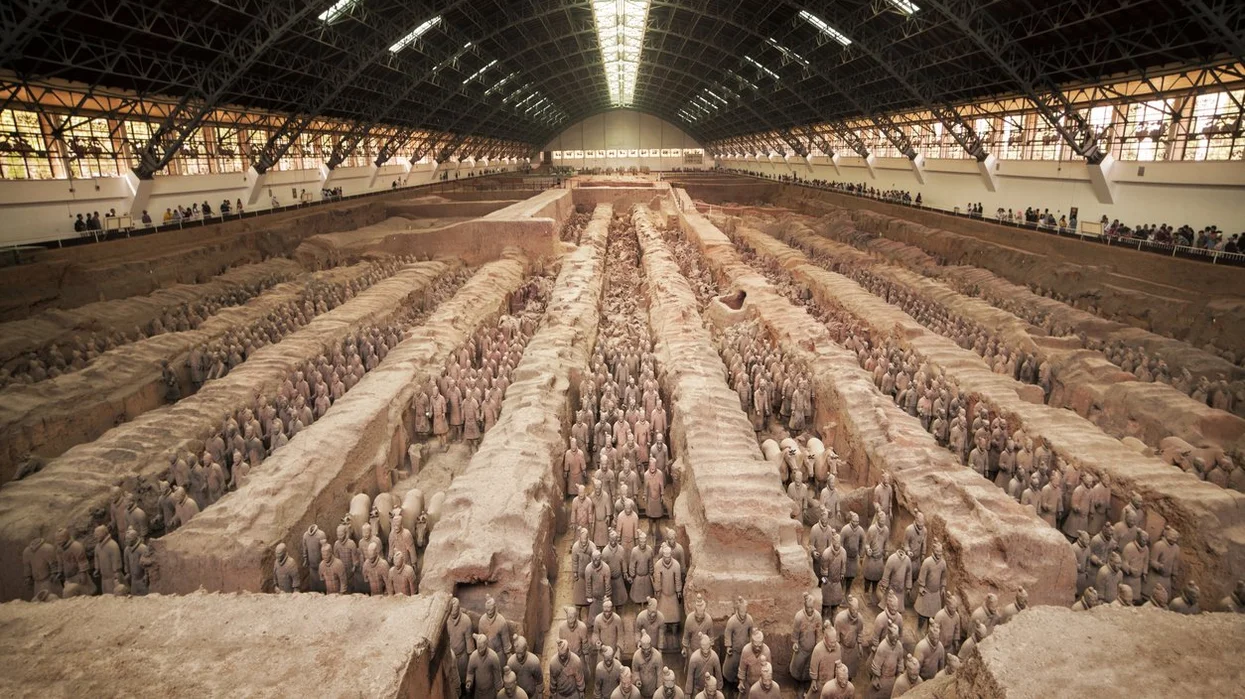
A terracotta army of soldiers and horses guards the tomb of Qin Shu Huang, who ruled from 221 BC to 210 BC. In the Chinese province of Shaanxi, farmers made the finding in 1974.
Despite the area's exploration by archaeologists, the tomb itself has never been excavated, and for good reason.
Not only do archaeologists think it will harm the site, but there are rumors of deadly booby traps that might kill interested visitors, according to IFL Science.
Sima Qian, a Chinese historian, said that "palaces and picturesque towers for a hundred officials were constructed and the tomb was full of rare artifacts and wonderful treasure," 100 years after Qin Shu Huang's passing.
Craftsmen were instructed to create crossbows and arrows that were ready to fire at anyone who entered the tomb, he added. Mercury was utilized to mechanically replicate the movement of the Great Sea, the Yangtze, and the Hundred Rivers.
There are still worries of liquid mercury leaking through the cracks, even though those claimed crossbows were unsuccessful thousands of years later.
One 2020 research argues that "highly volatile mercury may be escaping through cracks, which developed in the structure over time, and our investigation supports ancient chronicle records on the tomb, which is believed never to have been opened/looted," according to the journal.
Non-invasive methods to access the tomb have apparently been considered by scientists, but little progress has been made in this direction.
There is evidence that the First Nations of Australia's oral histories date back 10,000 years
Lardil man Goobalathaldin (also known as Dick Roughsey) finished writing his autobiography, "Moon and Rainbow," in 1970. In it, he told the tales of his ancestors. One of them recounted a time when the Australian mainland was connected to the North Wellesley Islands.

Sea levels surrounding Kangaroo Island and Fleurieu Peninsula.
According to current estimations, the North Wellesley Islands last had terrestrial contact at least 10,000 years ago.
This is only one example, according to Professor Patrick Nunn of the Sustainability Research Center at UniSC, among a growing body of evidence that demonstrates that First Nations Australia's oral histories go back farther than those of practically any other country in the world.
According to Professor Nunn, Australia contains legitimate examples of information that has been transmitted orally for nearly 400 generations in order to reach us now.
Geologist and geographer Professor Nunn's most recent research has looked at how tales from First Nations people all around the world may provide hints about a place's geographical past. Consider Lake Eacham in North Queensland, which was created more than 9,000 years ago by a volcanic eruption.
Indigenous people in the area tell tales of two men who defied their laws—with disastrous results—long before geologists arrived and figured out its roots, according to Professor Nunn.
However, submergence stories may provide the clearest hints as to the extraordinary durability of Indigenous Australians' storytelling.
Reports mentioning the post-last ice age rise in sea levels.
In order to compile these submersion accounts and date them in accordance with the water levels mentioned within, Professor Nunn began working with Associate Professor Nick Reid, an expert in linguistics from the University of New England, several years ago.

He pursued them along the south coast of the Fleurieu Peninsula, finally catching sight of them as they were crossing a strip of land connecting it to Kangaroo Island across Backstairs Passage, according to legends about Ngurunderi, a historical figure from South Australia whose two wives fled from him. He was so furious that he raised the sea to drown them, and the women and their possessions ended up as The Pages, a group of islands. The sea never retreated once more.
"There, the water is around 30-35 meters deep. The last time it would have been possible to walk from the Fleurieu Peninsula to Kangaroo Island was 10,100 years ago, according to our calculations. That kind of antiquity is what we're referring to, said Professor Nunn.
"I've been gathering all the many accounts of it with the help of local Ngarrindjeri people and archaeologists from Flinders University.
"I believe it's amazing that people are still recounting stories today that have been passed down for the majority of that period orally rather than in writing. It is a real story.
Professor Nunn and Dr. Reid have so far assembled more than 30 submergence tales from all points around the coastline of Australia, creating a picture of an earlier, very different Australia.
Professor Nunn noted that Dr. Adrian McCallum, a colleague at UniSC, is researching accounts of the time when K'gari was still connected to the mainland and travelers could cross on foot.
There are many tales of times when the Great Barrier Reef was dry land and people walked out to its edge if you travel north.
It was at least 10,000–11,000 years ago, according to the clock.
A tale of perseverance
Professor Nunn thinks Australia has a claim to having the oldest oral history, even if it is by no means the only nation to have one.

"The continent and the inhabitants remained essentially isolated for about 70,000 years. Australia had nearly the finest conditions for preserving these legends since there were so few foreign groups to dilute them, according to Professor Nunn.
Due to the geography of Australia, these tales have been able to persist in oral traditions, recollections, songs, and artistic expression.
But the opposite is also accurate.
These tales also aided those who told them in surviving in one of the world's most harsh environments.
Anthropologist Donald Thompson spent several weeks with the Pintupi people in the Central Desert in 1957, during which time he developed an interest in a spear-thrower (lankurru) with ornate decorations.
The knowledge found in the oral stories is no different.
"Thousands of years ago, our predecessors didn't only make up tales for amusement. They were designed to be means of information sharing", according to Professor Nunn.
"If you wanted your bloodline to survive, you had to pass that knowledge down the line so that the next time a flood does come along—there's a story about how to survive it."
"We may examine purportedly old myths and legends and discover meaning in them. That's significant. It affects both our understanding of the present and the future."
70 years after her skull was discovered, a 45,000-year-old woman's face was recreated
A 45,000-year-old woman's face has been roughly recreated by a global team of academics. Her remains were found more than 70 years ago.

The severed skull of the Zlatý kůň woman — the oldest modern human to be genetically sequenced — was found buried in a cave system in the Czech Republic in 1950.
The Zlatý kůň woman's severed skull, the oldest modern human whose genes have been analyzed, was discovered buried in a cave network in the Czech Republic in 1950.
According to an online report released last month, scientists used information from the 2018 CT scans of her repaired skull to generate the digital face.
In one, a woman with light brown skin, curly dark hair, and brown eyes is framed by a square-shaped face with proportionately wide features.

Scientists created the digital face using data from the 2018 CT scans of her reconstructed skull.
The woman's nine-piece skull is kept by the Department of Anthropology at the National Museum in Prague, according to Interesting Engineering, therefore, the researchers were unable to use the bones for their facial experiment.
The left orbit, part of the maxilla, part of the frontal bone on the left, and a portion of the nasal bone are all missing from the skull, according to the study's authors.
Co-author and Brazilian designer Cícero Moraes said, "An interesting fact about the skull is that it was gnawed by an animal after her death. The flora of the time included both wolves and hyenas, thus either one may have been this species.
Moraes highlighted the woman's "robust" jaw and huge brain cavity, nodding to her Neanderthal lineage.

The woman’s nine-piece skull is under the care of the Department of Anthropology of the National Museum in Prague, and the researchers didn’t have access to the bones for their facial experiment.
Since there was no information provided regarding the color of the skin, hair, or eyes, Moraes noted that "we looked for elements that could possibly compose the visual structure of the face only at a speculative level."
"Once we had the basic face, we generated more objective and scientific images, with the eyes closed, without hair, and without coloring (in grayscale)." he continued. We later produced a hypothetical version with colored skin, open eyes, fur, and hair.