Naples's underground chapel from the 16th century was discovered

Naples is home to a wealth of Catholic artworks, including the "Veiled Christ" sculpture and St. Clare's monastery. Even structures that now house nonreligious events frequently had a Catholic origin. This is true of the State Archive building, which is housed on the grounds of a former Benedictine monastery honoring two local saints, St. Severinus of Noricum and St. Sosius.

A fresco depicting a Pietas scene with Mary holding the corpse of Christ was found beneath a wall inside Naples’ State Archive building.

An active community of Benedictine monks lived in the monastery, which was founded in 846 in the heart of ancient Naples. Cardinal Fabrizio Ruffo, who presided over Naples at the close of the 18th century, issued an order for the expulsion of the monks and the conversion of the monastery into a weapons storage facility in 1799.

By order of Joachim Murat, a French general who commanded Naples under Napoleonic occupation, the newly established States Archive, housing thousands of public papers dating from medieval medical treatises to 15th-century notary deeds, was relocated inside the former Benedictine abbey in 1848.

Workers performing regular maintenance on Naples State Archive building discovered a previously unknown 16th-century chapel.

The State Archive is now a government structure, but its stunning cloister and extensive collection of artwork, notably a set of murals by Renaissance artist Antonio Solario depicting significant events in St. Benedict's life, reflect the building's former monastery use. Restoration efforts to restore sections of the building's walls began a few months ago.

A fresco depicting a Pieta scene with Mary holding the corpse of Christ was found beneath a wall inside Naples’ State Archive building.

Workers discovered something strange was growing beneath a wall in one of the archive rooms during a routine clean up. A superbly maintained fresco from the 16th century was discovered to be what at first glance appeared to be some old paint. The fresco, which shows Mary bearing the body of Christ in a Pieta tableau, once decorated a wall in an unidentified chapel. other work revealed two other murals of St. Severinus of Noricum and St. Sosius that were painted on the two neighboring walls.

The artistic director of the State Archive posted images of the recently discovered frescoes and the discovery's news on Facebook. Luigi La Rocca, a state archeologist who works at the Naples municipality, remarked, "It was a real discovery; we had no idea that the chapel was there." We shall now do research on the frescoes to more precisely date the church.

Further works unveiled two other frescoes, decorating the two adjacent walls, featuring St. Severinus of Noricum and St. Sosius.

The chapel, which is said to have been built in the sixteenth century, is likely to be added to the list of Catholic visitors' destinations. In an interview, Naples mayor Gaetano Manfredi commented, "This extraordinary discovery gives us a glimpse of Naples during the Aragon Kingdom and will become a new gem for the many tourists who come to our city."

Source: https://aleteia.org/2023/08/08/a-16th-cent...

The Children and Family of Zeus | Greek Mythology Family Tree

Today's video is about the Children and Family Tree of the King of the Gods Zeus, the God of Lightning, Thunder, Law, Justice, and the Sky. We're going to be talking about his parents Cronus and Rhea and his siblings Hestia, Hades, Demeter, Poseidon, and Hera, as well as his numerous wives and famous children. Famous children including Heracles, Perseus, Athena, Artemis, Hellen of Troy and famous wives such as Hera, Leto, Europa, and Alcmene. Come learn about Zeus's huge family tree.

Why Were Medieval Armies So Small?

In today’s video we will talk about the armies of the Middle Ages, as we try to deduce why they were smaller than their ancient and modern counterparts, how the fall of the Roman empire and the rise of feudalism affected the armies of the period. Enjoy!

12 Most Incredible Recent Archaeological Finds

Archaeology is a process that starts with digging into the ground to discover more about our ancestors, but it never ends. We’ll never find out everything there is to know about the places and people that came before us, but that doesn’t stop us from trying. There’s always an amazing archaeological discovery happening somewhere on the planet, and we like to bring the best of them to you on this channel. Here are some of the most impressive finds we’ve seen recently!

Megalithic Dolmens Discovered At The La Lentejuela Teba Necropolis

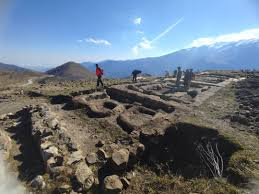
Archaeologists excavating in the southern area of the La Lentejuela Teba necropolis have discovered two Megalithic dolmens.

The La Lentejuela Teba necropolis is a concentration of burial structures located near Málaga, Spain. Previous excavations have identified 13 structures since the site was first studied in 2005, with recent excavations by the University of Cádiz (UCA) uncovering two new Megalithic dolmens.

This season has focused on a dolmen identified as Funeral Structure 1. The dolmen has a bent corridor that gives access to an antechamber, differentiated from the corridor by the presence of two vertical orthostats.

Preliminary dating suggests that the structure was constructed during the end of the 4th millennium BC, however, the dolmen was reused during the 3rd millennium BC by the Bronze Age people living nearby to deposit their dead inside small spaces built into the structure.

Serafín Becerra from UCA said: The Bronze Age populations deposit their deceased in this tomb and even built small spaces inside the dolmen to bury them individually, or at most with two individuals.”

The researchers have also applied new technologies to record all the structures at the necropolis by using aerial photography with a drone, 3D digital scanning, photogrammetry, precision topography through the use of total stations and differential GNSS.

Archaeological samples have also been taken to further date and build a chronology of the site, in addition to further understand the funerary practices of the people that inhabited the region during prehistory.

Ancient Greek City of Bathonea: Underwater Ruins of a Lighthouse Were Found

The excavations in the ancient Greek city of Bathonea, located in the Küçükçekmece Lake basin in the Avcılar district of Istanbul, with the discovery of underwater architectural remains of the second ancient lighthouse in Turkey after the ancient city of Patara.

The excavations in Bathonea, are being done by the Culture and Tourism Ministry and Kocaeli University under the supervision of Professor Şengül Aydıngün, aiming to reveal and preserve the historical and archaeological heritage.

The early Hittite traces found in the excavations of the Ancient City of Bathonea, where many unknown important structures of Istanbul and issues waiting to be enlightened, are brought to light, are described as the biggest discovery in the studies. With this discovery in the excavations, Hittite traces were found for the first time on the European continent.

The Bathonea ancient city also bore traces of the Thracian/Phrygian tribes, the existence of which was contested until these findings proved they migrated from the Bosporus to Anatolia 3,000 years ago.

When did Sanskrit appear in India? | The Genetic Evidence

A topic that stirs up controversy in India is the development of Indo-Aryan languages, and specifically the idea that speakers of an early form of Sanskrit arrived in India between 2000 and 1500 BCE. While the linguistic argument is probably the strongest for the theory of an Indo-Aryan migration into South Asia, genetic evidence gathered so far supports it. In this video, other theories like the Aryan Invasion Theory and the Out of India Theory will be examined, along with the claims of Abhijit Chavda concerning the genetic evidence for or against migration of this language group into India.

Is There Archeological Evidence For The 10 Plagues Of The Exodus?

After six years of research, working with archeologists, Egyptologists, geologists, and theologians, Simcha Jacobovici came to the groundbreaking conclusion that the Exodus took place hundreds of years earlier than previously thought. With this new timetable in hand, Jacobovici and his colleagues re-examined long-ignored archeological artifacts and uncovered the truth about the Exodus and the Egyptian dynasty that ruled at the time.

Viking Berserker and their animalistic qualities - Documentary

In this history documentary we explore one of the most famous units of Viking History, the berserkers. We begin by describing the main traits of a Viking berserker. The first is their animalistic qualities. This is actually tied to the broad trend of animal-human hybrids which appear in civilizations across the world. The Berserkers appear to have emerged from the norse version of this tradition with their sagas being filled with many instances of norse gods, legendary figures, and mortals transforming into all kinds of animals. The berserkers were just a subset of this group.

One of the next qualities of a Berserker was their rage, known as the berserkergang. This involved the viking warrior devolving into a rage filled state which might see them begin to bite their teeth and howl. The norse saga tradition has many tales of how this berserker rage led to much bloodletting of friend and foe. This leads us to the next quality of the berserker, their rejection by the community. This is a result of the way their violence threatened cultural taboos of loyalty and honor.

With this established we then talk about the viking weapons and armor which would have been used by the berserkers. Berserker armor is usually described as consisting of nothing but a shield however we speculate that they likely wore better gear, especially if they served in a noble's retinue. We then talk about training, initiation rights, and battle tactics. Finally we conclude by looking at their service history in viking warfare across the years.

The Economy of Ancient Egypt

Ancient Egypt was amongst the first major human civilizations in existence.

Outside of being genuinely fascinating the economy of ancient Egypt is enlightening to really pull apart because it represents an economy in it’s most basic form.

Targeted inflation, debt cycles, derivatives contracts, and even the financial sector are all crucial components of our modern and hyper-advanced economies. Egypt, had none of these...

mtDNA shows how humans migrated across the World

It has been over 20 years since DNA analysis technology began to be used in the field of archaeology. In many countries, scientists are analyzing genes from ancient human fossils and making them into a database so that they can be used for research.

Genes extracted from more than 10,000 fossils were extracted, analyzed, and compared.As a result, humans are said to have originated from a woman in Africa about 200,000 years ago.

And as a result of genetic analysis of her descendants who lived scattered around the globe, their migration routes were revealed.

In this video, their movement paths by era were mapped.

Who are the 7 Archangels & What Do They Represent?

In the following video we will explore the concept of the seven archangels. Using various religious texts and surrounding works we take a look at who they are and what exactly they represent. Enjoy!

Elizabeth I - English Monarchs Real Faces Recreation

A visit into renaissance England, and more specifically the reign of queen Elizabeth I, starting from teenage years to older, as well as her parents, Henry VIII and Ann Boleyn. Watch the video to find out more!

The Battle of Hastings Brought to Life in Stunning Animation: 1066

Join us as we take you on an epic journey through the Battle of Hastings, one of the most pivotal moments in English history. Our 3D animated documentary brings the medieval conflict to life, with stunning animation, realistic battle reenactments, and expert narration. Follow the events leading up to the historic battle between William the Conqueror and Harold Godwinson in 1066, and learn about the key players and tactics that shaped the outcome. Immerse yourself in the story of the Norman Invasion and its impact on Anglo-Saxon England. Perfect for history buffs and fans of medieval warfare alike. Don't miss out on this informative and visually stunning animation about the Battle of Hastings.