The Trial of Socrates (Plato's Apology)

Plato's Apology is one of the most famous works of not just philosophy, but world literature in general. It depicts the trial of Socrates, who was charged with impiety and corrupting the young, and sentenced to death for it. Instead of begging for mercy, Socrates gives a powerful defense of his practice of philosophy, and bravely argues that we should not fear death. Why was Socrates so hated? Why did Athens kill the man who the Oracle of Delphi said was the wisest of the Greeks? And why was Socrates not afraid of death? Find out all about it in today's video!

3,800-year-old cuneiform tablet found at earthquake-damaged site in Turkey

Archaeologists working to restore damage wrought by the massive earthquakes that struck southern Turkey earlier this year have unearthed a 3,800-year-old cuneiform clay tablet at the Bronze Age site of Tell Atchana. The inscription is in Akkadian and is a contract for the acquisition of another city by the king of the ancient city of Alalakh.

Archaeology professor Murat Akar said the tablet is not damaged and the finding was “so exciting.”

“It proves us that those kings had the economic power and potential to buy another city in those times."

“There is also the name of the important people of the city who witnessed this sale on the tablet, most likely,” he added.

“The work came out as an extremely unique example, especially to decipher the economic structure of that period, the relationship between cities, the economic and political model,” Akar said.

The first examination of the tablet in Akkadian language revealed information containing an agreement made by Yarim-Lim, the first known king of Alalakh, to purchase another city.

The tablet will be transferred to a museum after the examinations, said the restoration team head.

Discoveries that Shook the World (Archeology Documentary)

All the most important finds of archaeologists over the past year I have collected in this video. To make it easy for you to watch. Egyptian mummies, ancient civilizations, the first humanoid creatures and the remains of ancient animals. Archeology is an amazing and unique science that allows you to study our history and find out how our ancestors lived and what they did. And in such small documentaries, it is much easier for you to learn history.

12 Most Amazing Archaeological Finds

Listing the most amazing archaeological finds in history isn’t easy. There are simply too many options to choose from. This video would be one hundred hours long, and not even the most dedicated archaeology fan has time for that! Instead, it’s better to break collections of archaeological wonders down into bite-size portions - which is precisely what we’re going to do in this video.

Study shows Ötzi the Iceman's true appearance

Scientists have determined that Ötzi the Iceman likely had dark skin and was bald, not too dissimilar from his current dried-out form.

The mummified body was found on the Schnalstal glacier in 1991 - South Tyrol Museum of Archaeology/SWNS

The Otztal Alps in the border region of Austria and Italy are home to Europe's oldest natural mummy, which dates back 5,300 years.

According to the present reconstruction in the South Tyrol Museum of Archaeology, Ötzi had fair skin, light eyes, and shaggy hair. He also had a beard.

With dark eyes and skin, though, it appears that he had a genetic susceptibility to male pattern baldness.

According to anthropologist Albert Zink, co-author of the study and director of the Eurac Research Institute for Mummy Studies in Bolzano, "It was previously believed that the mummy's skin had darkened during its preservation in the ice, but presumably what we see now is actually largely Ötzi’s original skin color."

It is the darkest skin tone ever observed in a contemporary European person.

"The genome analysis revealed phenotypic traits like high skin pigmentation, dark eye color, and male pattern baldness that are in stark contrast to the previous reconstructions that show a light-skinned, light-eyed, and quite hairy male," Prof. Johannes Krause of the Max Planck Institute for Evolutionary Anthropology, Germany, added.

"However, the actual mummy is dark and hairless. It is amazing how our own idea of a stone-age human from Europe biases the reconstruction.

Scientists have concluded Ötzi looked not too dissimilar to his present desiccated state, with dark skin and a bald head - South Tyrol Museum of Archaeology/SWNS

In one of the oldest murder mysteries ever, Ötzi was shot in the back with an arrow by an unidentified assailant. His body remained immobilized in the mountain's ice and snow for all time.

Ötzi ancestry is altered by the current research. He may have derived from a combination of local hunter-gatherers, migrant farmers from Anatolia, or modern-day Turkey, and Steppe herders from Eastern Europe, according to genetic profiling conducted in 2012.

However, the latest findings show no connection to the Steppe herders, with researchers realizing that current DNA had unintentionally gotten mixed up with the original samples. Additionally, there is hardly any hunter-gatherer DNA, pointing to Middle Eastern farmers as his ancestors.

Source: https://uk.news.yahoo.com/study-reveals-ot...

The 13-year-old girl discovered in the Iberian cave was a 1,000-year-old Early Neolithic pioneer who invented burial customs

Human bones from the Early Neolithic period discovered in Spain's Sierra de Atapuerca cave system's Galera del Slex cave have been studied again by researchers at the Universidad de Alcala.

Geographic distribution of Early Neolithic sites (before 4,800 cal BCE) in the Iberian Peninsula . Credit: Quaternary Science Reviews (2023)

The team describes their examination of the site, fossils, and context of the remains in an article titled "Early Neolithic human remains from Galera del Slex in Sierra de Atapuerca, Burgos, Spain" that was published in Quaternary Science Reviews. This investigation was done to piece together the history of the people who were discovered there.

For thousands of years, people have used the Galera del Slex cave. Numerous human and animal remains, 53 panels of engravings and red and black cave paintings, dozens of fire hearth ruins, and pieces of ceramic vessels may all be found in the cave.

The cave entrance was sealed just as the Bronze Age was coming to an end, creating a time capsule that survived until its discovery in 1972. Over time, a more nuanced image began to emerge, but at first the objects and remains were all assumed to date from the Bronze Age.

In the decades following discovery, 2,700 human remains were gathered from various cave regions. In addition, several hearths, the remains of torches that were placed in strategic locations, more than 6,000 ceramic fragments (at least 336 containers), tools, flint, an axe that had been polished, and 341 animal bones, mostly rabbits, were also discovered.

The remains of five people were found in the cave's two deep chasms, Sima A and Sima B.

Sima B

Three people are found in Sima B's vertical shaft, and the positioning and surroundings of the remains imply intentional placement. One person (I-1) is discovered to have all of the skeleton remains present, showing that it was thrown into the chasm just after passing away.

The others could have been moved from another area to the shaft because they are not as complete. The authors note that using the pictures of the original excavation to rebuild this location presents significant challenges.

Sima A

From the depths of Sima A, two people and six pottery vessels that were later dated to the Early Neolithic were found. The two people were initially thought to be a tragic pair of Bronze Age cave explorers who became disoriented and fell into the 15-meter-deep crevice of the Sima A features. Neolithic ceramics, on the other hand, point to an older, deliberate placement. According to the authors, this intention is consistent with the custom of 5,000–6,000 years ago, when pottery vessels were frequently left as funerary offerings in Neolithic cemeteries.

According to forensic analysis, one of the people (I-5) was a female who was 13 years old when she passed away. Her full and assembled remains were discovered resting against the far wall of the chasm floor, close to the six porcelain urns.

The other bones (I-4) were of an adult guy who was found face down and without the lower half of his skeleton, indicating that he may have been a more unfortunate explorer than the others.

Three of the remains—one from the young girl (I-5) of Sima A and two from Sima B—have undergone radiocarbon dating, which dates them to the latter half of the 6th millennium BCE, or more than 7,000 years ago, making them some of the oldest Neolithic human remains ever discovered in the interior of the Iberian Peninsula. It is by more than 1,000 years the oldest Neolithic funeral site in the instance of the 13-year-old girl.

It's interesting to note that individual I-4 of the Sima A funeral site is significantly more modern, dating to just over 4,000 years old. This is consistent with the first excavation interpretation of a Bronze Age spelunker who ran into some terrible luck.

Source: https://phys.org/news/2023-08-year-old-gir...

Unusual discoveries made in the historic city of Olba in southern Turkey

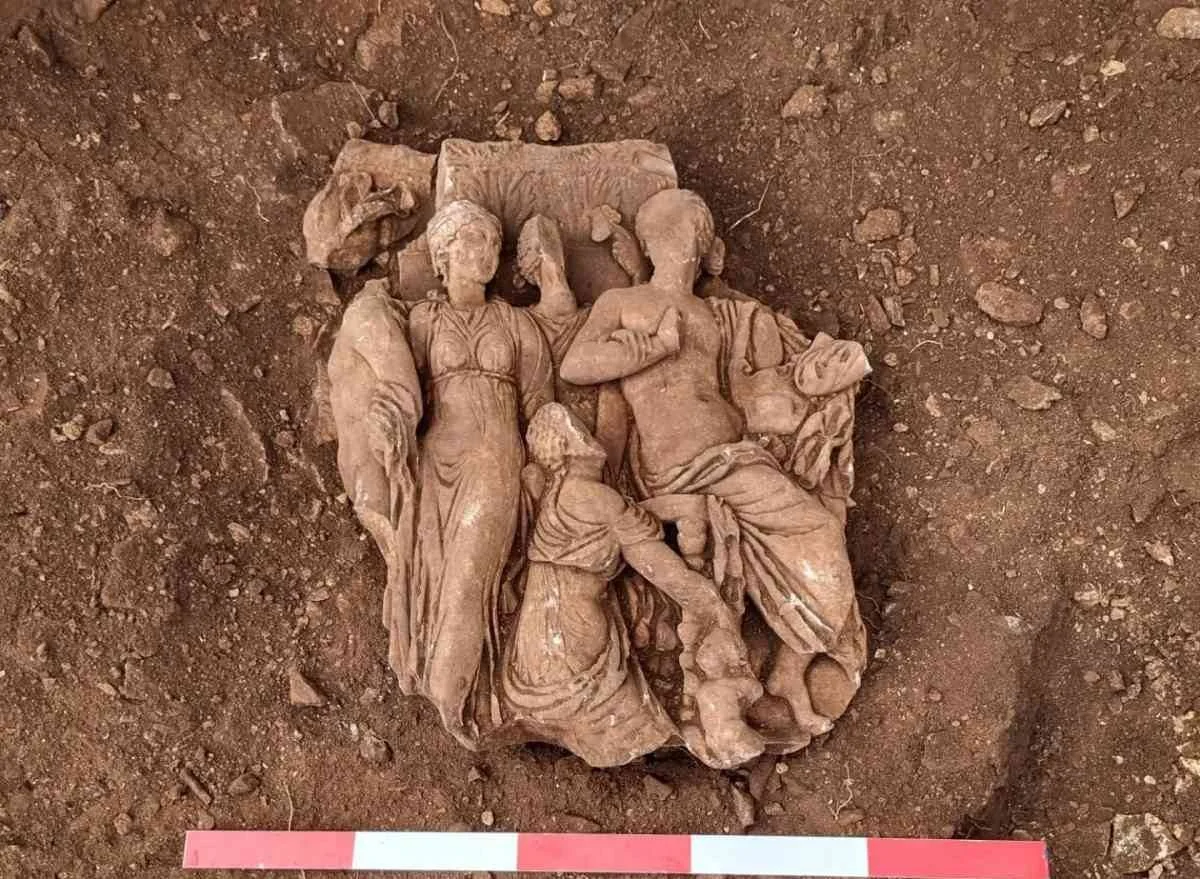
A female statue thought to date to the second century AD and two frieze fragments showing scenes from mythologies were discovered during excavations in the ancient city of Olba, which is located in the Silifke neighborhood of Mersin, in the south of Turkey.

The ancient city in the Ören District, which was a significant community during the Hellenistic era and was referred to as the center of the Olba Kingdom, is still being excavated. Work on the project began in July.

In this historically significant area that was once a major commercial center, a group of 15 people working together includes art historians, specialist archaeologists, and students. Associate Professor Yavuz Yeğin from the archeology department at Ardahan University is in charge of the excavations.

Two frieze remnants (architectural bands of decoration) were uncovered this year while digging in separate areas of the ancient city. Both of them depict mythical situations, with one being a female statue from the second century AD.

Associate Professor Dr. Yeğin, the excavation's head, said: "Unique artifacts have been found during this season's excavations. The Cilicia region has not yet yielded any items of a similar nature. Our work in the historic city is moving along at top speed, "

These objects, which are presently in protective custody, have been given to the Silifke Museum Directorate for additional review.

Deep among the Taurus Mountains lie the remnants of the ancient city of Olba. It was perhaps the seat of the Pirindu monarchy, which ruled the region in the sixth century BCE. The earliest buildings found by archaeologists in the Olba region belong to the Hellenistic era.

The ancient city and bishopric of Olba or Olbe was located in the Roman province of Isauria. From the first century CE onward, the city flourished under the Romans. Olba served as the bishop's residence throughout the early Christian era and served as the city's representative at important councils and synods.

Source: https://arkeonews.net/unique-finds-unearth...

Brazilian dinosaur linked to Xinjiang dinosaur in China

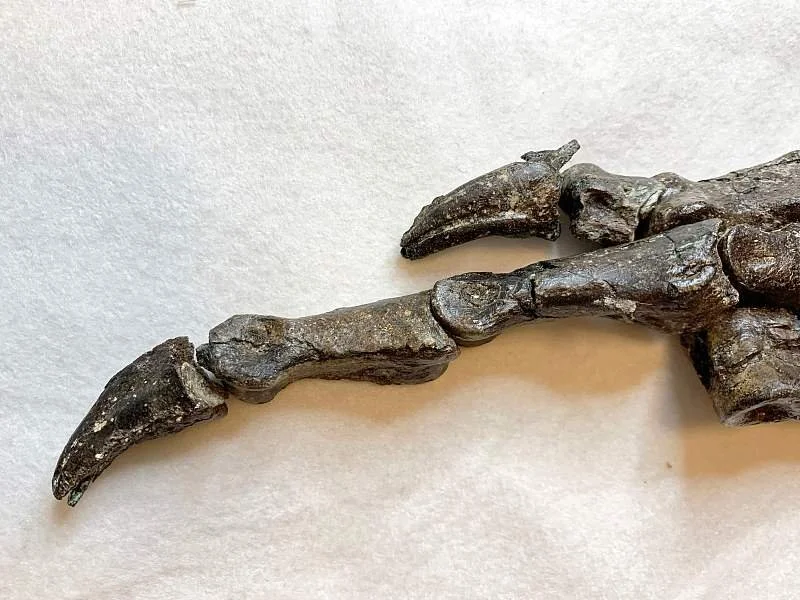
Three years ago, researchers from the Federal University of Pernambuco and the National Museum of Brazil jointly released their results in Rio de Janeiro, describing the discovery of a new species of dinosaur that was discovered petrified in the Araripe Basin in Ceará, northeastern Brazil.

A file photo shows dinosaur fossils found in the Araripe Basin in Ceará, Brazil in 2020. /CFP

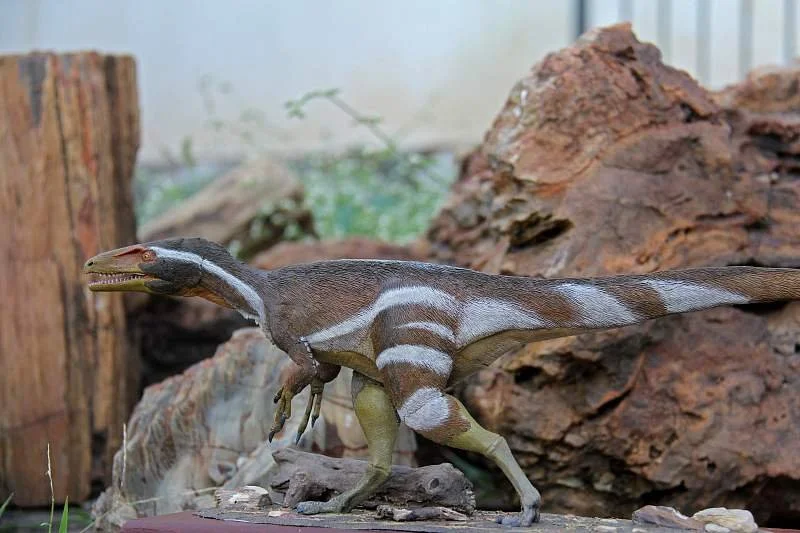
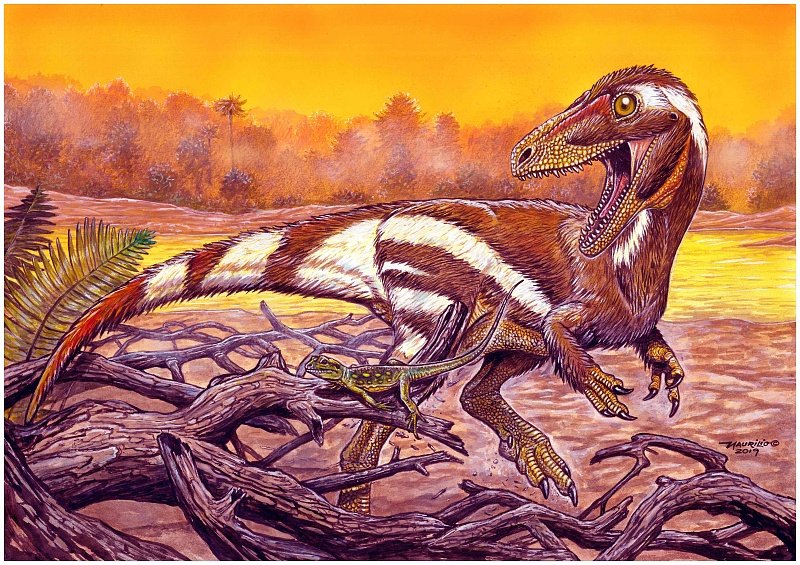
The Aratasaurus, a carnivorous dinosaur that lived between 115 million and 111 million years ago, is the name given by archaeologists to this sort of dinosaur. It measured 3.12 meters in length and weighed about 34.25 kilos when it was petrified. It was discovered that the dinosaur was not fully matured when it died after dating the petrified dinosaur bones.

A model of Aratasaurus, a carnivorous dinosaur during the Cretaceous period /CFP

The dinosaur remains were discovered in the Araripe Basin, which was formerly a sizable lake. With the influx of sea water, the lake's salinity varied over time. This region had been home to a wide variety of animals and flora for hundreds of millions of years. Archaeologists now know that there were many more dinosaur species in the area than previously thought, thanks to the discovery of dinosaur remains.

According to archaeologists, this kind of dinosaur is known as the Aratasaurus, a carnivorous dinosaur that lived during the Cretaceous period. /CFP

Archaeologists claim that this dinosaur from Brazil is related to a different kind of dinosaur that was found in Xinjiang, northwest China, in 2001. The dinosaur was found in the upper Wucaiwan, where it had previously lived in the late Jurassic period about 160 million years ago. This kind of dinosaur, known as "Zuolong" in Chinese, is comparable to the Aratasaurus in terms of size, length, and weight. Both of them lived in arid environments.

Source: https://news.cgtn.com/news/2023-08-17/Braz...

In the Jezreel Valley, archaeologists discover a 3,800-year-old arched corridor

The Middle Bronze Age was determined by archaeologists with the aid of an artifact discovered at the entrance to the corridor.

Aerial view showing stone-covered plaza scheduled for future excavation to access the passageway with the corbelled vault, Tel Shimron.

A rare and perfectly preserved arched corridor from approximately 3,800 years ago was discovered by archaeologists at the Tel Shimron Excavations in the Jezreel Valley of northern Israel, it was revealed on Thursday.

This extraordinary discovery fills in a crucial gap in the history of the arch in the area by marking the first use of a corbelled mudbrick vault in a tunnel in the southern Levant.

Only 200 years after the patriarchs Abraham, Isaac, and Jacob, who lived in the 17th century BCE, when Jewish history began almost 4,000 years ago, did the tunnel appear.

"This is the only example of a mudbrick passageway with an intact corbelled vault discovered in the southern Levant, exquisitely preserved and complete with decorative elements," said Daniel Master, co-director of the Tel Shimron excavations. This discovery fills in a significant gap in the history of the arch in this area.

The vault, he continued, is "an ancestor of the mudbrick radial arch in the gate at Tel Dan and is an extraordinary example of Mesopotamian mudbrick technology."

A corbel is a structural element used in architecture that protrudes from a wall to support a bracket-like superincumbent weight. In order to produce a gradually narrower ceiling, piled bricks are gradually stepped inward. Mesopotamian sites frequently employed this approach. However, this mudbrick construction is unique in that it has never been discovered in a southern Levant corridor, making it a remarkable discovery that reveals linkages across the fertile crescent.

Archaeologists at Tel Shimron discovered a tower made of over 9,000 carefully preserved mudbricks that was more than five meters high on the southern side of the ancient city's acropolis. There was a little corridor in the middle of the building that led to the domed mudbrick passageway. The corridor, which is over two meters long and has mudbrick stairs that descend towards the city, has a corbelled roof constructed of unfired brick that is decorated with white chalk stripes.

Corbelling is utilized on small tomb cysts at different Middle Bronze Age sites, both in Canaan and the Egyptian Delta, according to Mario Martin, the co-director of Master's excavations. "However, there is no other totally surviving mudbrick-built tunnel with this kind of corbelled vault. These unfired mudbrick buildings hardly ever endure.

Object found there aids archaeologists in dating a route.

The archaeologists discovered an undamaged Middle Bronze Age vase lying among ashy detritus at the entrance to the cave. The entire object, referred to as a "Nahariya Bowl," is a seven-cup offering bowl that derives its name from the location in northern Israel where it was first found in a cultic context. This discovery aids in establishing the tower complex's Middle Bronze Age origins. The kingdom of Tel Shimron (ancient Sham-anu) was powerful enough to catch the Egyptians' attention about this time, according to legend.

The royal acropolis included the tower complex. The tower itself, with its extensive use of intricate brickwork, is a prime example of the vast fortifications and elite constructions typical of the major cities of the Bronze Age, as evidenced in buildings discovered in elite districts of Mesopotamian cities like Mari and Ur. The acropolis has been uncovered in an area of around 500 square meters, with stone foundations and mudbrick buildings elevating the entire precinct by more than four meters.

The Tel Shimron corridor was intentionally blocked up shortly after it was built. The vault and mudbrick stairs of the corridor were nearly completely intact thanks to the ancient fill. The entire vaulted corridor is still in existence, but big stones obstruct the path beyond the brick tower's edge. The corridor was backfilled by the end of the summer excavation season at Tel Shimron in 2023 to protect the delicate mudbrick from deterioration. Archaeologists intend to open the route from the opposite direction during next excavation seasons to determine its ultimate destination.

Mudbrick stairs within the passageway are blocked by intentional gravel backfill and large boulders, Tel Shimron. (credit: EYECON)

Located along historic trade routes from the Mediterranean to the Arabian Desert, Tel Shimron is a massive ruin that dominates the northern Jezreel Valley in Israel. Beginning in the early second millennium BCE, Egyptian texts first made reference to the ancient city. Subsequent texts, including as the Hebrew Bible and the Mishna, continued to make reference to it.

Tel Shimron had never undergone comprehensive excavation prior to 2016, and the world was mostly unaware of its multi-epoch history. The group led by Master and Martin has made progress at bridging this historical gap in northern Israel over the past seven years. The excavation team has already unearthed a Canaanite fortified city (1850–1200 BCE), pieces of an Israelite city from the First Temple era (734–2 BCE), and a Jewish community from the early Common Era in just five excavation seasons.

Leading authorities in all fields of archaeological study from Israel, the US, and Europe are part of the Tel Shimron excavation team, which is cooperating with Wheaton College in Illinois and the Institute of Archaeology at Tel Aviv University. With funding from US donors, the project is carried out under license from the Israel Antiquities Authority and INPA. Through meticulous archaeological inquiry, the excavation aims to comprehend the ancient world, particularly the world of the Bible, and to give materials for the study of Levantine history and culture for the past 5,000 years.

"Tel Shimron National Park is a time capsule capturing 5,000 years of fascinating history in the heart of the Jezreel Valley, renowned as one of the most significant tels in Israel," said Dror Ben Yosef, the INPA's archaeologist for the northern region. The current expedition's archaeological investigations at the site are supported and helped by INPA. It is interested in conserving Tel Shimron as a public place with its values of heritage, nature, and landscapes and continues to be directly involved with the study discoveries, which continue to astonish researchers year after year.

Source: https://www.jpost.com/archaeology/article-...

See the visage of a Connecticut graveyard 'vampire' from the 18th century

Locals in Griswold, Connecticut, believed a man who was buried there in the late 18th century was a vampire because of the way his femur bones were placed. But there wasn't much else known about him. DNA data is now showing what he may have looked like after more than 200 years. (And yes, he had human genetics.)

Using DNA extracted from a skull, a forensic artist created a facial reconstruction of a man believed to be a vampire from the 18th century. (Image credit: Parabon Nanolabs, Virginia Commonwealth University)

The Armed Forces DNA Identification Laboratory (AFDIL), a division of the U.S. Armed Forces Medical Examiner System based in Delaware, and forensic scientists from Parabon NanoLabs, a Virginia-based DNA technology company, came to the conclusion that the deceased male (known as JB55) was about 55 years old at the time of death and had tuberculosis. According to a statement, a forensic artist assessed that JB55 most likely had fair skin, brown or hazel eyes, brown or black hair, and some freckles using 3D facial reconstruction software.

Researchers speculate that the body may have been disinterred and reburied at some time, a technique frequently connected to the idea that someone was a vampire, based on the placement of the legs and skull in the grave. According to the statement, historically, some people believed that persons who passed away from tuberculosis were truly vampires.

According to Ellen Greytak, director of bioinformatics at Parabon NanoLabs and technical head for the company's Snapshot Advanced DNA Analysis branch, "the remains were found with the femur bones removed and crossed over the chest." This would prevent them from moving around and attacking the living, says the speaker.

Forensic investigators first took DNA samples from the man's skeletal remains in order to conduct the analyses. Working with bones that were more than 200 years old, nevertheless, proved difficult.

In particular, if the bones are old, the technology doesn't work well with them, Greytak said. "As bones age, they deteriorate and fragment over time. Additionally, when remains have been exposed to the environment for hundreds of years, the DNA of nearby fungi and bacteria ends up in the sample. We aimed to demonstrate that we could still extract DNA from challenging old samples.

A common practice was to bury suspected vampires with their legs crossed so that way they couldn't rise from the dead. (Image credit: MDPI, Basel, Switzerland)

In conventional genome sequencing, the goal is to sequence every segment of the human genome 30 times, or "30X coverage." Only roughly 2.5X coverage was obtained from the sequencing of JB55's degraded bones.

To add to this, scientists took DNA from a person buried nearby who was thought to be related to JB55. Even worse coverage was produced by those samples, at roughly 0.68X.

They were either first cousins or third-degree relations, according to what Greytak indicated.

In 1990, archaeologists discovered the alleged vampire's remains. In 2019, forensic scientists took his DNA, ran it through an internet genealogy database, and discovered that JB55 was really John Barber, a struggling farmer who most likely passed away from tuberculosis. The epitaph written in brass tacks on his grave, which included his initials and age at death, served as the inspiration for the moniker JB55.

Source: https://www.livescience.com/vampire-burial...

Unusual 300,000-year-old jawbone discovered in China may be from a line of extinct humans

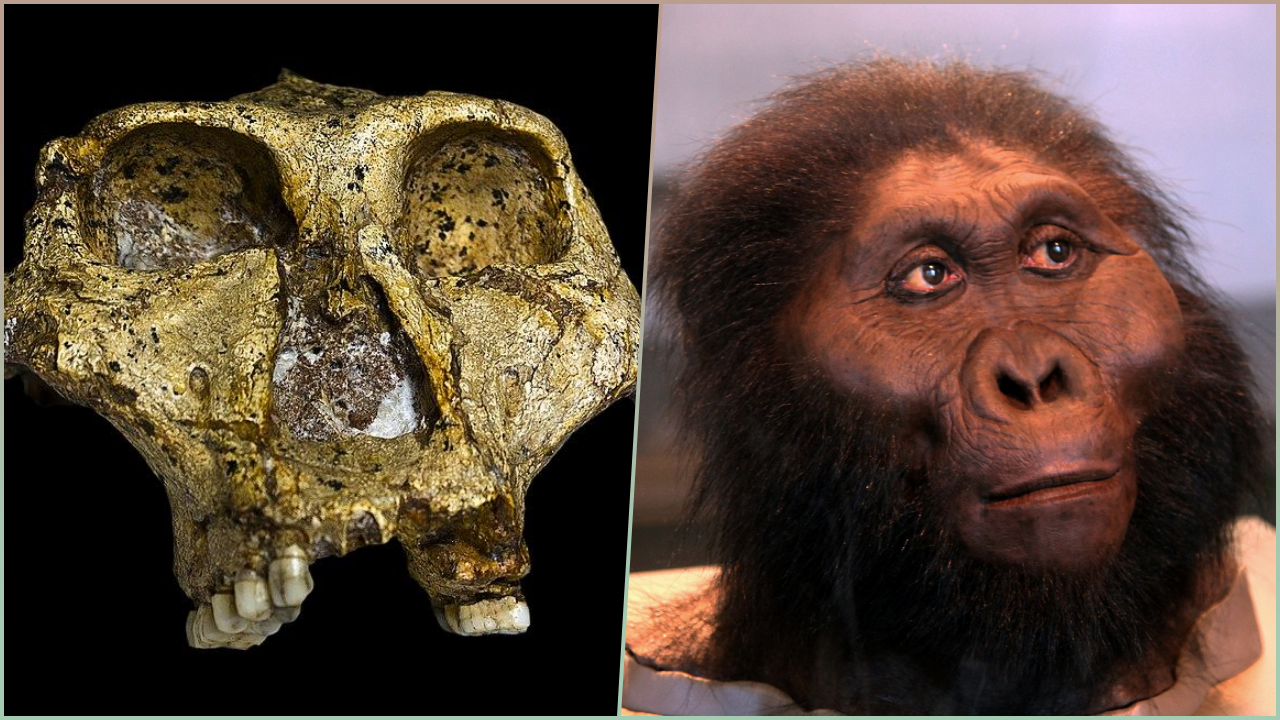
It is challenging to place fragments of a jaw bone discovered in China on the human evolutionary tree because they share a mosaic of characteristics with both contemporary and prehistoric humans.

A computer reconstruction of the skull and jaw fragments unearthed in China. New fossil fragments suggest the skull could have come from an unknown human lineage. (Image credit: See Eurekalert (2019))

Lower jaw pieces that may have belonged to a different human lineage have been discovered by anthropologists in China.

According to a new study, the bone, which is around 300,000 years old and has a distinctive mosaic of ancient and modern traits, belonged to a young adolescent.

Experts told Live Science that because the characteristics of the fossils can be interpreted in different ways, it may also be related to Homo sapiens or to our close human cousins. At least 16 people's remains have been discovered over the past ten years at the Hualongdong site in east-central China, around 750 miles (1,200 kilometers) south of Beijing. The remains were previously analyzed, and it was determined that they were from the late Middle Pleistocene epoch (2.6 million to 11,700 years ago), which means they are between 275,000 and 331,000 years old. Understanding the evolution of our own human lineage during this time is crucial, but it is made difficult by the presence of other, since-extinct branches of the human tree, such Neanderthals and Denisovans.

Researchers in Hualongdong uncovered an almost entire skull there that they have named HLD 6. Initial research conducted in 2019 and 2021 revealed that this person, who was probably between the ages of 12 and 13 when they died, had a current, human-like face but a cranium that resembled the first Homo sapiens.

In December 2020, a new piece of HLD 6's mandible, or lower jaw, was found. For further investigation, scientists inspected and rebuilt the bone. In a study that was published in the Journal of Human Evolution on July 31, they summarized their findings.

Geometric morphometrics, which compares the 3D shapes created by the measurements, was used by Xiujie Wu, Wu Liu, and colleagues from the Chinese Academy of Sciences in Beijing to measure the mandible of HLD 6 and compare it to 83 other known fossil hominins.

HLD 6 contained a number of characteristics that suggested the adolescent had a chin, a feature that is distinctive to contemporary humans. Researchers came to the conclusion that the ancient teen did not have a chin because the fossil lacked a few other characteristics of one.

The researchers said in their report that the HLD 6 mandible "displays a mosaic pattern with some features commonly found in Middle Pleistocene archaic hominins, Late Pleistocene anatomically modern humans, and recent modern humans."

Although the facial bones of HLD 6 resemble those of modern humans, their lower jaw has a more complex combination of characteristics that reflect the variety within the human lineage in the Middle Pleistocene. This implies that the people from Hualongdong could descend from Homo sapiens, Neanderthals, or Denisovans, or they could originate from a completely different lineage.

Although the skull and mandible are very intriguing, Chris Stringer, research director for human evolution at the Natural History Museum in London, who was not involved in this study, does not believe that HLD 6 is closely connected to Homo sapiens. "The data presented suggest a distinctive combination of features that supports the idea of a third human lineage in China, not sapiens nor Neanderthal," he wrote in an email to Live Science.

In an email to Live Science, University of Hong Kong biological anthropologist Michael B.C. Rivera noted that "with few fossils available for study in previous decades, scientists could not grasp the degree of variation we now see dated to the Middle Pleistocene." According to Rivera, this Hualongdong fossil may suggest that our evolution was slower and more complex than previously believed and that "we are only uncovering snippets of that evolutionary history."

More research is required, according to Stringer, in order to completely comprehend how our human species originated, interbred with other species, and traveled around the globe.

Although stone tools indicate that people formerly lived in those regions, "vast areas of Africa and southeast Asia have still not produced a single ancient bone or skull, and the entire Indian subcontinent has only one significant ancient human fossil to date," Stringer said.

Source: https://www.livescience.com/archaeology/st...

Unexplained 2,000-year-old burial discovered with odd artifacts

Scientists and historians had long been perplexed by the enigma surrounding a 2,000-year-old island burial, but the riddle has now been cleared up. Archaeologists were perplexed as to who was buried in the grave that was found on the Isles of Scilly's Bryher island.

The Iron Age grave discovered on Bryher on the Isles of Scilly in 1999 in which a sword and a mirror were found (Image: Historic England)

Since the unusual Iron Age tomb included both a mirror and a sword, researchers for decades were unable to determine whether a man or a woman had been interred there. Swords are typically associated with men, while mirrors in tombs are typically linked with ladies. That mystery has now been solved by a new scientific study conducted by Historic England and released on Thursday the 27th of July, 2023.

An international team of researchers has reexamined the ancient tomb, which has baffled archaeologists ever since it was found in 1999. Farmer Paul Jenkins stumbled onto the stone-lined burial chamber on Hillside Farm near Bryher, and it has turned out to be the richest Iron Age grave ever uncovered in the South West and the only one in the area to include weaponry.

Archaeologists discovered a shield and a sword in a copper alloy scabbard during the initial excavation 24 years ago; these items are typically connected to men. They also discovered a bronze mirror and a brooch that had what appeared to be a solar disc motif on it. Typically, a woman would be indicated by these items.

But only one person's remains and a few things were placed in this single tomb. DNA testing techniques, however, were unable to determine the gender of the person buried inside because all that could be seen of the skeleton was a brown soil mark where the body had formerly been lying on its side and only small pieces of bone and teeth.

The sword and mirror found in an Iron Age tomb on Bryher (Image: Historic England)

Years of debate were followed by recent scientific developments, including the creation of a sophisticated approach by researchers at the University of California, Davis. Finally, it was possible to confirm that the individual was a female warrior.

The study's participant, Glendon Parker, an environmental toxicology professor at the University of California at Davis, stated: "Tooth enamel is the toughest and most resilient component in the human body. It has a protein that connects to either the X or Y chromosome, making it possible to identify sex. This is helpful because, in contrast to DNA, this protein survives longer.

"For our analysis, we isolated remnants of proteins from minute fragments of the remaining tooth enamel. As a result, we were able to determine that there was a 96% chance the person was female. It's amazing to have such a good outcome considering how deteriorated the bones are. You start to worry what might be found if you revisit other graves that are in terrible condition.

The results of the study, which were just published in The Journal of Archaeological Science Reports, established the person's gender.

The research conducted by Historic England could reveal more about this person's identity as well as the position of women in Iron Age Britain, a time when intercommunal conflict was common. 2,000 years ago, surprise raids by a war group on hostile towns were probably the primary method of warfare.

The mirror and weaponry discovered in the grave, according to Dr. Sarah Stark, a human skeleton biologist at Historic England, are all connected to battle.

Mirrors served a variety of functional and symbolic purposes during the Iron Age. They might be used to coordinate attacks, communicate, and send out signals. They also had ritualistic purposes, like as 'cleansing' warriors after a raid or using them as a means of communication with the supernatural realm.

The Isles of Scilly can be a mysterious place (Image: Historic England)

Our discoveries present a fascinating opportunity to reexamine this significant burial, according to Dr. Stark. They show that women played a significant role in combat on Iron Age Scilly. The presence of a sword and a mirror in a cemetery suggests this woman had a high rank within her society and may have held a commanding position in local warfare, organizing or leading raids against rival groups, though we can never be fully certain of the symbolism of things found in graves.

"This could indicate that female involvement in raiding and other forms of violence was more widespread in Iron Age society than we've previously believed, and it could have laid the groundwork from which leaders like Boudicca would later emerge," the scholar continued. To find out if there are any additional "hidden" female warriors out there, it would be interesting to re-examine other deteriorated tombs.

Visitors have been enthralled by the mystery that surrounds the sword and mirror, according to Kate Hales, curator of the Isles of Scilly Museum. Knowing that they were interred alongside a young woman is intriguing, and we look forward to retelling her story and speculating about the kind of life she spent thousands of years ago on our now-calm islands.

Source: https://www.cornwalllive.com/news/cornwall...

At the bottom of Lake Van, Turkey's largest lake, mysterious ruins were found.

Divers found a cemetery and places with signs of an old village at the bottom of Lake Van, Turkey's largest salty soda lake at 3,712 square kilometers.

The largest lake in Turkey and the second largest lake in the Middle East is called Lake Van (Van Gölü in Turkish). Additionally, it is the world's largest lake of sodium water.

By diving, people discovered the ruins at the bottom of Lake Van, and additional ones were added to them.

Following the dive by members of two associations in the provinces of Bitlis and Van, it was reported that cross-shaped sunken ruins believed to be part of an ancient city had been found in Lake Van's depths.

They discovered fresh puzzles that could only be addressed by diving, according to Cumali Birol, president of the Eastern Sea Association, in a statement to Demirören News Agency (DHA).

According to Cumali Birol, after the water levels dropped, reports of several tombstones and ruins found in the water between the Tatvan and Ahlat districts were sent to the appropriate agencies.

"Our divers discovered what appeared to be a hamlet in the area, including streets, tombs, and crosses with the Kayı tribe's markings. By providing the findings to specialists, we are attempting to shed light on the history of the area. Between Ahlat and Tatvan, we found a huge space. At the bottom of the river, there are cemeteries. The graves are marked with crosses.

Since there are remnants of old civilizations all around the lake basin, Birol emphasized that Lake Van is a mysterious location for divers. In recent years, more than 3 meters of water have receded in the lake basin, exposing numerous ruins.

"We sent two English geologists to the session that our organisation hosted. Thus, we have established that the Lake Van Basin was the location of the Noah's Flood. This notion is supported by the latest discoveries, which we made at a depth of 23 meters, said Birol.

While diving to study the lake in 2017, a group of archaeologists and independent divers from Van Yüzüncü Yıl University discovered a 3,000-year-old underwater fortification.

Source: https://arkeonews.net/mysterious-ruins-dis...

Teeth may keep antibodies that are hundreds of years old

According to a recent study, teeth may be able to preserve antibodies for hundreds of years, allowing researchers to analyze the evolution of contagious human diseases.

Proteins called antibodies are created by the immune system as a defense against pathogens like bacteria and viruses. Their responsibility is to identify those microorganisms so that the immune system can combat and eliminate them from the body.

In a recent study, published in iScience, it was discovered that antibodies taken from 800-year-old medieval human molars were stable and still capable of recognizing viral proteins.

In collaboration with Professor Anisur Rahman and Dr. Thomas McDonnell from the Division of Medicine at University College London, the study—led by Professor Robert Layfield and research assistant Barry Shaw from the School of Life Sciences, University of Nottingham—expands the field of ancient protein research, or palaeoproteomics, and may eventually enable experts to examine how human antibody responses have changed over time.

With ancient proteins already successfully retrieved and identified after preservation in 1.7 million year old teeth enamel from an ancient rhinoceros and an ostrich eggshell more than 6.5 million years old, palaeoproteomics can go back into the depths of antiquity. The authors of this new study also discovered preliminary evidence that mammoth bones approximately 40,000 years old appear to contain stable antibodies, similar to the medieval human teeth.

The Nottingham team has used this technology in the past to analyze other illness-associated proteins found in ancient human bones and teeth from Norton Priory in Cheshire, enabling the discovery of a peculiar early form of the skeletal disorder Paget's disease.

In discovery science, we learn to expect the unexpected, yet it was nevertheless surprising to learn that full, functional antibodies could be isolated from skeletal remains found in the archaeological record, according to Professor Layfield. Certain proteins from the distant past were known to be stable, but they tended to be'structural' proteins like collagen and keratin, which are rather inactive.

"Antibodies are different because we can test whether they can still recognize viruses or bacteria even after hundreds of years," continued Professor Rahman. In this instance, we discovered that antibodies from ancient teeth were capable of identifying the glandular fever-causing Epstein-Barr virus. In the future, it might be feasible to examine how antibodies from ancient specimens respond to diseases that were prevalent then, such the Black Death.

Source: https://www.nottingham.ac.uk/news/teeth-co...