Ancient Siberian Ice Maiden - Mysterious Mummy of the 2500-year-old Princess of Ukok

Who was the Princess of Ukok? The Princess of Ukok, also known as the "Siberian Ice Maiden", was a woman of high status who lived in Siberia around the fifth century BC. Her remarkable mummified remains, adorned with ornate tattoos, were found next to a bag of herbs.

What do the tattoos on the Princess of Ukok represent?

The intricate tattoos on the Princess of Ukok depict mythical creatures and animals that reflect the values and status of Pazyryk culture. These tattoos served as forms of identity and were believed to help in the afterlife.

What caused the death of the Ukok Princess?

In 2010, MRI scans showed that the Ukok Princess probably died of breast cancer in her mid-twenties. Despite her advanced cancer, her skeletal remains showed no signs of physical trauma.

Why was the Princess of Ukok buried with cannabis?

Scholars speculate that the Princess of Ukok may have used cannabis for medicinal or shamanistic purposes, possibly to ease her pain. Her funeral and the presence of horses suggest that she played an important role in her community.

Why was the Ukok Princess' relocation controversial?

The relocation of the Ukok Princess led to natural disasters and disagreements between the Altai Republic and larger authorities. The Altai people believed that disturbing sacred lands led to disasters.

12 Most Amazing Ancient Technologies Scientists Still Can't Explain

Our ancient ancestors had access to some pretty incredible technology. In fact, their technology was so incredible that we can’t adequately explain how they came up with it. Scientists don’t like to talk about it, but you can find evidence of this high technology everywhere if you know where to look. Fortunately, we do - and we’ll share it with you in this video!

Truth about the Irish - First slaves brought to the Americas

Slavery is perhaps one of the oldest profit making endeavors in human history and the Irish were a special target for a thousand years, persecuted by one faction or another, to include enslavement and indentured servitude. But were they the first slaves in the Americas? Watch the video to find out!

Vlad the Impaler: The True Story of Dracula (History Documentary)

In the following video we will be saying the incredible story of Vlad the Impaler from his youth in Wallachia and childhood as a hostage to his wars against the Ottoman Turks and his great passion for impaling his enemies.

Vlad Dracula was born into a time of great conflict between the Christian kingdoms of the Balkans and Central Europe and the Ottoman Turks who were determined to conquer them. Vlad III Dracula was the son of a Voivode of Wallachia yet he had to fight all his life for his throne and his people. Watch the video for more!

10 Most Amazing Recent Archaeological Finds

These are the most amazing recent archeological finds that will blow your mind. Every day, archaeologists dig up more and more artifacts, ancient buildings, the remains of people and animals in order to study our history thoroughly.

In 2022, archaeologists continue to find amazing and unusual finds at a variety of ancient monuments. Unusual wooden figurines, most likely used for ritual purposes. Australopithecus, which turned out to be much older than all humanoid creatures on our planet. Scraps of skin with real traces of human teeth. As well as the remains of ancient people who survived after the most difficult injuries suffered in their youth.

Pocahontas: Facial Reconstructions & History Documentary

Pocahontas is a very famous figure from the era of European settlement in Virginia. However, her story is immensely shrouded in myth and legend. Did she really save John Smith's life? Who was the John Rolfe that she later married? And how did she help the colonists and her tribe find peace during her lifetime? Finally, we'll take a look at how she really looked. Enjoy!

Abritus 251 - Crisis of the Third Century

In this video we will talk describe the early portion of the Crisis of the Third Century in the Roman empire, as the Year of the Six Emperors heralded by the coming to power of the first soldier emperor Maximinus Thrax takes the throne. Rome is beset by the barbarian incursions from all sides and one of them - Gothic invasion of 250 leads to the battle of Abritus of 251 between the Gothic leader Cniva and the Roman emperor Decius Trajanus.

How Early Female Hunters' Experience Was Modified by Ancient Dart Launchers

One throw at a time, a female archaeologist is disproving the notion that men are hunters and women are gatherers.

Atlatls use leverage to launch spears faster and farther than hand-thrown javelins. METIN EREN

Men have long struggled to understand the intricacies of women. anthropologist William Webb, for example. When he discovered hunting tools in the ancient graves of women in the 1940s, he was momentarily baffled. Webb, who was in charge of the University of Kentucky's archaeology and anthropology department at the time, was looking into the Late Archaic (5,000 to 3,000 years ago) Indian Knoll site. He came to the conclusion that the hunting equipment—in this example, an atlatl, or spear-thrower—had either been left there by husbands or because they constituted attractive hair accessories.

“It is hardly to be supposed that … women would have any practical use in life for an atlatl … such occurrences represent true burial offerings to the dead of artifacts primarily intended for the use of men,” Webb wrote in 1946.

Webb, a white cis-man, was working under the long-held presumption that hunting was a male-dominated activity.

“There’s a lot of assumptions about gender roles in archaeology that really aren’t supported,” says Metin Eren, an experimental archaeologist at Kent State University in Ohio. “The reason why we have assumptions about gender roles is because it was males over the 20th century that made those assumptions. It’s important to give preeminence to evidence and not assumption.”

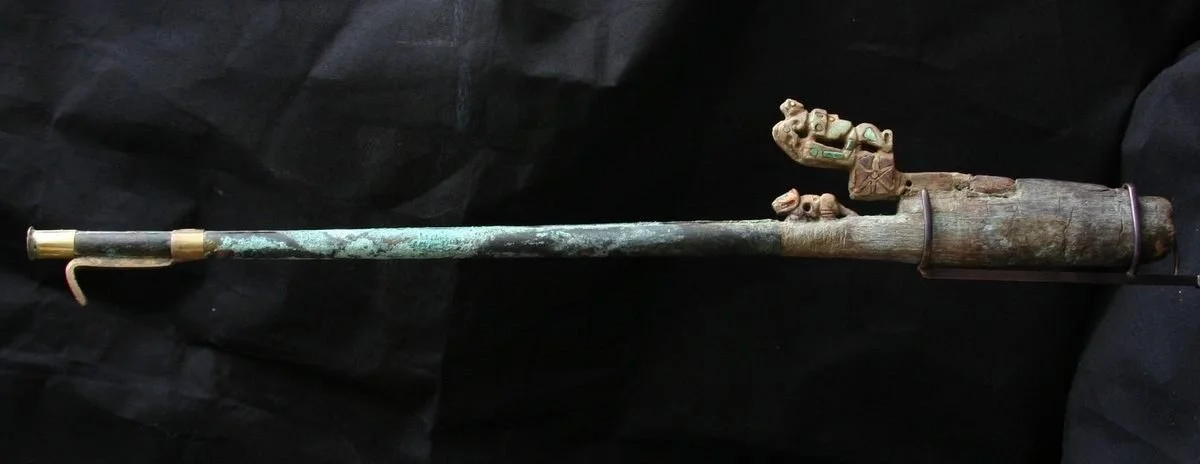
An ornately carved atlatl from Peru. There is evidence of atlatl use on every continent except Africa. LOMBARDS MUSEUM/WIKIMEDIA/CC

There is no reason to believe that ancient women didn't employ hunting equipment to lethal effect, according to recent research, including a new study published in Science Reports. Communities of hunters on all continents, with the exception of Africa, switched from throwing spears like javelins to using the atlatl, a type of handle that uses leverage to propel a spear farther and faster, as early as 22,000 years ago (though this may be due to a lack of archaeological evidence on what would be a much older timeline). For the current study, 108 participants were asked to throw spears in a variety of methods. Males were superior to females at javelin-style throwing. But when an atlatl was involved, that distinction virtually vanished. The results are consistent with the "atlatl equalizer hypothesis," put forth by scholars John Whitacker and Kathy Kamp at Grinnell College in Iowa, which postulates that using strategic leverage, hunting may have been a common activity in an ancient community.

“This and other research seems to be all converging on the idea that there’s much more diversity in how we organized labor in the past, and it doesn’t always fall along the gender lines that we see in the present,” says archaeologist Randall Haas of the University of Wyoming, who was not involved in the study.

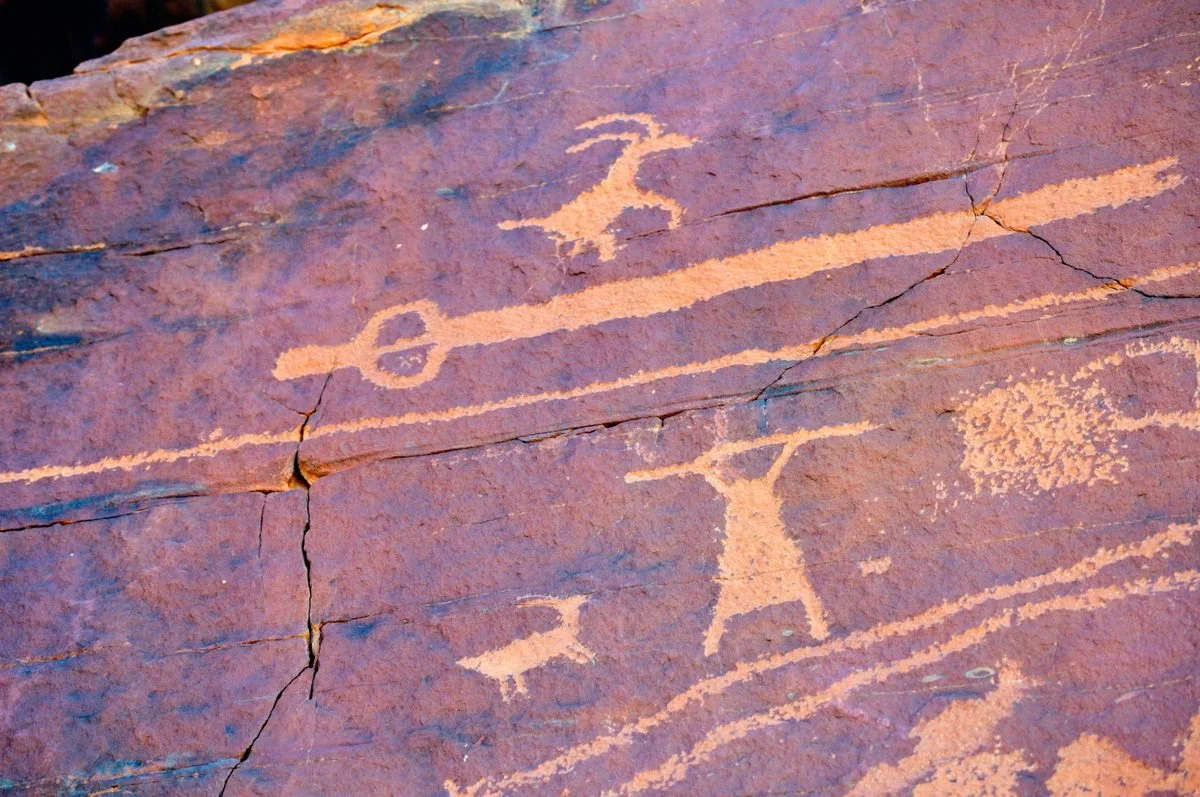
Petroglyphs at Valley of Fire State Park in Nevada depict early atlatl use. JOEL ZATZ/ALAMY

2020 saw the discovery of a 9,000-year-old corpse in the Andes by Haas, his colleagues, and members of the Mulla Fasiri village in southern Peru. This site turned out to be the earliest known female burial with big-game hunting equipment neatly arranged around her body and enormous mammal bones dispersed throughout. The team determined that 30 to 50% of ancient big-game hunters in the tribes they studied were female after looking at the remains of an additional 429 individuals from 107 locations throughout the Western Hemisphere. This result was shocking to preconceived notions about the gender roles of the earliest hunters and gatherers. Thereafter, a flurry of studies into women's hunting roles emerged. According to Haas, "we stand to learn something about a huge section of humanity throughout the world and into our deep evolutionary past" if we can comprehend how these technologies mix with gender dynamics.

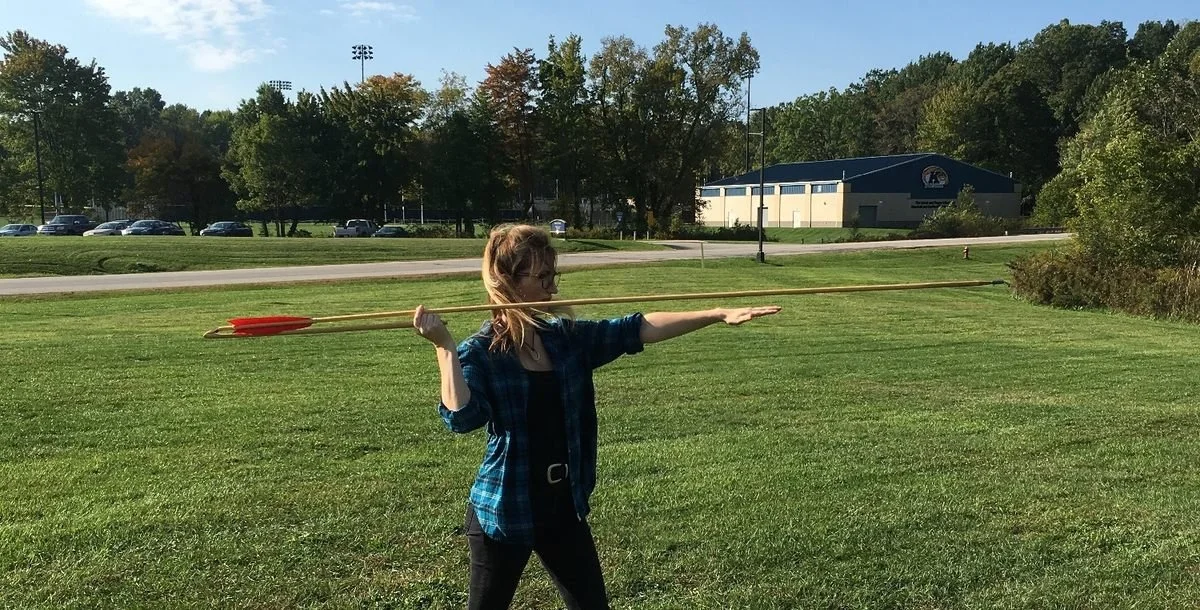
These concepts are frequently tested in Kent State's experimental archaeology lab. A loadable lever composed of wood, bone, or antler is known as an atlatl. According to lead author Michelle Bebber, an experimental archaeologist at Kent State, think of it as a tennis ball launcher for a dog. An atlatl has a tiny spike at the end opposite the handle that is roughly two feet long but might be as little as five inches. For the study, a six-foot-long, strong spear-like dart's butt end can be notched there. The thrower employs essentially a standard throwing action while holding the handle rather than the dart. Leverage handles the rest.

Bebber encouraged students—as well as their parents, partners, and anybody else who happened to turn up—to try their hand at both throwing styles at an abandoned sports field on the outskirts of school. She "countless hours" on the field in the pouring rain and the snow. Coauthor Eren comments, "It's a testament to her dedication to this project." There has never been anything like this done before since she was out there throughout the winter when it was chilly and she launched over 2,100 weapons.

Lead author and experimental archaeologist Michelle Bebber holds an atlatl loaded with a six-foot dart. METIN EREN

The effort was worthwhile. Males were found to throw javelins at speeds between 26 and 52 feet per second and females between 16 and 38 feet per second, which is faster than females. But when it came to throwing darts, sex didn't matter as much; grip strength, which isn't as closely related to sex, was more crucial. In essence, the researchers came at the conclusion that women have the same atlatl capacity as men. "If you're picking teams for the javelin on the playground, you'll pick teams with powerful males. Eren quotes colleague and University of Tulsa anthropologist Briggs Buchanan who adds, "For the atlatl, you will only pick strong."

"I think that narrative is really important to see, that women weren’t just passive and that they were able to fully participate in hunting activities," claims Bebber. They were probably inventive and perceptive, and they might have even developed this kind of technology.

According to the researchers, the atlatl's "equalizing opportunities" might transcend sex and gender stereotypes. Bebber is considering a broader spectrum of ages. Haas wants to know how much talent counts and whether it holds true in comparison to other primitive hunting tools. It seems to support certain earlier suggestions, and “I think it’s a solid analysis and it seems to bear out some earlier hypotheses,” he says. The results, in my opinion, are persuasive and it does a wonderful job of thoroughly examining. It would be interesting to see similar tests with archery technology, as well as some extensions with people who have more experience.

Haas concurs that this research adds crucial subtlety to our understanding of gender roles, both historical and contemporary. "Understanding the extent to which we engaged in sexual division of labor, or any kind of division of labor in the hunting and gathering context can help us better understand any disparities, unification, or divisions that we see between sexes or in different gender roles today," he claims. "I won’t say [this study] confirms, but it supports, this idea that our previous understanding of gender and labor practice in the past was at least off the mark by quite a bit," the author says.

Source: https://www.atlasobscura.com/articles/earl...

Large Neolithic monument found by researchers on the Isle of Arran

On the Scottish island of Arran, a team of archaeologists unearthed what is thought to be a full Neolithic cursus placed within a magnificent prehistoric landscape.

This monumental structure, which is enormous and is 1.1 km long and 50 m broad, is among the earliest of its kind constructed by farmers in Neolithic Britain.

An enormous Neolithic structure made up of one or more rectangular enclosures is known as a cursus. A substantial stone, earth, and turf bank encircling the entire enclosure serves to delineate the cursus on Arran. This monument's construction would have required enormous labor, completely altering the nearby environment.

Researchers estimate that this monument type may have existed as early as 3500 BC. It is the most comprehensive example of this site type that can be found in Britain, and it is incredibly uncommon and thrilling to have the chance to explore a cursus bank.

The same area has also yielded the remains of prehistoric field boundaries, clearance cairns, and round huts, some of which may have existed at the same time as the monument and were all preserved by peatland, which sealed the archaeological layers. An unrivaled opportunity to comprehend how contemporary farming practice and settlement interacted with the cursus monument and how early farmers changed this place is provided by ancient soils that represent the original Neolithic land surface in combination with cultivated soils from the Bronze Age.

The landscape geoarchaeology and environmental science study at the site was co-led by Dr. Emma Jenkins, Associate Professor in Archaeology at Bournemouth University, with assistance from Dr. Sarah Elliott, Deputy Head of Department, Life and Environmental Sciences (LES), and Harry Manley, Demonstrator in LES.

Excavations were made nearby the cursus into Neolithic and Bronze Age field systems, allowing for the collection of material for dating and other environmental evidence. Having a better understanding of how people have used and maintained this significant environment will help the team develop a more effective rewilding approach.

Dr Jenkins mentioned, “The Isle of Arran is well known for Machrie Moor with its Prehistoric stone and timber circles; standing stones and burial cairns but the discovery that these may be part of a much larger complex which included this enormous cursus elevates this into a region of global significance on a par with other ceremonial landscapes like Stonehenge. As an environmental archaeologist I am particularly excited by the discovery of well-preserved soils, contemporary with the creation of the cursus which means we can investigate how people used and modified this landscape from the time of the first farming communities in Britain.”

The Northwoods Rewilding Network, landowner David Bennett, and the Arran Geopark's larger efforts will all benefit from the invaluable information about the history of the environment and previous ecosystems that will be gleaned from this research. Additionally, the team encouraged community members to participate in the research process, and they are investigating potential future learning and creative opportunities in response to the studies. North Ayrshire Council and Arran Theatre and Arts Trust gave local artists funding to investigate the excavation.

Professor Nicki Whitehouse, Professor of Archaeological Science, University of Glasgow, said: “The initial discoveries reveal a highly unusual combination of a ceremonial monument within a prehistoric farming landscape. It is part of a continuum that likely linked to the ritual site at Machrie Moor, probably forming part of something much more extensive. The science work will allow us to understand about the animals and plants people farmed, how people impacted the landscape and its ecosystems and transformed their soils for cultivation – and what we may learn from this today.”

It is exceedingly unusual to combine the investigation of all these factors at once, and experts from the universities of Birkbeck, Reading, Coventry, Birmingham, and Southampton as well as archaeologists from Archaeology Scotland and Historic Environment Scotland have contributed to this effort.

Source: https://www.bournemouth.ac.uk/news/2023-09...

'Archaeological sensation': Swiss Alps ancient wall discovery

In the foothills of the Alps in Switzerland, archaeologists have unearthed the ruins of Roman fortifications that date back 2,000 years.

Wall discovery in Swiss Alps called an 'archaeological sensation'ADA Zug, David Jecker

The walls that previously shielded a Roman building complex were discovered in Cham, a canton or state in central Switzerland, during the excavation of a gravel pit. Archaeologists have also discovered other artifacts, such as a plaster wall, iron nails, and bits of gold. Along with things like bowls, grinding millstones, glassware, crockery, and amphorae, which are ceramic jugs.

The Office for the Preservation of Monuments and Archeology described the discoveries as a "archaeological sensation" for the area and said they may provide information about Roman involvement in central Switzerland.

Roman structures of a similar size were last uncovered in Cham-Heiligkreuz nearly a century ago, according to Gishan Schaeren, head of the Prehistory and Protohistoric Archaeology Department. The fact that the top bricks could even be seen above ground astounded us as well.

The walls cover at least 5,300 square feet (500 square meters) of space. It is unknown how the Romans used the location, including whether it was a "villa with a view or a temple building," according to Christa Ebnöther, professor of archaeology of the Roman provinces at the University of Bern.

According to the study, evidence of Roman dinnerware known as terra sigillata, or "sealed earth" in Latin, was discovered, indicating the location was frequented by affluent individuals. The amphorae, which ordinarily contained liquids like wine, olive oil, and fish sauce, are proof that Roman traders in the area conducted business with people in the Mediterranean.

Several copper and bronze coins were also discovered by archaeologists, as well as a Julius Caesar-minted silver denarius from the first century B.C.

The Roman fortifications were not the only antique artifact found there. In the past, researchers have discovered the remnants of a middle Bronze Age settlement, late Bronze Age burials, and a handful of Celt-era coins.

Source: https://www.indy100.com/science-tech/swiss...

Roman swords dating back 1,900 years were discovered in an amazing Dead Sea cave find

According to researchers, Jewish rebels during an insurrection placed the weapons in the desert cave where they had been stored for nearly two millennia.

The weapons were found with part of a javelin Pic: AP

After 1,900 years, four wonderfully preserved Roman swords were discovered in a cave close to the Dead Sea.

Israeli archaeologists discovered the swords, along with their wooden hilts, scabbards, and steel blades, during an excavation two months ago, it was revealed on Wednesday.

The blades, which were discovered with a pilum, the head of a javelin, are thought to have been hidden in the grotto by Jewish insurrectionists during a rebellion against the Romans in the 130s CE.

The artifacts weren't radiocarbon-dated; rather, their typology was used to determine their age.

While returning to a cave close to the oasis of Ein Gedi to record an inscription discovered decades earlier, archaeologists discovered the swords.

Asaf Gayer, an archaeologist at Ariel University, said, “At the back of the cave, in one of the deepest parts of it, inside a niche, I was able to retrieve that artefact - the Roman pilum head, which came out almost in mint condition.”

“Each one of them can tell you an entire story”, according to Guy Stiebel, an archaeologist at Tel Aviv University who specializes in Roman military history.

“They also reflect a much grander narrative of the entire Roman Empire and the fact that from a small cave in a very remote place on the edge of the empire, we can actually shed light about those mechanisms is the greatest joy that the scientist can have.”

Experts have dated the swords to the second century Pic: AP

Only a few other examples of the high-quality preservation of Roman weaponry are known to exist, he added.

While the swords were discovered on the fringe of the Roman Empire, Mr. Stiebel continued, it is likely that they were made in a distant European province and transported to Judea by soldiers.

Future research will be done to ascertain the materials utilized and how they were created.

The find was a result of the Judean Desert Survey, a project that aimed to catalog and explore Dead Sea caverns in order to protect priceless artifacts from looters.

The Dead Sea Scrolls are ancient parchment fragments that have been preserved in excellent shape thanks to the cave's cool, dry environment.

Source: https://news.sky.com/story/four-1-900-year...

Archeologists Learn about 3,700-year-old human brain remains.

The well-preserved brain and skin remains of humans who lived in Turkey some 3,700 years ago have been found by a team of researchers.

Stock image: An archaeologist excavating a set of human remains. Researchers have discovered the well-preserved brain and skin remnants of people who lived around 3,700 years ago.

The remains were discovered in the Tavşanlı Mound (or Tavşanlı Höyük) in Turkey's Kütahya region, which is situated in the western part of the Anatolian peninsula. They belonged to two Bronze Age people.

The mound is known as the "Heart of Western Anatolia" because from above it looks to have a heart shape.

The unusual brain and skin remnants were uncovered at the site during recent excavations that were directed by scientists from Bilecik Şeyh Edebali University.

According to the Anadolu Agency (AA), the remains belonged to a young man who was between the ages of 15 and 18 when he passed away and another middle-aged male who was between the ages of 40 and 45.

These people, according to researchers, perished during an attack some 3,700 years ago when their dwellings were set on fire and they were unable to escape.

The research's principal investigator, archaeologist Erkan Fidan from Bilecik Şeyh Edebali University, claims that the mound is the oldest village in the area and was probably the region's capital during the Bronze Age.

Evidence indicates that the city was the target of a significant assault that left the entire settlement completely destroyed circa 1700 B.C.

According to Yılmaz Selim Erdal of Hacettepe University's Anthropology Department, the fact that both skeletons appeared to have been subjected to intense heat is what caused the brain tissue to be preserved inside the skull.

In one of the skeletons, between the chest and the abdomen, the archaeologists discovered skin fragments that had also been carbonized by heat.

Carbonization is the process of turning a substance into carbon, usually through burning or heating or during the fossilization process.

The most recent discoveries mark the first time in the nation that such skin remains have been discovered during archaeological investigations. On the other hand, the preserved brain material has been discovered four or five times before, according to the researchers.

The archaeologists are now looking into the motive for the attack on the community and possible suspects.

The most recent research was presented at a conference put on by the European Association of Archaeologists between August 30 and September 2 of this year in Belfast, Northern Ireland.

Source: https://www.newsweek.com/archaeologists-di...

How Europeans' white skin changed over time: According to a study, pale skin only became widespread in the area 8,000 years ago

The range of skin tones and eye colors that people have on the planet is intriguing and beautiful. Research is still being done to determine when and how individuals acquired the features they do now in order to solve the riddle of early human history.

According to contemporary anthropology studies, European genetic features like tall stature and fair skin are relatively recent additions to the continent.

A study was recently presented at the 84th annual meeting of the American Association of Physical Anthropologists by an international team of researchers led by Dr. Iain Mathieson of Harvard University.

Researchers have discovered that the bulk of the time that humans have lived in Europe, the people have had dark skin, and the genes indicative of light skin only occur over the past 8,000 years, based on 83 human samples from Holocene Europe that were investigated under the 1000 Genomes Project.

According to the American Association for the Advancement of Science (AAAS), this recent and relatively swift process of natural selection leads scientists to believe that the features that spread quickly were useful within that environment.

This compelling evidence implies that contemporary Europeans do not resemble their incredibly ancient forebears.

Genetic Transmission

Instead of a small number of people, the samples come from a wide spectrum of ancient populations, and they gave scientists access to five particular genes linked to nutrition and skin color.

According to the AAAS, "modern humans who came out of Africa to originally settle Europe about 40,000 years are presumed to have had dark skin, which is advantageous in sunny latitudes.

Artist’s depiction of Stone Age peoples

And the new data confirm that about 8500 years ago, early hunter-gatherers in Spain, Luxembourg, and Hungary also had darker skin: They lacked versions of two genes—SLC24A5 and SLC45A2—that lead to depigmentation and, therefore, pale skin in Europeans today.

Then, the first farmers from the Near East arrived in Europe; they carried both genes for light skin. As they interbred with the indigenous hunter-gatherers, one of their light-skin genes swept through Europe, so that central and southern Europeans also began to have lighter skin. The other gene variant, SLC45A2, was at low levels until about 5800 years ago when it swept up to high frequency."

This was different from what was happening further north. Researchers have discovered gene variations associated with fair complexion and blonde hair as well as the HERC2/OCA2 gene, which causes blue eyes, in ancient bones from southern Sweden that date back 7,700 years.

Researchers concluded that because of this, early hunter-gatherers in northern Europe were already fair-skinned and blue-eyed. It would have been advantageous to have light skin in areas with less sunshine.

Biological Selection

The study by Mathieson and colleagues does not explain why the genes were preferred and propagated so swiftly, although it is speculated that Vitamin D absorption probably played a role. 8,000 years ago, hunter-gatherers in Europe were unable to digest milk. Only about 4,300 years ago did the ability to do so emerge.

Artist’s impression of a blue-eyed hunter gatherer

According to Pennsylvania State University paleoanthropologist Nina Jablonski, humans in less sunny climates needed distinct skin pigmentations in order to synthesis and absorb Vitamin D. The ability to digest milk and having light skin were advantages in the area.

According to AAAS, "Natural selection has favored two genetic solutions to that problem—evolving pale skin that absorbs UV more efficiently or favoring lactose tolerance to be able to digest the sugars and vitamin D naturally found in milk.”

This new study builds on previous investigations on modern humans in pre-farming Europe and their genes.

The common perception of light-skinned European hunter-gatherers was disproved by DNA extracted from the wisdom teeth of a 7,000-year-old person discovered in Spain in 2006. According to the study, the person had black hair and dark-skinned African DNA. However, the researchers were surprised to discover that the man had blue eyes. The earliest person in Europe with blue eyes is a hunter-gatherer.

Previous studies indicated that the first eye-color gene changes that resulted in the evolution of blue eyes most likely happened in people living in the vicinity of the Black Sea roughly 10,000 years ago.

The striking feature of the findings is that while the dissemination of beneficial genetic traits is essential to natural selection, it rarely happens quickly. Researchers are particularly interested in this phenomena because the study demonstrates how quickly these genetically predisposed light skin features spread throughout Europe.

The online journal BioRxiv has accepted for publication the preprint paper "Eight thousand years of natural selection in Europe" by Mathieson and colleagues. These recent discoveries help us understand our ancient origins by shedding insight on humanity's genetic past.

The Real History of the King Arthur Legend

The familiar medieval Arthurian myths of a noble King ruling over his kingdom from Camelot, supported by his Round Table of loyal and brave knights who seek for the Holy Grail and slay dragons, is a legend that has been engaged with by English kings ever since the 13th Century. By the 14th Century, these tales provided a model for their kingship.

What you may not know about, is the clash of cultures that occurred in the 12th Century, that led to the making, breaking and redefining of Arthur's story. Watch the video for more!

Debunked: The Biggest Myths about Hannibal Barca

In this captivating video, we delve into the unknown aspects of Hannibal's life, strategies, and enigmatic disappearance. Join us as we unveil the truth behind Hannibal Barca's enigmatic persona.

Throughout the video, we explore Hannibal's early life, his military tactics, and the famous battles he fought against the Roman Empire. We bring to light the questions that have puzzled historians for centuries. Was Hannibal a military genius? How did he manage to outwit the mighty Roman Empire with such limited resources? What were the secrets behind his strategies?

Uncover the historical clues and follow us through the enigmatic journey of Hannibal Barca. We analyze his famous crossing of the Alps with his army and the surprising tactics he employed. Could there be hidden messages within his battles that historians have overlooked until now?

As we explore Hannibal's disappearance, we delve into the numerous theories proposed by historians. Did he vanish without a trace, or did he succeed in escaping his enemies? Could there be evidence of Hannibal's final years hiding in plain sight? Join us as we dive deep into the unknown and shed light on these mysteries.

The Biggest Quadrupedal Carnivore Ever

Giant therapods are the largest terrestrial predators to ever live, but they are not the only big predators that have walked the Earth, and paleontologist now believe that a +200 million year old terror by the name of Fasolasuchus, was the largest non-dinosaur land based predator to ever live! Watch the video below to find out more!

Scientists Have Discovered One Key Habit That We Humans Share With Neanderthals

You might think that Neanderthals were very different from us modern-day humans. It’s true that lots about them is strange to us – from their biology to behaviors. That doesn’t mean we have nothing in common, and one study from 2020 shows a rather unexpected similarity. Yep, you might be surprised when you find out just what we share.