North America during the Late Jurassic, could be a very harsh place. Dry seasons crippled the lands, and drove dinosaurs mad. Only the mightiest survived, which included numerous giant sauropods and theropods. However, it wasn't only size that mattered, as the Ceratosaurus proved. This was a middle sized theropod that thrived in the badlands of the Jurassic, proving that, "It's not the size of the dog in the fight, its the size of the fight in the dog".
Unveiling the Mysteries of the Ziggurat: Ancient Marvels Explored
Welcome to our journey back in time as we explore the captivating world of Ziggurats, towering structures that once graced the landscapes of ancient Mesopotamia. Today, we delve deep into the history, architecture, and significance of these majestic edifices.
Mesopotamia, often referred to as the "cradle of civilization," was home to the birth of advanced societies around 3500 BCE. The Ziggurats were a testament to the ingenuity of the people of that era, serving as both religious centers and symbols of power.
Constructed primarily from mud bricks, Ziggurats were multi-tiered platforms resembling stepped pyramids. Their design was awe-inspiring, with a wide base and a series of terraces leading to a shrine or temple at the summit.
Ziggurats had varying dimensions and layouts, but they shared a common purpose: connecting the earthly realm with the divine. They were dedicated to deities of Mesopotamian pantheons and were used for rituals, ceremonies, and offerings to ensure favorable conditions for the community.
The Ziggurats were often built by powerful rulers as symbols of their authority, reinforcing the relationship between religion and political control. Priests and priestesses played a crucial role, facilitating communication between humans and the gods.
The construction process was elaborate and labor-intensive. Local communities collaborated on building these structures, layering mud bricks and employing intricate architectural techniques to create stability and longevity.
The inner sanctum atop the Ziggurat housed the temple, a sacred space where rituals and ceremonies unfolded. Elaborate decorations, including statues, frescoes, and offerings, adorned these holy chambers.
The Ziggurats held immense cultural and social importance. They were focal points of festivals, education centers, and served as repositories for accumulated knowledge, fostering the development of writing, mathematics, and astronomy.
Cuneiform, the earliest form of writing, was often used to record the Ziggurats' significance in society. These inscriptions provide valuable insights into the rituals, beliefs, and daily life of the people who built and maintained these structures.
Despite the passage of millennia, remnants of Ziggurats still dot the landscapes of Iraq and Iran. These archaeological sites continue to captivate researchers, offering a window into the world of ancient Mesopotamia.
As the sun sets on our exploration, we're reminded of the enduring legacy of the Ziggurats. These architectural marvels stand as a testament to human creativity, spirituality, and the unbreakable bond between the physical and the divine.
Experts Searching For Pieces Of Noah's Ark Make Epic Announcement
Legends of catastrophic floods are found in texts from ancient cultures all across the globe, and they share some strange similarities. A man builds a massive ship, the world floods, and the man waits out the storm on the boat. But there's one story, in particular, that has captivated archaeologists and treasure seekers for centuries: Noah's Ark. Many people over the years have falsely claimed to have found the remnants of the Biblical boat, but one team recently made a discovery that could finally be the real deal.
Barbarian Tribe to Most Important Province in China's History - Entire Story of Canton and Baiyue
Growing up in the Western World, nearly everyone has been exposed to Cantonese culture in some way or another. From the building of the railroads of North America to the countless Chinatowns that infiltrated their way into every major city, and yet, most people know very little of the history of the province or its people. How did this group of people go from barbarian tribal kingdoms to shaping the history of China and the world in less than 1000 years?
Seven New Great Pyramid Missions That Are Long Overdue
With the discovery of the Great Pyramid North Face Corridor earlier this year, it’s no surprise that Ancient Egypt became headline news around the world, a much-needed boost in publicity for a country whose tourism industry has struggled for more than a decade.
The Great Pyramid is the shining beacon of the country - the biggest draw for tourists, the most written about ancient monument on the planet and yet, even in the 21st century we still don’t know everything about it.
We also know the ScanPyramids team found a big void but sadly there is no easy way to see inside it. It’s around 10 metres above the Grand Gallery and 7 metres from the King’s Chamber Relieving chambers, which means drilling is required. We also don’t currently know the specific shape of the chamber so more muon scans seem like a necessity, so we know exactly where to drill and in which specific direction
Whether the Egyptian authorities will do this, we don’t think it will be any time soon, but that doesn’t mean we should be sitting around idly. There is still so much exploration that could be taking place in the pyramid, exploration that is low cost, low difficulty and it would cause no damage to the structure.
So, in this video, we’re going to highlight what we would consider are 7 relatively easy ways to explore the Great Pyramid, new missions that would either lead to new discoveries, end speculation or just expand our knowledge base. All would guarantee publicity for Egypt and they could easily all be done before the end of the year, if the authorities were so inclined.
Watch this video to learn more and please comment your thoughts and ideas regarding how we should be exploring this enigmatic ancient monument.
The Great Persian Army That Vanished | The Lost Army Of King Cambyses
Twenty five hundred years ago, the Persian King Cambyses led his army into the desert and disappeared forever. Despite efforts in the 1930s to discover what happened to him, no clues were found until 1996 when a geologist stumbled on evidence by accident. The Egyptian authorities have suppressed news of these findings until now....
What can Stone Age art tell us about extinct animals?
From Lascaux to Chauvet to Australia, in this video we will discuss the many illustrations of now extinct prehistoric animals and how they can be significant to paleontologists. Additionally, artwork created by our long dead ancestors can actually tell us a lot about prehistory we wouldn't know otherwise from cultural norms to religious beliefs. We will talk about everything from Irish Elk to Marsupial Lions!
Israel finds ancient Roman swords and a javelin that Jewish rebels took
After being taken from Roman forces about 1,900 years ago, the weapons stash was probably buried by Jewish insurrectionists.

Four ancient swords found preserved in Israel's Ein Gedi Nature Reserve
Israel's Ein Gedi Nature Reserve, in the Judean desert, is home to an old collection of Roman weapons, including four spatha swords and a javelin head, which were discovered Wednesday in what the Israel Antiquities Authority called a "once in a lifetime" find.
The swords and javelin head were discovered concealed in a tiny chamber and were in "excellent" condition, according to the authority. “To find one sword like this is rare, so four? It's a dream come true," the researchers noted. "We couldn't believe our eyes.”
The authority claimed that after being taken from Roman forces 1,900 years ago, the weapons stash was most likely hidden by Jewish insurrectionists. One of the IAA employees speculated that they might find DNA on the swords that would provide even more amazing facts.
Asaf Gayer of Ariel University and geologist Boaz Langford led an expedition into the cave that was initially intended to capture multispectral images of ink-written Hebrew inscriptions discovered on a stalactite. They also discovered pieces of process wood and leather straps that were later determined to have been used as part of the swords' scabbards.
Dr. Eitan Klein, one of the directors of the Judean Desert Survey Project, mentioned that “obviously, the rebels didn’t want to be caught by the Roman authorities carrying these weapons. We are just beginning the research on the cave and the weapon cache discovered in it, aiming to try to find out who owned the swords and where, when, and by whom they were manufactured. We will try to pinpoint the historical event that led to the caching of these weapons in the cave and determine whether it was at the time of the Bar Kochba Revolt in 132–135 CE.”
The blades were still partially hidden
Three of the swords were discovered with the handles made of handmade iron and wood and the blades still hidden, protecting the steel. Due to the three swords' 60–65 cm-long blades, the experts determined that they were spatha.
Due to its 45 cm. blade, the fourth sword was determined to be a ring pommel sword.

"It is an extraordinary privilege to take part in such a discovery and the excitement is immeasurable," Gayer stated. "The inscription and the weapons teach us a new chapter about the way Jews used the caves of the Judean desert in the different periods."
The historic Roman weaponry were displayed in New Studies in the Archaeology of the Judean Desert: Collected Papers, which was published on Wednesday morning.
In a press briefing with IAA director-general Eli Escuzido and the researchers, the unique weapons were displayed for the first time. The National Parks Authority has control over the caves.
The book presents the results of six years of archaeological surveys and excavations in the caves of the Judean Desert, a significant and pricey national undertaking that the IAA, in collaboration with the Ministry of Heritage and the Archaeological Office for the Military Administration of Judea and Samaria, started.
Researchers Discover a 1,000-Year-Old Mummy Buried at the Pinnacle of a Massive Pyramid
In Peru, a mummy considered to be about 1,000 years old was found.
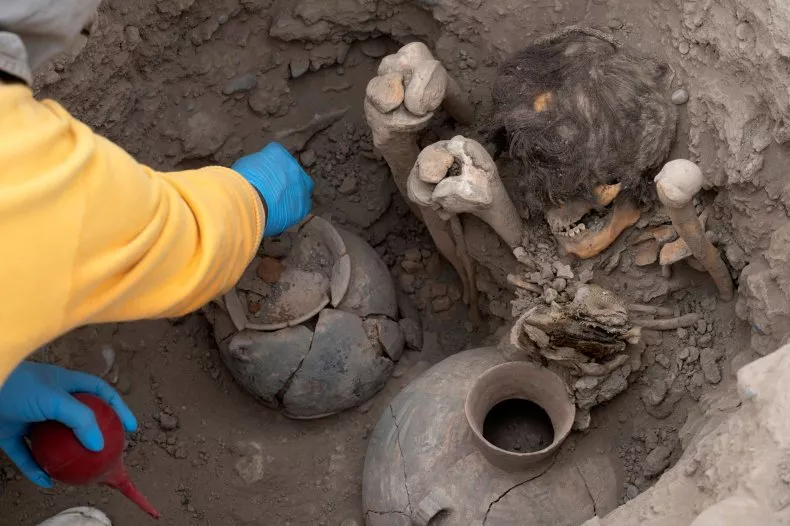
A mummy belonging to the pre-Inca Ychsma culture was found buried at the Huaca Pucllana site in Lima, Peru.
Newspaper Per 21 stated that during excavations at the Huaca Pucllana archaeological site, researchers came across a mummy that belongs to the pre-Incan Ychsma civilisation.
At the summit of the pyramid, which is situated in the center of a residential neighborhood in the Peruvian capital of Lima, the body was interred in a straightforward, circular tomb. The Huaca Pucllana is a sizable clay pyramid in the city's Miraflores neighborhood that is more than 70 feet tall.
The Lima culture, which emerged on the central coast of Peru between A.D. 200 and 700, built the monument, which has seven staggered platforms.
The location was a significant ceremonial hub for these prehistoric people. The evidence points to the site's primary use as a location for ceremonial events, though other activity, possibly administrative, may have taken place there.
Before Spanish colonialism, the location was occupied for three distinct time periods. Huaca Pucllana was initially inhabited by the Lima culture, a civilization that flourished between A.D. 400 and 700 and built it.
The Huari civilisation followed, occupying the location between A.D. 800 and 900.
Last but not least, Huaca Pucllana has been the site of Ychsma habitation since the beginning of the second millennium. This was the location's final pre-Hispanic habitation.
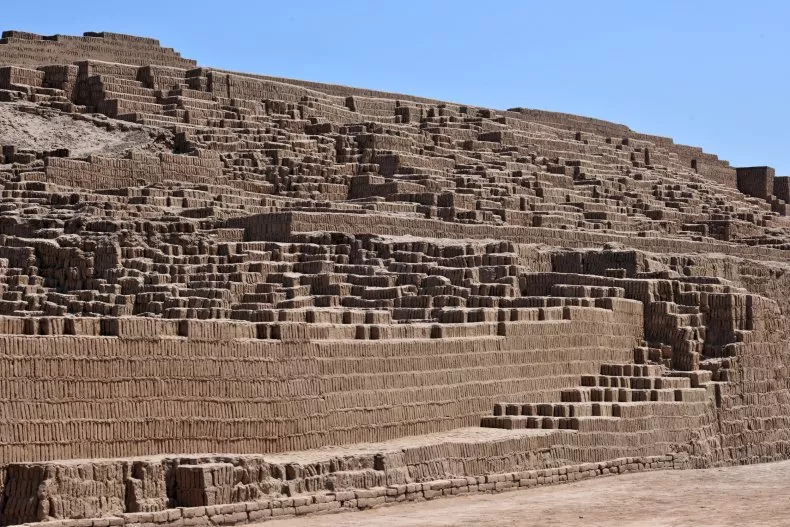
The Huaca Pucllana pyramid in Lima, Peru, features seven staggered platforms.
Huaca Pucllana appears to have been utilized as a burial site by the Ychsma culture, which flourished in the area around A.D. 1000 before being incorporated into the Inca Empire in the 15th century.
Archaeologists last year discovered a personal tomb with human remains at the summit of the pyramid connected to the Ychsma culture as a result of investigations. The Huaca Pucllana site museum said in a statement that a portion of the building had to be dismantled in order to make room for the tomb.
The person was discovered by archaeologists inside the tomb, facing south and flexed in a sitting position.
The body was covered in a plain fabric, of which only a few fragments have survived. In addition, the cemetery contained a number of other items, such as pottery vessels, which allowed researchers to place the burial into the early Ychsma civilization.
At the Huaca Pucllana location, mummies and ancient offerings have already been discovered. However, no Ychsma burial objects previously unearthed at the location have the kind of adornment present on those in the recently discovered grave.
Mirella Ganoza, an archaeologist with the Huaca Pucllana Site Museum, told Per 21: "I find it quite interesting that right in the heart of Miraflores, in the middle of the city, surrounded by modern buildings and constructions, an important site such as the Huaca Pucllana ceremonial center is still preserved."
A Prospector Found This Rock And Prayed For Gold, But The Treasure Inside Was Even More Valuable
Upon discovery of a rock, a prospector sought to extract gold from it. However, upon further examination, it was revealed that the minerals contained within possessed a value far surpassing that of gold.
An Australian named David Hole is prospecting for gold not far from his home near the city of Maryborough. Then, suddenly, Hole’s detector indicates that there’s metal in the ground. And as the blackened rock with a red hue he uncovers looks promising, he takes it home after his time in the field is done. At this point, though, Hole doesn’t know that he has unearthed something exceedingly precious – even better than gold.
The Acropolis of Athens Explained
What did the Parthenon look like 2400 years ago? Explore with us the Acropolis of Athens in a way you've never seen before, and understand the architectural character of Ancient Greece.
Kordin lll | Malta's Oldest Megalithic Structure and the Mysterious Stone Trough
Kordin III is not open to the public, unlike the well-known neighbouring sites of the Ħal Saflieni Hypogeum and Tarxien. We recently organised private access to explore this enigmatic site. Immediately above the Grand Harbour once stood numerous temples.
One has disappeared under an industrial estate whilst only Kordin III survives despite being hit by a bomb in World War II. The temple is in a very ruinous condition with a Ggantija phase 3-apse design. It is the only temple whose forecourt, in front of the concave facade, is stone paved as is the entrance passage leading to the central area.
The most important feature is the 2.75 metre long 'trough' lying across the entrance to the west apse. It has seven deep grooves and made of hard limestone brought from over 2 km away although it is likely to have been used as a libation stone in rituals as it was placed in a specific location at the entrance to the temple. Includes exclusive aerial footage and 3D Lidar Scans.
The Latins: Rome's Cousins? (Rome and Romans)
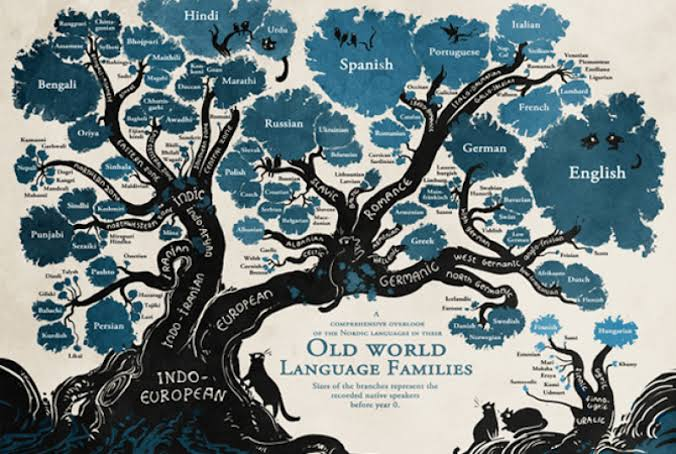
The Latins are the most influential Italic group in the history of the world. Of course, their most obvious contribution is their language, Latin. Latin was not only the main language of the Romans and by extension much of Europe for centuries but it is also the father language of the Romance Languages. A group that includes the likes of French, Italian, Spanish, and so on.
Today, the successors of Latin are the native languages of over 900 million people across the globe. However, the Latins are also influential due to the actions of one of their own tribes, the Romans. That's right the Romans are actually Latins.
While history refers to the two groups as essentially separate peoples, the truth is that the Romans were a Latin tribe who just so happened to become one of the most powerful peoples in the history of the world. It's similar to the old adage, "every square is a rectangle but not every rectangle is a square." Every Roman was a Latin but not every Latin was a Roman.
So why then are the two seen as separate peoples by the historical record? Why were the Latins so influential? Where did the Latins come from? And how did the culture develop? Let's talk about it.
Roman Mosaics Feature Historical Bikini Grls
If you've ever wondered where the history of the bikini started, it was with the ancient, at the same period and location in history as philosophy, mathematics, and art. Roman mosaics discovered in Sicily demonstrate that cheerleading and "training with Jane Fonda" were not the first activities to promote fit bodies as beautiful. These vintage bikini girls appear to be having a great time enjoying a sunny day at the beach, which is much more essential considering how quickly beauty standards can change.

Mosaic from the Villa Romana del Casale, 4th century CE, Sicily, Italy. DNA India. Detail.
Mosaic of ancient bikini girls showing athleticism and rewards in Roman society
During an archaeological dig at an old Roman villa close to Piazza Armerina in Sicily, the mosaic known as "Ancient Bikini Girls" was discovered. Since some of the tesserae (the mosaic's parts) are from Africa, it may have been created in the fourth century CE by North African artisans. It demonstrates the sports in which women are capable of participating. The palm of victory and the crown, which they earned for the best performance, are also displayed.

Mosaic from the Villa Romana del Casale, 4th century CE, Piazza Armerina, Sicily, Italy. System of Knowledge.
Fit and Fabulous: Investigating the Athleticism and Beauty Ideals of Ancient Women
Just take a closer look at these amazing beauties! Their workouts are identical to ours! Running, kicking a ball around, or using hand weights. Their lean, toned figures resemble those in our sports and health publications. Strangely, the images might have been idealized, which reveals what the time period's ideal of beauty looked like. That is, strong arms and legs, wide hips, and small feet. And, of course, accessories and hairstyles!

Mosaic from the Villa Romana del Casale, 4th century CE, Piazza Armerina Sicily, Italy. System of Knowledge. Detail.
The Strophium and Subligar in Ancient Rome Are the Roots of the Bikini
A band known as the strophium (also known as the fascia, fasciola, taenia, and mamillare) was the forerunner of the bikini. The breasts were most likely held or perhaps compressed by a long piece of cotton or linen cloth that was wrapped around them. It was a common component of women's undergarments. But for a Roman citizen, the bottom was not a typical part of undergarments. It was known as a subligar and was worn by slaves or sportsmen.

Mosaic from the Villa Romana del Casale, 4th century CE, Piazza Armerina, Sicily, Italy. Science Photo Library. Detail.
Claudius' Revenge: Retrieving the Last Teutoburg Eagle
In this video we dive into the life of emperor Claudius and the beginning of his reign, where he managed to retrieve the last eagle standard lost by Varus at the battle of the Teutoburg forest in 9 AD. What was the significance of this event for emperor Claudius and his rule of the Roman empire?
INAH archaeologists discovered a nose ornament made of human bone in the Mexican
Archaeologists from the National Institute of Anthropology and History (INAH) have discovered a nose ornament made of human bone in the ancient Mayan city of Palenque in Mexico.
The discovery was uncovered during excavations at House C, part of a palace complex built by Pakal the Great, the National Institute of Anthropology and History (INAH) said in a statement.
The nose ornament was made with part of a human distal tibia and is engraved with a scene that expresses communication with the gods and ancestors.
For the first time in the history of explorations in the Archaeological Zone of Palenque, in Chiapas, a nose ornament with an eloquent carved scene was located, an attire made of human bone worn by rulers and priests of this ancient city, during ceremonies in which they embodied K’awiil, the Mayan god of maize and fertility.
Elemental study reveals the dying moments of the Pompeii victims
Asphyxiation was most likely the cause of death for seven victims of the volcanic explosion that buried the ancient Roman city of Pompeii, according to an elemental study of plaster casts from those individuals. When Mount Vesuvius erupted in the year 79CE, the research used portable x-ray fluorescence (XRF) technology to acquire insight into the dying moments of people who resided in the city.

The researchers suggest that the Porta Nola victims’ relaxed positions are consistent with asphyxiation
Plaster was initially injected into the crevices left by bodies rotting beneath the volcanic ash in the 1870s to create the first casts from Pompeii. The casts still have the original body shape and contain skeleton fragments because of how they were created.
While these molds have provided information about the eruption and its aftereffects, the contamination with plaster has made it challenging to analyze the biological material. “The main [components] of the plaster and the bones are [calcium-based], but the proportion of phosphorous changes”, according to Gianni Gallello, the project's principal investigator and an archaeologist at the University of Valencia in Spain.
The researchers examined the elemental compositions of six casts from the Porta Nola region of Pompeii and one from Terme Suburbane using portable XRF to the compositions of bones that were either cremated locally before the eruption or buried in Valencia, Spain. The scientists created a statistical model to distinguish between plaster and bones within the castings by concentrating on the phosphorous-to-calcium ratios of the samples. According to Gallello, “the contaminated bones are very similar to the plaster while the less contaminated bones are similar to the burned bones.” It is thought that the chemical processes that led to the leaching of carbonates and phosphates are responsible for this resemblance to charred bones.
The fundamental information shows that the Porta Nola victims died of hypoxia brought on by breathing in ash before their bodies were buried under more volcanic material. The victims' prone, relaxed positions and the cast bones' chemical resemblance to incinerated bones, according to the experts, point to suffocation as the cause of death.
These findings are supported by Piero Dellino, a volcanology professor at the University of Bari in Italy. Neither the mechanics nor other stuff killed any people. He claims that people died as a result of breathing ash. The eruption persisted for a few minutes longer than was safe for breathing, not because it was hot.
The value of teamwork in science is one of Gallello's main takeaways from the piece. "A multidisciplinary approach is really essential in these kind of studies," he claims. In order to investigate these extraordinary remains, "a multidisciplinary approach is really essential in these kind of studies."
Dellino agrees with this statement. Because this world is complicated, he claims, fragmenting research and focusing solely on the biological, ecological, environmental, or geological element doesn't present the whole story.
According to Dellino, researching the past of the Vesuvius region enables people to both understand the past and plan for the future. The most dangerous volcano in the world is Vesuvius. 700,000 people are put in danger in the red zone [around] Vesuvius, he claims. If you study a thunderstorm or a significant flood, you learn virtually little about what happened at the time. However, after the occurrence, it's like a crime scene: you can learn a lot about it and then create plans for [future] mitigation.
"I've lived in Cardiff for 30 years, but I was unaware of the incredible historical wonder right outside my door!"
It was once a place for horse racing where the Welsh Grand National was held, but it became a public park in 1933 and is today one of Cardiff's biggest recreational fields. However, until a recent archaeological dig turned up what is thought to be Cardiff's oldest house, dating back thousands of years to the Bronze Age, its historical significance for the city went virtually unrecognized.

An aerial survey of a Cardiff park, where archaeologists and volunteers discovered a dwelling more than 3,000 years old (Image: PA)
The fact that a Roman villa's ruins had been found on the racetrack in 1894 had inspired searches throughout the park. Sir Mortimer Wheeler, who was in charge of the National Museum of Wales at the time, excavated the site.
He described his findings saying: "Here, some time during the first half of the second century, some Romanised settler built a small house upon an island formed by a branching streamlet in a flat tree-lined marsh. The house was of half-H shaped plan with wings facing south and fronted by a continuous veranda. Above this the main block doubtless rose to a second storey. Close by lay a second building, oblong in plan, again with a veranda along the main front. To the southern end of this second structure was added shortly afterwards a small but complete set of baths.
"In connection with this establishment, iron-smelting was carried on. After various modifications... the second structure was demolished and the remaining buildings were surrounded, apparently within a quarter-century of AD 300, by banks and ditches and not many years afterwards the whole establishment seems to have fallen into disuse."

University of Cardiff of archaeologists and volunteers working on discovering the roundhouse at Trelai Park (Image: PA)
This information inspired modern archaeologists to conduct some geophysical testing in the park (a technique for employing imaging to determine what is beneath the surface without having to dig) in order to determine what more riches might be buried beneath the earth. They were thrilled to find the roundhouse building's outline in a park corner around 200 meters from the home.
Initial examinations revealed that it had been a wooden building with a floor that had survived for more than 3,500 years under the playing fields, dating back to 1,500 BC. It had been about 10 meters in diameter. Even the presence of a sizable porch facing the rising sun could be discerned.
We visited last week to meet the group from the Caerau and Ely Rediscovering (CAER) Heritage Project, which has been in charge of planning digs at the location. We were curious about what had been found and had no idea that we would learn about a wonderful region of the city that we were unaware even existed. The project team is housed in a former chapel that has been transformed into an essential neighborhood resource owing to lottery funding at a center at the base of the Caerau Hillfort.
Dr. Oliver Davis, a prominent archaeologist at Cardiff University and the project's co-director, is dedicated to ensuring that local residents are included. "The vibrant history of the hillfort and what we have found at the dig in Trelai Park is brought to life not just through the important archaeological finds, but also by the lived experiences of local people uncovering the heritage on their doorstep," he claims. "The modern communities living in the shadow of Caerau Hillfort face many challenges, but there is also an incredible sense of connectedness to be found here. If you stand atop the hillfort today and take in the view, you will see a very modern city which changes with every season, but you will also be standing upon the same earth as your ancient ancestors, gazing upon the same stars."

Co- Director of CAER project, Dr Oliver Davies (Image: WalesOnline/Rob Browne)
An extensive dig was started earlier this summer in the hopes of learning more about how people lived there during the late Iron Age and early Roman eras and what connections they had to the neighboring Caerau Hillfort using the knowledge about the roundhouse in Trelai Park as a starting point.
When the Hillfort was no longer in use, the archaeologists initially believed that this building might have been constructed in the late Iron Age. However, soon after the project's excavation teams got started in July 2022, a clay pot was discovered in the enclosure's ditch by volunteer archaeologist Charlie Adams, which led to a complete reevaluation of the site's timeline.
The pot was painted in a manner similar of Deverel-Rimbury Ware, which convinced the experts that it was from the middle Bronze Age, according to archaeologist Tom Hicks, who was in charge of the sub-team that made the discovery. More decorative features were found when the pot was transported to Cardiff University to be conserved.
Tom stated to CA, "We saw some decoration on it – thumbnail imprints which were quite easy to see with the naked eye – but it was only when they had a real close-up look at it that they could see corded decoration on it as well."

Retired teacher Glyn Everett (Image: WalesOnline/Rob Browne)
He added: "We’ve got lots of evidence in Wales for middle Bronze Age metalwork and burial but, to date, settlement has proved elusive. Trelai [Enclosure] wouldn’t be out of place in southern England, but enclosed settlement sites in Wales for that period are very rare. Most other middle Bronze Age sites in south Wales, such as Rumney on the Wentloog Levels and Redwick on the Gwent Levels, are open settlements of one or two roundhouses, but overall very few are known."
Dr David Wyatt, a reader in early medieval history at Cardiff University, explained the significance of the find saying: ‘We came looking for the missing link between the late Iron Age and early Roman period. What we found is something much more remarkable and much older. We believe the roundhouse could now have been constructed in the mid-to-late Bronze Age, going back to between 1500 and 1100 BC."

More than 1,000 people visited the site in June of this year to learn more about the history of the area, including 257 volunteers and 159 students from five nearby primary and secondary schools who were directly involved in the excavations. The archaeologists returned to the meticulously marked-out excavation site.
Since the end of the dig, 78 volunteers have contributed about 300 hours of their time to cleaning, sorting, and analyzing the artifacts at the CAER center in preparation for a display of the findings in December. Glyn Everett, a retired teacher who has always had a strong interest in history, is one of those volunteers who has been assisting with the project since 2017.

Sifting through the earth that was recovered from the site (Image: WalesOnline/Rob Browne)
He was sorting through the bags of earth that had been taken from the site on the day of our visit using conventional methods. The coordinates of the square where they were discovered have been written on the outside of all of the bags, which are dark.
The contents of the bags are then efficiently sieved and placed in trays to be cleaned before the archaeologists search through them for historical hints.
Glyn tells how certain items were even simpler to unearth. He claimed that retirement was driving him "insane" until he discovered the project.
"It is staggering what we have found," he said. "I was involved in the dig and one of the students who was in my trench found an intact flint arrowhead. She was actually working on a paper on arrowheads and she couldn't believe what she had found. Most people go through a lifetime not finding something as amazing as that."
Sian Davies, a volunteer from Llandaff North who has been involved for some time, joined him on the day. Her duties included cleaning and sorting through the marked-up boxes.
"Each tray tells a story," she explains. "In this one there is some charcoal which helps to give you an idea of how they cooked their food and heated their homes, there is some clay that could be from the pots they used, there are parts of bones and chippings. I have always had an interest in history and getting involved in this project and other digs in Wales has been fascinating. I love finding out more about the history of our amazing country."

Sian working through the soil that was recovered from the site (Image: WalesOnline/Rob Browne)
The group's headquarters of operations is a hillfort with a route circling Iron Age ramparts and medieval castles that have been found there. Early Ordnance Survey maps referred to the hillfort region as a "Roman camp," but little was known about the location until 2011 when CAER started conducting archaeological research. In April 2012, they asked the Time Team from Channel Four to conduct the initial dig there.
A "nationally important site" with more than 6,000 years of history, the hillfort is detailed. an enormous Iron Age hillfort with a medieval castle and church to a Neolithic causewayed enclosure. “This is the story of Wales told through a single site. It would have been an area of real importance, where leaders made some of the major decisions in the area at the time. Three thousand years ago this would have been where all the important decisions were made, a bit like the role the Senedd in Cardiff Bay plays today.”
Regarding the excavation in the neighboring Trelai Park, Oliver calls it one of the "most significant projects" he has undertaken because it involved discovering the "treasures that are locked away in the soil."
The long-lost tomb of Antony and Cleopatra has been discovered and will soon be revealed
Egypt's historians think they might soon find the long-lost tomb of Mark Antony and Cleopatra. The leaders are allegedly interred together in a crypt that has been secretly located, according to archaeologists.

The historians are sure they have located the burial site, around 18 miles from Alexandria (Image: Getty Images/National Geographic)
"The long-lost tomb of Antony and Cleopatra will be eventually uncovered. The burial site has been finally estimated to be in the region of Taposiris Magna, 30km (18 miles) away from Alexandria," Egyptian archaeologist Zahi Hawass said. The historian, who has a wealth of archeological experience, continued: “I hope to find the tomb of Antony and Cleopatra soon. I do believe that they are buried in the same tomb.We are so close to discover the accurate location of the tomb; we are on the right way. We know where exactly we have to dig.”
The Ptolemaic Kingdom of Egypt was last actively ruled by Cleopatra VII Philopator. She and Mark Antony allegedly bit themselves to death in August 30 BC when she was 39 years old by letting an asp to sting them.
However, some assert that she was murdered and assert that finding her body will help produce proof to support their claim. Marcus Antonius, sometimes known as Mark Antony, was a Roman general and statesman. He was given control over Rome's eastern territories, which included Cleopatra's client kingdom of Egypt.
It happens just a few days after a Ramses II-era royal hall from antiquity was found close to the Cleopatra location in question. It was discovered below soft-brick structures and commercial neighborhoods. The Jubilee feast and other royal ceremonies were held in the hall.
Underwater "amazing discovery" that might ultimately unlock the Stonehenge riddle
A piece of the Stonehenge legend has been revealed underwater off the coast of Israel, and this information may help to explain the long-standing enigma. A circle of rocks that matches the Wiltshire building uncannily was discovered by a diver.

The phenomenon was explored in documentary 'Stonehenge-like Structures Have Been Found All Over the World' (Image: Smithsonian Channel' WS)
New information that might help to explain the long-standing Stonehenge riddle has been disclosed by the discovery of a construction close to Israel.
The stone circle sites from the Late Neolithic and Early Bronze Age draw tens of thousands of tourists to the UK each year. In Britain alone, there are more than 1,000 examples of stone circles, with 508 of them located in Scotland. These 4,000+ year old buildings may also be found all over the world, though. While many of them, like Stonehenge, continue to be a mystery to scientists, a discovery made off the coast of Israel may provide the final piece of the puzzle needed to explain the puzzling arrangement of boulders on the Salisbury plain.

A stone circle off the coast of Atlit, Israel may help explain Stonehenge ( Image: Smithsonian Channel' WS)
The Smithsonian Channel's brief documentary, "Stonehenge-like Structures Have Been Found All Over the World," which focused on the discovery, which was made close to the tiny Israeli town of Atlit, analyzed the find. Ehud Galili, a maritime archaeologist, conducted a routine dive in 1984 around 400 meters offshore to look for ships that had been discovered by shifting sands during a severe storm. He discovered an ancient sunken town on the journey.
"Usually we find remnants from shipwrecks like anchors, metal, nails, all kinds of artefacts. But while we were diving here we found a wall," he said. Within a few days, further foundations were discovered close by. The wall had once been a portion of a house. Galili noted that his team discovered about 15 family houses in addition to the skeletons of the people who formerly called the location home.

Stonehenge, the Neolithic and Bronze Age monument is in Wiltshire ( Image: Getty Images)
"We estimated that the population was between 70 to 150 people at one time," he added. "We found walls, dwellings, structures in situ as they were left. Little by little, we came to realise that it is a huge site, 40,000 square metres." One of the first human settlements on Earth, the site was over 9,000 years old according to radiocarbon analysis. A fascinating stone circle building in almost pristine condition was located in the middle of the abandoned settlement.
What connection does this, though, have to Stonehenge? According to academics, it provides a special perspective into why the stone circle structure was created in the first place. One of the earliest settlements in the world, the stones that made up the construction had cup markings etched into them. The stone circle may have been utilized for a ritual involving water since researchers think they formerly served as cup holders.

The Stonehenge, the Neolithic and Bronze Age monument is in Wiltshire ( Image: Smithsonian Channel' WS)
In another installation, three oval stones with grooves etched into them to represent anthropomorphic figures—possibly miniature gods—were discovered among the stones. "When you're looking at Stonehenge you're seeing a culmination of the labour of people, extraordinary use of resources, and an astonishingly complex, perfectly executed idea," said Mary-Ann Ochota, an anthropologist and archaeologist.
"Every time we find a new stone monument, it gives us another piece of evidence on that detective hunt to try and work out ‘what were the ancestors thinking?; why did they build this? And what did it all mean?’", she continued.