Until today, a 1,500-year-old palace-like residence was concealed by tropical vegetation

In the Mexican jungle, two residential building complexes were built more than 1,500 years ago.

Archaeologists found the sets of residential buildings at the Kahah Archaeological Zone in Mexico, officials said. INAH

Archaeologists have been trying to locate the buildings ever since, but to no avail—until now. According to a Sept. 7 news release from Mexico's National Institute of Anthropology and History, specialists recently uncovered the two structures buried behind many layers of jungle growth and foliage.

In southeast Mexico's Yucatán, at the Kabah Archaeological Zone, the houses were found. They were created, according to archaeologists, between 250 and 500 AD.

One of the buildings found in the group during the restoration. INAH

According to the organization, experts remarked that one of the mansions stood out from the rest due to its palatial aspect. The house had an 85-foot addition with a portico ornamented with nine apertures and eight pilasters, which, according to Britannica, are little columns erected against a wall.

A close-up view of the home during restoration work. INAH

According to archaeologists, the elaborately decorated house included sculptures showing feather, bird, and bead patterns. A approximately 30-foot-long stucco figurehead's remnants could be seen on the staircase.

At the site, archaeologists also found ceramic artifacts such polychrome bowls and practical jars.

Experts said the building had intricate carvings and designs. INAH

Source: https://www.kansascity.com/news/nation-wor...

Robot, a canine explorer, unearths one of the most stunning works of ancient art

In the Dordogne region of France on September 12, 1940, 18-year-old Marcel Ravidat was out walking his dog, Robot.

Robot discovered a hole in an uprooted tree while on the La Rochefoucauld-Montbel family's property and informed his owner.

Ravidat was intrigued and later returned with Jacques Marsal, Georges Agnel, and Simon Coencas.

The four people entered the cave through a 15-meter-deep hole, which they thought led to the adjacent Lascaux Manor.

Henri-Édouard-Prosper Breuil (L) joins Jacques Marsal, Marcel Ravidat and Georges Agniel, three of the four teenage "inventeurs" of the caveJerome CHATIN/Gamma-Rapho via Getty Images

They instead discovered cave walls adorned in pictures of animals, people, and abstract symbols.

Henri-Édouard-Prosper Breuil, a French archaeologist, researched the ancient artworks after the youngsters informed the authorities of their discovery. He learned that the main cavern, which is 20 meters broad and 5 meters high, is what makes up the Lascaux grotto.

About 600 paintings and almost 1,500 engravings are displayed on the walls.

Breuil (L) examines the cave art shortly after its discovery alongside Count Begouen, prehistory professor at the University of ToulouseJerome CHATIN/Gamma-Rapho/Getty

Numerous species of animals, including horses, red deer, stags, cattle, cats, and what appear to be mythological creatures, are shown in the images.

There is only one human figure in the cave, and it is not the modern-day version of a person.

A man with a bird-like head and an upright phallus is depicted.

This image of bird-headed man with an erect phallus, apparently dead, alongside a bison and rhinoceros has intrigued researchers since it was discovered in 1940JT Vintage / Glasshouse Images / Getty

Archaeologists now think that the cave was used for hunting and religious rituals for a very long time because of this and other discoveries.

Although the Upper Paleolithic paintings are frequently dated to be between 15,000 and 17,000 years old, scientists now think Lascaux is far more problematically dated.

A replica of one of the Lascaux 'galleries' in Montignac, FrancePatrick Aventurier/Getty Images

That period of time was established by radiocarbon dating. It's now more widely accepted that the images in the cave date from a few centuries before and after that time and are mostly uniform. Some experts assert that the art has existed for even longer.

In 1948, the public was allowed access to the Lascaux cave, but it was only open for 15 years.

A section of the Great Hall of the Bulls - one of the most impressive 'galleries' on showJerome CHATIN/Gamma-Rapho via Getty Images

Experts had discovered that the bright colors of the paintings had faded and that a significant portion of them had become covered in lichen, fungi, and algae as a result of artificial lighting.

By 1955, the paintings had also been clearly harmed by the carbon dioxide, heat, and humidity caused by the roughly 1,200 visitors every day, forcing them to close in 1963.

Replicas of the cave have been exposed since the 1980s and continue to draw tens of thousands of curious tourists each year.

In this image from 1983, visitors marvel at the inside Lascaux II Grotto - one of the cave replicasPierre VAUTHEY/Sygma via Getty Images

Replicas of the Hall of the Bulls, the Passageway, the Shaft, the Nave, the Apse, and the Chamber of Felines are among the exhibition galleries.

Millions of people throughout the world have been captivated by the artwork since its discovery.

As part of the Prehistoric Sites and Decorated Caves of the Vézère Valley in southwest France, Lascaux was added to the UNESCO World Heritage List in 1979 due to its exceptional, largely well-preserved prehistoric images.

Source: https://www.euronews.com/culture/2023/09/1...

Archaeologists Discover a Jesus Christ-Representing Silver Coin While Excavating a Fortress

While excavating a stronghold in Bulgaria, archaeologists came across a coin that had a picture of Jesus Christ.

A picture shows the coin discovered in Bulgaria, that used to belong King Stefan Uros II Milutin

According to a news statement from the Burgas Museum, archaeologists from Rome, Italy, discovered the mystery silver penny while excavating the medieval Bulgarian city of Rusokastro in the country's southeast.

They noticed it was the Serbian King Stefan Uros II Milutin, who ruled from 1282 to 1321, after giving it a closer look.

Jesus Christ is shown on one side of the coin, while St. Stephen, who is regarded as the first Christian martyr, is shown on the other.

It is a replica of the Venetian matapan, which the Burgas Museum stated in a news release as being the "most stable currency in the Balkans at the end of the 13th and the beginning of the 14th centuries."

The reason for this was "their weight and the high quality of silver."

According to the press release, these coins typically symbolized St. Mark, Venice's patron saint, and the Doge, the head of the Venetian Republic.

One of the most influential kings of Serbia throughout the Middle Ages was King Stefan Uros II Milutin. He was a renowned and well-known ruler at the time in Europe. He was notable for enlarging Serbia's borders into Bulgaria.

Because of this, Serbia as a whole "grew enormously" under his rule, "at the expense of not only Bulgarian, but also Byzantine lands north of Thessaloniki [today in Greece]."

He was recognized as a saint at the time, and many of his remains are now stored in the Saint Nedelya Church in Sofia, the capital of Bulgaria, according to the Burgas Museum.

During his lifetime, the king was married five times. According to a news release from the museum of Burgas, which is located on the Black Sea coast, one of his brides was the Bulgarian princess Anna Terter, who was the daughter of Bulgarian Tsar George I Terter.

The coin will provide crucial information about the historic city.

The coin is significant to archaeologists since Rusokastro, a medieval city, is where such a find was made for the first time. According to a statement from the Burgas Museum, it "expands the picture of the previously known coin circulation in the city.

Source: https://www.newsweek.com/archaeologists-di...

In Northampton, archaeologists discover signs of a historic market hall

Experts have discovered curious artifacts in the Market Square that provide new light on Northampton's past.

Archaeologists have revealed some of their finds from Northampton Market Square

They contain a wooden structure that may have once served as a whipping post for punishing offenders.

Additionally, there are indications of what historians claim they were unaware of—a market hall.

As part of a £10 million rehabilitation project, an archaeological dig has been conducted at the location.

Fragments of medieval shoes, linens, ceramics from 1200 to 1350, animal bones, and wood were among the medieval artifacts discovered by a team from the Museum of London Archaeology (MOLA).

Cartographer John Speed's Map of Northampton (1611) shows buildings that could be on the site

Additionally, there were traces of buildings that may have existed hundreds of years ago.

"A fine stone building was found in the centre of the Market Square and seems to be later than most of the medieval layers. It may be a previously unknown market hall," said Mark Roberts, senior project manager with MOLA.

"We have found a stone building in the south-west dated perhaps from 1100 to 1150 and may predate the first use of area as a market in 1236", he added.

Experts say they might have found evidence of a whipping post.

The remnants of some of the houses discovered by archaeologists to the west of the site may be those depicted on a map created by cartographer John Speed in the early 17th century.

Mr Roberts said: "We have also identified the Great Conduit of Northampton at the south of the Market Square, thought to have been built by Edward IV and documented as being repaired in 1509 - it gives its name to Conduit Lane."

The Great Conduit and Little Conduit were built to transport water to the neighboring Northampton Castle.

Additionally, a sizable medieval wooden post has been found, which experts speculate may be proof of a whipping post, which Northampton was rumored to have had.

A piece of black metal which was one of the finds from the market square site

Along with the more well-known stocks and pillory, it would have been used to impose light punishments.

The smaller items will stay in the Northamptonshire collections, and the buildings will be completely recorded and cataloged before Market Square is resurfaced.

According to West Northamptonshire Council, the site has now undergone the majority of the required surface water and drainage upgrades, as well as critical repairs to the Victorian brick sewer system.

While the construction is being done, market vendors have been moved to Commercial Street Car Park, where they will eventually find contemporary market booths, tiered seating, artwork, and a water feature.

Source: https://www.bbc.com/news/uk-england-northa...

Was the Khafre Pyramid Planned to be Much Bigger?

The Pyramid of Khafre is the second largest pyramid in Egypt, situated in the centre of the Giza Plateau and standing some 136.4 metres or 448 feet tall. Today it is somewhat dilapidated – we’re of course not seeing its final form, and on completion, it is thought to have been around 7 metres or 23 feet taller.

This means that in the 4th dynasty, 4 and a half thousand years ago, the Khafre Pyramid would have been just 3 metres shorter than the Great Pyramid… but was this really the plan? Wouldn’t Khafre try and top the building achievement of his father and build an even bigger pyramid? Well, funnily enough, there is a hypothesis out there, that the Pyramid of Khafre, as we know it today, was not how it was originally planned.

Italian scholars Maragioglio and Rinaldi suggested that Khafre’s architect planned a pyramid that was not just wider, but also nearly 20 metres taller than his father’s Great Pyramid, which really is quite substantial.

In this video, as well as presenting their hypothesis, we also have my own adaptation, one that may explain the evidence even better - that all the Giza pyramids had a very specific construction process. Enjoy!

Vanishing Clues of the Bent Pyramid

The Bent Pyramid at Dahshur remains a woefully neglected monument in desperate need of scientific scrutiny. The unique shape of the pyramid is amazing, but the story of the Bent Pyramid goes far beyond a change in slope.

Deep inside the pyramid are many clues which are disappearing in the modern era. These pieces of the puzzle need to be restored in order for the full history of the pyramid to be understood, which can perhaps explain it's unique role in Egyptian history.

Can Egyptology come to terms with how this pyramid's excavation was botched - and is there any hope of scrutinizing the evidence which becomes fainter with each passing season?

Archaeologists have discovered a 2,000-year-old wooden bridge connecting England and Wales

Archaeologists have discovered evidence of Roman and Anglo-Saxon fortifications in the town of Chepstow in the United Kingdom. Surprisingly, however, the town was also home to an ancient bridge that connected England and Wales before the formation of the two countries.

Archaeologists discovered the wooden structure while looking for evidence in the shadow of a 950-year-old Norman castle on a muddy bank on the Wye riverbank. Known as the gateway to Wales, Chepstow is a border town steeped in history.

This wooden structure – believed to have been built by the Romans 2,000 years ago – was found preserved in mud following a race against time to uncover it during an ‘extreme low tide event’.

The Controversial Classification of Neanderthals and Modern Humans

In this video, we'll be exploring the mystery of Neanderthals and modern humans. What caused the Neanderthals to extinction and why did modern humans become the dominant species on the planet?

Neanderthals are one of the most intriguing extinct human species, and their story is still a mystery. In this video, we explore the evidence and try to figure out what happened to the Neanderthals. We discuss the possible reasons for their extinction, and how their story can help us understand modern human evolution.

So if you're curious about the mystery of Neanderthals, then watch this video and learn all you need to know about this fascinating species!

The Lost Knowledge of the Olmecs

Mesoamerica's progenitor civilization, the Olmecs, are one of the most enigmatic civilizations of the Americas ancient past. Much like the Egyptians, the Olmecs arrive on the archaeological record as a fully formed civilization--with an understanding of numerology, written language, monumental architecture & advanced methods of polishing - not seen anywhere else in the ancient Americas at that time.

Due to the rampant book burning of thousands of Mesoamerican texts in the mid-1500s, we must use the very scant evidence & a lot of detective work to piece back together the lost knowledge from the origins of ancient Mesoamerica.

Florida Hurricanes Unearthed A Shipwreck In An Unlikely Place, And It Sent Locals Scrambling

The discovery of a shipwreck in an unexpected location by Florida hurricanes has caused a stir among the local populace, prompting a flurry of activity.

As 2022 crept to an end, Florida’s Daytona Beach Shores was being battered by storms. The whole coast was in the process of being torn up and reshaped. It was a terrifying sight to behold, but then an unexpected shape began to emerge. The extreme Florida weather had inadvertently revealed a secret hidden beneath the sands — and locals couldn’t wrap their heads around it.

Modern Words and Phrases That Came From The Ancient World

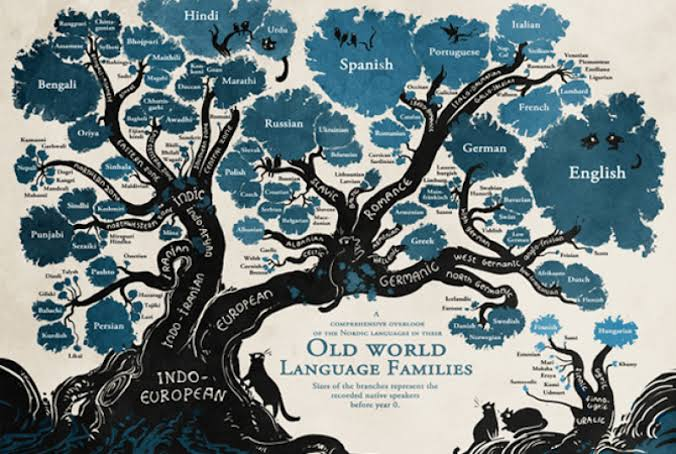
English is a language with many influences. A hefty percentage of English words are taken from French, and are particularly evident in British English. The influence of Old Norse and others can all be readily seen in everyday use. Another major source of our modern vocabulary comes from decidedly ancient origins, particularly the Greco-Roman world.

This collection features words and phrases and the stories behind them drawn from the ancient world.

Archaeologists have found anthropomorphic figurines in the Aztec Templo Mayor

Archaeologists from the Templo Mayor project and the National Institute of Anthropology and History (INAH) have found anthropomorphic figurines placed as an offering at Templo Mayor in Mexico City.

Templo Mayor was the heart of a temple complex in Tenochtitlan, the capital of the Aztec Empire. The temple was called the huey teocalli in the Nahuatl language and was dedicated to Huitzilopochtli, the god of war, and Tlaloc, god of rain and agriculture.

Construction of the temple began sometime after AD 1325, but was destroyed by the Spanish in AD 1521 following the conquest of Tenochtitlan. The present-day archaeological site lies to the northeast of the Zocalo, or main plaza of Mexico City, on the corner of what is now the streets of Seminario and Justo Sierra.

Archaeologist excavating at Templo Mayor have found a stone chest known as tepetlacalli in Nahuatl, containing 15 anthropomorphic figurines and numerous green stone beads, snails, shells and marine corals.

Polynesian Origins: DNA, Migrations and History

Oceania was the last region to be settled by humans and the last part of Oceania to be settled by humans was Polynesia. Polynesians are famous for their voyages to remote islands in distant parts of the Pacific. Using outrigger canoes, they founded a society across islands stretching in a triangle from the Hawaiian Islands to Easter Island to New Zealand. That society was reasonably well-connected by trade, language, culture, and religion, despite its distribution over such a large area.

One major question today is where did the Polynesians originally come from? Several theories have been proposed over the years, but one which is gaining ground is that the Polynesians originated from Taiwan, parts of Papua New Guinea, and Southeast Asia. Another intriguing area of study is the genetic connection between Polynesians and South Americans.

Could the Polynesians Have Origins in South America?

One early theory of the origin of Polynesians is that they came from South America and sailed west, eventually reaching the Polynesian triangle. This was proposed by the archaeologist, writer, and explorer Thor Heyerdahl , who even constructed a Polynesian balsa wood raft and, with a team, sailed it west of Easter Island from the South American coast. This demonstrated the feasibility of using a primitive craft to cross the Pacific.

The thing to remember about experimental archaeology is that just because something could have theoretically been done doesn’t mean that it actually happened that way. Although it is plausible that Polynesia was settled by ancient South Americans; all the genetic, linguistic, and ethnographic evidence points toward a predominantly southeast Asian origin.

Eat Like a Lumberjack in the 19th Century With This Recipe

In the middle of the Maine winter in 1902, a young scientist convinced six lumberjacks to act as his test subjects. He recorded every morsel of food the men were planning to consume for a single 18-meal workweek. He then gathered all the pertinent excrement, put them in "museum jars," and stored them in a snowbank stash. He also put together and frozen samples of each type of food supplied to the men with the camp cook's help. He then brought all of these ice jars to the University of Maine at Orono's Maine Agricultural Experiment Station for examination.

A group of men pose at Russell Camp, another camp for loggers in Maine, circa 1900. PUBLIC DOMAIN

The study was a part of a wave of early investigations into metabolism and digestion that would later lay the groundwork for the emerging area of nutrition science. In addition, it paints a remarkably accurate picture of the diets of lumberjacks at the turn of the century. The study's participants were highly physically fit Canadian immigrants in their late 20s who worked long hours performing "severe work under more or less trying conditions," as the study's authors described it.

The loggers consumed a diet high in calories and protein to fuel their strenuous work. The salted fish—cod, herring, and salmon—as well as fresh or salted beef and pork—served as stews, boiled meat, roasts, and side dishes of potatoes, cabbage, and turnips—made their way across the menus. Doughnuts, pies, cakes, and cookies were always available, as well as hot breads, particularly sourdough biscuits. However, when it came to "the most important single article of diet," the study found that baked beans were superior to all other foods.

All of these filling, nutrient-dense foods had been mainstays in 19th-century America, but as the 20th century got underway, "respectable" indoor people began to marginalize the "coarse fare" that was still the foundation of rural diets. For most Americans, baked beans represented the most primitive food imaginable, and they were the staple of the logging camp.

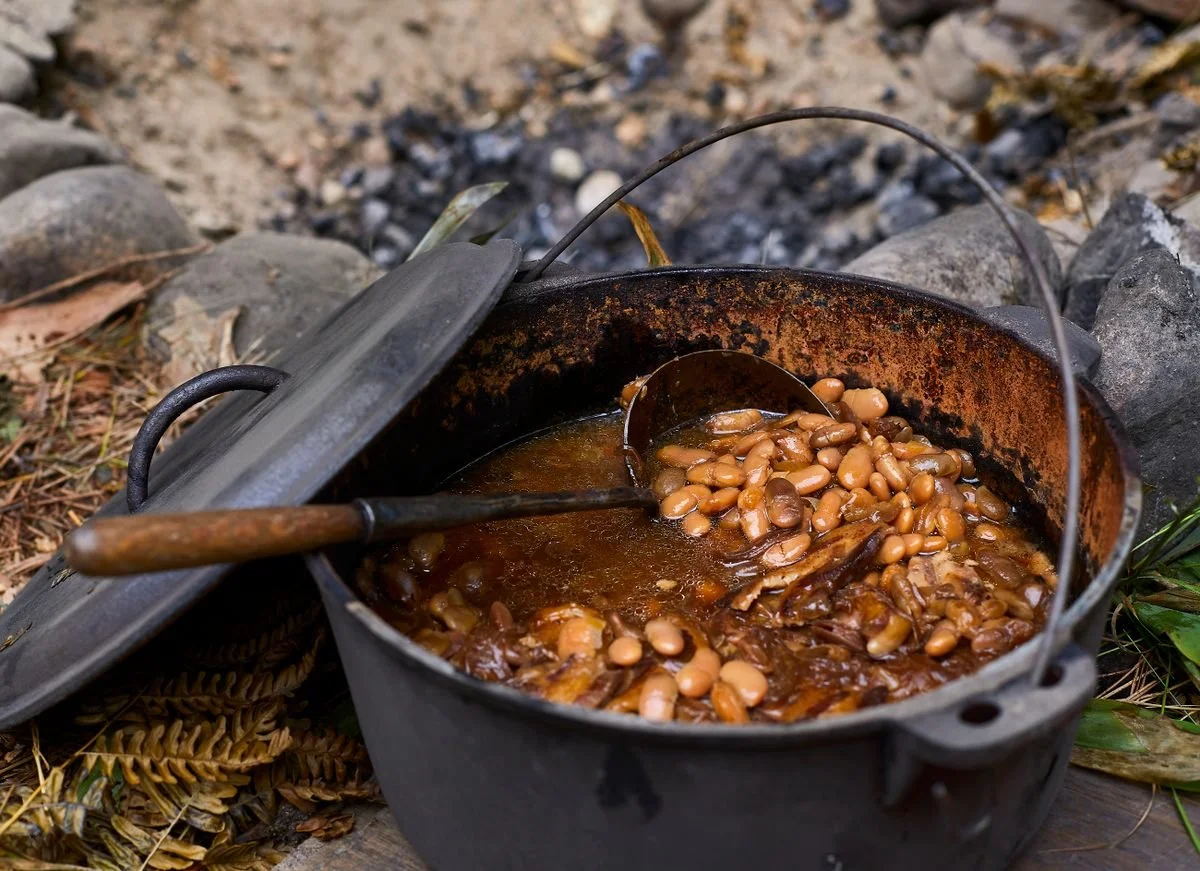
Baked beans were “the most important single article of diet,” among lumberjacks, the study said. ANGEL TUCKER FOR GASTRO OBSCURA

Before capitalists exploited them as a weapon to assist the region's deforestation, baked beans had a long history in New England, but nowhere were they as essential and pervasive as in logging camps. They were served in large quantities at at least two meals per day. Before railroads made it easier to supply camps, fifty years prior, when Henry David Thoreau traveled through rural Maine, he learnt of the much sparser and less dependable diet for loggers—tea, molasses, hard bread, salt pork (often raw), and beans, plenty of beans. “A great proportion of the beans raised in Massachusetts find their market here”, he noted dryly. In the time between Thoreau's visits and the science experiment at the University of Maine, farmers not only opened clearings along the rivers, planted beans, potatoes, corn, and turnips, and raised dairy and meat animals to supply the lumber camps, but also laid hundreds of miles of rail.

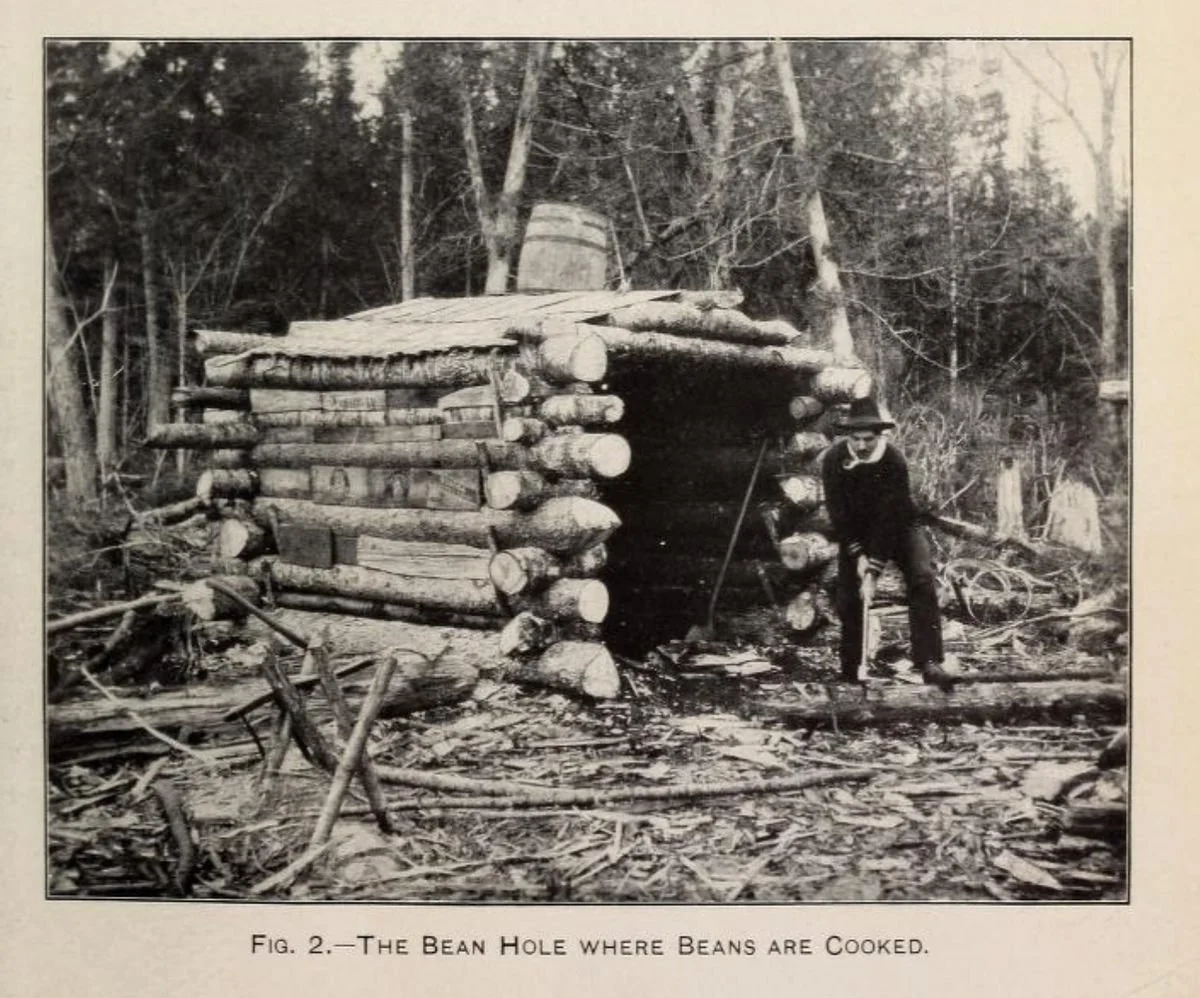
The bean-hole and the lumber camp

While a single, long, log-built structure essentially served as the entire domestic infrastructure for a 50–60 man camp—dormitory, cookroom, dining hall, and food storage—only one daily function—the lean-to guarding the bean-hole—was important enough to deserve its own construction. Every day, a cookee (the cook's assistant) would light the pit and cook a batch of soaked beans over the cookroom fire, just long enough for the skin to wrinkle when the beans were exposed to air. Then, he would place them in the bean kettle with salt pork, onions, and possibly dry mustard, drizzle on a generous amount of molasses, tighten the cover, bury the kettle in the bean-hole with hot coals and earth, and leave it there overnight to be picked up the following morning for breakfast. Then he would repeat everything.

Over the past century, a lot has been written about lumberjacks, including the fact that they consumed a lot of beans. However, many of these accounts are anecdotal and embellished by a bro-mance, a sedentary and selective view of the bygone era of manly men engaging in manly activities. In any case, numbers are always missing, even if the source is reliable.

The bean-hole the study’s lumbermen used in 1902. PUBLIC DOMAIN

In contrast, the University of Maine study, titled "Studies of the Food of Maine Lumbermen," was first published in a USDA bulletin in 1904. Despite the fact that the researchers' study was well-designed and the accompanying data is a veritable gold mine for the food historian, they were a few decades too early to understand what a vitamin was. Granted, it demonstrates that the loggers did consume a significant amount of beans, but when quantified, it becomes much more intriguing. Beans were clearly shown to be the main source of calories for every male in the research, despite the abundance and variety of meat on the table and the pyramids of doughnuts and sugar sweets. They all consumed strikingly similar amounts of baked beans every day, ranging from a pound to a pound and a half, providing between 10 and 16 percent of their 6,000–8,000 daily calories and one-fifth to one-third of their protein intake, despite the fact that their personal preferences were obviously different.

The most mentally and physically taxing and outright dangerous aspect of the task was the river drive, when a team was out for about 10 days guiding the logs down the river as the ice broke up. Even the times when the men weren't working were miserable because they frequently slept in tents while being wet to the skin. The guys would receive meals at intervals of several hours while working from early daybreak till after midnight, eating wherever the cookees found them.

Baked beans were essential during this most trying time of the operation because they made up the majority of the diet, which included up to five meals a day of just sourdough biscuits, cookies, tea, and molasses. The authors of the study noted that "These conditions might naturally tend to lessen the appetite." The men consumed 25% less food overall and generally lost a couple pounds from their already trim frames without a full menu of meat dishes and pastries. The majority of the calories and protein needed to keep them going came from baked beans.

Six of these Canadian lumberjacks were featured in the study. PUBLIC DOMAIN

In Maine in the late 20th century, when traditional logging camps and river drives fell out of favor, bean-hole beans found new supporters among outdoor enthusiasts whose values were more in line with Thoreau's half a century earlier than with the loggers of 1902. The bean-hole method was popularized by authors of hunting, fishing, and scouting manuals, but not without a warning to tenderfoots:

Baked beans are strong food, ideal for active men in cold weather. One can work harder and longer on pork and beans, without feeling hungry, than on any other food with which I am acquainted, save bear meat. The ingredients are compact and easy to transport; they keep indefinitely in any weather. But when one is only beginning camp life he should be careful not to overload his stomach with beans, for they are rather indigestible until you have toned up your stomach by hearty exercise in the open air.

–The Book of Camping and Woodcraft: A Guidebook for Those who Travel in the Wilderness, by Horace Kephart)

If you have that piece of advice, a large kettle, a shovel, and a few other oddities, you might be excavating your breakfast tomorrow too.

A 1907 river drive in eastern Ontario. PUBLIC DOMAIN

Beans with holes

Timing

The day before you want to dig up and serve these beans, start. Although this may seem like a lot of labor, keep in mind that the final 16 hours or so require absolutely nothing from the cook because the cooking is done underground while you sleep, party, or do whatever else it takes to work up an appetite fit for a lumberjack.

Gear

A sizable cast-iron pot with a bail and a tight-fitting, heavy cover is required, along with excavating and fire-tending equipment. Find something to serve as a second barrier to keep sand, dirt, or ashes from getting inside if your pot's cover is at all flimsy or light, or if you're a Nervous Nellie like me. I've used odd pieces of aluminum, ferns covered in old shingles, the lid of a large enamel pot, and other things on various occasions. I once found a recipe in an outdoorsman's guide that instructed producing a flour-and-water paste gasket for your bean kettle.

You need a mix of dry, small-split wood—both hard and soft—for fuel.

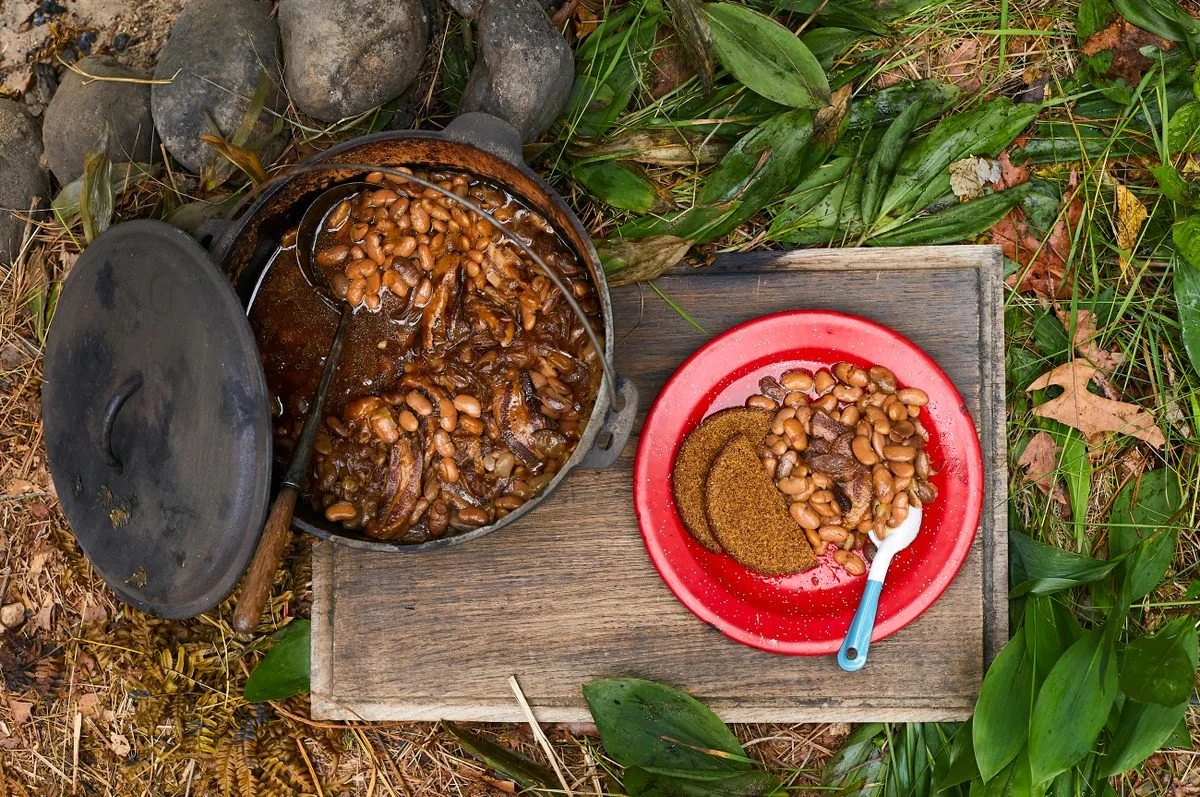
Beans accounted for one-fifth to one-third of the lumberjacks’ protein intake in 1902. ANGEL TUCKER FOR GASTRO OBSCURA

Ingredients

Beans. You can use Navy, Great Northern, Cannellini, or virtually any full-flavored, robust bean you desire. Old-fashioned New Englanders like us like our Marfax, Yellow Eye, Jacob's Cattle, and Soldier beans, but you can use these instead.

Pork salt. Regardless of baking method, this savor-bomb is what gives classic New England beans their particular richness. To season 2 pounds of beans, lumber camp cooks used up to 212 pounds of salt pork; in other circumstances, a half-pound might be utilized.

Keep your own salt pork on hand for optimal results: In a sealable tub with some room around it, sprinkle a piece of pork belly with kosher salt on all sides. Then, add a brine you make by dissolving additional salt in cool water until it tastes like sea water. Cutting off chunks and topping up with fresh brine to keep it completely buried, seal the tub and keep it in the refrigerator until needed.

  • 2 pounds dry beans

  • ½ to 2 teaspoons salt, depending on the amount and saltiness of the salt pork

  • 1 teaspoon freshly ground black pepper

  • 1 teaspoon dry mustard (optional)

  • 3 tablespoons molasses

  • 1 medium onion, sliced

  • ½ to 2½ pounds salt pork

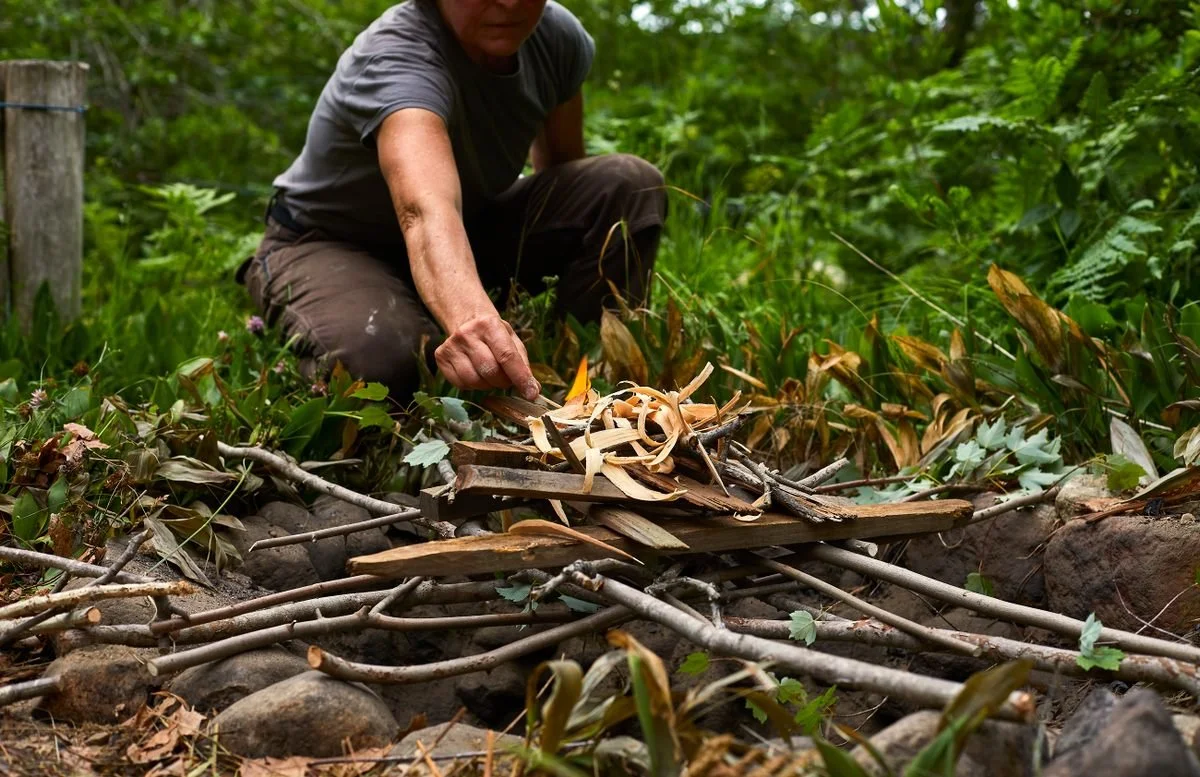
Make a lattice of green sticks across the mouth of the pit, create a “cob-house,” of dry sticks atop it, and set that alight. ANGEL TUCKER FOR GASTRO OBSCURA

1. The beans should soak for six to eight hours in plenty of cool water.

2. Dig the beanhole in the meantime. With just the correct amount of room on both sides for hot coals and earth, the bean-hole should be simple to maneuver the kettle into and out of. So anticipate a cylindrical pit with a flat bottom that is at least a foot deeper and roughly twice as wide as your bean kettle. As you dig, take that into consideration whether you intend to line the pit's bottom and sides with stones, which is optional but attractive.

3. About 18 hours before you want to serve the beans, start the fire. Take it easy on yourself by having lots of excellent, dry tinder and kindling wood on hand because starting a fire in a damp tight pit can be difficult. This procedure would be rather quick and simple at timber camps where a bean-hole would be covered by a lean-to and utilized continuously. On a muddy trail, it can be challenging to heat a freshly dug bean-hole.

One author from the era, a trapper, provides this practical tip: Create a "cob-house" (an airy stack of dry sticks stacked at right angles like a log cabin) on top of it, light it on fire, and then make a lattice of green sticks to span the mouth of the pit. As you can, keep adding gasoline because eventually everything will fall into the pit and you'll be on your way. Regardless of whether you employ this strategy, after your fire has started, burn it steadily for around two hours at a moderate pace. Hardwood and softwood blends are ideal.

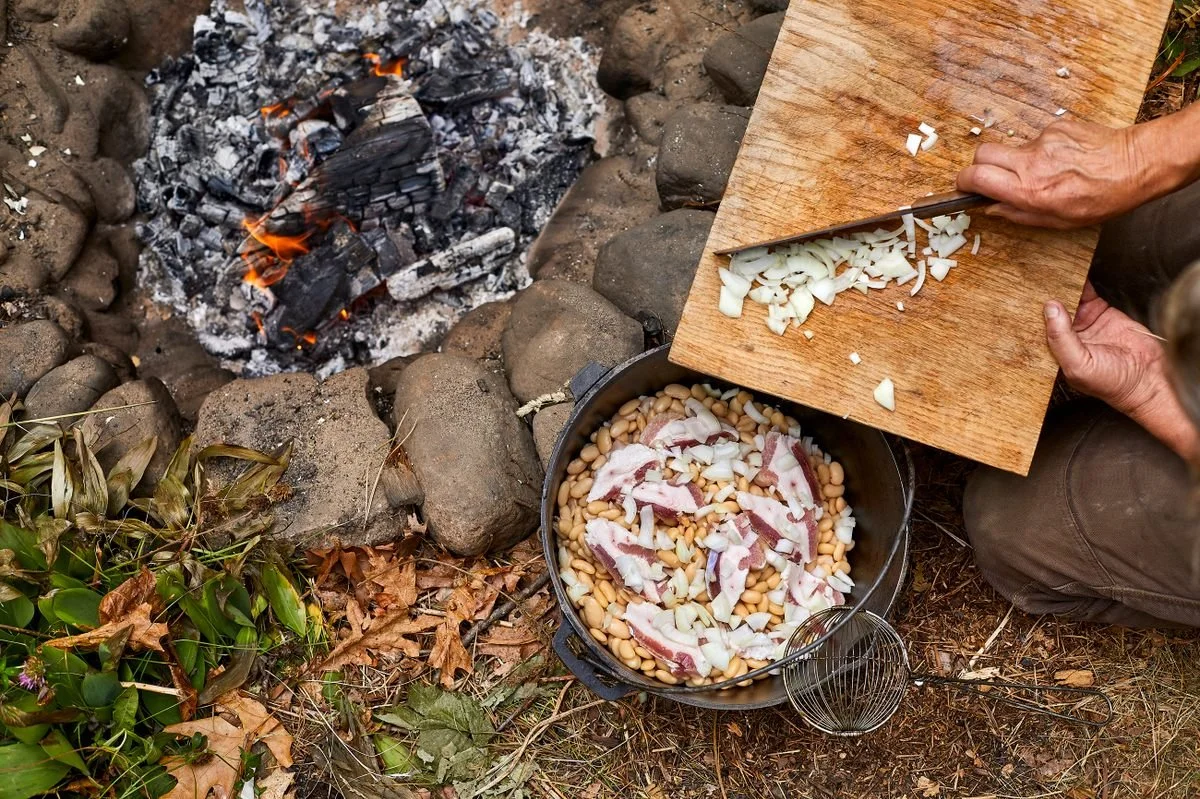
Layer the beans in the kettle with salt pork, onions, and a mixture of broth, salt, pepper, and molasses. ANGEL TUCKER FOR GASTRO OBSCURA

4. To parboil the soaked beans, add water to cover by two inches, if necessary. Place them over a medium flame, skimming the froth as you bring them to a very gentle simmer. When you dredge up a few beans and blow on them, the skins should wrinkle. Cover the pot and cook over low heat until that happens. Generally speaking, this process takes at least an hour, but it fully depends on the age and caliber of the beans.

5. Slice the onion, then scatter it in the bean kettle's bottom. Pour roughly half of the beans on top. Slice the pork or leave it whole and make cross-hatching cuts into the rind with a knife. Layer the remaining beans in the pot after adding the pork, keeping the broth aside.

6. In a small bowl, combine the molasses, salt, pepper, optional mustard, and molasses. Pour part of the bean broth in and mix everything together. Finish by adding extra bean broth (or boiling water if you're out) to cover the top beans by about an inch. Pour over the entire dish. It should be heated over a low flame so that it will be simmering when it is buried.

7. If you are concerned about the safety of your pot lid, take action right away. You can either build a sacrificial gasket by blending a very thick slurry of flour and water and pasting it around the lip of the lid to seal it, as indicated in the "Gear" remark above, or you can jury-rig a protective "helmet" to protect yourself.

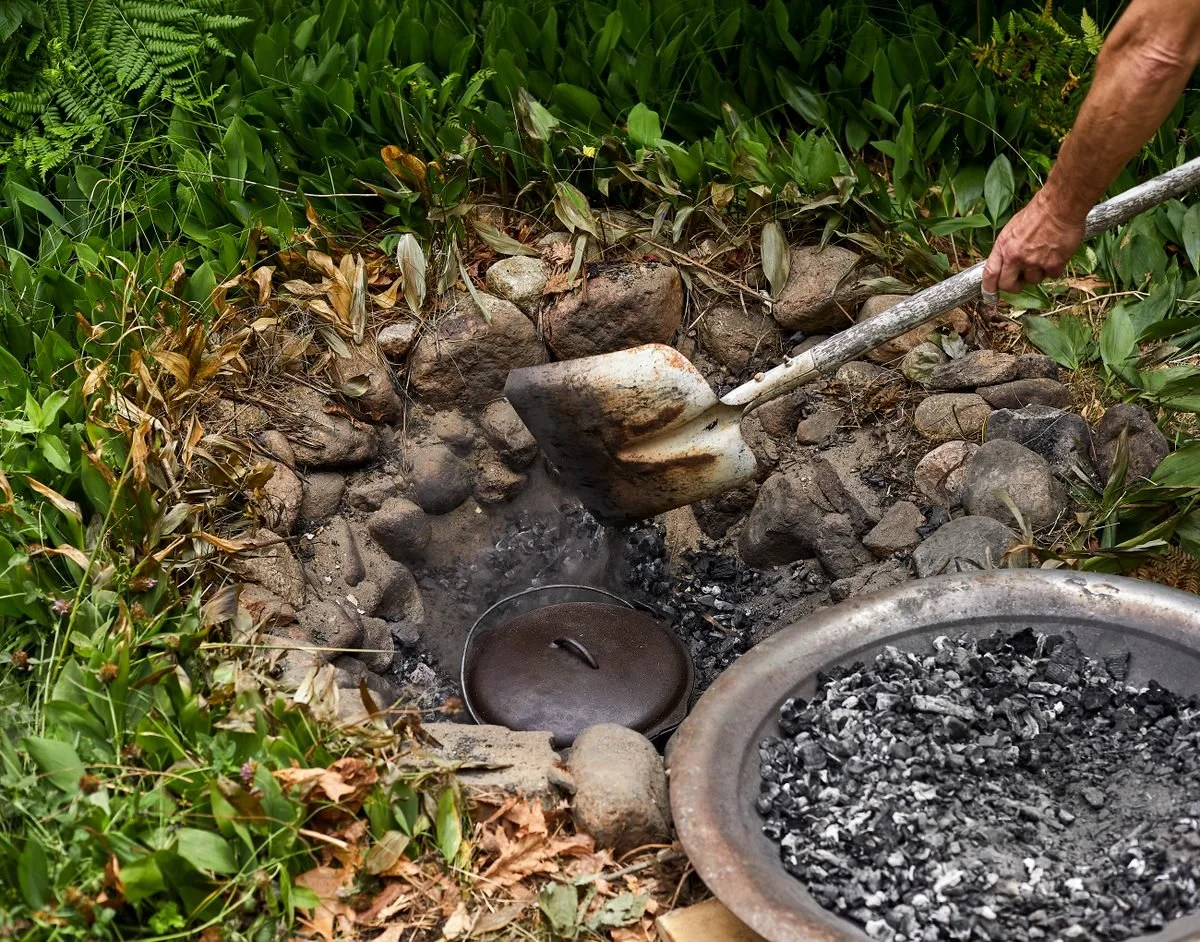
Bury the kettle and let the beans cook for at least 12 hours. ANGEL TUCKER FOR GASTRO OBSCURA

8. In the meantime, assemble everything you'll need to properly insert and cover the kettle. When everything is prepared, remove any sizable pieces of unburned wood using a long shovel or a pair of fire tongs. Smaller embers and coals should be pushed to the pit's edge so that the kettle will rest upright and firmly at the bottom. Carefully drop the kettle into the pit's middle. (If there is a lot of loose, hot earth and ashes in an unlined pit, scoop some out first and pile it nearby so you can easily nestle it around the pot.)

At this point, some authors advise stacking plant material around and over the pot; I've loved adding a thick layer of green bracken, but I can't guarantee that it changed the outcome. The worry-warts among us may be calmed by laying down a sheet of metal or a thin covering of clapboards before the earth is covered. In any case, pile dirt on top of the bean bake.

9. Bake the beans for at least 12 hours, though we've found that longer is good. Try to be aware of the dirt at each turn as you dig the pot up. Avoid upsetting your defenses before they are ready. A little hand broom comes in handy.

If there are any leftovers after cooking, they are just as delicious when warmed up.

Source: https://www.atlasobscura.com/articles/eat-...

How the ancient Romans ate is shown through isotope study of Vesuvius fatalities

An ancient Roman archaeological site's chemical study of human remains has revealed fresh information about the nutrition of individuals who lived along the Italian coast over 2000 years ago. In Herculaneum, one of the towns covered in volcanic ash after Mount Vesuvius' eruption in the year 79CE, there was a gender gap in access to several foodstuffs, according to the research.

Skeletal remains of victims of the eruption of Vesuvius in 79CE. By extracting collagen from 17 skeletons the York team were able to infer the kind of diet Herculaneum residents had

A group of bioarchaeologists from the University of York in the UK, led by Silvia Soncin and Oliver Craig, examined the amino acids in preserved bone collagen from 17 eruption victims. The researchers was able to more precisely rebuild meals using a model that takes into account both food sources of amino acids and the human metabolic processes that synthesize them.

“For example, by using the carbon isotope values of alanine, we know that we are getting information about the consumption of carbohydrates rather than proteins or fatty acids. And that’s because alanine is synthesised from the consumption of carbohydrates,” mentions Soncin, who is now based at Sapienza University of Rome, Italy. “We also considered all the protein components of diet, and that’s particularly important if we want to detect those food sources that are really high in concentration of protein – such as fish or terrestrial animal products.”

“By refining analyses from bulk collagen to analysis of particular amino acids, they improve the precision of estimates of diet composition,” explains Anne Katzenberg, an expert in using stable isotope analysis to determine past diet based at the University of Calgary, Canada, who was not involved in the study. “In particular they demonstrate a greater reliance on marine fish than was evident from bulk analyses.”

In contrast to what would have been assumed, the amino acid analysis revealed that fish represented about 25% of the dietary protein ingested by people in Herculaneum. The discovery highlights how vital seafood was to this community considering that, in modern Mediterranean people, less than 10% of their diet's protein comes from fish.

Unique photograph

According to Soncin, when testing archaeological remains, researchers typically have to accept some biases. For example, it's possible that the people were sick and changed their diets, and burial sites may span decades or even centuries with changing diets. However, Herculaneum provides a rare glimpse into a "living population" because none of these individuals would have perished if it weren't for the eruption.

The research team noticed that the relevance of some meals varied between men and women's diets. The men ingested almost 50% more proteins from seafood, while the women had less access, according to Soncin. "The most striking one is perhaps the marine consumption," she adds.

Soncin thinks that this might be the case since men in Roman culture typically held more privileged positions and had more money to spend on meals. “And probably men were more likely to be directly involved in fishing related activities – and so were most likely able to access those kinds of food sources”, she continues.

Men also ingested more grains, whereas women seem to have relied more on terrestrial animal products, including milk, cheese, and eggs, rather than just meat. “We are still reflecting on this result because it was really surprising for us,” says Soncin. “Perhaps it’s just because the women had to find an equilibrium for the deficiency of fish … and so accessing animal products was a good compromise.”

According to Katzenberg, “This also has broader implications if used in other contexts where dietary differences due to sex, status or age may be of interest with respect to reconstructing past human behaviour. Diet reconstructions provide a window into past human behaviour and by improving their resolution, knowledge of the past becomes clearer.”

Going further

Robert Tykot, a researcher at the University of South Florida in the US who also focuses on bone chemistry and ancient diet, says, "Compared to previous published studies of pre-modern Mediterranean individuals using bulk stable isotope analysis, I found the results suggesting a significant amount of seafood in the diet highly significant." Tykot believes Soncin's team will be able to examine more than just the 17 people in order to get a more complete picture of the nutrition of the people of Herculaneum. Further research at sites like Pompeii and other inland Roman sites, he adds, may enable comparisons to be drawn between social classes and individuals who could be expected to have less access to seafood.

The team is already preparing to delve further into the cuisines and way of life of these pre-Roman people, according to Soncin. “There’s so much that we can learn about [the Herculaneum population] – for example, it would be interesting to do DNA [analysis]”, the researcher claims. “We don't know who these people were; it's possible that they were all freedmen who were released from slavery, coming from somewhere else in the Mediterranean,” the author said. "The Bay of Naples was a really important port in trade in the Mediterranean."

The group is eager to use the same approach with other Roman groups. According to Soncin, "there’s this kind of belief that the Roman diet was always the same – they consumed a lot of cereals, vegetables, and only small amounts of animal products and fish. We saw that it’s a bit different at Herculaneum and we want to see if this is the case in other communities. If we start collecting different data, we can also see if there’s a response to people’s diet depending on the economic role of this community, or different political or cultural influences."

Source: https://www.chemistryworld.com/news/isotop...

Why the Head of the Sphinx is Too Small for the Body

Noting the disparity between the size of the body of the Sphinx and its head, some have speculated that the head is not original. Is this the best answer for why the head and body don't match well? Find out in the video below!