• MAIN PAGE
  • LATEST NEWS
    • Lost Cities
    • Archaeology's Greatest Finds
    • Underwater Discoveries
    • Greatest Inventions
    • Studies
    • Blog
  • PHILOSOPHY
  • HISTORY
  • RELIGIONS
    • Africa
    • Anatolia
    • Arabian Peninsula
    • Balkan Region
    • China - East Asia
    • Europe
    • Eurasian Steppe
    • Levant
    • Mesopotamia
    • Oceania - SE Asia
    • Pre-Columbian Civilizations of America
    • Iranian Plateau - Central Asia
    • Indus Valley - South Asia
    • Japan
    • The Archaeologist Editor Group
    • Scientific Studies
    • Aegean Prehistory
    • Historical Period
    • Byzantine Middle Ages
    • Predynastic Period
    • Dynastic Period
    • Greco-Roman Egypt
  • Rome
  • PALEONTOLOGY
  • About us
Menu

The Archaeologist

  • MAIN PAGE
  • LATEST NEWS
  • DISCOVERIES
    • Lost Cities
    • Archaeology's Greatest Finds
    • Underwater Discoveries
    • Greatest Inventions
    • Studies
    • Blog
  • PHILOSOPHY
  • HISTORY
  • RELIGIONS
  • World Civilizations
    • Africa
    • Anatolia
    • Arabian Peninsula
    • Balkan Region
    • China - East Asia
    • Europe
    • Eurasian Steppe
    • Levant
    • Mesopotamia
    • Oceania - SE Asia
    • Pre-Columbian Civilizations of America
    • Iranian Plateau - Central Asia
    • Indus Valley - South Asia
    • Japan
    • The Archaeologist Editor Group
    • Scientific Studies
  • GREECE
    • Aegean Prehistory
    • Historical Period
    • Byzantine Middle Ages
  • Egypt
    • Predynastic Period
    • Dynastic Period
    • Greco-Roman Egypt
  • Rome
  • PALEONTOLOGY
  • About us
No results found

The Impossible Architecture of Étienne-Louis Boullée

January 8, 2024

Etienne Louis Boullée was an 18th-century French architect who became famous for his designs that were never built, but were of such a vast scale that they would have been impossible to build in real life. Boullée developed a distinctive style of abstract geometric forms and produced a series of designs illustrating his ideas, making up an almost encyclopedic representation of the necessary institutions for an ideal State. While only one of his designs, the Hotel Alexandre, still exists, his visionary nature has earned him his place in history and still inspires architects today.

Boullée was a reluctant architect who originally dreamed of becoming a painter but turned to architecture at his father's insistence. It was rather as a theorist and a teacher that he achieved lasting influence, and he worked as a professor for over 50 years of his life. Boullée's call was to create buildings that would instinctively make us feel in a way that corresponded to their nature or purpose and that would shape moral values in the public. His designs often had little or no precedent in the past, and he sought to discover the properties of volumes and their precise emotional effects on humans. Boullée wrote down his theories in a book called "Essay on the Art of Architecture," in which he explained his various designs.

7 STOIC THINGS YOU MUST DO EVERY NIGHT (MUST WATCH) | STOICISM

January 8, 2024

The ancient philosophy of stoicism is a practical way of living that can help people overcome challenges, cope with stress, and achieve their goals.

One effective way to apply stoicism in daily life is to develop nightly habits that help reflect on actions, learn from mistakes, and prepare for the next day. Seven simple but powerful nightly habits of a stoic can make individuals more resilient, calm, and focused.

The first habit is to review the day by asking simple questions such as what was done well, what was done poorly, what was learned, and how to improve tomorrow. Writing down the answers creates a record of progress, challenges, and growth.

The second habit is to meditate on mortality by imagining it as the last night on earth and asking powerful questions such as how would life be remembered, what would be regretted, and what would be proud of or grateful for.

The third habit is to practice gratitude by writing down three things that were good about the day.

The fourth habit is to plan for the next day by prioritizing the most important tasks.

The fifth habit is to read or listen to something inspiring or educational.

The sixth habit is to disconnect from technology and engage in calming activities.

The seventh habit is to get enough sleep by setting a bedtime routine and sticking to it.

Applying these nightly habits can help individuals become more aware of themselves, aligned with their values, and resilient in the face of uncertainty.

12 Most Mysterious Ancient Technologies Scientists Still Can't Explain

January 8, 2024

Our ancient ancestors were highly inventive, and some of their inventions were so advanced that we still don't fully understand them today. Examples of these inventions include Inuit storytelling maps, snow goggles, the Syum Tunnel, and forced draft shaft furnaces.

The Inuit maps were used by hunters to tell stories of their fishing and hunting experiences, while snow goggles were used to protect against the glare of the sun and snow. The Syum Tunnel was an artificial water tunnel carved in the city of David in the 8th century BCE, and it was most likely built during a time when Jerusalem was anticipating an attack from the Assyrians.

Finally, the forced draft shaft furnaces were wind-powered iron smelting facilities that might have made a significant contribution to South Asia's early mastery of steel production. These inventions demonstrate the ingenuity of our ancient ancestors and their ability to create advanced technologies with limited resources.
Top 3 Neanderthal Mysteries Solved in 2023 - And One that Was Not

January 8, 2024

New research on the Roche-Cotard cave in France has revealed evidence of Neanderthal artistic expression. French archaeologist Jean Claude Marque first discovered fine lines on the cave walls in 1974, which he suspected were of human origin. Recent analysis using modern methods has confirmed that the marks were made with human fingers and are not tool marks. The cave also yielded other intriguing artifacts, including an object resembling a human or animal face and a potential oil lamp. These findings challenge the traditional view of Neanderthals as mentally inferior and suggest a closer cognitive resemblance to modern humans. The study was led by Dr. Gabrielle Russo and provides groundbreaking insights into the hunting practices and cultural significance of apex predators to Neanderthals.
Another study examined Neanderthal hunting practices and found that they hunted apex predators such as cave lions. The discovery of bones with cut marks and spear thrusts provided evidence of Neanderthal hunting practices. This study contributes to the understanding of behavioral similarities between Neanderthals and early Homo sapiens, indicating complex Neanderthal behaviors and possibly the basis for later cultural developments in Homo sapiens.

A study on Neanderthal diet and use of marine resources revealed significant aspects of their dietary habits in central Germany and Coastal Portugal. Researchers found strategic repetitive cut marks on elephant bones suggesting that Neanderthals carefully butchered these large mammals for consumption. Additionally, the study found evidence of the regular consumption of marine resources, indicating a varied diet.

In this video we look at how the scientific community was able to solve some mysteries surrounding Neanderthals, these relate to their cognitive and hunting skills and also abstract thoughts. One mystery remain elusive and continues to challenge the scientific world.

Top 5 Prehistoric Discoveries of 2023

January 7, 2024

Archaeology is a constantly evolving field with new discoveries, methods, and studies emerging every year. In 2020, several groundbreaking prehistoric discoveries were made, including a lavish burial of a woman known as the "Ivory Prince" at the Monumental Iberian Megasite of Valencina, suggesting that women held powerful positions in Iberian society.

Studies also challenged the Clovis first hypothesis and provided evidence of early human presence in the Americas, with the discovery of modified giant sloth bones and fossilized footprints dating back 21,500 years in White Sands, New Mexico.

In France, the oldest evidence of European archery was uncovered with the discovery of small flint arrowheads dating back 54,000 years ago. In China, the discovery of the HLD 6 skull proposed the existence of a new human lineage.

Finally, in Zambia, a wooden structure dating back 476,000 years was found, providing the oldest example of structural engineering. These discoveries offer new insights into prehistoric societies and the evolution of humans.

When History Repeats: A Tale of Two Mothers

January 7, 2024

The video explores the lives of two noblewomen, Julia Agripina and Irene of Athens, who married emperors and found themselves in positions of power. Agripina, the great-granddaughter of Emperor Augustus, married her uncle Claudius and was seen as a threat to his rule due to her son's potential claim to the throne.

She may have even killed Claudius to ensure her son's succession, although the truth is unknown. Irene, a Greek noblewoman, married Emperor Leo IV, who was opposed to religious iconography, while Irene and her family were in favor of it. Their marriage was strained, but Irene became Empress Regent after Leo's death and ruled on behalf of her young son. However, she faced plots and chaos and was eventually overthrown by her own son.

While the video presents alternate histories of these women's lives, it also promotes Keeps, a hair loss prevention medication that delivers affordable FDA-approved hair loss treatments to men.

Scientifically Dating the Giza Pyramids

January 7, 2024

The Giza Pyramids are the most studied ancient structures in the world, and their age is not debated by scholars. However, their origins remain mysterious and have been challenged by independent researchers. To date the pyramids, archaeology, historical writings, and scientific methods have been used.

The rich archaeology of the Giza Plateau is enough to place the construction of the pyramids in the fourth dynasty of the Old Kingdom. The Great Pyramid belongs to Khufu, the second pyramid belongs to Khafra, and the third pyramid belongs to Menkaure.

However, some say the evidence is circumstantial and not proof that they built them. Written historical sources attribute the monuments of Giza to Khufu, Khafra, and Menkaure, but they were written hundreds of years later, making them less credible sources. Scientific methods, such as surface luminescence dating and radiocarbon dating, have also been used to date the pyramids.

Surface luminescence dating was used on the Menkaure pyramid, and the results were published in 2014. The method works by erasing geological luminescence on stone surfaces through solar radiation. The contact between the stones and the mortar also provides a date range. Despite using multiple methods, not everyone agrees on who built the pyramids.

The Ongoing Saga of the “Binders of Phaleron” in Greece: 78 Chained Human Skeletons Are Still Being Rescued

January 6, 2024

In a striking juxtaposition of ancient history and contemporary conservation efforts, the "Binders of Phaleron" continue to unravel their secrets under the watchful eyes of modern archaeology. Discovered in 2016 in Athens during excavations at the Esplanade of the Stavros Niarchos Foundation Cultural Center, these 78 chained human skeletons have become a focal point of intrigue and scientific inquiry, shedding light on a turbulent period in ancient Greek history.

Unearthing the Past

The skeletons, dating back to the latter half of the 7th century BC, present a macabre tableau. Men executed for reasons yet unknown; their remains were interred in chains, grouped into three distinct clusters. The first group portrays a haunting scene—skeletons still bound by their shackles. With remains either tied by hands or shackled at the wrists, the second and third clusters tell a slightly different story. These bindings speak volumes, hinting at a society deeply engaged in punitive practices or perhaps ritualistic activities.

Retention of slopes using polyurethane foam

The Conservation Challenge

The task of preserving these ancient remains has been nothing short of herculean. Under the supervision of the Ephorate of Antiquities of Piraeus and Islands and observed by the Greek Minister of Culture, Lina Mendoni, the conservation work has been methodical and meticulous. The proximity of the site to the water table, coupled with fluctuating humidity levels and the presence of salts, posed significant risks to the integrity of the osteological material. This necessitated the temporary relocation of the finds in early 2023, using a combination of iron rails and crane vehicles—a delicate operation that underscores the complexities involved in archaeological conservation.

Technological Integration in Archaeological Preservation

The relocated skeletons are now housed in a specially designed temporary enclosure. This setup includes state-of-the-art humidification, dehumidification, and air-conditioning systems closely monitored to ensure optimal environmental conditions. Electronic recorders continuously track these conditions, highlighting the role of modern technology in preserving our ancient past. The preventive and life-saving maintenance operations conducted on the skeletal material are testament to the painstaking efforts invested in safeguarding these historical treasures.

Clusters 1 and 2 have been moved to their temporary location on a concrete slab underpass

Future Plans: Bridging the Past and Present

The Recovery Fund is funding the final stage of this enormous project, which entails the construction of a museum shell with a budget of about 6.5 million euros. This structure, blending seamlessly into the Esplanade, will provide a permanent home for the "Binders of Faliro." The design cleverly balances the aesthetic integration of the museum with the functionality required for the preservation and display of the skeletons. The planned underground space will protect the skeletal material, while the ground floor will cater to visitors, complete with surveillance and operational facilities.

Supporting the collapsing bones with a mixture of silica sand and sand from the excavation site

A Window into Ancient Societies

The ongoing work on the "Binders of Faliro" is not just a tale of archaeological discovery and conservation; it's a narrative that spans millennia. It connects us, through the lens of modern scientific techniques and historical inquiry, to a past that is both mysterious and revealing. This project is a testament to the enduring curiosity of humanity, our desire to understand our history, and our commitment to preserving it for future generations. As this endeavor continues, it serves as a powerful reminder of how the past, though silent in its physical form, can speak volumes through the careful study and preservation of its remnants.

Aigai, Macedonia: The Restored Palace of Philip II was Inaugurated by the Greek Prime Minister

January 6, 2024

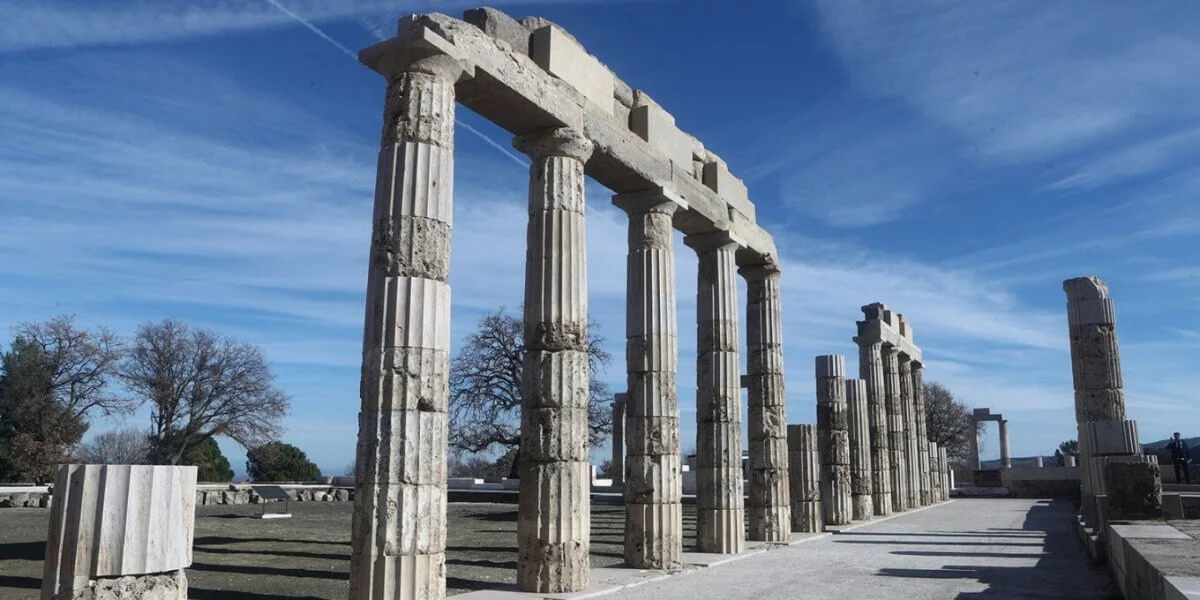
The Rebirth of a Macedonian Marvel: Philip II's Palace in Aigai

The long-awaited inauguration of Philip II's restored palace took place today in a magnificent ceremony at the Polycentric Museum of Aigai, and among other dignitaries, Greek Prime Minister Kyriakos Mitsotakis was present. This momentous occasion marks the culmination of a meticulous restoration journey, resurrecting the palace from the depths of time to its former grandeur. The palace, an architectural marvel just a few kilometers from the new museum, stands as the largest edifice in classical Greece and a testament to Macedonian heritage. The assassination of Alexander's father, Philip II, overshadowed his coronation here. The site offers a panoramic view over the Macedonian plain, standing as a beacon of ancient civilization.

The resurrection of this grand palace began in earnest in 2007. Under the stewardship of the Imathian Antiquities Ephorate, and thanks to 20 million euros of funding received during the periods of 2007–2013 and 2014–2020, the project was a colossal undertaking. Angeliki Kottaridis, the guiding force behind this project, despite her recent retirement, remained unwavering in her dedication to archaeology. The restoration process was complex and challenging, with the revelation in 2013 of an ancient landslide that had contributed to the site's initial destruction. This discovery necessitated a major technical project to stabilize the area, which was only completed in 2018. The pandemic posed further delays, but the restoration resumed with vigor in May last year.

Dubbed the "Parthenon of Macedonia," this palatial structure, covering an impressive 15 acres, epitomizes the zenith of Philip II's architectural aspirations. It represents a significant milestone in the evolution of Greek architecture. German scholar Wolfram Hefner was the first to accurately date this magnificent structure, coining its nickname to underline its significance. Angeliki Kottaridis offers an intriguing comparison between the Parthenon and Philip's palace, noting the latter's size, multifunctional nature, and accessibility to the public, in contrast to the Parthenon's primarily religious function.

The palace was likely the brainchild of the architect Pytheos, embodying an avant-garde design for its era. It was conceived not just as a residence but as a multifaceted public space, serving various civic functions. This included being a political hub, a court, a religious sanctuary, and a cultural center for philosophical discourse and literary exchanges. It also housed common dining areas and sports facilities for the youth.

The site also boasts several other significant attractions:

1. The Museum of Royal Tombs: Constructed in the 1990s, this museum serves as a protective cover for the royal tombs of the Philip II cluster, showcasing the exquisite treasures unearthed by Manolis Andronikos.

2. The Archaeological Park of the Vergina Necropolis: Spanning nearly 550 acres, this park, introduced to the public in 2021, offers a unique blend of archaeological exploration and natural beauty.

3. The State-of-the-Art Museum Building: Inaugurated a year ago by the prime minister, this modern facility, costing 18 million euros and covering 146,000 m2, has quickly become a cultural landmark.

4. The Ancient Theater and Other Monuments: The ongoing restoration of the ancient theater, the listed church of Agios Dimitrios, and other individual monuments add to the site's historical richness.

View fullsize 6074973 (1).jpg
View fullsize IMG_20240105_140017_1799_x_1200_πίξελ (1).jpg
View fullsize 6074968-1568x1045 (1).jpg
View fullsize ΑΙΓΕΣ (1).jpg

The ceremonial event for the inauguration was led by Georgia Stratoulis, the new head of the Imathia Ephorate of Antiquities, marking a new chapter in the appreciation and understanding of Macedonia's glorious past. The opening of the palace to the public heralds a renewed interest in the Hellenic world, offering a tangible connection to a pivotal era in human history.

12 Most Incredible Archaeological Finds

January 5, 2024

Archaeologists have made several recent discoveries, including the eighth sarcophagus of a protector of the Divine Flank, the first of its kind found in Turkey and the only one still in possession of grave goods and the bones of its occupant.

A 2nd-century marble funerary altar dedicated to a 13-year-old girl has also been found in Rome, while modernising work on an electrical substation in Mexico City led to the discovery of an ancient Aztec house dating back to the late post-classic period.

Finally, the unusually clear waters of Lake Michigan have enabled people to see many of the dozens (if not hundreds) of shipwrecks at its bottom, including the James McBride, which sank in 1857, and the Rising Sun, which sunk in 1917, and was owned by a religious cult called The House of David.

Eight Extinct Animals the Greeks & Romans Saw

January 5, 2024

The Roman Coliseum originally had a 9 ft high barrier separating the arena from the spectators, but following a tiger attack, the barrier was raised to 15 ft. Many exotic animals were used in the Coliseum during the Roman period, some of which are now extinct.

Tigers were native to a vast area ranging from Eastern Turkey to Southeast Asia, with the Caspian tiger being the most likely animal featured in Roman games. The Caspian tiger was officially declared extinct in 2003, but its population had been declining since the 19th century.

The population would have been significantly higher during the Roman period, with most imported tigers being female and smaller. Capturing female tigers involved sneaking into their dens and stealing their cubs.

The barber lion, a population of Asiatic lions native to North Africa, was also used in the Coliseum for entertainment and executing condemned criminals. The barbery lion went extinct in the 1960s and differed from African lions in size, with males weighing between 350-420 lb and females weighing between 220-285 lb.

Ancient Egypt Explained in 12 Minutes

January 5, 2024

Covering a broad range of topics within its limited timeframe, the video likely delves into the geographical significance of Egypt, emphasizing the crucial role played by the Nile River. Viewers can expect insights into the governance structure led by Pharaohs, their divine status, and the elaborate religious beliefs and practices that shaped the society. Furthermore, the video might touch upon the construction of iconic structures like the pyramids, shedding light on the technological and cultural achievements of ancient Egyptians. Daily life, cultural practices, and the eventual decline of this remarkable civilization may also be featured, providing a comprehensive yet concise overview of Ancient Egypt's rich history and cultural legacy.

12 Most Ancient Archaeological Discoveries Scientists Still Can't Explain

January 5, 2024

This video explores several mysterious artifact discoveries that have puzzled archaeologists and scientists. One such discovery is a tiny Swiss ring watch found inside a Ming Dynasty tomb in China, despite Switzerland not being founded until centuries later. Another is the Liber Lintas, a wrapping found on an ancient Egyptian mummy which is now known as one of the most impressive and important records of the ancient Etruscan written language in the world.

The video also discusses the Disc of Sabu, a 5,000-year-old obsidian artifact found in Egypt that is shaped like a wheel and thought to be a highly elaborate candlestick holder, but its obsidian material and unique design raise questions about its true purpose.

Finally, the video explores septarian nodules, which are spherical rocks that appear to be elaborately decorated and are found all over the world. While some fringe theorists believe these nodules to be of artificial origin, scientists argue they are a specific type of sedimentary rock concretion formed millions of years ago.

The Legacy of Harald Bluetooth: From Viking King to Wireless Icon

January 5, 2024

By The Archaeologist Editor Group


Bluetooth, the ubiquitous wireless technology that connects our devices seamlessly, may have a name and logo that seem unrelated to its function, but they actually owe their origin to a 10th-century Viking king, Harald Bluetooth Gormsson. In this article, we delve into the fascinating story of this Viking monarch and how he inspired one of the most widely used technologies of our time.

Who was Harald Bluetooth?

Harald Bluetooth, known as Harald Blåtand Gormsen in Danish, is a historical figure whose name might not be familiar to many. He ruled Denmark from around 958 to 986 AD, and his reign played a pivotal role in the unification of Denmark with its neighboring countries, Norway and Sweden, as well as the Christianization of Scandinavia. Although historical records about him are scarce and sometimes embellished, Harald's legacy is undeniable.

The Conversion to Christianity

Harald's conversion to Christianity around 960 AD marked a significant turning point in Scandinavian history. It was not just a matter of faith but also a shrewd political move. At the time, Otto the Great, the East Frankish king and Holy Roman Emperor, sought to expand his territory into Danish lands. By embracing Christianity, Harald strengthened the Danish Church's independence, reassuring his subjects that they could retain their old beliefs and traditions alongside the new faith.

The Origin of the Nickname "Bluetooth"

Harald Bluetooth's peculiar nickname, "Bluetooth," has a somewhat unglamorous origin. His tooth's darkened appearance—which matched his Danish name of "Bltand"—made it appear to be blue or black. William of Belholt later provided an explanation for this detail, which first appeared in the Chronicon Roskildense, a Danish chronicle from the 12th century. However, the true cause of his tooth's color remains a mystery, with some speculating it could have been due to a fondness for blueberries.

The Jelling Stones and Harald's Legacy

Despite limited historical records, Harald Bluetooth's influence on Denmark and its neighboring regions is evident in the archaeological traces he left behind. One of the most significant sources of information about him is the Jelling Stones complex in central Denmark. These runestones, with their inscriptions, commemorate Harald's accomplishments, including the annexation of Norwegian and Swedish territories and the Christianization of his kingdom.

Legacy of the Jelling Dynasty

Harald Bluetooth was part of the Jelling dynasty, which played a crucial role in shaping Denmark into one of the most powerful kingdoms in 11th-century Northern Europe. The dynasty's legacy continued through several kings, ultimately contributing to the spread of Danish influence from Northern Norway to England.

The Tragic End

Despite his political success and achievements, Harald Bluetooth's reign met a tragic end due to a revolt led by his own son, Sweyn. Forced into exile in the 980s, Harald's life took an unexpected turn, and he met his demise in a rather ignoble manner.

The Birth of Bluetooth Technology

The connection between Harald Bluetooth and the wireless technology we know today began in 1997, when engineers from Intel and Ericsson were searching for a name for their new device-connecting technology. Their love for history led them to the Viking king, and they saw parallels between his unifying rule and the technology's purpose. The name "Bluetooth" was born, and it has remained a symbol of connectivity ever since.

The Bluetooth Logo

The Bluetooth logo, inspired by the runic alphabet used by Germans and Scandinavians in ancient times, combines the initials of Harald Blåtand to create its distinctive design. This nod to history has only enhanced the technology's appeal, especially as interest in Viking culture has surged in recent years.

Harald Bluetooth, a Viking king of the 10th century, may have lived in obscurity for centuries, but his name now echoes in the modern world as a symbol of seamless connectivity. His legacy, from unifying kingdoms to inspiring groundbreaking technology, serves as a testament to the enduring impact of historical figures on our contemporary lives.

In Europe Tags The Archaeologist Editorial Group

The History of Mexico Animated

January 4, 2024

This video explores the mystery surrounding the downfall of the pre-Columbian Mayan civilization, which is still largely unknown to archaeologists and historians. The video describes the origins of the Mayan civilization in southern Mexico, and how it developed into a powerful trade network with other civilizations in the region. However, after a period of prosperity during the classical Mayan period, the civilization collapsed, leaving behind abandoned cities and derelict monuments.

The reasons for this collapse are still unknown, as there are no written records or archaeological findings to explain it. The video also explores the conflict between the powerful Mayan cities of Tikal and Kalakmul, which had its origins in the invasion and subsequent installation of a new dynasty in Tikal by the great city of Teotihuacan.

The video describes Teotihuacan as an absolutely massive city in the valley of Mexico, which ruled the trade between the civilizations of the south and the nomads of the north for about five centuries. However, the origins of Teotihuacan and its people remain a mystery to this day. Overall, the video highlights the enduring mystery surrounding the pre-Columbian Mayan civilization and its downfall.

Marcus Aurelius' Advice For Better Days

January 4, 2024

This video encourages readers to embrace their natural tendencies and fulfill their purpose as human beings, rather than succumbing to the temptation to stay in bed and avoid work. It notes that plants, animals, and insects all diligently perform their tasks to keep the world in order, and humans should do the same. The author argues that people who love what they do will wear themselves down doing it, and that helping others is a valuable use of one's time and effort. This video concludes by urging readers to subscribe to the Daily Stoic email for daily doses of wisdom.

When An Expert Studied Stonehenge’s Skeletons, She Found Clues About The Monument’s Secret Purpose

January 4, 2024

A team of archaeologists discovered an artifact inside the mouth of a dead man buried under the ancient Monument of Stonehenge, which could change everything we know about the historic site. Jackie McKinley, a bone specialist with Wessex Archaeology, found clues about the monument's secret purpose by studying Stonehenge's skeletons.

The origins of Stonehenge remain shrouded in mystery, and it is still not known for certain who built it or why. Initially, experts believed that it was constructed by the Druids, but later scholars determined that construction began as far back as 3000 BC. Stonehenge consists of a series of sandstone slabs known as sarson Stones, and some of the smaller rocks scattered amongst them are called blue stones. The heaviest of these slabs, known as the heel stone, weighs more than 30 tons.

The stones were placed on sledges and rolled along Fel trees onto waiting rafts and from there floated up the river to their new home in Salisbury. The monument was intended to serve an astronomical purpose, perhaps predicting occurrences such as eclipses. Alternatively, it may have marked the point where two different territories intersected, serving as a gathering place, or it may have been a place where ailing people came to heal.

The Origins of the Seven Day Week

January 4, 2024

The seven-day week has shaped the lives of billions of people around the world, but where did it come from? While many assume it was prescribed in the Bible, the story in Genesis is actually describing a practice that already existed.

To find the origin of the seven-day week, one has to go back to ancient Babylon. The Babylonians recognized the 7th, 14th, 21st, and 28th days of the month as religiously significant and built a seven-roomed tower in celebration of a seven-day festival.

While the exact reason for the choice of a seven-day week is unknown, there are three theories that are pretty well accepted among historians. The first theory is based on the Babylonians' interest in the number seven, which was significant in some of the most prominent constellations like the Big Dipper and the Pleiades. The second theory is based on the fact that the Babylonians named the days after the planets, which were also the names of some of their gods. The last theory is based on the belief that the number seven had a cosmological importance.

Manuel Bravo

Ancient Pompeii Explained | Preserved in Time

January 4, 2024

Pompeii, a city that Mount Vesuvius' eruption rendered impervious to time, offers a remarkable window into Roman life in the past. Founded in the 7th century BC, Pompeii underwent various cultural influences, from being a Greek colony to flourishing under Roman rule. The city's sophisticated water system, including functional and beautiful fountains, demonstrated both technological ingenuity and an aesthetic appreciation for clean water and city charm.

Mount Vesuvius, mainly viewed as a source of fertile soil and recreation, played an unforeseen role in Pompeii's fate. Despite its civic structures, such as the Tabularium, Comitium, and basilica serving as public centers, and impressive temples like the Temple of Jupiter, Apollo, Vespasian, and Public Lares, Pompeii succumbed to the eruption, burying these structures for over 1500 years.

Manuel Bravo

Pompeii's indulgent public baths, like the Stabian and Forum baths, enriched social life through features like the hypocaust heating system. The city's commercial life was bustling, with general-purpose shops (tabernae) and specialized food and drink stalls (thermopolia) being central to daily life. Meanwhile, Pompeian houses were designed with a perfect blend of functionality and aesthetic appeal, with spaces like the atrium, cubicula, and peristylum serving specific purposes.

Manuel Bravo

The architectural styles in Pompeii evolved with time, distinctive of different periods and reflective of shifting cultural and artistic values. According to Pliny the Younger, the catastrophic eruption preserved Pompeii, resulting in the creation of a melancholy, frozen tableau of ancient Roman life. Today, Pompeii's legacy serves as a poignant reminder of the impermanence of civilizations and the resilience of human creativity and urban development. Amidst the tragedy, the city's remains offer inspiration, emphasizing the importance of creating cities that reflect humanity's best attributes.

Manuel Bravo

Ancient Athens Explained | Architectural Marvels and Historical Significance

January 4, 2024

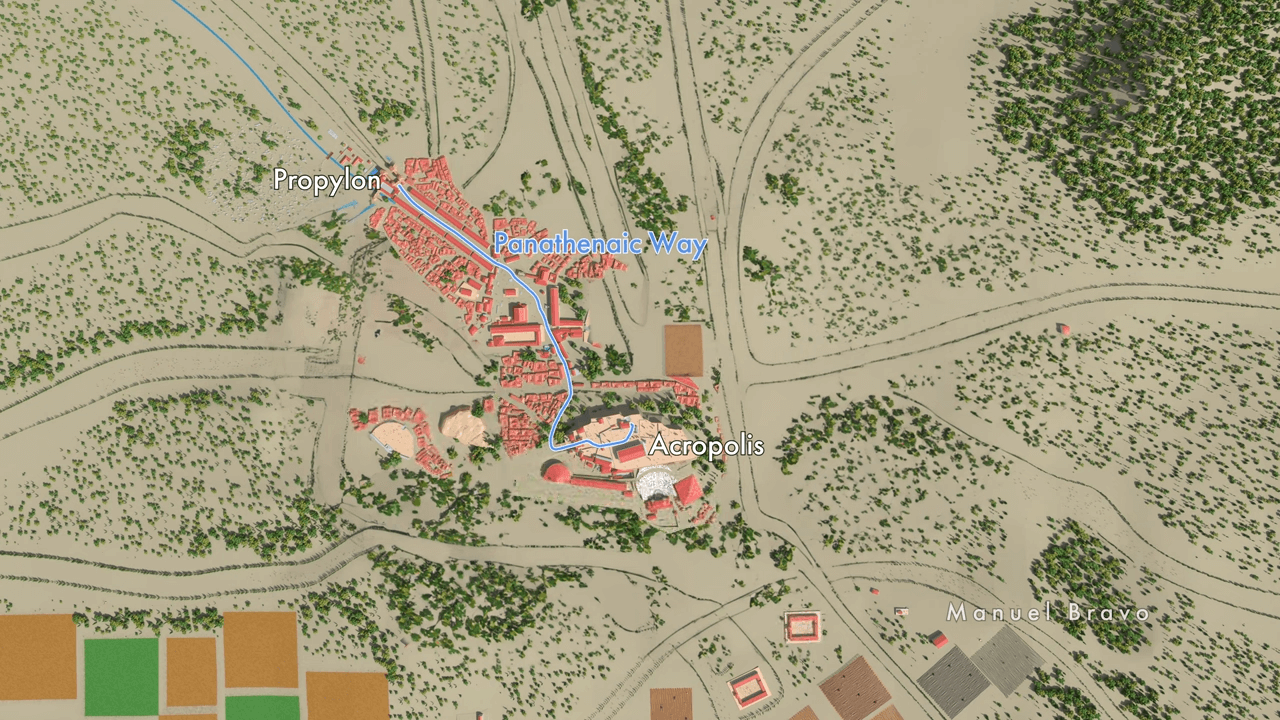
Ancient Athens, with its rich cultural heritage, boasted several significant architectural and historical landmarks that continue to evoke curiosity and awe. The Panathenaic procession, a pivotal event in ancient Athens, was held annually, with a special celebration every four years at the Parthenon. The procession route, known as the Panathenaic Way, was an essential part of Athenian life, serving as a path of reverence and revelry and offering a glimpse into the city's vibrant history.

At the heart of ancient Athens lay the Agora, a bustling center of commerce, government, and culture. Public structures like the imposing Middle Stoa and the stately Stoa of Attalos encircled this sizable open space. It was here that revered philosophers like Socrates and Plato engaged in intellectual discourse and debate, leaving an indelible mark on ancient Greek philosophy and leading to the birth of the term 'stoicism'.

Manuel Bravo

The Temple of Hephaistos, a remarkably well-preserved ancient Greek temple dedicated to Hephaistos and Athena, stands as a testament to the architectural prowess of the time. Constructed in the 5th century BC, this temple exemplifies the perfected Doric hexastyle form, with its sculpted frieze, imposing columns, and thirteen columns flanking each side, contributing to the grandeur of the Agora and Athens itself.

The transition of Athens from Greek to Roman influence during the Pax Romana brought about the construction of notable structures such as the Odeon and the Temple of Ares, along with the Roman Agora and the Tower of the Winds, which served as significant additions to the city's architectural landscape.

Manuel Bravo

Ancient Athens boasted remarkable architectural and theatrical achievements, exemplified by the iconic Theater of Dionysus, considered the prototype of all Greek theaters, and the magnificent Panathenaic Stadium, rebuilt in 144 AD, which featured 50,000 white marble seats and was primarily used for athletic performances and foot races.

Furthermore, meticulous planning and attention to detail defined the architectural landscape of ancient Athens. The positioning and orientation of key buildings were carefully calculated to ensure optimal viewing angles and harmonious integration with the surrounding landscape, resulting in a unified and visually stunning composition.

Manuel Bravo

Finally, the Pnyx, a central location for popular assemblies, played a pivotal role in the creation and sustenance of democracy. The rich and complex history of Athens, from classical Greek and Roman antiquity to the Byzantine Empire and beyond, serves as a testament to its diverse and enduring cultural legacy.

← Newer Posts Older Posts →
Featured
image_2026-06-22_223748063.png
June 24, 2026
Lake Mungo: Australia's 42,000-Year Cremation Rites
June 24, 2026
Read more →
June 24, 2026
image_2026-06-22_223711115.png
June 24, 2026
Wyrie Swamp: Australia's 20,000-Year Boomerangs
June 24, 2026
Read more →
June 24, 2026
image_2026-06-22_223638840.png
June 24, 2026
Madjedbebe: World's Oldest Ochre Processing Site
June 24, 2026
Read more →
June 24, 2026
image_2026-06-22_223602824.png
June 24, 2026
Nauwalabila: Australia's 50,000-Year Stone Tools
June 24, 2026
Read more →
June 24, 2026
image_2026-06-22_223518130.png
June 24, 2026
Devil's Lair: Australia's 48,000-Year Ochre Use
June 24, 2026
Read more →
June 24, 2026
image_2026-06-22_223408714.png
June 24, 2026
Laili Cave: East Timor's 44,000-Year Colonizers
June 24, 2026
Read more →
June 24, 2026
read more

Powered by The archaeologist