• MAIN PAGE
  • LATEST NEWS
    • Lost Cities
    • Archaeology's Greatest Finds
    • Underwater Discoveries
    • Greatest Inventions
    • Studies
    • Blog
  • PHILOSOPHY
  • HISTORY
  • RELIGIONS
    • Africa
    • Anatolia
    • Arabian Peninsula
    • Balkan Region
    • China - East Asia
    • Europe
    • Eurasian Steppe
    • Levant
    • Mesopotamia
    • Oceania - SE Asia
    • Pre-Columbian Civilizations of America
    • Iranian Plateau - Central Asia
    • Indus Valley - South Asia
    • Japan
    • The Archaeologist Editor Group
    • Scientific Studies
    • Aegean Prehistory
    • Historical Period
    • Byzantine Middle Ages
    • Predynastic Period
    • Dynastic Period
    • Greco-Roman Egypt
  • Rome
  • PALEONTOLOGY
  • About us
Menu

The Archaeologist

  • MAIN PAGE
  • LATEST NEWS
  • DISCOVERIES
    • Lost Cities
    • Archaeology's Greatest Finds
    • Underwater Discoveries
    • Greatest Inventions
    • Studies
    • Blog
  • PHILOSOPHY
  • HISTORY
  • RELIGIONS
  • World Civilizations
    • Africa
    • Anatolia
    • Arabian Peninsula
    • Balkan Region
    • China - East Asia
    • Europe
    • Eurasian Steppe
    • Levant
    • Mesopotamia
    • Oceania - SE Asia
    • Pre-Columbian Civilizations of America
    • Iranian Plateau - Central Asia
    • Indus Valley - South Asia
    • Japan
    • The Archaeologist Editor Group
    • Scientific Studies
  • GREECE
    • Aegean Prehistory
    • Historical Period
    • Byzantine Middle Ages
  • Egypt
    • Predynastic Period
    • Dynastic Period
    • Greco-Roman Egypt
  • Rome
  • PALEONTOLOGY
  • About us

A Lost Bronze Age City in Kazakhstan Is Rewriting the History of the Eurasian Steppe

November 23, 2025

Archaeologists have uncovered a vast Bronze Age settlement in Kazakhstan that is forcing scholars to rethink what life looked like on the ancient Eurasian steppe. The site, known as Semiyarka, dates to around 1600 BCE and covers approximately 140 hectares, an area comparable to nearly 260 football fields. Perched on a plateau above the Irtysh River, the city reveals evidence of highly organized urban planning, including rectilinear earthworks, structured residential compounds, and a monumental central complex believed to have served ritual or administrative functions.

For decades, dominant theories held that Bronze Age populations in this region were largely nomadic and lacked permanent urban centers. Semiyarka directly challenges that view. The settlement shows all the hallmarks of a planned, permanent city, indicating a level of social organization and political coordination previously underestimated for the Central Asian steppe world. Its strategic location, overlooking ravines and ancient trade corridors, offered both natural defense and access to critical resources, positioning it as a powerful regional hub.

Even more striking is the evidence for industrial-scale metal production. Excavations uncovered large quantities of slag, crucibles, and tin-bronze artifacts, representing some of the strongest evidence yet for a major metallurgical center in the steppe zone. The site’s proximity to the metal-rich Altai Mountains suggests that Semiyarka played a key role in early long-distance trade networks, helping to spread tin-bronze technology far beyond modern-day Kazakhstan and into broader Eurasian exchange systems.

An international research team from Kazakhstan, the United Kingdom, and other European institutions employed advanced techniques such as geophysical surveying, aerial imaging, and materials analysis to map the settlement and understand its complexity. Their work reveals that Semiyarka was not an isolated outpost but part of a dynamic, interconnected world. The findings have been published in the 2025 study “A major city of the Kazakh Steppe? Investigating Semiyarka’s Bronze Age legacy” in the journal Antiquity, marking Semiyarka as one of the most important Bronze Age discoveries in Inner Asia in recent decades.

Tags D

“Passing the Torch”: A New Greek Documentary Preserves a Living Tradition from Naxos

November 22, 2025

In an era where “tradition” is often treated as something frozen in time, a new Greek documentary challenges that idea by showing it as something alive, fragile, and constantly evolving. Passing the Torch is the work of three friends from Thessaloniki who set out to capture one of the most visually and emotionally powerful folk rituals in modern Greece: the Lampadedromies of Naxos.

The film is directed by Giorgos Tsivranidis, with cinematography by Giorgis Tsamis and produced by Alexandros Goropoulos. Their story begins in the summer of 2024, when the three of them decided to bring back to Greece the skills and experience they had developed abroad, and use them to create films with a distinctive aesthetic and cultural depth. Instead of turning to grand historical narratives or romantic tourist images, they chose something far more intimate: a local ritual that exists on the margins of official history, but at the very heart of community life.

The Lampadedromies of Naxos are a torch-lit procession that takes place during the carnival period. Visually, it feels ancient. Dozens of participants move through the narrow streets holding flaming torches, filling the town with smoke, fire, rhythm and shouting. Many outsiders assume the custom is centuries old. In reality, it began only about thirty years ago, created by members of the island’s cinema club and local cultural groups who wanted to invent something communal, dramatic, and deeply participatory. This contradiction is exactly what fascinated the film’s creators.

Rather than treating the ritual as folklore in a museum sense, the documentary focuses on the people who built it. The creators of the Lampadedromies speak on camera about the first procession, the fear of accidents, the joy of collective creation and the constant threat that such grassroots traditions might disappear under pressure from commercialization or apathy. The camera follows the torches through the city, but it also lingers on faces, hands, and small gestures, revealing how tradition is made not by abstract forces, but by real, imperfect human beings.

A key part of the project is its visual language. Influenced by the photographic work of Vasilis Bakalos, one of the early chroniclers of the event, the filmmakers experimented with low-light shooting, slow motion, blurred motion effects and high shutter angles. During scouting trips to Naxos, they tested their cameras in total darkness with only torchlight as illumination, deliberately embracing grain, blur and shadow to convey the trance-like atmosphere of the ritual. The result is not a clean, distant observation, but an immersive experience that places the viewer inside the procession itself.

What makes Passing the Torch particularly compelling is its wider philosophical stance. The film argues, without preaching, that tradition is not something handed down fully formed from the past, but something that communities actively create when they feel the need for expression, unity, and shared identity. The Lampadedromies are not a fossil from antiquity, but proof that even in the modern world, people can invent rituals that feel timeless when they are born from genuine collective emotion.

The project is currently in the final stages of post-production and is being funded through a Kickstarter campaign, which has already reached around ninety percent of its target. The team plans to submit the film to the Thessaloniki Documentary Festival in 2026, as well as to other international festivals. At the same time, they are preparing a parallel YouTube channel with English-language content that will explore modern Greek folklore and social phenomena, aiming to challenge the shallow stereotypes that often dominate foreign perceptions of Greece.

Beyond this single film, the team’s ambition is larger. They see this documentary as the beginning of a long-term visual archive of contemporary Greek cultural life. Alongside Passing the Torch, they are already working on projects examining collective trauma and social memory, including a film about post-traumatic stress and public grief following the Tempi train disaster.

In a world saturated with fast, disposable visual content, Passing the Torch stands out as a patient, thoughtful attempt to preserve something fragile and real. It does not romanticize the past, nor does it invent myths. Instead, it shows how myths are born in real time: in narrow streets, in trembling hands holding fire, and in the quiet decision of a community to create meaning together.

In that sense, the film is not only about Naxos. It is about how cultures survive, not by freezing themselves, but by daring to keep creating.

Mycenaean Engineers Built Europe’s First Monumental Roads

November 20, 2025

A New Study Uses Digital Modeling to Reconstruct Their Bronze Age Network

A groundbreaking study has digitally reconstructed the monumental road system of the Mycenaean civilization, revealing how Bronze Age engineers planned, optimized and built Europe’s earliest large-scale road network. Using cutting-edge route simulation tools, the research shows that these ancient roads were designed primarily for wheeled vehicles and played a central role in binding together the palatial centers of Late Bronze Age Greece.

The study, published in the Journal of Archaeological Science by Christopher Nuttall (National and Kapodistrian University of Athens and the Swedish Institute at Athens) and Jovan Kovačević (University of Belgrade), applies Least-Cost Path Analysis (LCP) through the Movecost package in the R environment. Titled Mycenaean roads in the Peloponnese, Greece: Least-cost path modelling using R and Movecost (2025), it represents the most detailed attempt to date to recreate Mycenaean road engineering using digital terrain models, mobility functions and complex energy-cost calculations.

The researchers tested their methodology on three real segments of Mycenaean roads still visible in the landscape: the Pylos–Ryzomilos road in Messenia, the Tiryns–Epidaurus corridor with its famous Arkadiko Bridge, and the enigmatic M1 route extending from Mycenae into the Berbati Valley. By inputting the known endpoints of these ancient road remnants into the software, they generated hundreds of simulated paths and compared them with the preserved archaeological traces.

A major finding of the study is the dominance of the wheeled-vehicle mobility function (WCS). When modeling the Pylos–Ryzomilos road and the M1 route, the WCS function produced digital paths that most closely matched the real archaeological roads, particularly when applying critical slopes of three to nine percent. This strongly suggests that Mycenaean engineers designed their roads primarily for carts and chariots, not merely for foot traffic. The monumental character of these roads—stone revetments, cuttings, embankments and bridges—now appears directly linked to the logistical needs of wheeled transport.

An exception emerged with the Tiryns–Epidaurus road. Here, pedestrian-based functions, particularly Tobler’s hiking formula, aligned more closely with the preserved segments. The authors interpret this as evidence that the route began as an older footpath that was later monumentalized for vehicular use. The model also resolved a long-standing debate, indicating that the optimal starting point of this road was the ancient port of Nauplia rather than the citadel of Tiryns, reinforcing its role as a connector between the Argolic and Saronic Gulfs.

The M1 road departing from Mycenae offered another revealing insight. Contrary to the popular theory that it led directly to Corinth, the simulations point toward alternative destinations, such as the port of Kalamianos on the Saronic Gulf or the site of Ayios Vasileios to the north, a location with possible ritual significance. This demonstrates the flexibility of LCP modeling when applied with carefully calibrated parameters—one of the main strengths highlighted by the study.

A second major contribution lies in the methodological rigor. The authors systematically tested five mobility functions, three types of directional movement across the terrain, the cognitive slope factor and two different digital elevation models (NASA SRTM and ESA COP-DEM). By generating and comparing hundreds of paths per road, they showed that route modeling is not a universal formula. Each road must be tested individually, with careful attention to terrain, purpose and transport mode.

The broader implications reach far beyond technical modeling. If Mycenaean roads were engineered for carts and chariots, then they formed a durable infrastructure for moving goods, people, and possibly military forces across the Peloponnese. This reinforces the image of the Mycenaean world as a highly organized palatial economy dependent on robust overland connections between citadels, ports and secondary settlements.

Through 21st-century technology, this study allows us to revisit routes carved into the landscape over three millennia ago. It illuminates not only how Mycenaean engineers worked, but how their roads underpinned the political and economic integration of the first great civilization of mainland Greece.


Reference

Nuttall, C., & Kovačević, J. (2025). Mycenaean roads in the Peloponnese, Greece: Least-cost path modelling using R and Movecost. Journal of Archaeological Science, 184, Article 106414. https://doi.org/10.1016/j.jas.2025.106414

Tags Studies, D

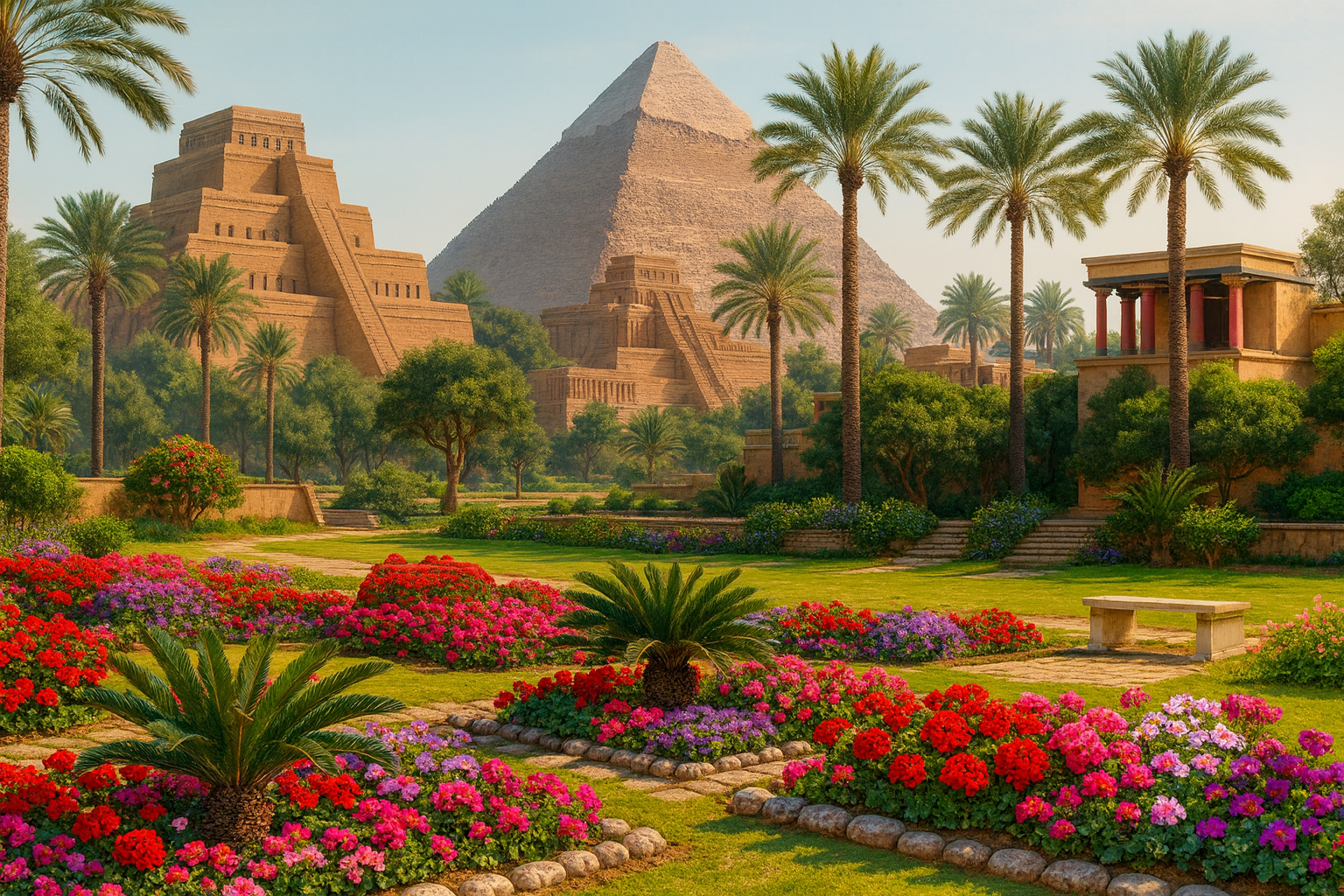
The Blooming Plants of Ancient Civilizations in the Gardens of Egypt, Mesopotamia, and Crete

November 18, 2025

In addition to being beautiful, flowers have served as significant cultural, religious, and political symbols throughout human history. The gardens of ancient civilizations such as Egypt, Mesopotamia, and Crete were decorated with a vast array of flowers, each carefully chosen for its beauty, fragrance, or symbolic meaning. Anchorage flower delivery can help us bring a touch of ancient elegance into our homes today, but in ancient times, flowers were essential to life. The gardens functioned as places of worship and recreation, showcasing the beauty of the societies that constructed them. In the past, flowers were used for spiritual, medicinal, and decorative purposes and were essential to life.

Egypt: Revival and Respectful Blooms

In ancient Egypt, flowers were highly valued and closely linked to religious rituals, death, and the afterlife. The lotus, particularly the blue and white varieties, was one of the most iconic flowers in Egypt and represented the sun, creation, and rebirth. In art and architecture, the flower's daily cycle—which closed at night and opened with the sun—was commonly depicted as a powerful symbol of resurrection. Another significant flower was the papyrus plant, which was also used for its stalks, which were required to make papyrus scrolls.

Egyptian gardens are full of many kinds of plants, including lilies, roses, and irises, particularly those found in the tombs of the pharaohs. These flowers were believed to have protective qualities that would ease a person's transition into the afterlife in addition to their aesthetic value. By using flowers like myrrh and jasmine in incense and perfumes, the Egyptians demonstrated their appreciation for nature's fragrant offerings and acknowledged the importance of fragrance.

source

Mesopotamia: A Blooming Garden

In Mesopotamia, particularly in the ancient city of Babylon, gardens were regarded as a symbol of prosperity and divine favor. Among the many flowers believed to be plentiful in the Hanging Gardens of Babylon, one of the Seven Wonders of the Ancient World, were lilies, roses, and cypress trees. Although the exact arrangement and plant species are still unknown, flowers surely played a significant role in the design of these elaborate gardens.

The Mesopotamians also used flowers for medicinal and religious purposes. For instance, the poppy was used in healing rituals, and the date palm, with its delicate yellow flowers, was necessary for the production of the sweet fruit that sustained the population. Mesopotamian gardens were often enclosed spaces that provided a sanctuary of tranquility in an otherwise harsh environment. They blended flowers, water features, and fruit trees to create an area of abundance and spiritual renewal.

Meaningful Flowers and Cretan Daily Life

Crete, with its Minoan culture, was known for its vibrant gardens that blended the natural world with religious and cultural rituals. The Minoans often depicted scenes of nature with lilies, roses, and daisies in their frescoes and ceramics. These flowers were valued for their beauty as well as their deep symbolic connections to life and fertility.

One of the most famous flowers from Crete is the saffron crocus, which has bright purple blooms. Apart from its culinary uses, saffron was employed in religious ceremonies as a symbol of God's presence due to its vibrant hue. The Minoans also planted gardens with flowers, fruit trees, and vines to create spaces of beauty and tranquility inside their palaces. They were among the first to combine ornamental and practical plants in their gardens, which functioned as centers of commerce, recreation, and religion.

Conclusion: The Legacy of Ancient Flowers

By examining the flowers of ancient Egypt, Mesopotamia, and Crete, we can gain insight into the cultures that prized flowers for their visual appeal, fragrant qualities, and symbolic significance. These gardens were more than just recreational spaces; they were hallowed spaces that symbolized the values, beliefs, and resilience of their local communities. By studying the flowers that once graced these ancient lands, we can gain a better understanding of how people have long incorporated nature into their daily lives and spirituality. When we incorporate elements of these flowers into our modern gardens or plant the same species in our backyard, we are reviving a tradition that has endured for thousands of years.

Tags Guest Articles

A museum sanctuary in Southern Italy that immerses visitors in Magna Graecia

November 17, 2025

The Moyseion brings the Greek heritage of ancient Southern Italy to life through spaces, rites and sensory experiences that reawaken the classical world

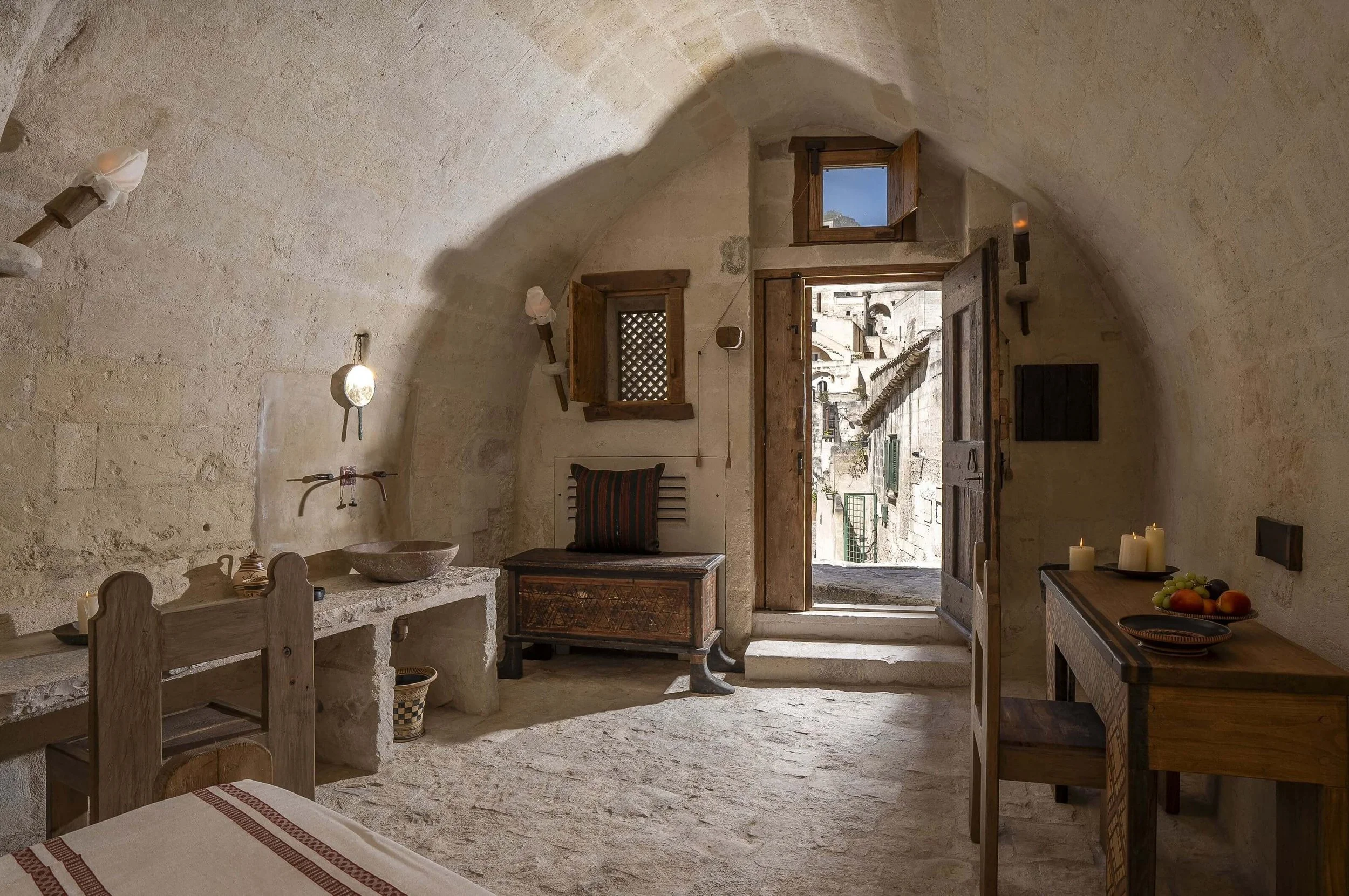
In the city of Matera in Southern Italy, where the cave dwellings of the Sassi form one of the oldest urban landscapes in Europe, a new project invites visitors to step into a reconstructed past. The Moyseion is not simply an unusual hotel or a thematic museum. It is a carefully orchestrated environment that revives the daily life and cultural atmosphere of Magna Graecia with the precision of archaeological reenactment and the intimacy of lived experience.

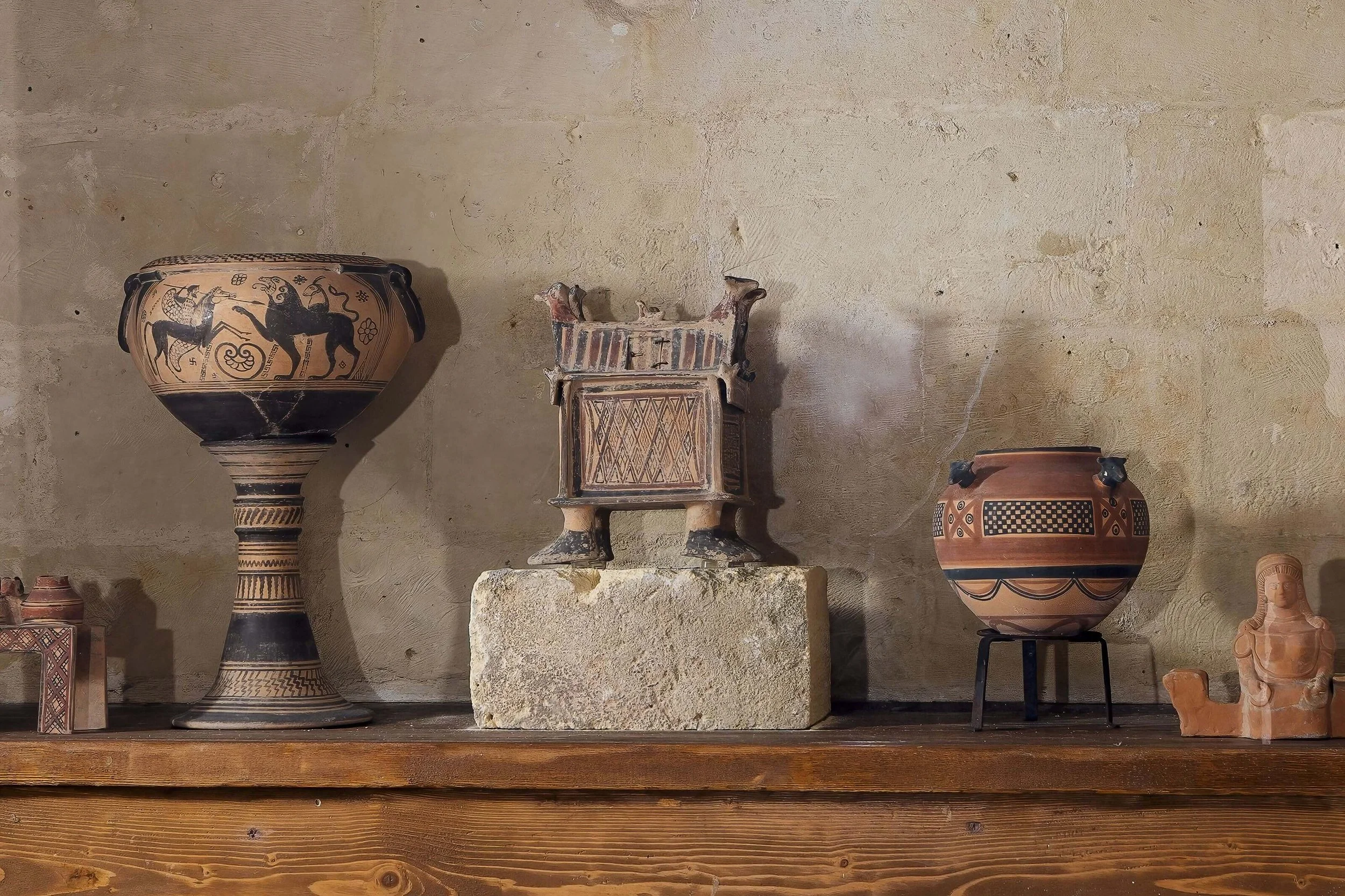
The complex extends across nearly one thousand square meters within restored underground dwellings. These ancient spaces, once abandoned, have been brought back to life through the collaboration of archaeologists, historians, architects and artisans. Sixteen houses from different periods have been reconstructed, ranging from the Neolithic era to the centuries of Greek presence. Every object, weaving, vessel and piece of furniture has been crafted from archaeological evidence and experimental techniques. Modern necessities such as lighting, plumbing and climate control remain concealed so that nothing disrupts the ambience.

At the core of the Moyseion lies the Sanctuary of Waters, a stone-carved spa that evokes ancient cult sites dedicated to Demeter and the cleansing symbolism of water. Pools and basins cut directly into the rock are illuminated in a way that recalls surviving references from Magna Graecia, while scents and soundscapes remove the visitor from the rhythm of contemporary life.

The project becomes fully alive through the people who inhabit it. A dedicated group of young specialists has been trained in ancient music, dance, ritual performance and the choreography of symposia. Guests are invited not only to watch but to participate. They wear clothing inspired by archaeological finds, take part in ceremonies of welcome or morning meals and experience scenes from daily life reconstructed from literary and material sources.

View fullsize imgi_46_66c7eb70222a71f67f3c78f3_REC-4-p-2000.jpg
View fullsize imgi_69_66f461d6d456be7f0b4b357b_SANT 7-p-2000.jpg
View fullsize imgi_76_66f461f04d5534d301f52418_SANT 9-p-3200.jpg
View fullsize imgi_90_66c7ec8a038a61dbeccd26cf_REC-16-p-2000.jpg
View fullsize imgi_90_66f4622bac48aeb8c3c6cb52_SANT 13-p-2000.jpg
View fullsize imgi_94_66c7ec99fb5ea724fa890ad4_REC-19-p-2600.jpg
View fullsize imgi_101_67b4619ac8611766a5b4aed6_magnagraecia4a_small.jpg
View fullsize imgi_106_66f46279c1c43391a16feb35_sant 19-p-2000.jpg
View fullsize imgi_126_67bf4c4beea10feff15f909b_magnagraecia21_big.jpg
View fullsize imgi_134_67bf581c3a55bcffef42dc9a_magnagraecia24(a)_big.jpg
View fullsize imgi_155_67d1bb12d9640402d94187fe_magnagraecia40(c)_S.jpg
View fullsize imgi_182_67d4cd58441a7707d165fcc6_magnagraecia52(a)_s.jpg
View fullsize imgi_390_672e66e377da8dc08b764612_enotrian6-p-2000.jpg
View fullsize imgi_409_672e682b7ee4cad2cc409931_enotrian10-p-2000.jpg
View fullsize imgi_435_672e6a30d5a55904ef86acb0_enotrian19-p-2000.jpg
View fullsize imgi_493_6730bb3a7b6d7d9adac833cd_enotrian30-p-3200.jpg
View fullsize imgi_510_6730c046a9e91179ff3b3c13_enotrian34a-p-3200.jpg
View fullsize imgi_538_6730c72d7a3048bca1c1b2e0_enotrian40-p-3200.jpg
View fullsize imgi_580_6718cbf26cb6dc26f0d60718_neolithic12-p-3200.jpg
View fullsize imgi_614_6718cd3028236d3e995ad00e_neolithic19-p-3200.jpg

The culinary dimension of the Moyseion relies on collaboration with food historians and anthropologists. Breakfast includes dishes grounded in ancient Greek diet and technique, from barley bread and fig cakes to spreads made from wild herbs. Workshops on ancient music complement these experiences, including lyre programs created with the Lotos Lab of Cambridge.

Matera itself, with nearly nine thousand years of continuous habitation, serves as the ideal backdrop. The Sassi, once described as Italy’s disgrace due to the harsh living conditions of the mid twentieth century, have since been revived and now host both major film productions and cultural initiatives like this one.

Antonio Panetta, the founder of the Moyseion, describes its purpose with clarity. Visitors no longer want to view history through a barrier of glass. They want to feel that the ancient world still breathes around them, that its echoes survive in the senses. The Moyseion seeks to awaken that dormant layer of human memory, offering a moment in which the past is not observed but inhabited.

A place like this may change you, even slightly. And if it does not, it will at least allow you to experience how antiquity can move beyond the static museum case and become a living presence once again.

German woman returns column capital she stole from Ancient Olympia after 50 years

November 16, 2025


A 2,400-year-old Greek relic stolen half a century ago has finally come home.

A German woman who stole the top of an ancient Greek column 50 years ago has returned the object to Greece, putting an end to the long absence of the 2,400-year-old artifact from its homeland.

The Ionic column capital, made of limestone and measuring roughly 23 cm in height and 33 cm in width, had been removed from the Leonidaion, a 4th-century BC guesthouse in Ancient Olympia. According to Greek authorities, the relic was handed back on Friday (10/10) during a ceremony at the Ancient Olympia Conference Center, after the woman voluntarily gave it to the University of Münster in Germany, which organized and ensured its repatriation.

She took it in the 1960s
The German woman had taken the capital during a visit to the archaeological site in the 1960s and kept it for decades before deciding to return it. She said she was motivated by the university’s recent efforts to repatriate looted antiquities. The Greek Ministry of Culture praised her “sensitivity and courage”, noting that her action shows that “it is never too late to do the right thing.”

This is the third major antiquity repatriated to Greece by the University of Münster in recent years. In 2019, the so-called “Louis Cup,” associated with the Olympic champion of 1896, was returned; in 2024, a marble male head from Roman-period Thessaloniki was also repatriated.

“Culture and history know no borders”
“This is a deeply moving moment,” said the Secretary General of Culture, Georgios Didascalou, during the handover ceremony. “This act proves that culture and history know no borders, but require cooperation, responsibility, and mutual respect. Every such return is an act of restoring justice and, at the same time, a bridge of friendship between peoples.”

Dr. Torben Schreiber, curator of the Archaeological Museum of the University of Münster, stated that the institution will continue to return any object proven to have been acquired illegally. “It is never too late to do what is right, ethical, and just,” he added.

The Leonidaion—named after its benefactor Leonidas of Naxos—is the largest building in the sanctuary of Olympia, built with Ionic columns around its perimeter to host distinguished visitors. The returned piece will now undergo conservation and be displayed at Ancient Olympia, according to officials.

Tags News, D

Roman road data overlaid on the confidence map.

Mapping the Empire: New Digital Atlas Reveals Rome’s Vast Hidden Road Network

November 8, 2025

A new digital mapping project has revealed that the ancient Roman road network was far more extensive than previously believed, expanding our understanding of how the empire was connected. The new map, named Itiner-e, shows that the system of Roman roads stretched over 299,000 kilometers, almost 50% more than earlier estimates, redrawing the physical footprint of Roman civilization. Created by an international team of researchers from European universities, the atlas integrates archaeological data, topographical surveys, satellite imagery, and even digitized aerial photos from World War II to reconstruct the routes that once linked Rome to its vast provinces.

According to archaeologist Tom Brughmans of Aarhus University, one of the project’s lead authors, mapping these roads was “a massive puzzle on a continental scale.” The researchers examined subtle traces in landscapes where ancient sources suggested missing routes, identifying roadbeds through variations in vegetation, terrain elevation, and remnants of Roman engineering. The result is the most comprehensive reconstruction ever made of the Roman road system around AD 150, when the empire reached its maximum extent.

Comparison of DARMC (in orange) and Itiner-e (in black) datasets, (a) showing an example from France of a region with increased coverage of roads, and (b) an example of increased spatial detail.


The findings, published in Scientific Data and highlighted by The Independent, show that many previously overlooked regional routes across the Iberian Peninsula, Greece, and North Africa expanded the known network. The map identifies 14,769 road segments, roughly one-third classified as major and two-thirds as secondary. Only 2.7% of them are confirmed with full certainty, while nearly 90% are traced with moderate accuracy. The researchers emphasize that the Roman roads were not just built for military or trade purposes but served as conduits for ideas, cultures, and even diseases, forming the arteries of a connected ancient world.

At its height, the Roman Empire spanned from Britain to Egypt and Syria, encompassing around 55 million people. The new Itiner-e data suggests that a traveler could theoretically move across this vast territory through a single, interconnected road system, comparable to modern European infrastructure. Many modern highways, such as the route linking Bologna, Modena, Parma, Piacenza, and Milan, still follow the same paths as their Roman predecessors.

Workflow summarizing the data collection and digitisation process.


Archaeologist Benjamin Ducke of the German Archaeological Institute, who was not part of the project, called Itiner-e “a foundational resource that will become a reference point for countless future studies.” For Brughmans and his team, the project’s value goes beyond mapping—it provides new insight into the mobility, logistics, and human dynamics of the ancient world. As co-author Adam Pażout from the Autonomous University of Barcelona noted, the Roman engineers’ innovations in bridges, tunnels, and roadbeds still shape the geography and economies of the Mediterranean today.

The Marbles — A British Documentary Rekindles the Debate Over the Parthenon Sculptures

November 7, 2025

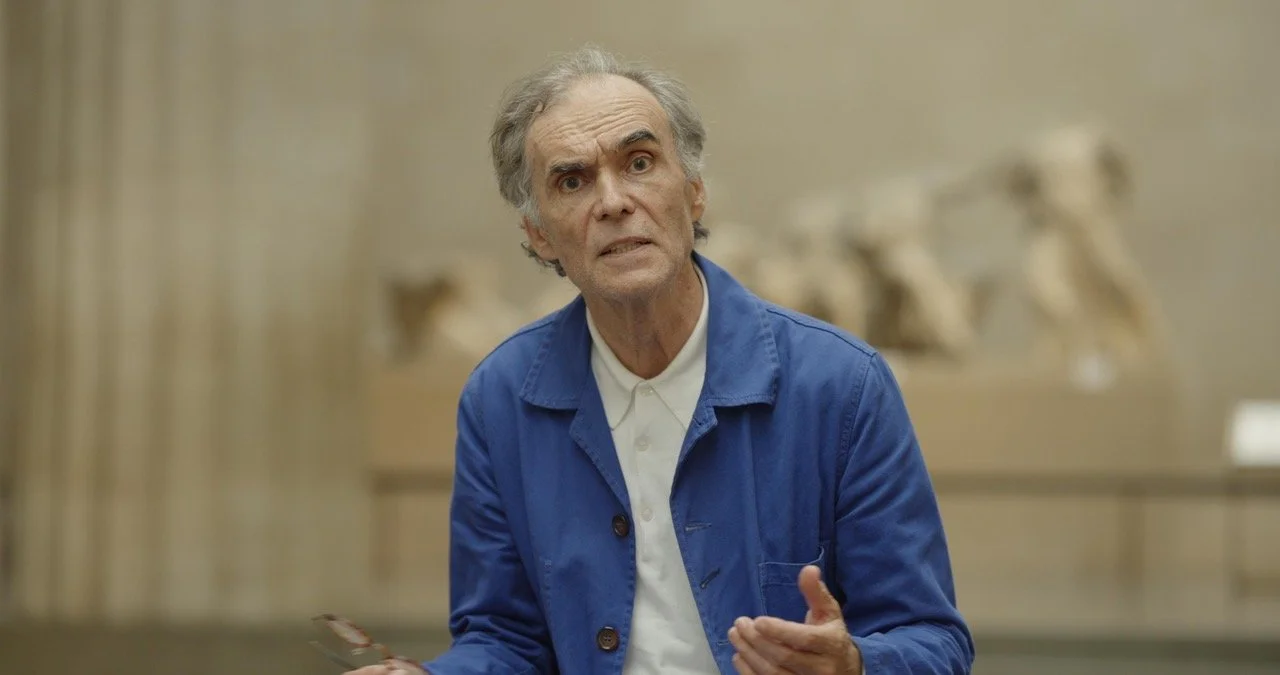
A new feature-length documentary, The Marbles, has arrived in British cinemas, reigniting one of the world’s longest-running cultural controversies: the fate of the Parthenon Sculptures, often called the “Elgin Marbles.” Directed by veteran filmmaker David Nicholas Wilkinson, the 114-minute film delves into the history, politics, and moral questions surrounding the famous collection housed in London’s British Museum — and the enduring calls for its return to Athens.

Released nationwide on November 7, 2025, the film coincides with renewed public and diplomatic pressure over cultural restitution. It follows Wilkinson’s three-year investigation into how the Parthenon sculptures were removed from Athens in the early 19th century by Lord Elgin, then Britain’s ambassador to the Ottoman Empire, and how they eventually became centerpiece exhibits in the British Museum.

Unlike many past treatments of the subject, The Marbles avoids polemic. Critics in The Guardian and the Financial Times describe it as “measured, thoughtful, and surprisingly balanced,” offering both sides of the debate. The film gives equal voice to Greek cultural figures, international heritage experts, and British Museum officials, who argue that the institution preserves and contextualizes the sculptures as part of a “universal collection.”

Still, the documentary clearly tilts toward moral introspection. Wilkinson traces how the Parthenon — once a temple to Athena, later a church, mosque, and ruin — has become a global symbol of cultural identity and loss. The film raises uncomfortable questions about the ethics of empire, the responsibilities of museums, and the growing movement demanding the repatriation of looted artifacts worldwide.

Cinematically, The Marbles blends aerial shots of the Acropolis and the British Museum’s Duveen Gallery with interviews and archival material. Wilkinson himself appears on camera, acknowledging his own shift in perspective as he studies the evidence. He concludes, as he told Sky News, that the sculptures were “beyond any reasonable doubt, taken under dubious authority.”

The release arrives at a delicate political moment. Although the British Museum has hinted at a potential “long-term partnership” with Greek institutions, the British government maintains that the law forbids permanent return. Yet polls show that a majority of the British public now favors repatriation.

For art historians and museum professionals, The Marbles offers more than advocacy; it’s a meditation on how nations define ownership, beauty, and historical justice. Whether or not it changes policy, it certainly reframes the narrative — reminding audiences that these stones carved in fifth-century BCE Athens are still alive in the world’s conscience.

Watch Live: The Opening of the Grand Egyptian Museum in Cairo

November 1, 2025

Near the pyramids of Giza, one of the largest archaeological museums in the world is opening its doors. It houses more than 100,000 artifacts spanning seven millennia of history, with the treasures from the tomb of Tutankhamun as its crown jewel — displayed across two of the museum’s fourteen exhibition halls.

After twenty-five years of construction, the museum finally opens. It is considered the largest archaeological museum on the planet. The inauguration ceremony is being broadcast live by hundreds of television networks worldwide. The country’s president welcomed the world leaders attending the event.

The monumental “Grand Staircase,” leading visitors upward to the exhibition halls, is flanked by colossal statues of pharaohs and gods.

Seven Millennia Come to Life
Located just outside the capital, near the Giza Plateau, the museum covers an area of 470,000 square meters. It will host around 100,000 artifacts, including 15,000 that have never been displayed before, spanning seven thousand years of the region’s history. Its massive triangular glass façade echoes the nearby pyramids. Visitors can explore twelve vast halls, each devoted to a distinct period — from the Predynastic and Old Kingdom eras, through the Middle and New Kingdoms, to the Hellenistic and Roman periods.

Construction began in 2005 but was delayed by financial crises, the “Arab Spring,” and other regional upheavals. The total cost exceeded one billion euros. Once fully operational, the museum is expected to attract up to eight million visitors annually, providing a major boost to tourism and the national economy.

At the Inauguration Ceremony
Among those invited are numerous international dignitaries, reflecting the global significance of the event. A strict security plan has been implemented: military snipers have been stationed at elevated points around the museum, while mixed police and army patrols monitor the main access routes to the site.

Archaeologists Discover 'Perfectly Preserved' 70-Million-Year-Old Dinosaur Egg in Argentina

October 23, 2025

A team of palaeontologists in Argentina has uncovered an extraordinary discovery — a dinosaur egg estimated to be around 70 million years old and in near-perfect condition.

The fossilized egg, believed to date back to the Cretaceous period, was found in Patagonia and is so well-preserved that researchers think it could contain embryonic material inside — a potential game-changer in the study of dinosaur evolution.

Finding a dinosaur egg is rare enough, but one with an intact shell and minimal damage is almost unheard of. The remarkable state of preservation has left scientists stunned and excited about what secrets might lie within.

“It was a complete and utter surprise,” said researcher Gonzalo Muñoz in an interview with National Geographic. “It’s not common to find the egg of a possible carnivorous dinosaur, much less in that state. The happiness was spectacular for the team.”

The egg was discovered by a team from Argentina’s Museum of Natural Sciences during a live broadcast on October 7, where viewers around the world witnessed the moment the ancient relic was unearthed.

Experts believe the egg may belong to the Bonapartenykus genus, a type of carnivorous theropod that roamed South America during the late Cretaceous period. Such eggs are exceedingly rare, as carnivorous species laid thinner, more fragile shells that were less likely to survive the fossilization process.

While some may jokingly fear a Jurassic Park-style scenario, scientists emphasize the discovery’s true importance lies in what it could reveal about dinosaur reproduction and development. If embryonic remains are indeed preserved inside, it could provide unprecedented insight into how these fearsome predators evolved, grew, and hatched.

The next phase for the research team involves conducting advanced imaging scans to determine whether any embryonic tissue remains within the egg. Should they find any, it would mark one of the most significant breakthroughs in palaeontology in decades.

“Science can reach many people whom we could not reach before,” said expedition leader Federico Agnolín, reflecting on the decision to livestream the discovery. “It’s wonderful that the world could witness this moment in real time.”

Once studies are complete, the egg will be transferred to the Argentine Museum of Natural Sciences for further analysis before returning to Patagonia, where it will eventually go on public display.

Louvre museum robbery: how the thieves broke in, what they stole and what happens next

October 20, 2025

Louvre Museum Robbery: How Thieves Pulled Off a Daring Heist in Broad Daylight

Police stand near the Louvre Pyramid in Paris after thieves made off with priceless jewels from the museum’s Apollon Gallery.

The Louvre — the world’s most-visited museum — was plunged into chaos on Sunday after a bold daylight robbery at its famed Apollon Gallery, home to France’s Crown Jewels. Eight pieces of historic jewellery were stolen in what authorities are calling a “highly professional operation.”

The Heist: How the Thieves Broke In

At around 9:30 a.m., just half an hour after the museum opened to visitors, four masked thieves arrived in a truck fitted with a basket lift along the Seine-facing side of the Louvre. Using an angle grinder and power tools, they forced entry through a second-floor balcony window.

Once inside, they smashed glass display cases and snatched jewels from the 17th-century gallery. As alarms blared, the thieves fled within minutes, escaping on motorbikes. The entire heist lasted under 10 minutes, according to Interior Minister Laurent Nunez, who described it as “the work of an experienced team who had clearly scouted the location.”

What Was Stolen — and What Wasn’t

The French Culture Ministry confirmed that eight pieces of jewellery were stolen. However, the thieves dropped their most valuable prize — the crown of Empress Eugénie, wife of Napoleon III — while escaping.

They also left behind the Regent Diamond, one of the most famous gems in the world, valued at over $60 million (£45 million) and displayed nearby.

Among the missing treasures are:

  • A sapphire necklace, tiara, and earrings once belonging to Queens Marie-Amélie and Hortense.

  • Several pieces from the Marie-Louise jewellery set, linked to Napoleon’s second wife.

These jewels were part of the Apollon Gallery, designed in 1661 under Louis XIV and later serving as inspiration for Versailles’ Hall of Mirrors.

Shock and Political Fallout

The heist has sparked outrage and political debate across France. Far-right leader Jordan Bardella condemned the theft as “an unbearable humiliation” and a symbol of “state decay.”

President Emmanuel Macron responded swiftly, vowing to recover the stolen pieces and bring the perpetrators to justice. “The theft committed at the Louvre is an attack on our heritage and history,” he said.

Minister Nunez called it “a major robbery” and promised further security reinforcements, noting that despite recent upgrades, the museum’s protections “are not equally robust across all collections.”

Public Reaction: Disbelief at Security Failures

Visitors were left stunned. “How can they ride a lift to a window and take jewels in the middle of the day?” asked Magali Cunel, a teacher visiting from Lyon. “It’s unbelievable that a museum this famous could have such obvious security gaps.”

While masterpieces like the Mona Lisa remain shielded behind bulletproof, climate-controlled glass, the theft highlights vulnerabilities elsewhere among the Louvre’s 33,000 exhibited objects.

Has the Louvre Been Robbed Before?

This isn’t the first time the Louvre has been at the center of an infamous theft.
In 1911, Italian handyman Vincenzo Peruggia stole the Mona Lisa, hiding inside the museum overnight and walking out with it under his coat. The painting was recovered two years later.

In 1956, a visitor threw a stone at the same masterpiece, damaging it and prompting the museum to install protective glass — a security measure that endures today.

What Happens Next

French police have launched a nationwide manhunt, reviewing CCTV footage and investigating possible international buyers or criminal networks that could handle such rare, identifiable artefacts. Experts say the jewels are nearly impossible to sell openly, leading many to fear they could be dismantled or melted down.

For now, the world’s attention turns once again to the Louvre, not for its art — but for one of the most daring museum robberies in modern French history.

“Who’s Afraid of the Ancient Greeks?” – A Defense of Greek Civilization from MMC Brussels

October 18, 2025

By Dimosthenis Vasiloudis


A public discussion titled “Who’s Afraid of the Ancient Greeks?” took place on October 8, 2025, in Brussels, as part of the cultural events organized by the MCC Brussels (Mathias Corvinus Collegium), a European think tank dedicated to the intellectual and cultural renewal of Europe. The panel featured three distinguished speakers: Dr. Benedict Beckeld, philosopher and author of Western Self-Contempt: Oikophobia in the Decline of Civilizations, Dr. Alexander Meert, historian and lecturer at the Vrije Universiteit Brussel and member of the Roman Society Research Center at Ghent University, and Dr. Maren Thom, researcher and film critic, Senior Research Fellow at MCC Brussels. The three academics engaged in a vivid dialogue about the significance of ancient Greek thought and education for contemporary European culture, exploring whether the West still recognizes its Hellenic roots or has become estranged from them in the name of postmodern sensitivity.

The event begins from a simple but often ignored premise: to understand Europe, one must look directly at Greece. Not as a museum relic, but as a living foundation of values, institutions, and intellectual tools that still function when we choose to use them. The introduction sets the stage clearly: Europe is not a bureaucratic invention or a random set of “principles” pulled out of administrative language. It is a historical continuum connecting Greece, Rome, Christianity, the Renaissance, and the Enlightenment. Within that continuum, ancient Greece is not merely an early stage but the primary mechanism that generated and regenerated the very ideas we live by: freedom, risk, self-government, reason, and the union of tragedy and catharsis. The discussion is not nostalgic. It is political in the classical sense: it asks how we live together, how we learn, how we argue, how we transform.

The first argument, presented by Benedict Beckeld, begins with a question: does “the West” exist? His answer is calm and empirical. Not as a physical object, perhaps, but as a historical reality with recognizable forms, memories, models, and influences, absolutely yes. It is no coincidence that Virgil imitates Homer, or that Dante takes Virgil as his guide. The thread is visible in art, architecture, law, and political language. The concept of “the West” is not invalid just because it is abstract; history is made of such abstractions that shape real societies. From there, Beckeld argues that if the West exists, we must see ourselves in the Greeks. Not as marble statues, but as ancestors who faced the same human dilemmas. Athens knew relativism, atheism, moral fatigue, and social decay, just as we do. The debate between physis and nomos, the crisis of faith, and the exhaustion of civic life are recurring patterns. To read them in the Greeks is not anachronism, it is a way to understand our own condition without illusions.

A key point in Beckeld’s speech is the rejection of guilt about “Eurocentrism.” Pride in one’s own heritage is not racism. Just as a Chinese person can be Sino-centric without hostility toward others, a European can love and protect his own cultural forms. Civilizational self-hatred is a dead end. Merely reacting against “decadence” changes nothing. There must be a positive horizon: a clear sense of who we are and what we aim to become, not only what we reject. Here, Greece functions both as mirror and beacon. It shows us the height of achievement but also the depth of human weakness.

From philosophy, the discussion turns to how Greek thought became a machine of balance. Alexander Meert returns to the classical texts to show that Greek philosophy created a worldview that connected the physical and the metaphysical, experience and meaning. Modern discomfort, the thinning of meaning into mere functionality, has led to shallow cults of rationalism and empty substitutes for spirituality. Greek philosophy offers another path: openness that allows both wonder and logic, a sense of measure that avoids extremes, and a dialogical method that teaches us to disagree without destroying one another. The story of Gyges’ ring is not a fable; it is a warning about what happens when nature devours law, when power hides itself under invisibility. Athens lived through plague, impiety trials, and fanaticism, yet within this pendulum Greek philosophy acted as the conscience of society, alerting it to the danger of imbalance.

The essential Greek contribution, Mert continues, lies in the value of reason. Not reason as cold rationalism, but as a living habit of dialogue, of questioning and answering. Dialectic, open debate, frank speech, and equality before the law were not decorative virtues. They were the operating system of a civic order built for citizens, not subjects. When modern universities start using “trigger warnings” for the Iliad or the Odyssey, or quietly censor material “to protect students,” that is not sensitivity but a loss of the Greek principle of endurance in the face of truth. Greek education demanded the strength to face discomfort, not escape it. Mert also notes a practical issue: the decline of classical languages and the rise of ideological theories about “identity.” When education becomes a matter of slogans, we lose the discipline of argument and become prey to every passing fashion.

The artistic dimension enters through Maren Thom, who shifts the focus to Greek drama. She argues that modern censors attack not the content of Greek texts but their form and psychological power. Greek tragedy transforms the audience through conflict, fear, and pity. Catharsis is not therapy; it is the civic process through which citizens learn to face truth without collapse. That is why Athenians built theaters that held thousands and paid the poor to attend. Drama was not private entertainment. It was a civic duty and a form of collective education. The modern tendency to “sanitize” art, to remove what shocks or unsettles us, empties the very engine of drama. The Greek theater worked precisely because it wounded and healed at the same time. Removing that power does not make art safer, only weaker. Thom points out that the flattening of emotional experience in modern storytelling, from Hollywood to animation, has erased catharsis. What remains is affirmation without transformation, narrative without consequence. The result is not morality but boredom.

Some critics at the event raised a fair warning against reading modern categories back into the past. Indeed, the Greeks had no single word for “religion.” Their gods were not objects of belief but participants in ritual, woven into civic life. “Atheos” shifted its meaning across centuries: first “forsaken by the gods,” later “without belief in gods.” Understanding these nuances requires philological care. Yet, as Beckeld replied, recognizing historical difference does not forbid comparison. When Isocrates laments that people no longer believe in the gods, or when Plato in the Laws tries to regulate a collapsing moral order, we see societies struggling with the same fatigue of meaning. To study those reactions is not to distort history but to learn how intelligent cultures respond to their own crises.

Another theme of the debate was the strangeness of the Greeks. They are not just “like us.” Their world was radically different, and that difference educates us. Their concept of honor, their intimacy with war, their fusion of freedom and slavery, their humor and cruelty in the same breath, all challenge our moral comfort. That alien quality is exactly what makes Greek civilization worth studying. Good translations should keep that strangeness alive. Making Homer sound like a modern teenager flattens his power. The goal is not to make the Greeks resemble us but to make us reach up to them.

A member of the audience asked a blunt question: what can we actually do? The answer emerging from MCC Brussels was practical and cultural. Revive the classics in schools. Restore the teaching of Greek and Latin, or at least serious engagement with the texts in accurate translations. Make public exposure to theater and philosophy part of civic education again. Remove the intellectual infantilization of “sensitive content.” Normalize disagreement as a form of learning. Reclaim concepts like frank speech, equality before the law, and civic duty. And above all, craft a positive narrative: pride without arrogance, self-criticism without self-hatred.

The memory of risk also matters. The story of Salamis was highlighted as the perfect symbol: the Athenians chose to abandon their city and fight at sea. They won not through generals or aristocrats but through sailors, the common people. After victory, they demanded political rights. That link between action and institution, courage and citizenship, is the Greek inheritance. Forget it, and democracy becomes a word without substance. Remember it, and it becomes strength again.

In answering those who accuse Greek civilization of racism, sexism, or “white supremacy,” the best response is twofold. First, scientific: do not fear the texts, read them fully, and reject the temptation to project modern categories backward. Second, educational: remind ourselves that truth often wounds before it enlightens, and that art exists to make us stronger, not safer. If we remove catharsis from art and philosophy, we do not produce sensitive societies but fragile ones.

The defense of Greek civilization, as presented in Brussels, is not reactionary nostalgia. It is an argument for courage in intellect and in aesthetics. Greece is not only admiration for beauty. It is, as one speaker put it, the pursuit of the future: playful creativity, democratic invention, balance between reason and reverence, war and wisdom, household and public square. To sever Europe from this root is to build a continent that is poorer, smaller, and easier to manage. MCC Brussels proposes the opposite: a Europe reconnected with its first workshop of the mind. There, the citizen is shaped again and again through speech, action, and transformation.

If this event leaves one clear message, it is that Greek civilization is not just one influence among many. It is our starting archive. From it, we learn to be Europeans without guilt and without arrogance, ambitious yet measured. Every time our age tries to sterilize education or flatten art, ancient philosophy and tragedy remind us of our duty: to stand upright within conflict and emerge changed, a little freer, a little wiser, a little more capable of carrying the weight of our shared city.

Tags Dimosthenis Vasiloudis

The Clay Hives of Al-Kharfi: Bees, Survival, and Innovation in the Desert

October 12, 2025

In the arid hills south of Taif, Saudi Arabia, the ruins of an ancient settlement known as Al-Kharfi hide a remarkable testimony to human resilience: about 1,200 clay and mud beehives carved into the rock face or built on terraces, many still standing in ruinous form. These silent structures whisper of a people who harnessed the power of bees to survive and thrive in a harsh desert environment.

The Discovery & Setting

The site of Al-Kharfi lies in the Maysan Governorate, south of Taif, perched on elevations that receive scarce rainfall. The beehives are clustered along rock walls and slopes, arranged in rows, sometimes one above the other, across uneven terrain. The architecture is simple but effective: cylindrical cavities and rectangular prisms in clay, mud, and rock, often recessed into the hillside to take advantage of natural shading and insulation.

Scholars and local explorers have long known about these hives, which are sometimes called “honey houses” in regional accounts. But in recent years they have drawn increasing attention as archaeological witnesses to desert economies and bee-keeping in antiquity.

Technology, Ecology, and Use

Why build so many beehives? In a landscape where plant growth is limited and rainfall irregular, bees offer a unique resource: honey, wax, propolis, and the pollination services that sustain wild flora. For a community living at the margin of subsistence, these products could have tremendous value.

The clay hives would maintain relatively stable internal temperatures (important for bee brood development), protect against desert winds, and reduce the stress of thermal extremes. Their positioning near valleys or wadis (seasonal water flows) and in shaded rock faces suggests a careful choice of microclimates.

Bee-keeping in the Arabian Peninsula has a long ethnographic tradition: even today, beehives made of clay or hollowed logs are used in mountain regions. The Al-Kharfi complex likely represents an early phase of that tradition.

Honey is more than a sweetener. In preindustrial societies, it functioned as a medicine (antiseptic, wound dressing, digestif), a preservative, a fermentable (in mead or other drinks), and sometimes as a form of portable calories. In times of drought or scarcity, honey could supplement or stabilize diets.

With over a thousand hives, Al-Kharfi may have been a regional honey center—producing surplus not only for local consumption but possibly for trade with nearby oases, caravan routes, or urban settlements in the highland-plain margins.

Social & Economic Implications

The scale of the hive complex implies organized labour, knowledge transfer, seasonal management, and coordination. Someone had to maintain hives, inspect for swarms, harvest safely, preserve the wax, and distribute the product. That suggests social roles (specialists, beekeepers) beyond simple subsistence farming or herding.

Also, the presence of so many hives indicates long-term planning and ecological memory: people knew which slopes to use, how to protect bees in harsh seasons, and how to integrate bee-keeping into their broader livelihood strategies.

It points to mixed economies: not purely pastoral or agricultural, but one that embraced insects as part of the resource mix. In desert frontiers, flexibility is often the margin between collapse and survival.

Challenges & Uncertainties

Our knowledge is fragmentary. We lack detailed excavation reports, chronology data, and paleoenvironmental reconstructions tied to Al-Kharfi. Some questions remain:

  • When exactly were these hives in use (century, millennium)?

  • Did they serve only the local community, or were they part of wider trading networks?

  • How did fluctuations in climate (drought, rainfall variability) affect hive productivity and survival?

  • To what extent were the bees local wild species versus induced feral populations?

Some of the published references are popular or secondary sources; rigorous archaeological publications with stratigraphic data are hard to find.

Thus, while the narrative of “resilience and ingenuity” is compelling, scholars must tread carefully when drawing sweeping claims.

Broader Significance

The clay beehives of Al-Kharfi remind us how humans do not just passively endure hostile environments—they actively shape them, coaxing life even where conditions are unforgiving. These hives represent a bridge between wild ecology and human culture: bees live in the margins, and people extend their domain by learning bee-ecology, microclimates, and behaviors of insects.

In global perspective, such ancient beehive complexes parallel other niche practices (ice harvesting, salt flats, cave fishery, terraced agriculture) in extreme lands. They force us to reevaluate what “marginal” means: what looks barren may conceal systems of knowledge deposited over generations.

Ancient Wheels Without Wheels: Travois Tracks at White Sands Rewriting Transport History

October 12, 2025

In a discovery that upends assumptions about prehistoric mobility in the Americas, researchers have identified drag marks, dating to about 22,000 years ago, alongside human footprints at White Sands National Park (New Mexico). These linear traces may be the oldest known evidence of a travois—a rudimentary sled-like device used by early humans to haul bulky loads across the landscape.

The Site: White Sands and Fossil Footprints

White Sands is already famed for preserving some of the earliest human footprints in North America—tracks embedded in the ancient lakebeds of what was once Paleolake Otero. Researchers have dated many footprints there to between 21,000 and 23,000 years ago, using seeds and sediment layers as chronometers. (nps.gov)

Within these same strata, geologists and archaeologists have now detected linear grooves—features that run alongside, intersect, or parallel human trackways. These are preserved in fine-grained sediments where the ancient terrain was soft and impressionable. (USGS)

What the Drag Marks Look Like

The study published in Quaternary Science Advances (2025) classifies three morphological types of line trace, all associated with nearby human footprints. (ScienceDirect)

  • Type I: Narrow, deep grooves (depth > width), sometimes bifurcating, that may extend for 2–50 m. These often intersect with, or truncate, human prints. (ScienceDirect)

  • Type II: Broader, shallower runnels (width > depth), generally straight, sometimes truncating adjacent footprints. (USGS)

  • Type III: Two equidistant parallel grooves, spaced ~250–350 mm apart, following gently curving paths. Human footprints are often between or adjacent to them. (USGS)

In several cross-section profiles, underlying sediment is deformed—suggesting significant force was applied, not just light dragging. Some grooves show striations that suggest dragging rigid objects, rather than pliable ones. (johnhawks.net)

Why a Travois Is the Best Explanation

Given the patterns and their association with human footprints (rather than animale tracks), the research team argues that the simplest and most plausible explanation is that prehistoric people used travois to move loads. A travois is a basic transport device composed of poles (often in an A- or X-shaped frame) that drag the ground behind a person or animal. In historic contexts in North America, travois were often pulled by dogs or horses (especially among Plains peoples). (ScienceAlert)

The researchers tested the hypothesis by constructing replica travois and dragging them over mudflats in the U.K. and Maine (USA). The tracks produced matched many aspects of the fossil grooves—parallel spacing, groove depth vs width, and the way they interacted with footprints. (ScienceAlert)

Alternative explanations—animals dragging logs, floating wood washed ashore, boat keels, etc.—were considered but found inconsistent with the geometry, context, and associations of the marks. (USGS)

Thus, these drag marks may constitute the earliest known evidence of transport technology in the Americas: humans dragging loads before the invention of the wheel. (USGS)

Behavioral Implications: Movement, Group Life, Logistics

The presence of footprints of varying sizes alongside the drag marks suggests that these were not solitary acts but part of a group activity. Children’s prints appear alongside adult prints, sometimes walking beside or between the drag grooves. This hints that families (or groups of mixed ages) moved together, possibly transporting tools, food, firewood, or even children in makeshift conveyances. (ScienceAlert)

The traces extend for considerable distances (up to ~50 m in some cases) and may intersect or cross other trails, indicating movement through a dynamic landscape, not just short hauls. (USGS)

Given that the environment was wetter and less arid at the time, with lake margins, marshes, vegetation, and game animals, efficient movement and transport would have provided significant advantage. (nps.gov)

Chronology & the Challenge to the “Late Arrival” Model

Perhaps the biggest upshot of this find is what it implies about the timing and sophistication of early human presence in North America.

If the dates around 22,000 years are correct—and that is still a matter of discussion—then the people who left these marks lived during the Last Glacial Maximum, long before the conventionally accepted wave of migration into the Americas ~13,000–16,000 years ago.

In other words, these tracks don’t just push back the arrival date; they imply that those early populations had already invented methods of logistical transport, not merely survival-level walking.

However, the dating is not free from debate. Critics point out that some of the radiocarbon ages are based on Ruppia cirrhosa seeds, which can absorb older carbon from groundwater and distort dates upward.

To mitigate this, more recent studies have applied optically stimulated luminescence (OSL) dating to quartz grains and independent radiocarbon methods, which broadly support the older chronology, although uncertainties remain.

Broader Significance & Future Prospects

This find reshapes how archaeologists think about prehistoric cognition, mobility, and social organization. The use of a travois implies:

  1. Forward planning—anticipating the need to move gear over distances, not just opportunistic foraging.

  2. Technical innovation—a rudimentary “vehicle” device, before wheeled transport.

  3. Social structure—group cooperation and roles (some hauling, some walking) in daily life.

It also invites reexamination of other prehistoric sites globally: might similar linear traces have been overlooked or misinterpreted? Might this push us to look for indirect evidence of transport technology (e.g. groove marks, substrate deformation) in contexts where the vehicles themselves don’t survive?

The White Sands site, thus, is not just about footprints or exotic antiquity; it’s about the ingenuity of human beings in extreme times. Even when our tools and machines are lost to decay, the marks we leave behind—if we look closely enough—can tell stories of our ancestors’ brilliance.

In Americas Tags Studies

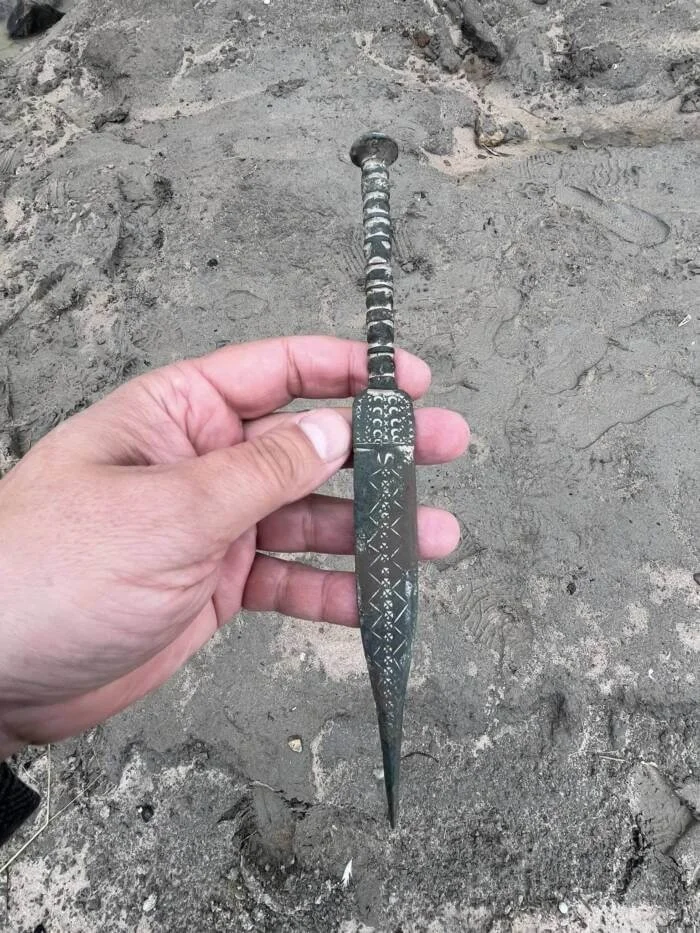
Ancient Ritual Knife Unearthed on Poland’s Baltic Coast After a Storm?

October 10, 2025

A recent post claims that after a violent storm in northern Poland, a section of cliff collapsed and revealed a 2,800‑year‑old ceremonial knife embedded in clay. According to the story, two metal detectorists, Katarzyna Herdzik and Jacek Łukoski, discovered the artifact on the Baltic coast, and it is now being handled by the Museum of the History of Kamień Land. The knife is said to date to the Hallstatt period and bears intricate motifs suggesting use in sacred rites rather than warfare.

Yet, as fascinating as the narrative sounds, we at The Archaeologist believe there are substantial reasons to doubt its authenticity until further proof emerges. The article offers no independent archaeological corroboration, no published laboratory analyses, and no record of stratigraphic context—or how the artifact was documented in situ by professionals. The exceptionally pristine condition of the dagger is also suspicious for something claimed to have lain exposed in clay for nearly three millennia.

Until the museum or a peer‑reviewed journal publishes detailed metallurgical tests, microscopic wear analysis, radiometric dating, and verified provenance, the story must be viewed with caution. Artifacts falling intact from cliffs during storms are a favorite trope in sensational archaeology, and too frequently these accounts remain unverified and untraceable. We urge readers to treat this claim as unconfirmed and await transparent scientific reporting before accepting it as fact.

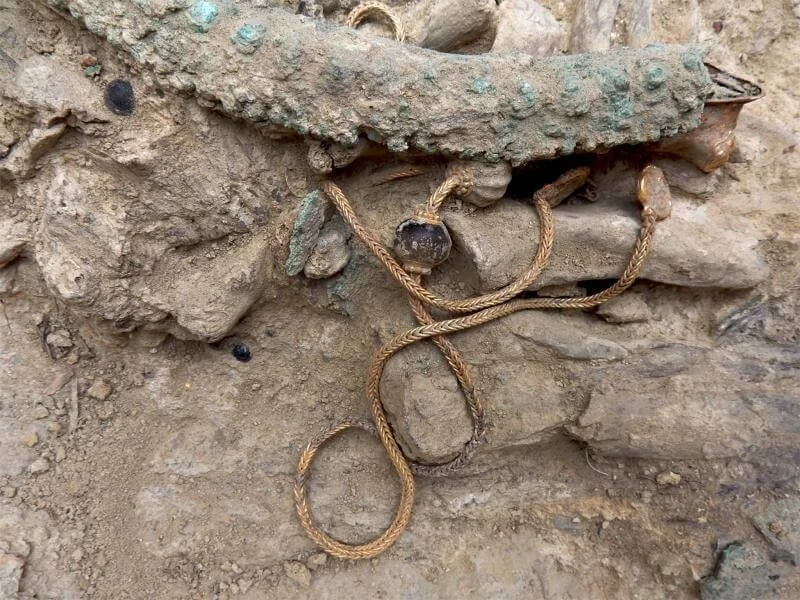
The moment of the discovery of the warrior’s tomb with the precious grave goods beside him.

Archaeological Museum of Chora in Pylos: A New Era for the Treasures of Nestor and the Griffin Warrior

October 3, 2025

The priceless finds from the so-called “Griffin Warrior” tomb will soon have a permanent home at the Archaeological Museum of Chora in Pylos. These extraordinary artifacts were unearthed in May 2015 during excavations on the hill of Ano Englianos, the site of the Palace of Nestor. Before their display, however, the museum must first undergo upgrades, modernization, and expansion to meet new standards. Toward this goal, the Greek Ministry of Culture’s Museum Council has just approved the preliminary museological plan for the redesigned exhibition.

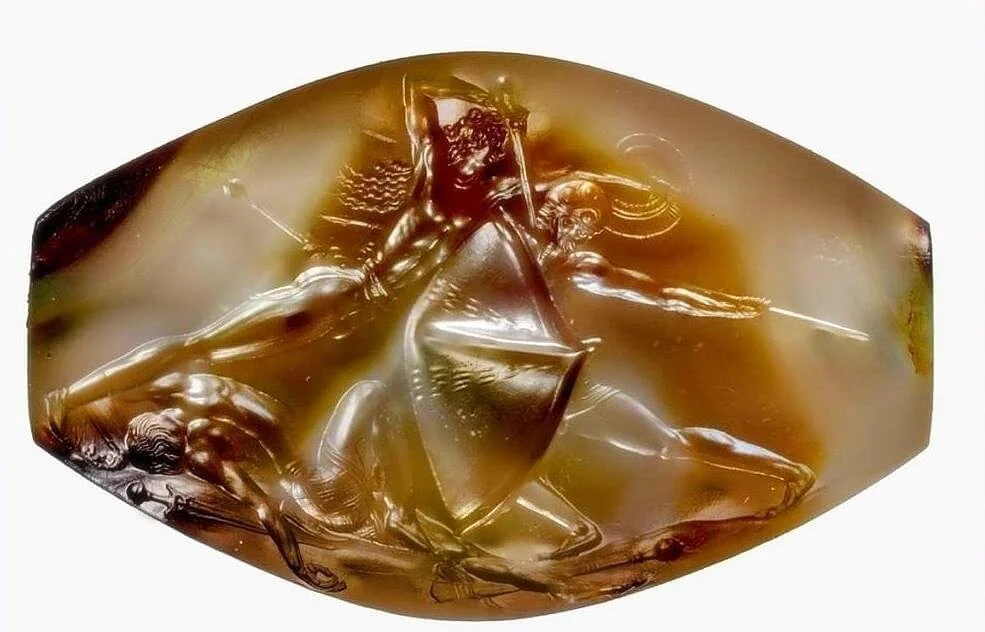
The museum ranks among the most significant prehistoric museums in Greece. Its original displays featured finds from excavations carried out by distinguished archaeologists such as Spyridon Marinatos and Carl Blegen. Now, the addition of the unique treasures from the undisturbed Mycenaean warrior’s grave—believed to be a local leader around 1450 BC—will elevate its importance even further. The tomb was named after a rare ivory plaque depicting a griffin, discovered among roughly 1,400 objects: weapons, gold cups, hundreds of beads made of gold, carnelian, amethyst, and amber, a gold chain with pendant, dozens of seal stones, gold rings, and more. The grave was uncovered by University of Cincinnati archaeologists Professor Jack Davis and Dr. Sharon Stocker, who have been excavating in the area.

The seal stone found in the “Griffin Warrior” tomb depicting a warrior defeating his opponent.

Expansion and Donation
Located about 4.5 kilometers from the archaeological site of the Palace of Nestor—the best-preserved Mycenaean palace in mainland Greece—the Archaeological Museum of Chora was designed in 1955 by architect Patroklos Karantinos and opened its doors in 1967. Its exhibitions have long been considered among the most representative for tracing the development of Mycenaean civilization and understanding palace art and burial practices in Messenia.

Covering a total area of 792.11 square meters, the museum has seen various interventions over the decades. It closed in 2022 to allow for major building upgrades and a complete redesign of its archaeological displays. In addition to improvements to its three existing galleries, the project will also benefit from a significant donation: Mrs. Konstantina Kolokytha-Stamatelopoulou, a London resident with family roots in Messenia, has pledged €325,000. This gift funds both the design and construction of a new gallery to replace a nearby auxiliary building, thereby expanding the museum’s exhibition space.

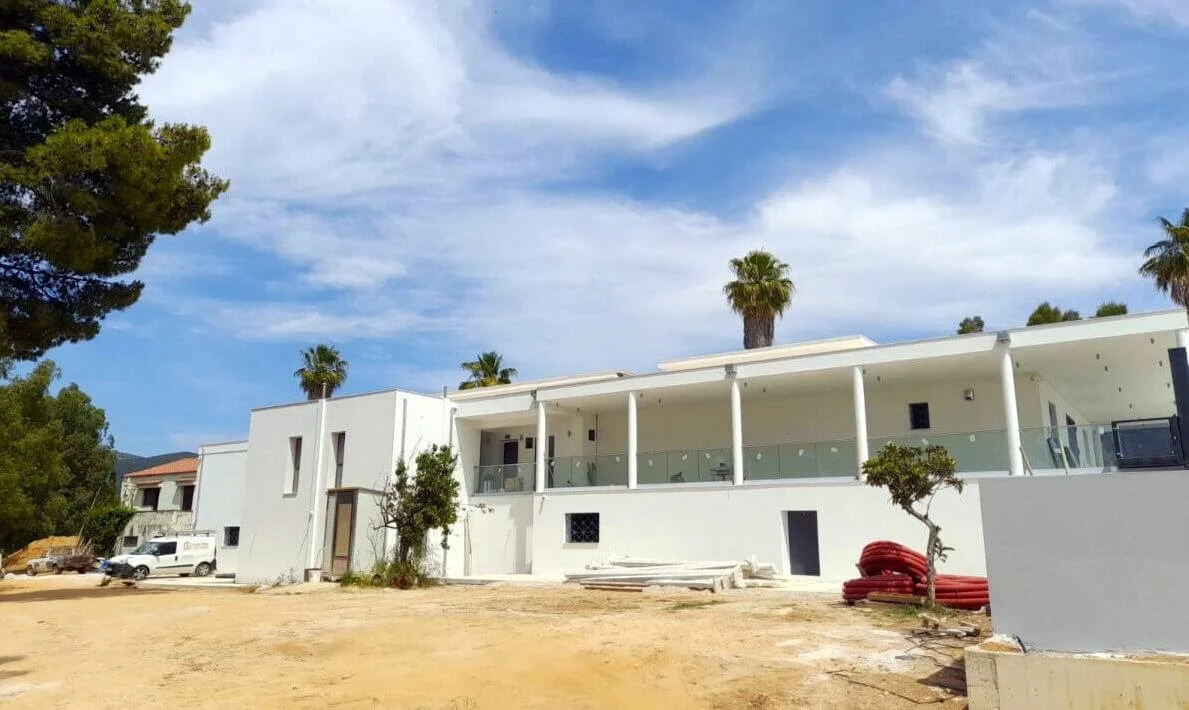
The archaeological museum under construction

According to the museological plan, the new design will highlight the building’s original architectural principles: sequentially arranged exhibition halls, natural light filtering from the roof, and minimalist interior forms. The permanent collection will be displayed on the raised ground level, spanning four consecutive galleries (the three existing ones plus the new addition).

Visitors will enter through a gradual approach leading to the main entrance. The reception area will feature the ticket office and museum shop on either side of the entryway. Out of the roughly 2,660 objects presented in the museum’s original displays, about 1,000 items—either individually or grouped—will now be exhibited. These will include not only key pieces from earlier excavations but also newly unearthed finds from the past decade, which will be showcased on a permanent basis for the first time.


Read also: Unearthing Connections: The Griffin Warrior and the Horned Hilt of a Minoan-Type Sword


All photos courtesy: Adjaye Associates

A Mosque, Church & Synagogue Together: A New Symbol of Religious Coexistence in the UAE

September 30, 2025

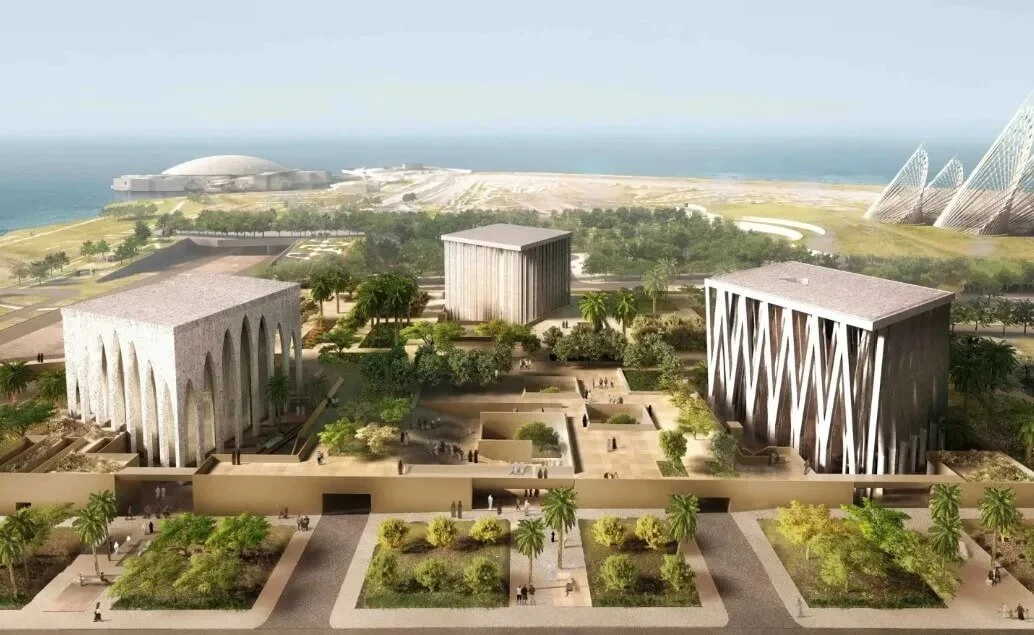
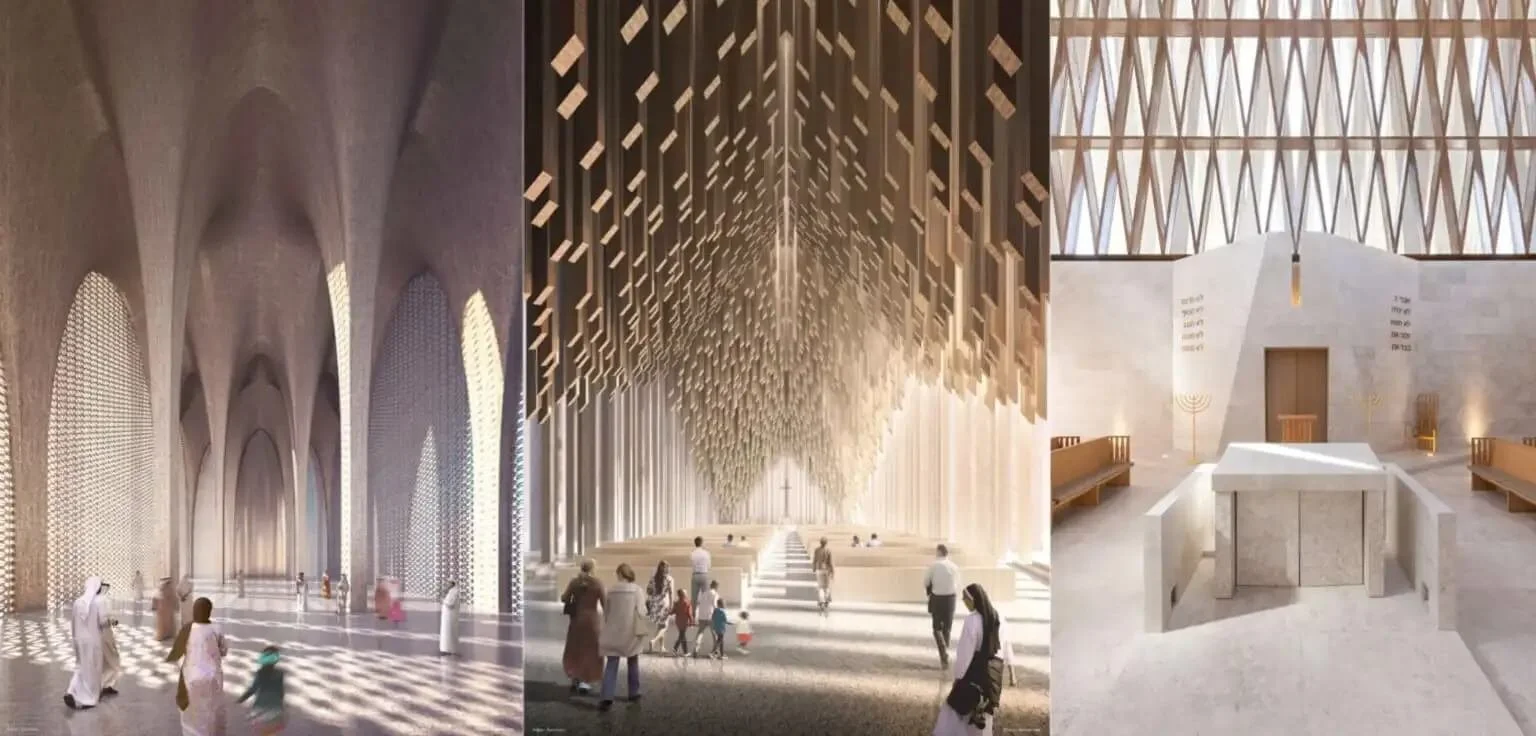
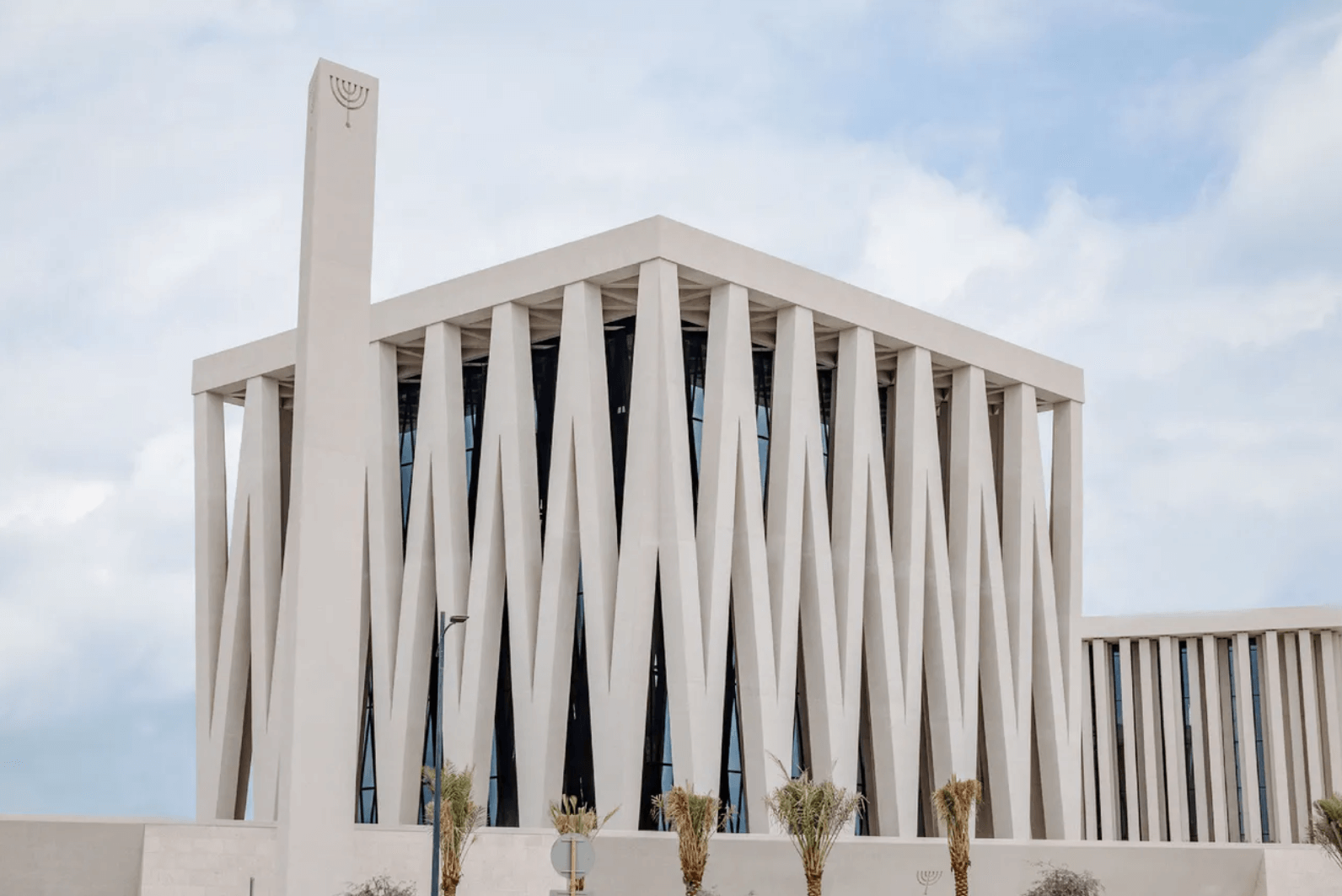
In Abu Dhabi’s Saadiyat Island, a bold architectural and social experiment is taking shape: the Abrahamic Family House, a single complex that houses a mosque, a church, and a synagogue, built side by side to foster interfaith dialogue and unity. The project draws directly on the Document on Human Fraternity signed by Pope Francis and the Grand Imam of Al-Azhar in 2019, aiming to transform the ideal of religious tolerance into tangible space.

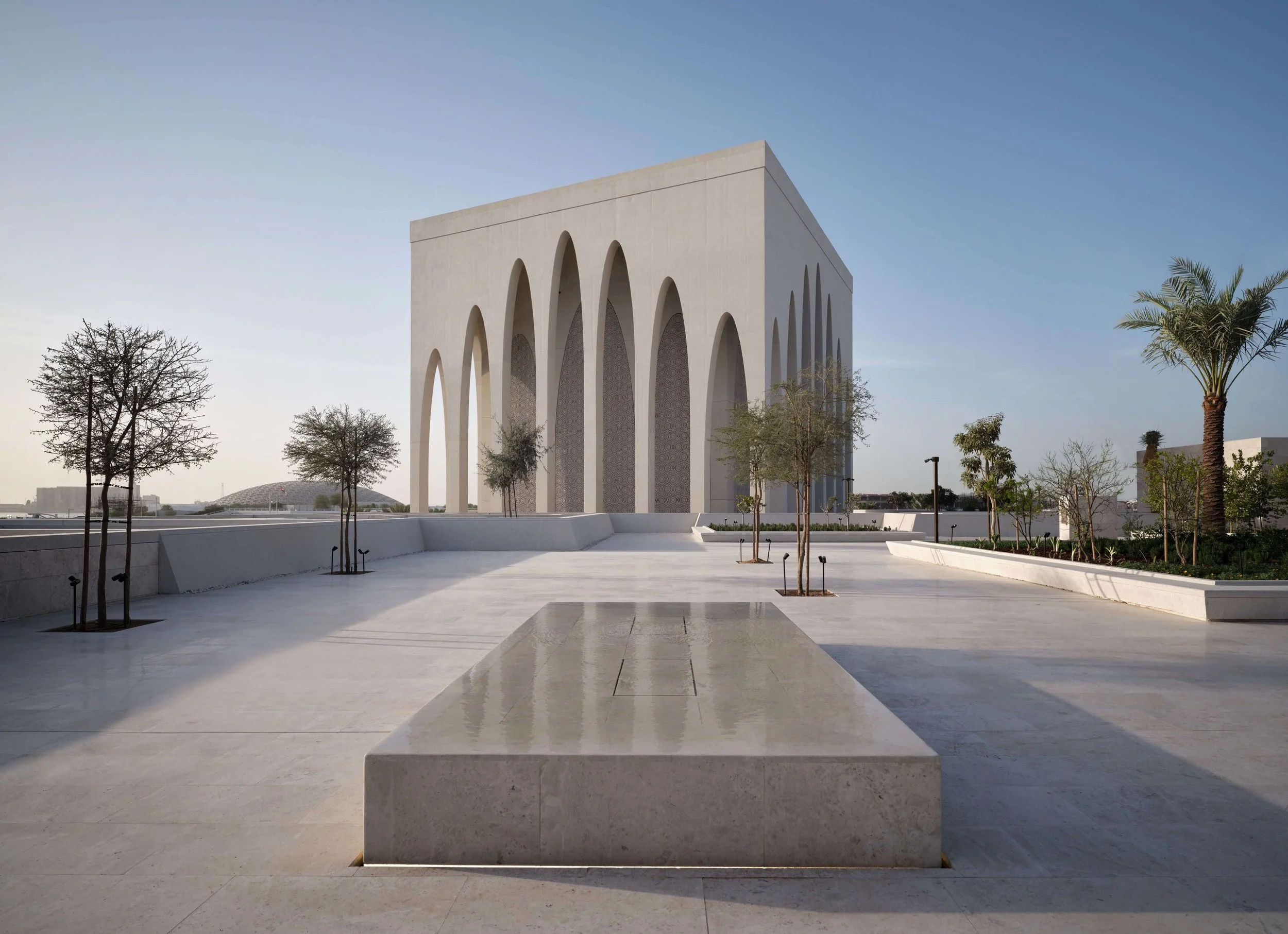
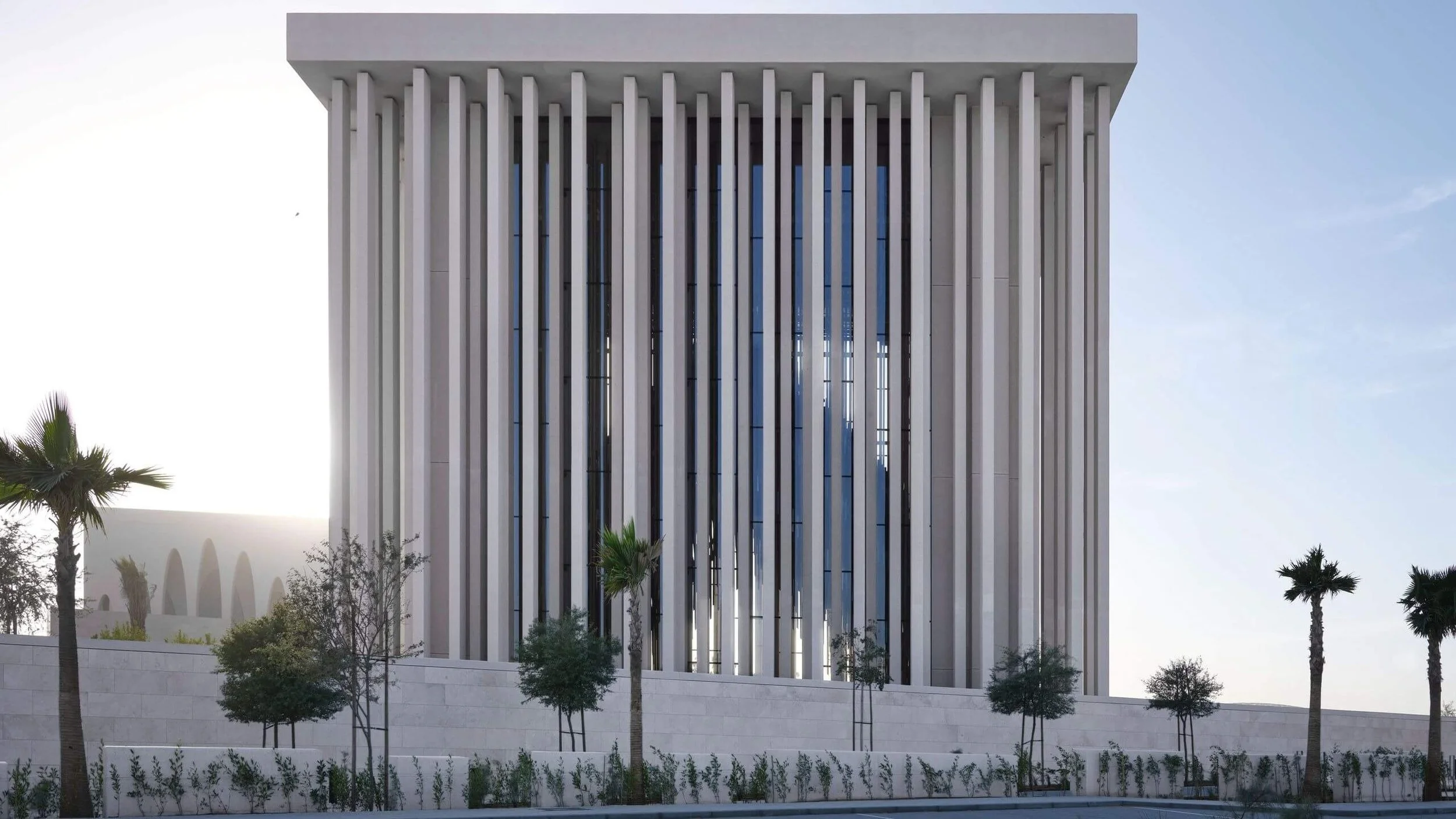
Designed by renowned architect David Adjaye, each worship structure is housed in its own concrete cube of identical dimensions, yet each cube features design elements unique to its faith tradition. The mosque, named Imam Al-Tayeb Mosque, features geometric latticework and architectural references aligned with Islamic tradition. The Moses Ben Maimon Synagogue, the first publicly built synagogue in the UAE, incorporates symbolic structural elements inspired by traditional Jewish motifs. Meanwhile, St. Francis Church, open to all Christian denominations, completes the triad.

All photos courtesy: Adjaye Associates

When it officially opened in February 2023, the Abrahamic Family House was hailed as a milestone in promoting religious pluralism in a region often marked by religious tension. It has already been used as a place for prayers, cultural events, and interfaith gatherings, reflecting the UAE’s desire to project an image of modern tolerance on its global stage.

Still, the project is not without challenges. Critics caution that while architecture can shape symbols, genuine interreligious harmony requires deeper social reforms and protections—especially given the UAE’s legal constraints on conversion from Islam or proselytization. Despite these tensions, the Abrahamic Family House stands as a physical assertion that coexistence and mutual respect among faiths can be manifested through space and shared commitment.

View fullsize imageye___-_imgi_65_w_120 (1).jpg
View fullsize imageye___-_imgi_3_AD0623_GRAND_FINALE_ADJAYE_3 copy.jpg
View fullsize Στιγμιότυπο οθόνης 2025-09-30 004833 (1).png

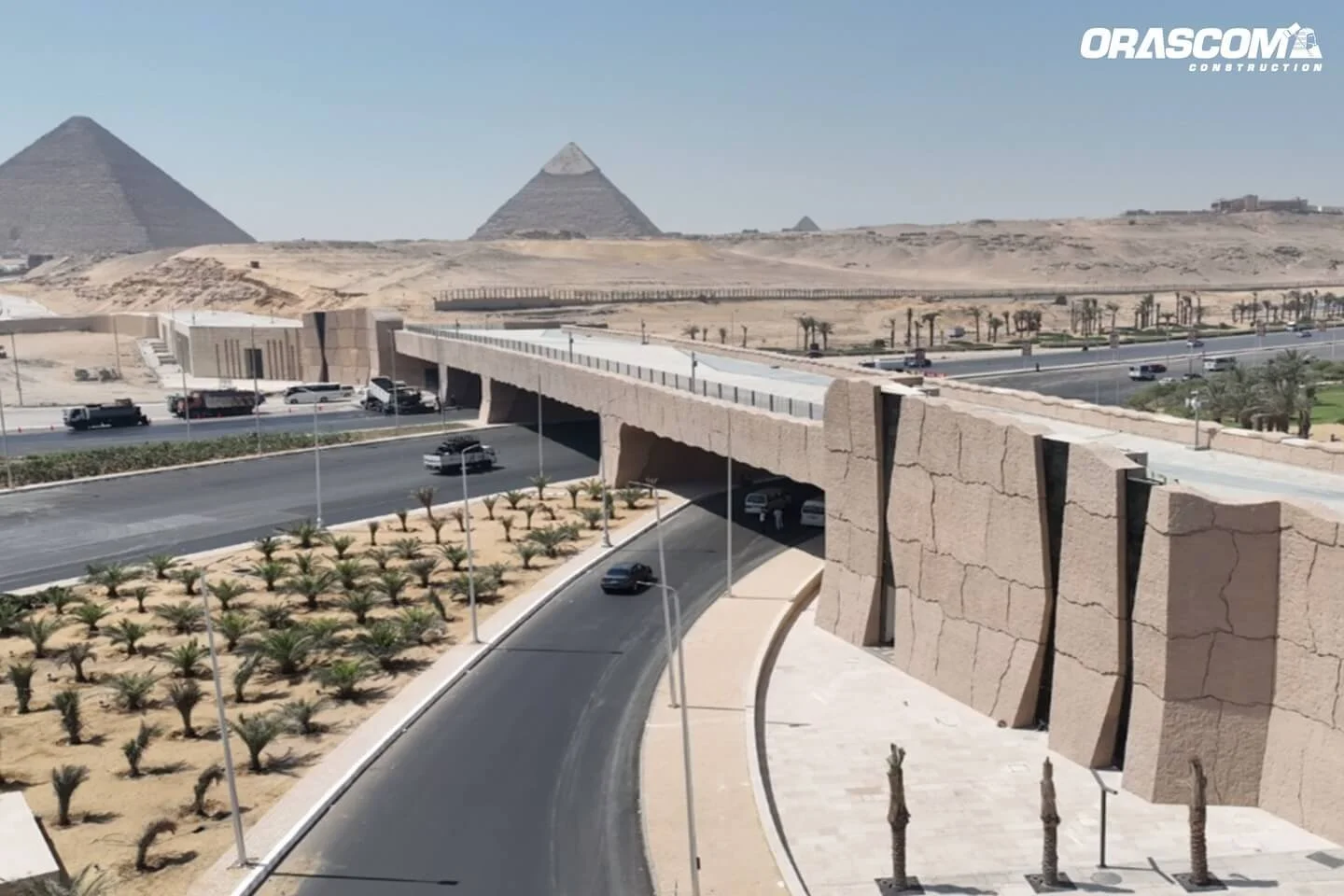
Orascom Construction PLC 

A New Gateway to Ancient Wonders: The GEM Walkway to the Pyramids Officially Completed

September 29, 2025

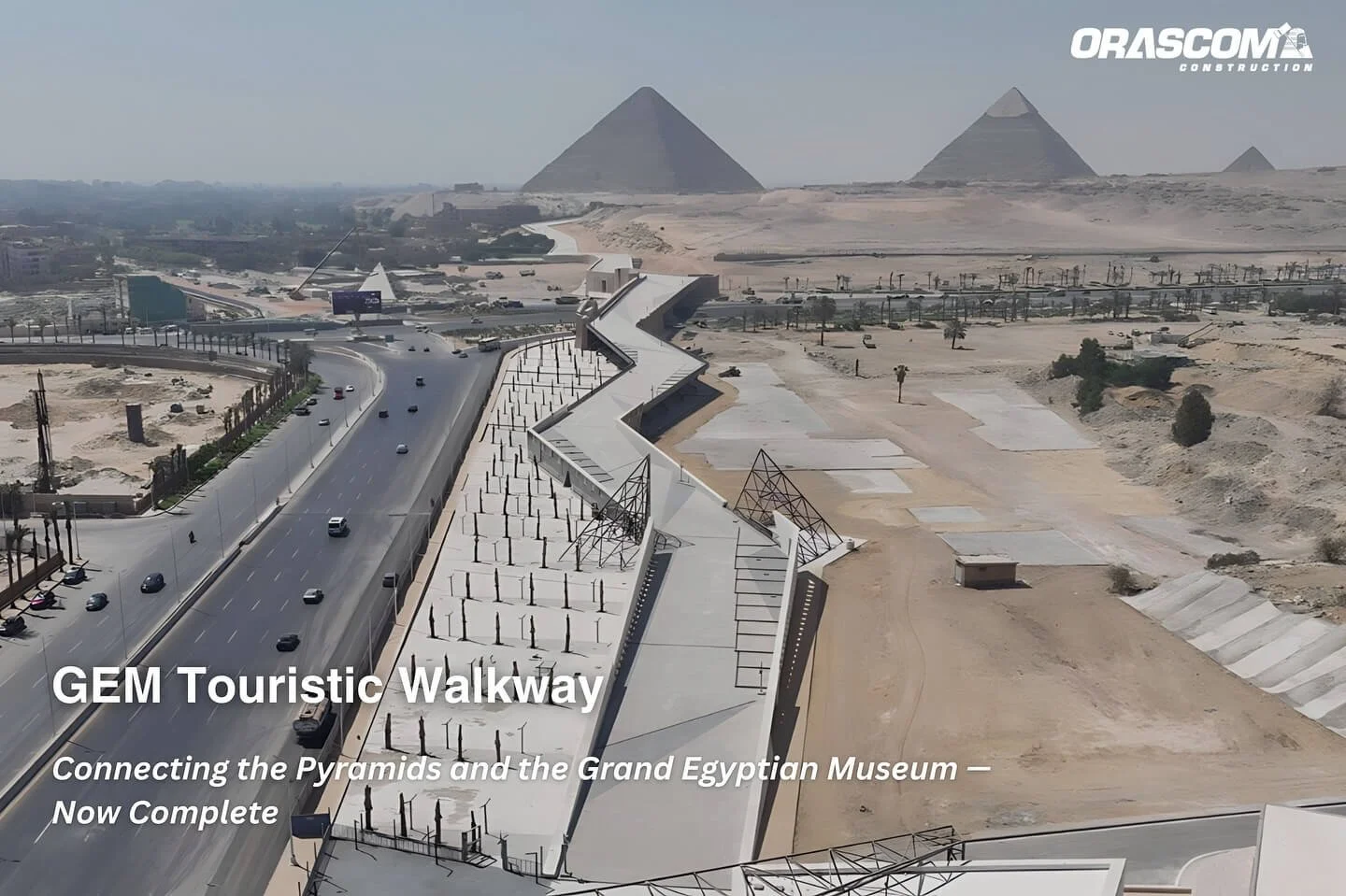
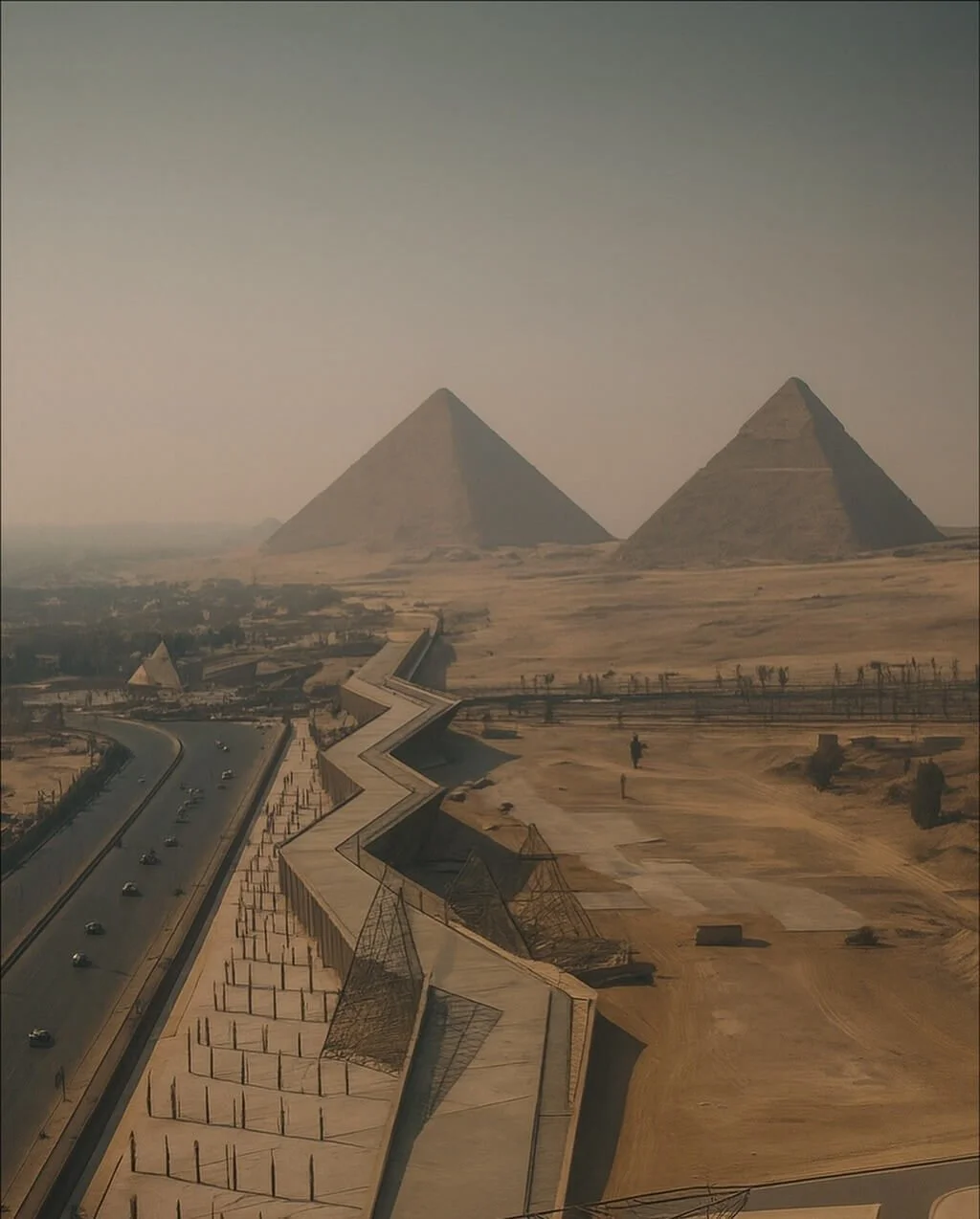
Egypt has unveiled a transformative project that is set to reshape how millions of visitors will experience one of the world’s most iconic heritage sites. The newly completed tourist walkway connecting the Grand Egyptian Museum (GEM) to the Giza Pyramids has been officially opened, marking a significant milestone in Egypt’s ongoing efforts to modernize its tourism infrastructure and preserve its ancient treasures.

A Seamless Connection Between Past and Present

Stretching between 1.27 and 1.45 kilometers, the GEM walkway has been designed as both a functional route and a symbolic link between Egypt’s two cultural giants: the newly built Grand Egyptian Museum, set to house over 100,000 artifacts including the full Tutankhamun collection, and the timeless pyramids of Giza, the last surviving wonder of the ancient world.

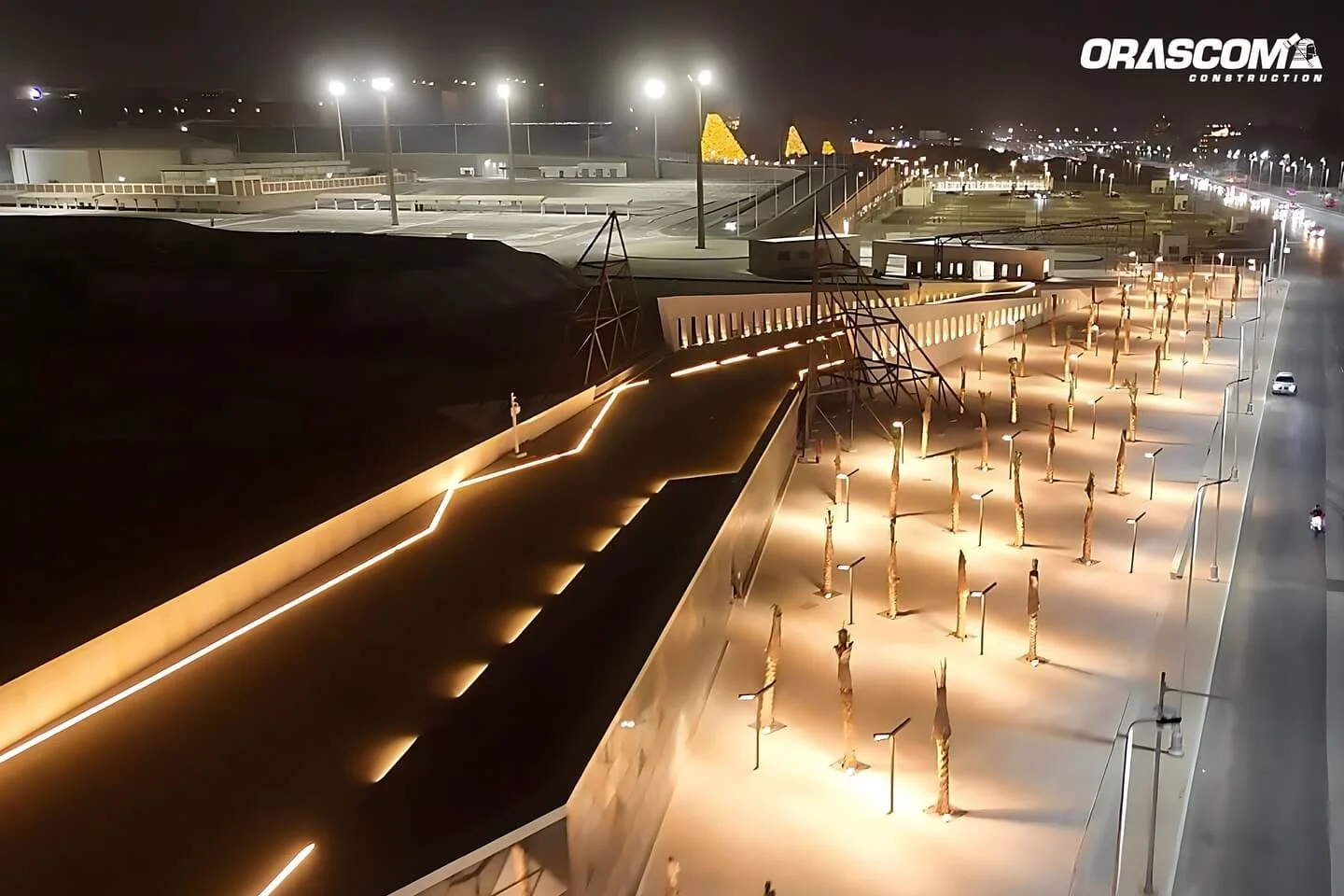
The project includes wide pedestrian pathways, landscaped areas, and an eco-friendly electric shuttle system, offering visitors a comfortable and accessible way to travel between the museum and the archaeological plateau. Illuminated at night with subtle, golden lighting, the walkway not only serves a practical role but also enhances the visual harmony of the entire site, blending modern design with the aura of antiquity.

Revitalizing Egypt’s Tourism Vision

According to Egypt’s Ministry of Tourism and Antiquities, the walkway is part of a broader redevelopment strategy to turn the Giza Plateau into a world-class cultural destination. Alongside the GEM’s long-awaited opening, the walkway is expected to reduce traffic congestion, better manage visitor flow, and improve the overall tourist experience, ensuring that the overwhelming scale and beauty of the pyramids can be enjoyed without the chaos that has sometimes plagued the site in the past.

International media have highlighted the project as a sweeping transformation of the Giza experience. Authorities hope this modernized infrastructure will help Egypt achieve record-breaking tourism numbers in the coming years, positioning Cairo as a global hub for cultural travel.

Tensions Behind the Transformation

Yet, as with any major development, the new walkway has not been without controversy. Local small business owners, horse and camel operators, and vendors who have traditionally earned their livelihoods near the pyramids worry that the streamlined system will reduce their access to tourists. Many fear that the government’s push for modernization may sideline these communities, replacing informal tourism economies with regulated, corporate-driven structures.

Critics argue that while the project elevates Egypt’s international image, it risks alienating those whose families have worked at the plateau for generations. Officials, however, stress that the changes are necessary to protect Egypt’s heritage from over-commercialization and mismanagement, while also ensuring safety and comfort for visitors.

A Bridge Between Eras

Ultimately, the GEM walkway represents more than just a new route — it is a metaphorical bridge connecting the grandeur of the ancient world with the aspirations of modern Egypt. For visitors, it offers an unprecedented way to encounter history, walking directly from the halls of the world’s largest archaeological museum into the shadow of the Great Pyramid. For Egypt, it stands as a bold statement of cultural renewal, an attempt to balance economic growth, heritage preservation, and the expectations of a global audience.

Whether hailed as progress or criticized as disruption, the walkway underscores the enduring power of the pyramids to inspire change. More than 4,500 years after they were built, these monuments continue to shape not only our view of the past but also the choices of the present — proving once again that the pyramids are not just relics of history but living symbols of identity, resilience, and ambition.

Tags News

Vestments Through the Ages: Tradition, Craft, and Cultural Continuity

September 15, 2025

In the study of material culture, few artefacts provide such a consistent thread through history as religious vestments. These garments have long served as more than ceremonial clothing—they are expressions of faith, continuity, and the social structures of their time. From early Christian tunics to elaborate medieval chasubles, the evolution of vestments reveals much about belief systems, craftsmanship, and cultural identity.

Liturgical Garments in Historical Context

Archaeological excavations and museum collections around the world have uncovered fragments of ancient textiles once used in sacred settings. From the Coptic vestments of Egypt to the richly embroidered garments of Byzantium, vestments offer a rare glimpse into the ceremonial and symbolic language of past societies. These artefacts are not only textiles; they are communicative devices—designed to signal hierarchy, season, and sacred function.

As these garments passed from generation to generation, often preserved within monasteries or cathedrals, they became part of a material dialogue between past and present. Their visual language—cross motifs, gold thread, Marian blues—remains strikingly consistent, even in contemporary ecclesiastical fashion.

Craftsmanship: A Living Tradition

The process of creating liturgical garments has always required specialised knowledge: not only in stitching or tailoring, but in iconography, theology, and symbology. While many ancient garments were handwoven using locally sourced fibres and dyes, today’s makers balance traditional methods with modern innovations.

For scholars and archaeologists, this continuity is especially interesting. It allows for a form of ethnographic observation in real-time—a way to witness how sacred craft evolves without breaking its link to the past. Contemporary vestment-makers still engage with age-old design choices, suggesting a deep-rooted conservatism in religious aesthetics that transcends fashion.

A Modern Lens on Ancient Practice

Today, producers of liturgical garments continue to uphold this lineage of sacred design. https://chasubles.com is one such example—drawing inspiration from historical styles while adapting to the needs of the modern Church. Their work reflects how centuries-old traditions can still inform current practice, blending precision embroidery with durable, ethically sourced fabrics.

While not artefacts in the archaeological sense, such contemporary creations mirror their historical counterparts in form, function, and spiritual significance. For archaeologists interested in ritual material culture, these modern vestments offer a unique opportunity to study “living heritage” in action.

Conclusion: Faith Woven in Time

The study of vestments offers more than aesthetic appreciation—it invites reflection on cultural continuity, ritual practice, and the enduring relationship between material and belief. Whether uncovered from a tomb or worn at Mass this Sunday, these garments serve as enduring links between generations of makers, worshippers, and communities. And in doing so, they remind us that tradition is not a relic—it’s a practice, still very much alive.

Albania’s First Monumental Roman Tomb: A 3rd–4th-Century Chamber with a Rare Bilingual Inscription

September 9, 2025

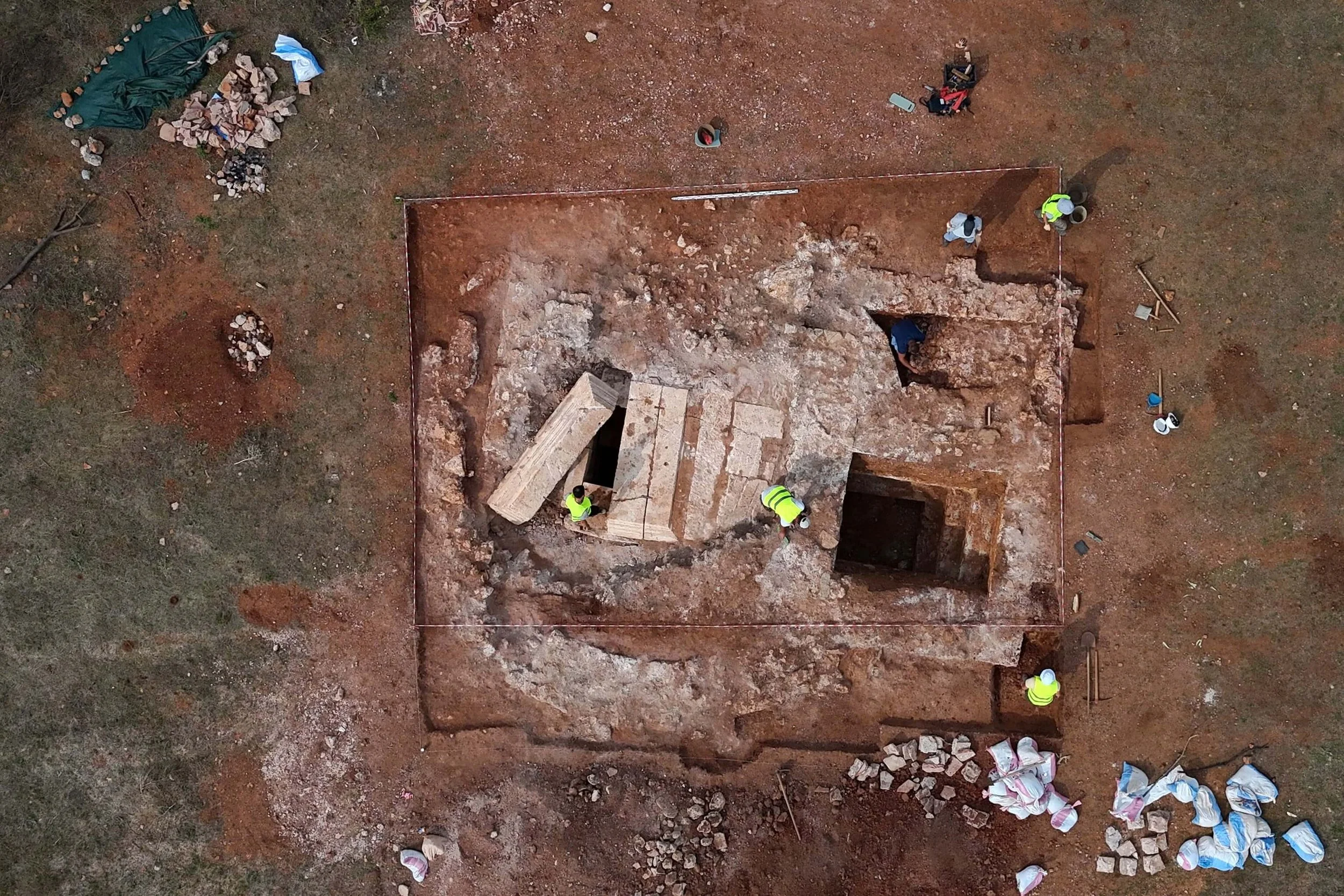
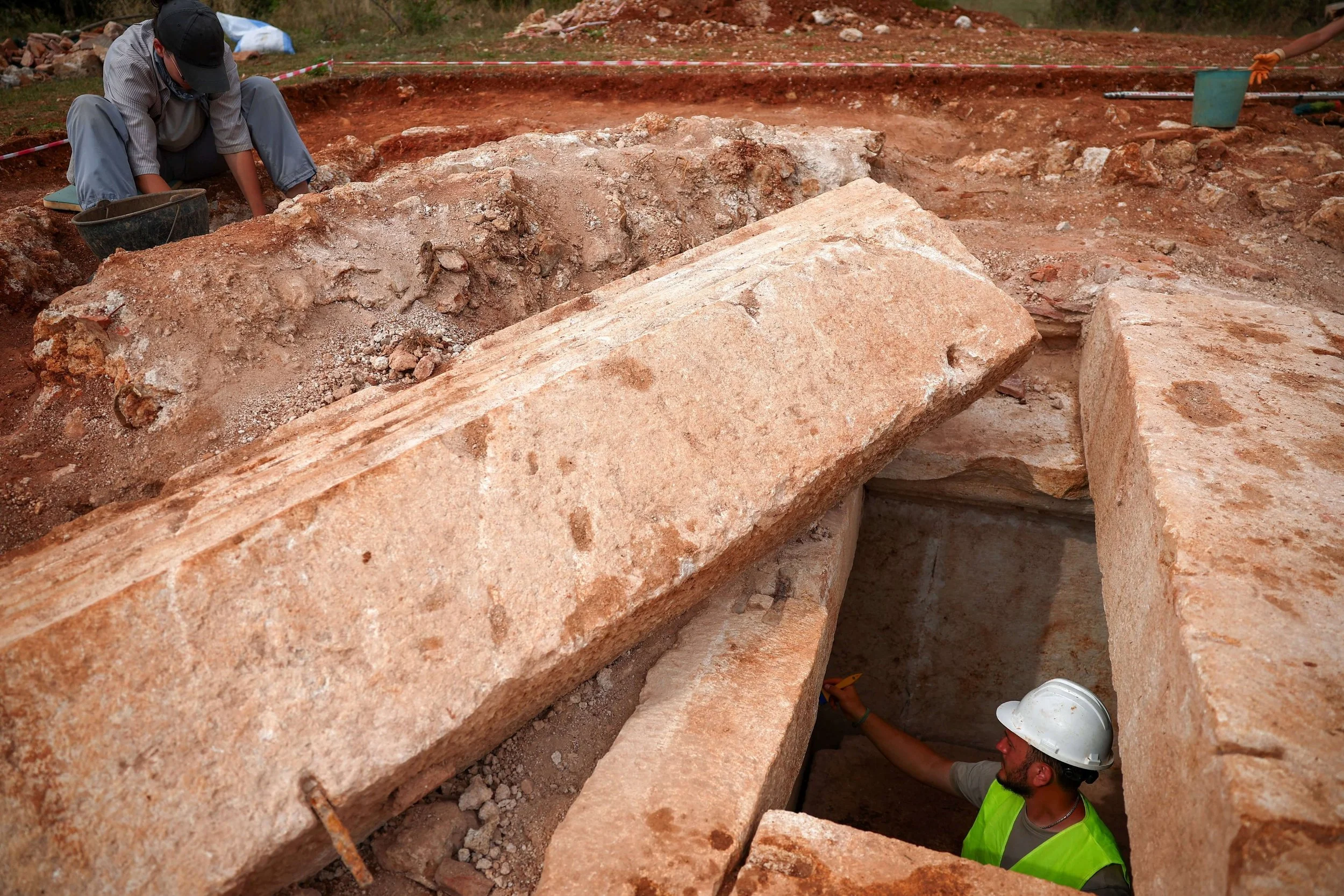
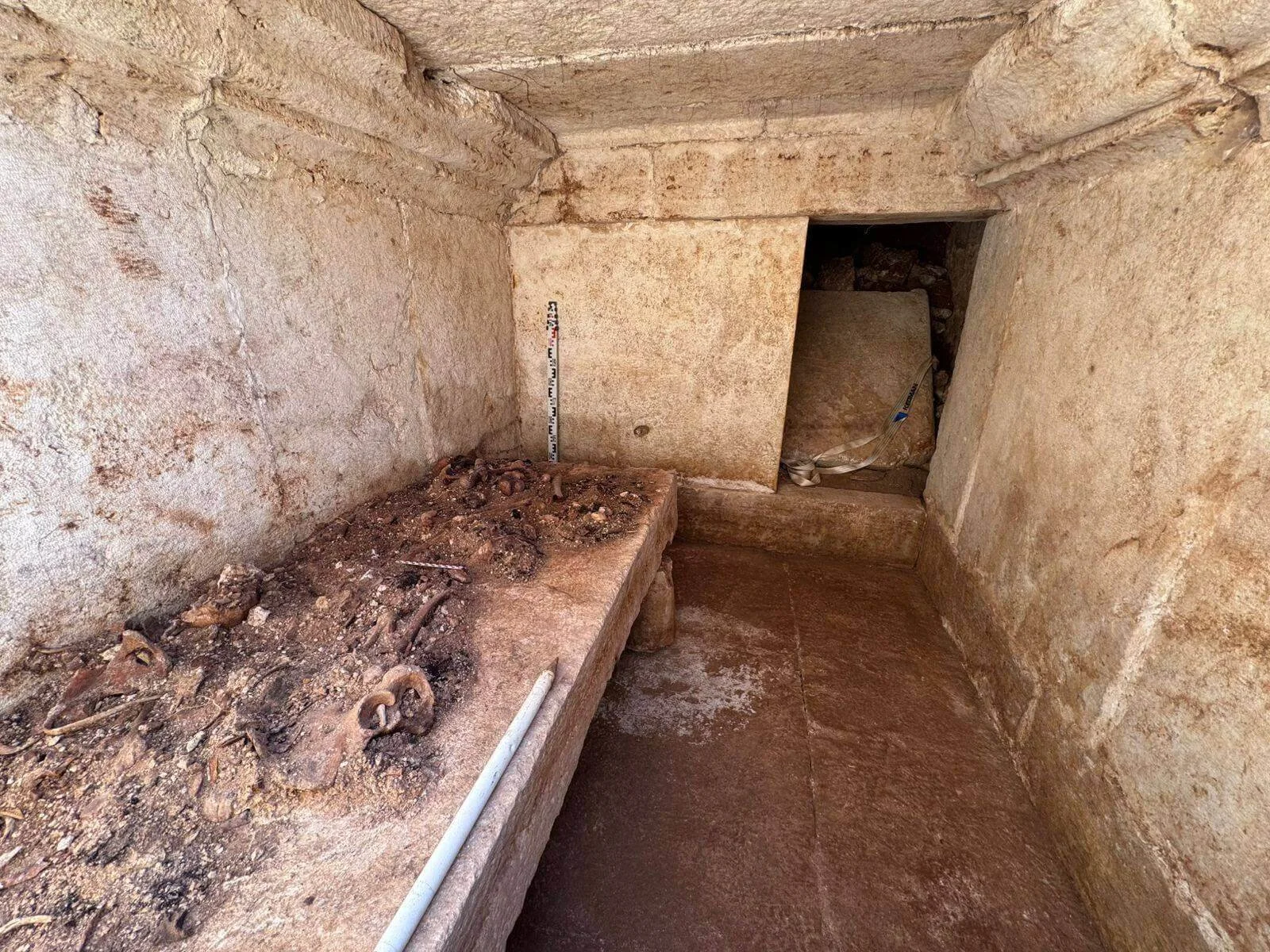
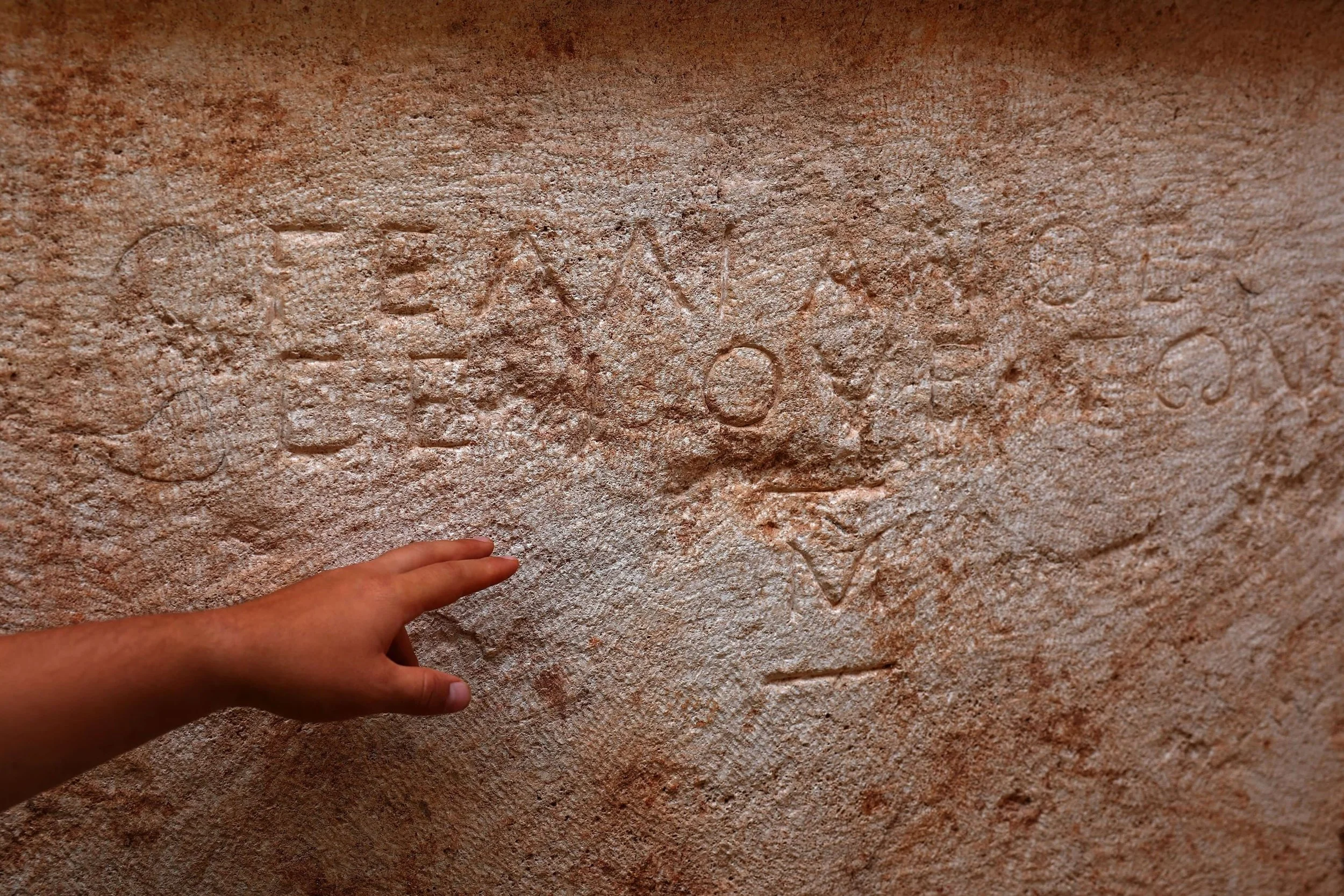
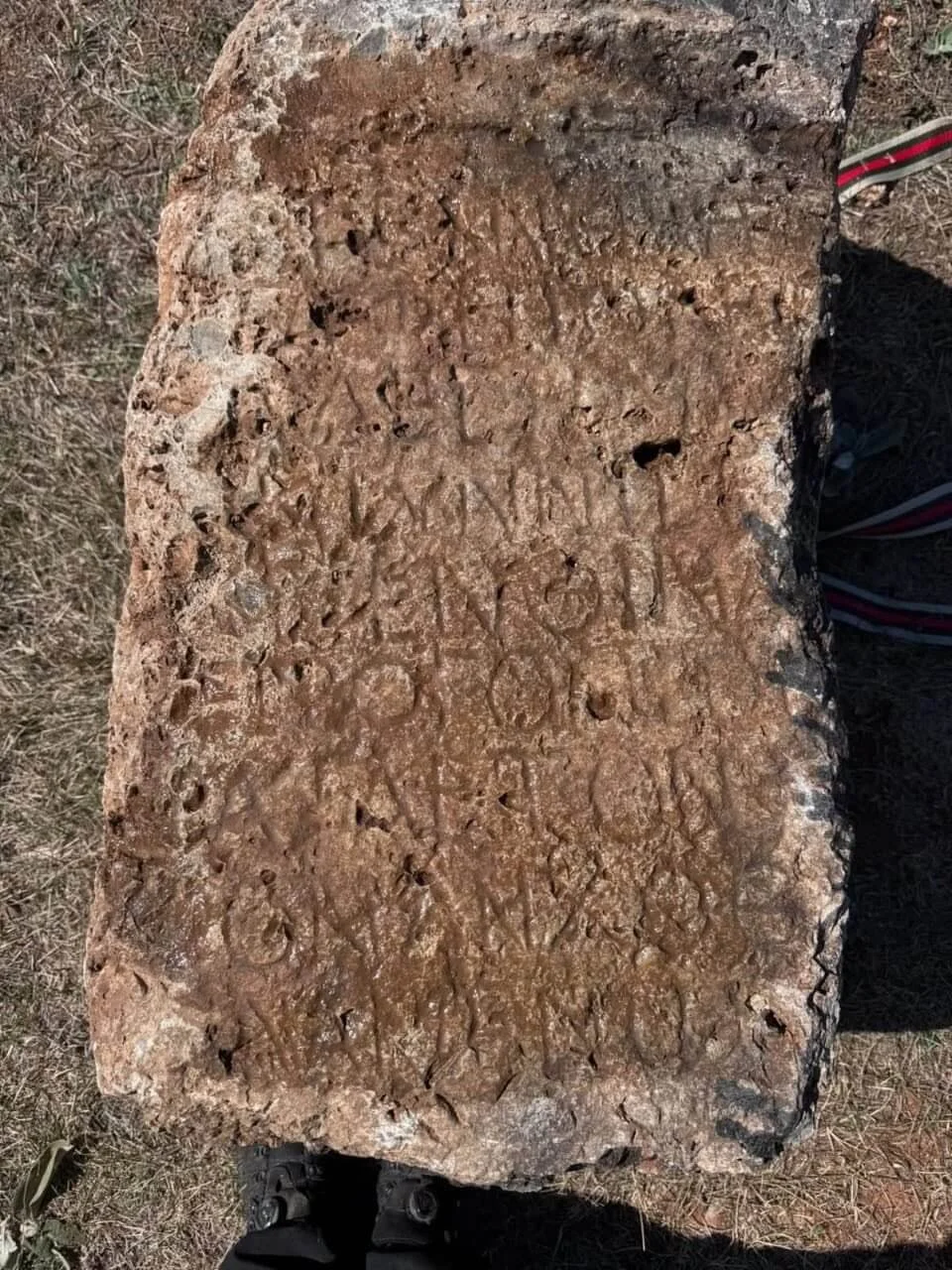
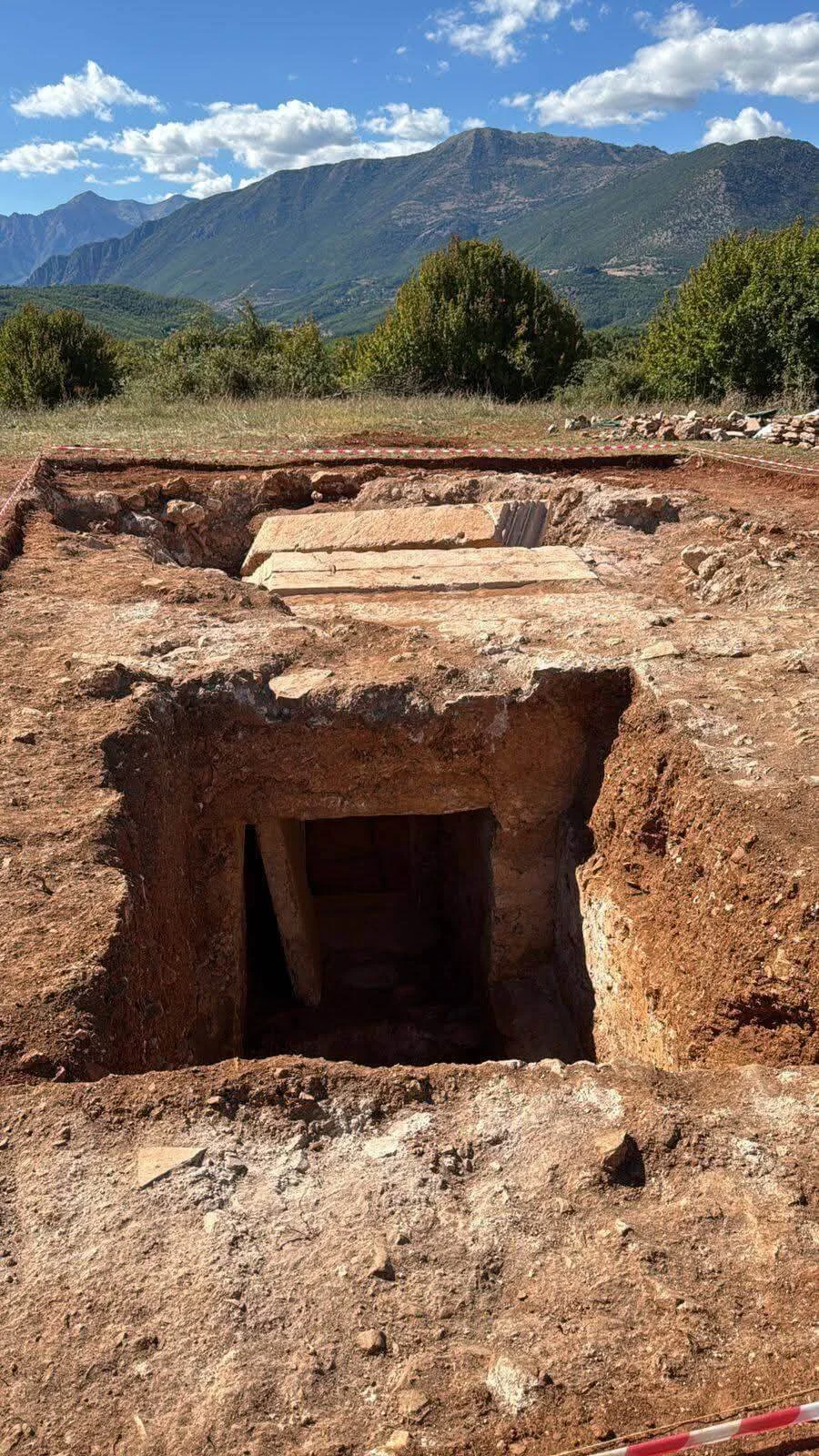
Archaeologists in northern Albania have uncovered a large Roman chamber tomb dating to the 3rd–4th century AD—the first monument of its kind ever documented in the country. The structure, discovered at Strikçan near Bulqiza in the historic Dibra region, measures roughly 9 by 6 meters with a burial chamber about 2.4 meters high. Its slabs bear inscriptions in Greek letters, including a rare bilingual dedication naming the deceased Gellianos and invoking Jupiter.

How the Discovery Happened

The find began with villagers who noticed unusually cut stones on a plateau. Acting on these reports, a team from Albania’s Institute of Archaeology opened test trenches in early August and soon identified a substantial underground construction sealed with massive limestone blocks. The excavation is directed in the field by Erikson Nikolli, who has provided the principal on-site statements to the press.

Architecture and Construction

The tomb is built from large, carefully dressed limestone slabs forming a stepped descent into a rectangular antechamber and inner chamber. At approximately 9 × 6 meters (29 × 19 ft) with a chamber height of ~2.4 m (8 ft), the monument is unusually spacious for the region and is being discussed by the team as a chamber tomb approaching the scale of a small mausoleum. Its plan and size distinguish it sharply from the simpler cist and pit graves more typical of northern Albania.

The Bilingual Inscription

Among the most significant features is an inscription cut in Greek letters that records the name Gellianos (Gellianus) and includes a dedication to Jupiter (Ζεύς/Ιουπίτερ). Officials have characterized it as a bilingual text (Greek and Latin), a rare phenomenon in Albania and the first ever recorded in the Dibra region. The surviving lines indicate both a personal memorial formula and a votive dedication, underscoring how Roman religious vocabulary could be framed in Greek epigraphic practice on the empire’s eastern Adriatic fringe. Full epigraphic publication is pending; additional inscribed stones recovered nearby may relate to a second monument.

Who Was Buried Here?

While osteological analysis and laboratory work remain to be reported, the scale, masonry quality, and decorated components point to a high-status burial—very likely a wealthy local notable with Roman citizenship or strong ties to the provincial elite. Nikolli has indicated that the chamber likely held two individuals, conceivably family members, with the named principal being Gellianos. The blend of Greek epigraphy, Latin theonym, and Roman funerary form reflects the cultural hybridity expected in a borderland community integrated into imperial networks.

Finds Inside the Tomb

Despite evidence that the tomb suffered at least two episodes of looting—one in antiquity and a later disturbance involving machinery—the team recovered noteworthy materials that survived the intrusions. These include fragments of textiles embroidered with gold thread, glass plates, and metal knives. Gold-thread fabric in particular is a strong status marker across the late Roman world, often associated with garments worn by elites at death. The fact that fragile objects like thin glass and textiles were preserved at all speaks to the tomb’s robust construction and stable microenvironment.

Why the Inscription Matters

The bilingual dedication is crucial for understanding language practice and identity in Roman Albania. Greek remained a dominant public epigraphic medium across the eastern Adriatic, but the invocation of Jupiter (rather than, say, Zeus alone) sits squarely within the Roman civic-religious idiom, suggesting self-presentation that was at once local and imperial. Officials emphasize that Dibra has yielded very few Roman-period inscriptions of any kind, and none with this bilingual profile, making the Strikçan text a reference point for future studies of provincial religion and onomastics in the region.

Comparanda and Rarity

Reports consistently describe the Strikçan monument as the first monumental Roman tomb documented in Albania. Other celebrated burials in the country—like the Illyrian royal tombs at Selcë e Poshtme—are earlier (Hellenistic) and architecturally different. For the Roman period proper, chamber tombs of this scale have not previously been recorded in Albanian archaeology, which explains the strong reaction from national authorities and the immediate plans for protection and presentation.

Public Presentation and Next Steps

The discovery quickly drew public attention. Albania’s culture ministry and the prime minister’s office circulated photographs and video from the site, while state broadcasters and international outlets amplified the news. Authorities intend to stabilize and conserve the structure and develop the location for controlled visitation, citing both heritage stewardship and cultural tourism. Meanwhile, the field team continues inscriptional analysis and artifact conservation, steps that will culminate in a technical report and, eventually, a peer-reviewed publication.

Interpreting Strikçan in Its Historical Landscape

Strikçan sits on a plateau that commands routes linking the Drin valley to passes toward North Macedonia. In late antiquity, such corridors knit together hinterland communities with coastal nodes on the Adriatic and Ionian seas, facilitating the flow of goods, people, and ideas. The tomb’s Roman funerary architecture combined with a Greek-lettered, Jupiter-focused text embodies this connective provinciality: the deceased (Gellianos) memorialized in a language legible across the eastern Mediterranean, yet inscribed with the central god of Rome’s public cult. This is precisely the kind of hybrid epigraphic habit scholars expect in regions where Latin power overlapped with long-standing Hellenic literacy.

What We Still Don’t Know

Key questions remain open pending analysis:

  • Text reconstruction. Only short excerpts have been released; a squeeze or high-resolution RTI record will be needed to establish the full lineation, letter heights, and restorations. (Officials have noted additional stones with writing from a nearby, possibly related monument.)

  • Burial practice. Whether the bodies were placed in sarcophagi, on biers, or in loculi is not yet reported. The chamber’s size and internal articulation may clarify this once excavation drawings are published.

  • Precise dating. The 3rd–4th-century window is based on architecture and finds; radiocarbon, textile analysis, and glass typology could narrow it.

Significance

For Albania, the Strikçan chamber is both a landmark discovery and a missing puzzle piece. It demonstrates that monumental Roman funerary architecture did reach the country’s northeastern uplands, and it provides a datable, inscribed context linking local elites to imperial religious vocabulary. For the wider Balkans, it offers a new datapoint for the diffusion of Roman mortuary forms into Greek-literate zones. And for epigraphy, it adds a rare bilingual text from a region where such inscriptions are sparse, enabling finer-grained discussion of language choice, identity, and ritual in provincial communities.

Tags News
← Newer Posts Older Posts →
Featured
image_2026-03-12_232439795.png
Mar 13, 2026
The Mysterious Architects of Ancient Palaces
Mar 13, 2026
Read More →
Mar 13, 2026
image_2026-03-12_232356896.png
Mar 13, 2026
Divine Kingship: When Rulers Were Seen as Gods
Mar 13, 2026
Read More →
Mar 13, 2026
image_2026-03-12_232211099.png
Mar 13, 2026
The Forgotten Sea Peoples: Raiders of the Ancient World
Mar 13, 2026
Read More →
Mar 13, 2026
image_2026-03-12_232026356.png
Mar 13, 2026
The Origins of Sacred Geometry
Mar 13, 2026
Read More →
Mar 13, 2026
image_2026-03-12_231941982.png
Mar 13, 2026
Buried Temples Beneath Modern Cities
Mar 13, 2026
Read More →
Mar 13, 2026
image_2026-03-12_231845648.png
Mar 13, 2026
The Secret Languages of the Ancient Priesthoods
Mar 13, 2026
Read More →
Mar 13, 2026
read more

Powered by The archaeologist