The Role of the Knights Templar in the Crusades

Title: "The Role of the Knights Templar in the Crusades"
Prompt: Explore the history of the Templars, their rise to power, and the myths surrounding their downfall.

The Knights Templar remain one of the most intriguing groups from medieval history. Known for their bravery, discipline, and mysterious reputation, the Templars played a major role during the Crusades and left behind a legacy filled with both historical achievements and legendary stories. This article explores how they emerged, rose to influence, and eventually faced a dramatic collapse that still sparks curiosity today.

Origins and Purpose

The Knights Templar began in the early 12th century with a simple mission: to protect Christian pilgrims traveling to the Holy Land. As violence along pilgrimage routes increased, a small group of knights formed a brotherhood dedicated to defending travelers and safeguarding important religious sites. Their commitment earned them recognition from the Church, giving the order legitimacy and support.

Growth and Rise to Power

As the Crusades progressed, the Templars expanded rapidly. They became known for their strict discipline, exceptional combat skills, and unshakable religious devotion. These qualities made them a valuable force in many key battles.

Beyond the battlefield, the order built a strong financial network. They managed estates, offered safe storage for valuables, and even developed early forms of banking. Their wealth and connections allowed them to establish influence across Europe, making the Templars not only warriors but also powerful economic figures.

Daily Life and Values

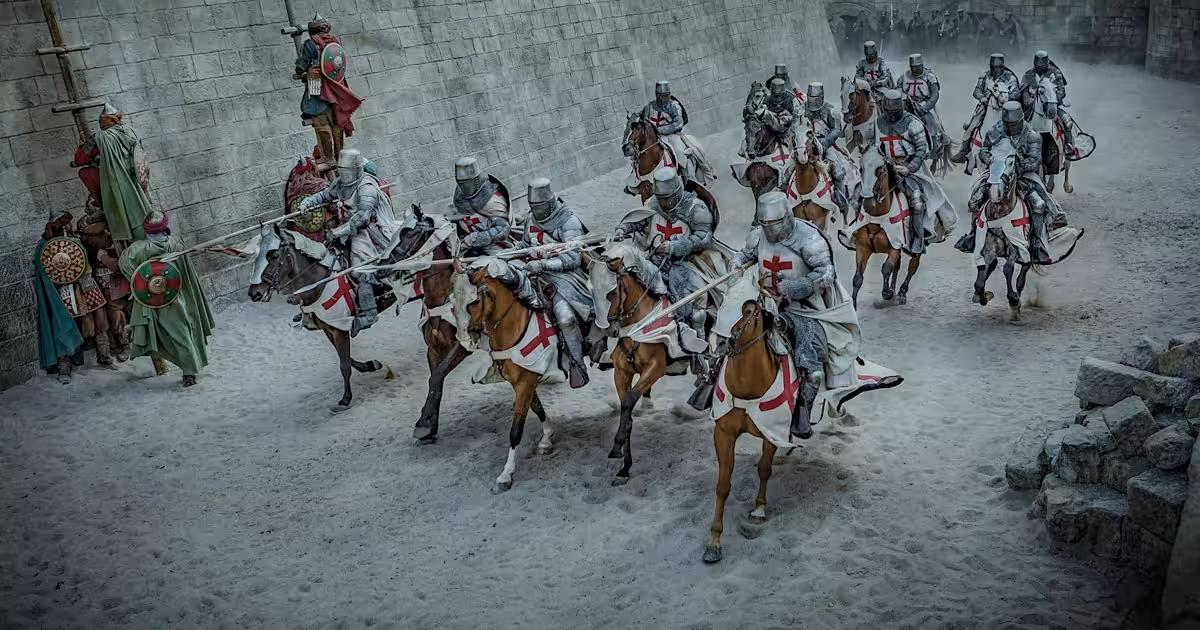
Life within the order demanded obedience, humility, and purity. Members lived under a strict code that emphasized simplicity and loyalty. Their uniform, marked with a red cross, symbolized sacrifice and faith. This disciplined lifestyle strengthened their reputation and set them apart from other military groups of the time.

The Fall of the Templars

Despite their success, the Templars faced a sudden and dramatic downfall in the early 1300s. Political tensions, jealousy, and financial motivations fueled accusations of heresy and corruption. Many historians believe these charges were exaggerated or fabricated by powerful leaders who saw the Templars’ wealth as an opportunity.

The order was eventually disbanded, and many members were arrested or executed. This abrupt end gave rise to countless stories and conspiracies about hidden treasures, secret rituals, and surviving members who continued the Templar legacy in the shadows.

Enduring Myths and Legacy

Even centuries later, the Knights Templar continue to capture the imagination of historians, writers, and the general public. Movies, books, and legends often portray them as guardians of sacred relics or holders of ancient secrets. While many of these stories are more fantasy than fact, they reveal how deeply the Templars have shaped popular culture.

Their real legacy lies in their military contributions, innovative financial practices, and the lasting fascination they inspire. The Templars remain a symbol of courage, mystery, and the complex history of the Crusades.

The Myth of Excalibur: King Arthur’s Legendary Sword

Origins of the Excalibur Legend

The story of Excalibur has fascinated readers for centuries, beginning with early medieval tales about King Arthur. Although versions differ, many early accounts describe the sword as a gift granted by mystical forces, emphasizing Arthur’s destined role as a great ruler. Some traditions say Excalibur was handed to Arthur by the Lady of the Lake, while others connect it to the famous “sword in the stone” test that only the rightful king could pass. These stories, shared through poems, folklore, and later literature, helped shape Arthur as a figure of honor and heroism.

Symbolism Behind the Legendary Sword

Excalibur is more than just a weapon it represents the qualities expected of a true leader. The sword symbolizes divine approval, justice, and the strength needed to protect a kingdom. Its shining blade often reflects clarity, courage, and moral integrity. Many storytellers use the sword as a symbol of rightful authority and the weight of responsibility that comes with power. For readers and audiences today, Excalibur continues to stand for honor, resilience, and the enduring hope for a noble leader.

Real-World Inspirations

While Excalibur is a mythical item, the idea behind it likely came from real historical influences. Early swords belonging to tribal leaders and warriors were often treated as sacred objects, believed to hold spiritual or supernatural significance. Archaeological discoveries show that ancient European cultures sometimes placed special weapons in lakes or rivers as offerings possibly inspiring the tale of the Lady of the Lake. Additionally, the tradition of proving one’s worth through physical challenges may have contributed to the “sword in the stone” motif. These real-world practices, combined with storytelling over generations, helped shape the powerful legend we know today.

Europe’s Oldest Lakeside Settlement Discovered in Ohrid

Findings in Ohrid have been dated to between 6,000 and 8,000 years old.

Wooden posts discovered in Lake Ohrid, on the Albanian side, are the submerged remains of a prehistoric village dating back 6,000 to 8,000 years the oldest lakeside settlement in Europe.

Swiss and Albanian archaeologists spend hours each day at a depth of three meters, retrieving the wooden piles that once supported the homes.

They also collect bones from domestic and wild animals, bronze objects, and clay vessels engraved with patterns remnants of a community of dozens or even hundreds of inhabitants who hunted and fished but relied mainly on agriculture.

A drone image shows the underwater excavation site (Reuters)

“Because it lies underwater, the organic material is well preserved, which allows us to examine what these people ate and what they cultivated,” Albert Hafner of the University of Bern, a member of the research team, told Reuters.

Previous studies have repeatedly shown that Lake Ohrid which is shared by Albania and North Macedoniais by far the oldest lake in Europe, more than one million years old.

The new findings are at least half a millennium older than prehistoric lakeside settlements in the Alps and the Mediterranean, the archaeologists reported.

A section of a wooden post recovered from the bottom of Lake Ohrid (Reuters)

The wooden remains were dated using carbon-14 analysis and dendrochronology, which is based on measuring tree growth rings.

The settlement is estimated to have covered around 60 acres, but only about 1% has been explored so far. Archaeologists believe that a full investigation will take decades.