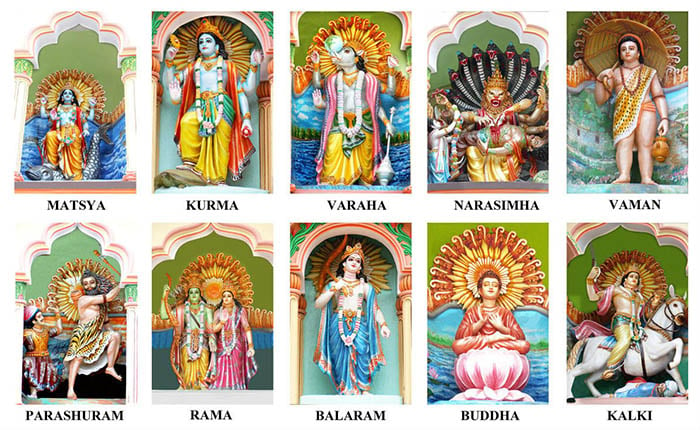
Matsya (the Fish): Saved humanity and sacred texts from a great flood.
Kurma (the Tortoise): Supported Mount Mandara during the churning of the ocean of milk.
Varaha (the Boar): Rescued the Earth from a demon who had submerged it in the ocean.
Narasimha (the Man-Lion): Defeated the tyrant demon Hiranyakashipu to protect his devotee Prahlada.
Vamana (the Dwarf): Subdued the demon king Bali through wit and humility.
Parashurama (the Warrior Sage): Restored justice by challenging corrupt rulers.
Rama (the Prince of Ayodhya): Hero of the epic Ramayana, embodying virtue and dharma.
Krishna: Central figure in the Mahabharata and the Bhagavad Gita, representing divine love, wisdom, and guidance.
Buddha (in some traditions): Taught compassion and non-violence.
Kalki (the Future Warrior): Yet to appear, will bring an end to corruption and restore righteousness.
These avatars illustrate Vishnu’s role as a protector and preserver, demonstrating that divine intervention adapts to the needs of each era.
Vishnu in Religious Texts
Vishnu appears extensively in Hindu scriptures, including the Vedas, Puranas, and epics like the Ramayana and Mahabharata. The Bhagavad Gita, a dialogue between Krishna (an avatar of Vishnu) and the warrior Arjuna, provides profound philosophical guidance, emphasizing dharma, devotion, and righteous action. Vishnu’s narratives often convey moral lessons, illustrating the importance of virtue, duty, and compassion.
Temples and Worship Practices
Temples dedicated to Vishnu, known as Vaishnava temples, are found across India and Southeast Asia. Famous examples include the Vishnu Temple at Tirupati in Andhra Pradesh and the Padmanabhaswamy Temple in Kerala. Devotees engage in rituals such as chanting mantras, offering flowers and food, and performing puja ceremonies, seeking protection, guidance, and spiritual growth. Festivals like Vaikuntha Ekadashi and Krishna Janmashtami celebrate his incarnations with devotion, music, dance, and storytelling.
Vishnu’s Cultural and Philosophical Influence
Beyond religion, Vishnu has influenced Indian art, sculpture, music, and literature. His avatars inspire countless works of classical dance, drama, and folk storytelling. Philosophically, Vishnu embodies the concept of preservation through balance, teaching that moral order is essential for personal and societal harmony.
Conclusion: Enduring Significance
Vishnu’s worship has endured for thousands of years, guiding millions of devotees and shaping Hindu culture. Through his avatars, teachings, and festivals, Vishnu represents the timeless principle that goodness, justice, and order can prevail even in the face of adversity. His legacy continues to inspire spiritual reflection, artistic expression, and cultural identity worldwide.