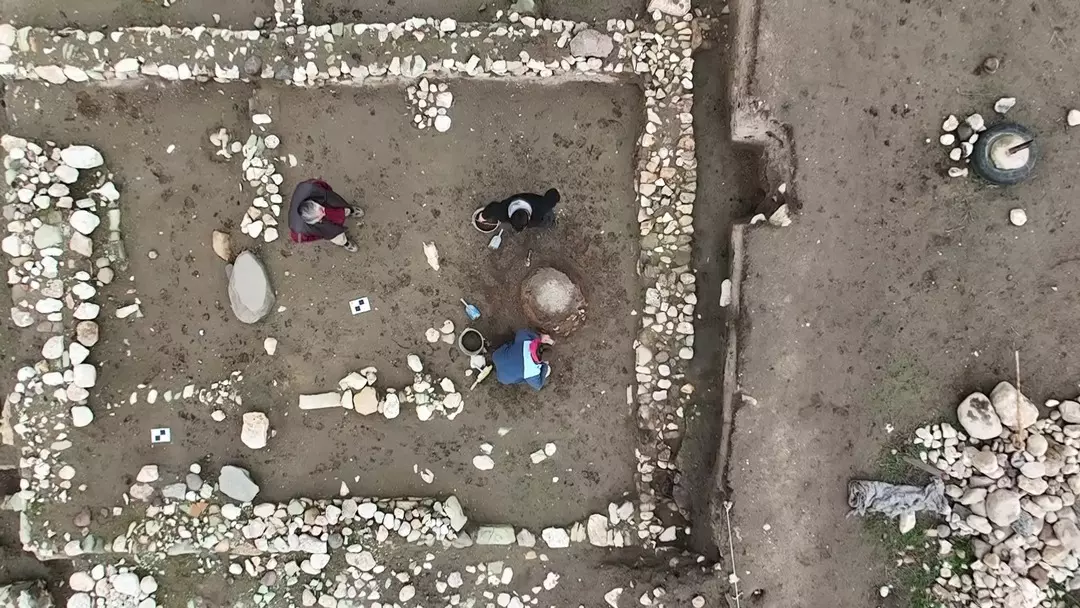
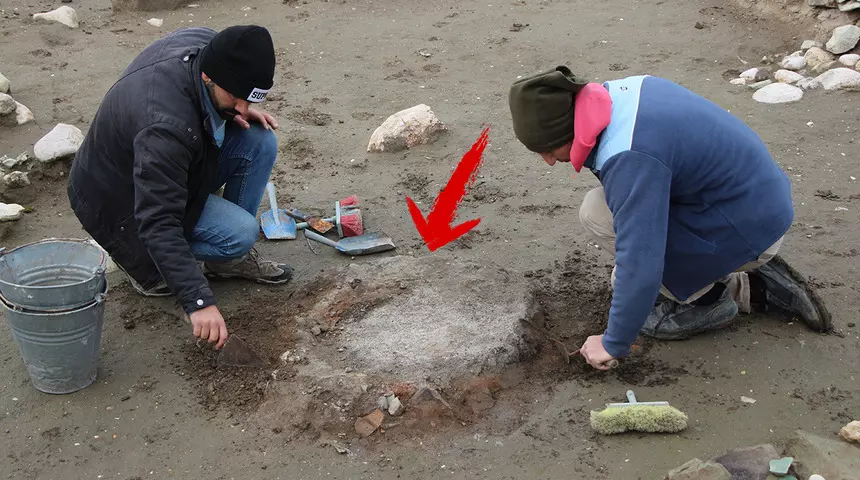
Archaeologists excavating the ancient site of Oluz Höyük in northern Turkey have revealed a remarkably intact tandoor oven that is about 2,600 old and dates to the Persian (Achaemenid) period, providing rare evidence of long-standing culinary traditions in Anatolia.
The oven was uncovered during the 19th excavation season at Oluz Höyük near Amasya, led by Prof. Dr. Şevket Dönmez of Istanbul University’s Department of Archaeology. Prof. Dönmez explained that the underground, fired-clay tandoor closely resembles those still commonly used in Anatolia today.
“This tandoor is almost identical to the ones found in present-day Anatolian villages,” Prof. Dönmez said. “The main difference is simply its age—it is 2,600 old.”
Insight into Everyday Life in Antiquity
The tandoor was found next to a stone work surface thought to have been used for kneading dough or processing grain, suggesting the space served as a household food preparation area. This supports the view that bread production and shared cooking activities were already an established part of daily life in Anatolia during the Persian period.
Researchers note that similar cooking structures have been present in the region since Neolithic times, but the Oluz Höyük example is particularly notable for both its sophisticated construction and excellent state of preservation. “This find highlights how deeply embedded Anatolia’s cooking methods and food traditions are,” Prof. Dönmez added.
The recently uncovered tandoor is also linked to an important discovery made at Oluz Höyük two years earlier. Archaeologists found a large clay vessel inside what is believed to have been a kitchen in a Persian-period palace. The pot contained animal bones and cereal grains, and laboratory analysis confirmed it had been used to cook keşkek, one of Anatolia’s oldest ceremonial foods.
Keşkek is traditionally prepared by slowly cooking wheat or barley with meat—commonly lamb or chicken—until it becomes a thick, porridge-like dish. It remains a staple at weddings, religious events, and communal gatherings, especially in rural Anatolia, and was recognized by UNESCO in 2011 as an Intangible Cultural Heritage of Humanity.
“Keşkek was very likely prepared in these tandoors,” Prof. Dönmez said. “This provides clear evidence of a continuous culinary tradition stretching from the Persian era to the present.”
Oluz Höyük: A Multicultural Center of the Past
Oluz Höyük is regarded as one of the most significant archaeological sites in the Central Black Sea region. Excavations reveal continuous occupation from the Late Bronze Age to the Hellenistic period, including a distinctive phase linked to Zoroastrian beliefs, making it one of the earliest known sites of Persian religious influence in Anatolia.
Finds at the site include Persian administrative buildings, ritual areas, and domestic structures, indicating that Oluz Höyük served as an important regional hub during the Achaemenid period.
Enduring Food Traditions
The discovery of the tandoor adds valuable insight into everyday life during the Persian period and underscores the remarkable persistence of Anatolian culinary practices. Techniques such as baking bread on tandoor walls and slow-cooking keşkek have remained largely unchanged for thousands of years.
Ongoing excavations are expected to reveal further details about daily life, food preparation, and social customs in ancient Anatolia, demonstrating how deeply the past continues to shape present-day traditions.