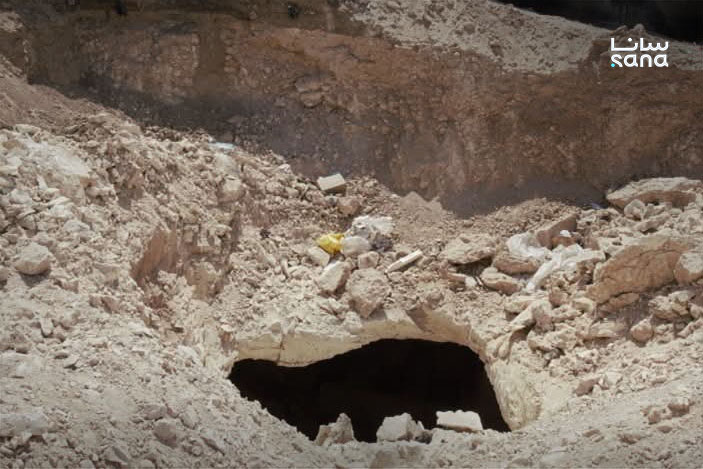
The General Directorate of Antiquities and Museums announced on Friday the discovery of an archaeological tomb in the city of Manbij, northeast of Aleppo, dating to the classical period. The find was made during emergency excavation work carried out by an archaeological mission at the site.
In a statement posted on the directorate’s official Facebook page, the discovery occurred while construction was underway on a private property in Manbij. Archaeological indications appeared during the work, leading the Aleppo Directorate of Antiquities and Museums to form an urgent excavation team to examine the location.
Excavations revealed a tomb composed of a main chamber and three adjacent rooms featuring semi-circular arches, an architectural style typical of the classical era. No artifacts of notable historical importance were found inside the tomb.
The Directorate reiterated its dedication to safeguarding Syria’s cultural heritage and called on citizens to report any archaeological remains discovered during digging or construction, helping ensure their protection for future generations.
The Manbij area in eastern Aleppo is considered a natural open-air museum due to its abundance of ancient remains. Historically referred to as the “Sacred City” (Hierapolis), the region contains several major archaeological sites, including Qalaat Najm, the Umm al-Sarj site, and the ancient walls of Manbij, along with Roman tombs, mosaic panels, and numerous other archaeological finds.