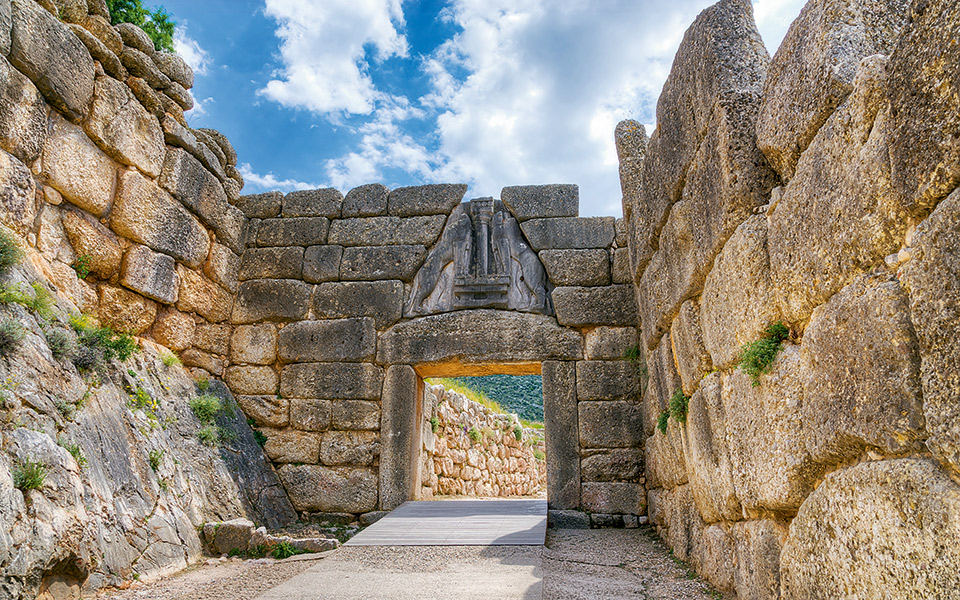
The Cyclopean walls of the Mycenaean world are perhaps the most visually intimidating architectural legacy of the Greek Bronze Age. Named by later Greeks who believed such massive stones could only have been moved by the mythical one-eyed giants, these fortifications defined the power of the Mycenaean citadels, including the strategic strongholds around Argos.
Engineering of the Cyclopean Style
The Boulder Technique: The "Cyclopean" designation refers to the use of enormous, roughly hewn limestone boulders, some weighing several tons. These were stacked without mortar, with the gaps between the massive rocks filled with smaller stones and clay to create a cohesive, impenetrable barrier.
Mass and Stability: The structural philosophy was based entirely on mass. By using such heavy materials, the walls were effectively immovable. They were designed not just to stop infantry, but to withstand the psychological and physical force of a prolonged siege.
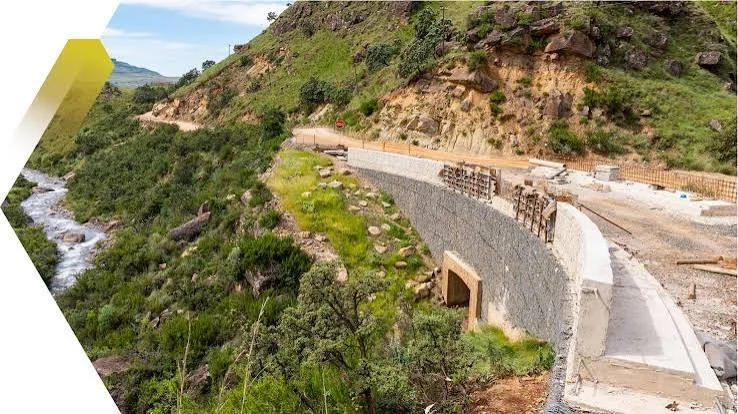
The Terracing Effect: At sites near Argos and Tiryns, the walls were often built into the natural slope of the hill. This created a terraced defensive system where each level of the wall provided a higher ground advantage, forcing attackers to navigate a gauntlet of uphill terrain while exposed to projectiles from the defenders above.
Strategic Purpose in the Argolid
Territorial Dominance: The citadels near Argos were part of a sophisticated, interconnected defense network. These fortresses were positioned to control the fertile plains of the Argolid and the vital coastal routes, acting as both secure storehouses for agricultural wealth and military garrisons.
Power Projection: The sheer scale of the walls served as a form of "architectural propaganda." For the local population and visiting emissaries, the sight of stones that appeared impossible for humans to lift was a direct reminder of the king’s ability to command vast amounts of labor and his divine or heroic connection to the legendary past.
The "Secret" Infrastructure: Archaeological surveys have revealed that these citadels were not just empty walls; they housed hidden postern gates and long, subterranean passages leading to external water sources. This ensured that, even when under siege, the citadel could remain self-sufficient.
Archaeological Context near Argos
The Tiryns-Argos Connection: While Mycenae is the most famous, the fortification systems around Argos—specifically at Tiryns and the Larissa of Argos—display the same massive masonry techniques. The citadel at Tiryns is especially notable for its "gallery" system: vaulted internal corridors built directly into the thickness of the walls, used for storage or as sheltered barracks for soldiers.
Evolution of Defense: Excavations suggest that these walls were not static. Over the centuries, the Mycenaeans repeatedly expanded their fortifications, thickening the walls and adding new bastions as the political climate grew more volatile, reflecting an era of increasing warfare leading up to the Late Bronze Age collapse.
Post-Mycenaean Survival: The durability of these walls allowed them to remain standing long after the Mycenaean palaces themselves were destroyed. In later centuries, the ruins of these citadels were often incorporated into classical Greek defenses, as the foundations were already so solid that subsequent generations found it easier to build on top of them than to try and tear them down.
Why They Endure
Seismic Resilience: Because the walls were built with a degree of "flex" between the heavy, unmortared stones, they were remarkably effective at absorbing seismic energy. Many of the walls that survived the collapse of the Bronze Age did so because they were inherently earthquake-resistant compared to the rigid, brick-and-mortar structures found elsewhere in the Mediterranean.
Human Labor as Currency: The construction of these walls required a level of social organization—the ability to organize, feed, and manage thousands of laborers—that provides modern archaeologists with clear evidence of a powerful, centralized state bureaucracy that controlled the Argolid during the peak of the Mycenaean era.