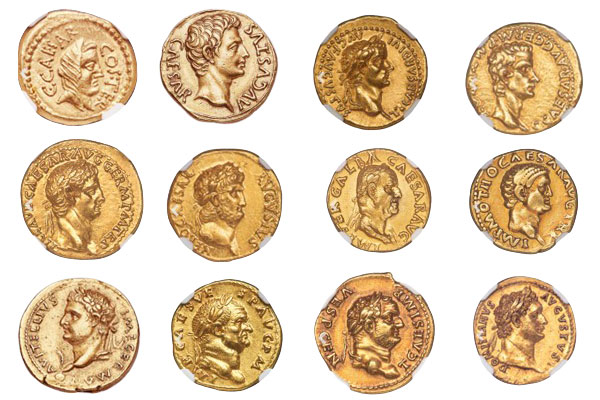
Roman imperial coinage functioned as the most effective mass-communication network in the ancient world. Before the invention of the printing press, coins were the primary mechanism for the government to project its image, enforce its ideology, and broadcast the legitimacy of its rulers across a vast, heterogeneous empire.
The Mechanism of Propaganda
The Medium: Every time a new emperor took the throne, coins were minted and distributed to every corner of the empire. For the average citizen, a coin was the only way they would ever see the face of their ruler.
The Message: Coinage transformed the person of the emperor into an institution. The obverse (front) usually featured a portrait of the ruler, while the reverse (back) showcased carefully curated messages, such as scenes of military victories, depictions of traditional gods, or slogans emphasizing stability and prosperity.
Economic Legitimacy: The consistent quality of the metal (the "fineness" of the silver or gold) served as a direct indicator of the health of the state. If an emperor decreased the silver content, he risked public distrust; conversely, maintaining currency standards was presented as proof of an emperor's integrity and economic mastery.
The Twelve Caesars: A Timeline of Ideology
The "Twelve Caesars" (as recorded by Suetonius) defined the visual language of the Roman Empire:
Julius Caesar: He was the first Roman to place his own portrait on a living coin, a radical break from Republican tradition that signaled the end of the old political order and the dawn of absolute rule.
Augustus: His coinage solidified the imperial image. He favored a youthful, idealized portrait style, associating himself with Apollo and the return of a "Golden Age." His coins broadcasted the message of Pax Romana—the peace that only the emperor could provide.
Tiberius: His coins introduced the "Tribute Penny" type, which became central to the empire’s standardized taxation and military payment systems. His portraiture grew more somber, projecting an image of the stoic, serious ruler.
Caligula: His coinage was used to re-establish his family connection to Augustus, emphasizing his lineage as a key source of his authority, even as his reign descended into erratic behavior.
Claudius: His coins highlighted the conquest of Britain, using the imagery of the "arch of triumph" to emphasize his role as a successful commander who expanded the boundaries of the empire.
Nero: His coinage evolved from traditional portraiture to more complex propaganda, often featuring the emperor playing the lyre or engaging in cultural activities, aimed at framing him as a patron of the arts and a populist leader.
Galba, Otho, and Vitellius: The "Year of the Four Emperors" proved the importance of coinage as a tool of war. Each claimant rushed to mint coins to pay their legions and announce their legitimacy, with their faces appearing and disappearing from the currency within months, highlighting the instability of the period.
Vespasian: He initiated a massive overhaul of the currency system to restore confidence after the civil wars of 69 CE. His coins focused on "Roma" and "Victoria," projecting an image of the empire as a stable, indestructible entity.
Titus: His coinage frequently commemorated the completion of the Colosseum and his victories in the Judean Wars, linking his reign to the grandeur of Rome’s architectural and military achievements.
Domitian: His coins displayed an increasingly autocratic tone, with titles like Dominus et Deus (Lord and God) appearing on the inscriptions, demonstrating the shift toward absolute, divinely sanctioned rule.
Archaeological Significance
Chronological Markers: Because coins bear the name and often the titles of the reigning emperor, they are the single most useful tool for archaeologists to date layers of strata at excavation sites.
Economic Distribution: The discovery of coin hoards throughout Britain, Gaul, and the Near East maps the movement of troops, the growth of trade routes, and the economic integration of the provinces.
The History of Lost Coins: Large hoards—like the Worcestershire coin hoard or recent finds in the UK—frequently offer a "snapshot" of historical crises. When people bury their wealth in the ground, it is rarely during times of peace; it is a physical indicator of the very moments that Roman propaganda sought to hide—civil unrest, invasion, and economic collapse.
The coins of the Twelve Caesars were not just currency; they were the "social media" of the ancient world. They turned the shifting politics of Rome into a visual language that every subject, from a merchant in the East to a legionary on the Rhine, could understand and internalize.