• MAIN PAGE
  • LATEST NEWS
    • Lost Cities
    • Archaeology's Greatest Finds
    • Underwater Discoveries
    • Greatest Inventions
    • Studies
    • Blog
  • PHILOSOPHY
  • HISTORY
  • RELIGIONS
    • Africa
    • Anatolia
    • Arabian Peninsula
    • Balkan Region
    • China - East Asia
    • Europe
    • Eurasian Steppe
    • Levant
    • Mesopotamia
    • Oceania - SE Asia
    • Pre-Columbian Civilizations of America
    • Iranian Plateau - Central Asia
    • Indus Valley - South Asia
    • Japan
    • The Archaeologist Editor Group
    • Scientific Studies
    • Aegean Prehistory
    • Historical Period
    • Byzantine Middle Ages
    • Predynastic Period
    • Dynastic Period
    • Greco-Roman Egypt
  • Rome
  • PALEONTOLOGY
  • About us
Menu

The Archaeologist

  • MAIN PAGE
  • LATEST NEWS
  • DISCOVERIES
    • Lost Cities
    • Archaeology's Greatest Finds
    • Underwater Discoveries
    • Greatest Inventions
    • Studies
    • Blog
  • PHILOSOPHY
  • HISTORY
  • RELIGIONS
  • World Civilizations
    • Africa
    • Anatolia
    • Arabian Peninsula
    • Balkan Region
    • China - East Asia
    • Europe
    • Eurasian Steppe
    • Levant
    • Mesopotamia
    • Oceania - SE Asia
    • Pre-Columbian Civilizations of America
    • Iranian Plateau - Central Asia
    • Indus Valley - South Asia
    • Japan
    • The Archaeologist Editor Group
    • Scientific Studies
  • GREECE
    • Aegean Prehistory
    • Historical Period
    • Byzantine Middle Ages
  • Egypt
    • Predynastic Period
    • Dynastic Period
    • Greco-Roman Egypt
  • Rome
  • PALEONTOLOGY
  • About us

7,500-Year-Old Stone Seal Discovered at Tadım Höyük in Türkiye

January 3, 2026

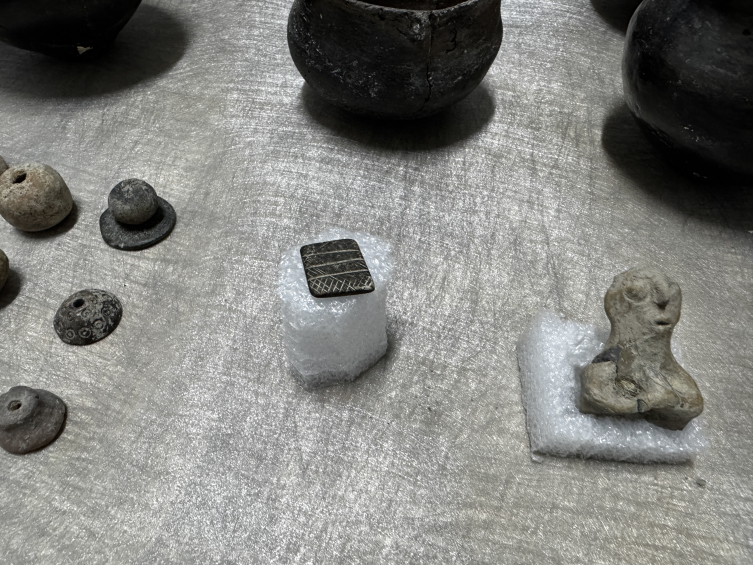
Archaeologists working at Tadım Castle and Höyük in Elazığ, eastern Türkiye, have uncovered a stone seal believed to be around 7,500 years old — a discovery that sheds new light on the deep cultural history of the Upper Euphrates Basin and confirms the region as one of Anatolia’s earliest settlement centers.

The excavations, carried out under the coordination of the Elazığ Museum Directorate and the Provincial Directorate of Culture and Tourism with the support of the Ministry of Culture and Tourism and the Governorship of Elazığ, form part of the national “Heritage for the Future Project.” The multi-layered mound at Tadım Höyük has revealed cultural remains stretching from the Ottoman and Seljuk eras back to the Neolithic period.

A Unique Artifact Linked to Identity, Ownership, and Early Social Organization

Governor Numan Hatipoğlu emphasized the exceptional nature of the seal within the context of discoveries made so far at Tadım Höyük.

“Among the finds unearthed in Tadım Village, we discovered a stone seal unlike anything previously seen in our city,” Hatipoğlu said. “It is believed that this seal may have been associated with ownership, property marking, or an early form of identity. Research is ongoing. This discovery indicates that civilization in our region dates back to approximately 7500 BCE. All of these finds show that Elazığ has been a settlement center since ancient times.”

The stone seal is currently preserved at the Elazığ Archaeology and Ethnography Museum, where specialists are conducting detailed analysis to better understand its function, symbolism, and possible administrative role within prehistoric society.

Year-Round Conservation and Expanding Excavations
Excavations at Tadım Castle and Höyük continue year-round, with the Elazığ Museum Directorate leading conservation, restoration, analysis, and documentation efforts. The project advances scientific research while promoting cultural tourism and awareness of regional heritage.

Elsewhere in Elazığ—including Harput Castle, Palu Castle, and Salkaya village—archaeologists have made notable discoveries. Among the latest finds are a Roman bath identified via ground-penetrating radar and a mosaic depicting animals, adding to the city’s rich archaeological record. Plans are underway to expand excavation areas, improve visitor facilities, and enhance accessibility for cultural tourism in future seasons.

Governor Hatipoğlu highlighted that preserving these discoveries strengthens both historical understanding and local identity. “As we continue working layer by layer, we expect even more significant archaeological outcomes for our province,” he stated.
← Public talk in Oswestry explores archaeological findingsThe unspoiled village between Darlington and Newton Aycliffe →
Featured
image_2026-02-21_225457188.png
Feb 21, 2026
The Princess of Bagicz: Tree Rings Resolve the Age of a Rare Roman Iron Age Wooden Coffin
Feb 21, 2026
Read More →
Feb 21, 2026
image_2026-02-21_225058691.png
Feb 21, 2026
Tomb more than 1000 years old found in Panama
Feb 21, 2026
Read More →
Feb 21, 2026
image_2026-02-21_225024526.png
Feb 21, 2026
Jesus Wasn’t a Messiah, He Was a Naughty Mushroom Trip. According to This Theory, Anyway.
Feb 21, 2026
Read More →
Feb 21, 2026
image_2026-02-21_223943764.png
Feb 21, 2026
Eatery recreates ancient Roman pizza – without tomatoes or mozzarella
Feb 21, 2026
Read More →
Feb 21, 2026
image_2026-02-21_223536117.png
Feb 21, 2026
Archaeologists discover remains of '10-foot-tall people' in cave
Feb 21, 2026
Read More →
Feb 21, 2026
image_2026-02-21_223410851.png
Feb 21, 2026
Archaeology Students Dug Up a Mass Viking Grave—With a Literal Giant Inside
Feb 21, 2026
Read More →
Feb 21, 2026
read more

Powered by The archaeologist