Introduction
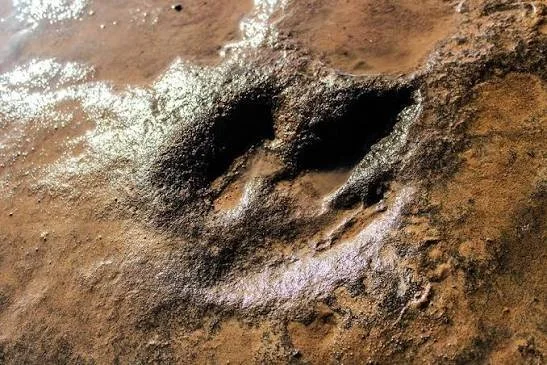
Dinosaur footprints offer a rare opportunity to investigate the behavior of animals that lived millions of years before humans appeared. Unlike bones, which preserve parts of an animal's body, footprints record an interaction between a living animal and the ground beneath it. They can provide evidence of movement, posture, trackway direction, and the conditions under which the tracks formed.
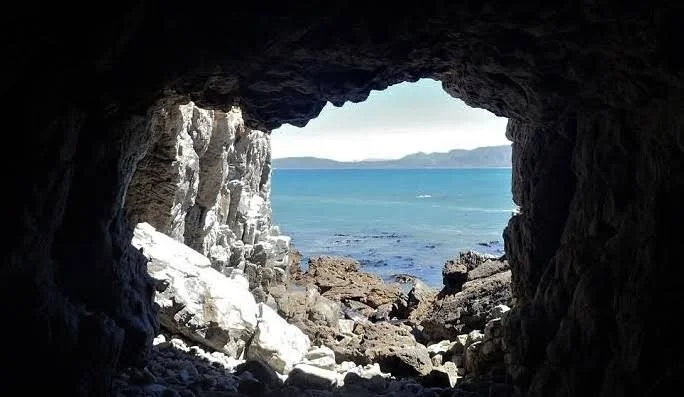
The title Afrikos: Lesotho's Dinosaur Footprints draws attention to the country's geological heritage and the possibility of investigating fossil trackways in its ancient sedimentary deposits. The specific identification of a dinosaur-footprint locality at Afrikos, however, requires verified geological or paleontological documentation. The wider geology of Lesotho provides an important context for understanding why fossil footprints can survive in the region and what they can reveal.
Lesotho's Ancient Landscape
The mountains visible in Lesotho today are the result of geological processes that took place over immense periods of time. The present landscape should not be confused with the environments that existed when dinosaurs lived.
During parts of the Mesozoic Era, which extended from approximately 252 to 66 million years ago, environments in what is now Southern Africa differed substantially from those of the modern highlands. Sediments accumulated in ancient landscapes, sometimes under rivers, lakes, floodplains, or other conditions suitable for preserving traces of animal activity.
Later geological processes buried, compressed, uplifted, and exposed these deposits. Erosion gradually removed overlying material, revealing layers that had formed in much earlier environments.
The rocks exposed in modern Lesotho can therefore preserve evidence of ancient ecosystems. Understanding this evidence requires geological mapping, analysis of sedimentary layers, and comparison with other fossil-bearing deposits in the region.
How Dinosaur Footprints Formed
A footprint begins when an animal steps onto a surface soft enough to record its weight and the shape of its foot. Mud, fine sediment, or damp sand can preserve a track if conditions are suitable.
The preservation process is delicate. If the sediment is too hard, it may not record a clear impression. If it is too soft, the footprint may collapse. Rain, flowing water, trampling, or rapid erosion can destroy the track before it is preserved.
In favorable circumstances, the footprint may be covered by additional sediment. Burial protects it from immediate erosion, while later compaction turns the surrounding sediment into rock. Over time, erosion can expose the track again.
The visible fossil may be an impression in the original surface or a natural cast formed when sediment filled the impression and later hardened. Researchers distinguish these forms by examining the rock layers and the shape of the preserved feature.
Identifying the Trackmaker
Dinosaur footprints can provide information about the animal that made them, but identifying the exact species is often difficult. A footprint records the shape and movement of the foot under particular conditions, not the entire skeleton.
Researchers examine the number and arrangement of toes, the shape of the heel region, the dimensions of the track, the spacing between successive footprints, and the overall structure of the trackway.
Some footprints may be broadly consistent with bipedal animals, while others may indicate movement on four limbs. Certain track shapes are associated with particular broad groups of dinosaurs, but different animals can produce similar impressions.
The size of a footprint may provide a rough indication of the animal's size, although the relationship is affected by the depth of the impression, the softness of the sediment, and the angle at which the foot contacted the ground.
For this reason, paleontologists often assign footprints to a track type rather than claiming that a specific dinosaur species has been identified.
What Trackways Reveal About Behavior
A single footprint provides limited information. A series of footprints forming a trackway can reveal more about movement.
The distance between successive steps, the width of the trackway, and changes in direction can help researchers estimate aspects of locomotion. A trackway may indicate that an animal was walking at a steady pace or changing its direction across the surface.
However, footprints rarely prove complex behavior on their own. Several parallel trackways might suggest that animals moved through the same area in a similar direction, but they do not automatically demonstrate coordinated group behavior. The tracks may have formed at different times.
Likewise, trackways of different sizes do not necessarily establish a family group. Researchers need to consider the timing of track formation, the preservation of the tracks, and the geological context before making behavioral claims.
Ancient Environments and Ecosystems
Footprints can also reveal the conditions of the environment in which they formed. The sediment surrounding a track may indicate whether the surface was muddy, sandy, wet, or exposed to repeated flooding.
Other fossils may provide additional information. Plant remains, freshwater organisms, or traces of invertebrates can help reconstruct the wider ecosystem.
When several kinds of evidence occur in the same geological sequence, researchers can develop a more detailed account of the ancient environment. They may investigate whether the area contained rivers, floodplains, lakes, or seasonally wet surfaces.
Such reconstructions remain interpretations based on multiple clues. A single footprint cannot establish the complete climate or vegetation of an ancient landscape.
Investigating Afrikos
A reliable study of the Afrikos locality would begin by confirming the location and geological formation in which the tracks occur. Researchers would document the footprints through photography, measurements, and three-dimensional recording where appropriate.
The sedimentary layers above and below the track surface would be examined to establish geological context. The trackways could then be compared with documented examples from other fossil sites in Southern Africa.
Researchers should also record the condition of the exposed surface. Weathering, vandalism, foot traffic, and uncontrolled collecting can damage footprints that have survived for millions of years.
Conservation and Scientific Value
Fossil trackways are often more vulnerable than they appear. Once exposed, they can deteriorate through weathering, water movement, and repeated contact. Removing a footprint from its geological context can also destroy information about its relationship to other tracks and sedimentary layers.
Protection may involve restricting access to particularly fragile surfaces, improving drainage where appropriate, documenting the site, and developing educational materials that encourage responsible visitation.
Conclusion
Afrikos provides a starting point for exploring the scientific value of dinosaur footprints in Lesotho's geological landscape. Any claim about a specific footprint site must be supported by verified paleontological evidence, but the broader subject demonstrates how fossil tracks can preserve information about ancient animals and their environments.
Through geological analysis, trackway measurement, and careful comparison with other fossils, researchers can investigate how dinosaurs moved across ancient landscapes. These traces transform a seemingly ordinary rock surface into a record of life from a distant chapter in Earth's history, offering a rare connection between modern observers and animals that disappeared millions of years ago.