Introduction
The history of Lesotho cannot be fully understood without examining the encounter between Basotho society and Christian missions during the nineteenth century and the changes that followed. Mission stations became places of religious instruction, literacy, education, printing, translation, and cultural exchange. They also operated within broader processes of political change, colonial expansion, and the transformation of social institutions.
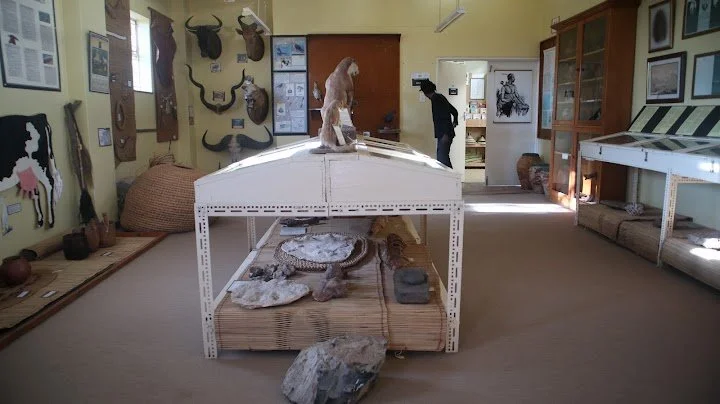
The title Morija Museum Sites: Lesotho's Mission Era focuses attention on Morija and its importance in preserving the history of missionary activity and Basotho cultural life. The Morija Museum and Archives provides an important institutional setting for exploring historical documents, material culture, and the development of written and recorded heritage.
A balanced account must recognize that mission history was not simply a story of European influence. Basotho people made decisions about Christianity, education, literacy, and political relationships, and their responses shaped the character of the mission era.
The Establishment of Morija
Morija became an important center of missionary activity in the nineteenth century. French Protestant missionaries associated with the Paris Evangelical Missionary Society established a presence among Basotho communities during a period of major political and social change.
The establishment of mission stations took place within the wider history of Moshoeshoe I and the development of the Basotho polity. Political leaders faced challenges involving conflict, territorial pressure, diplomacy, and the need to maintain the security of their communities.
Missionaries brought religious teachings and new forms of schooling, but they also depended on relationships with local leaders and communities. Their activities were shaped by the political realities of the region rather than operating separately from them.
The history of Morija should therefore be understood as a process of negotiation, adaptation, and sometimes disagreement between people with different beliefs and objectives.
Christianity and Basotho Society
Christianity introduced new religious ideas and institutions, but its adoption varied among individuals, families, and communities. Some Basotho embraced Christian teaching, while others maintained established religious practices or combined different forms of belief and social participation.
Conversion could affect family relationships, marriage practices, education, and ideas about authority. Missionaries sometimes criticized local customs that they regarded as inconsistent with Christian teaching. Such criticism could create tensions, particularly when religious instruction challenged established social responsibilities or cultural practices.
At the same time, Basotho Christians were not merely passive recipients of foreign beliefs. They interpreted religious teachings through their own experiences and helped shape the development of Christian communities in Lesotho.
A historical account should therefore consider both the influence of missionaries and the agency of Basotho individuals who accepted, adapted, debated, or rejected their teachings.
Literacy, Language, and Printing
One of the most lasting aspects of mission activity was the development of literacy and written materials. Mission schools taught reading and writing, often using religious texts as central educational resources. The translation and printing of Christian materials also contributed to the development of written Sesotho.
Written language can have consequences beyond religious instruction. It supports correspondence, record keeping, the production of educational materials, and the preservation of historical accounts. It can also help standardize spelling and written forms, although language continues to change through everyday use.
Printing and literacy created new opportunities for Basotho writers, educators, religious leaders, and intellectuals. They also influenced how history was recorded and whose perspectives were preserved in written form.
Missionary archives must nevertheless be read critically. Documents written by missionaries may contain valuable observations, but they often reflect the assumptions and priorities of their authors. Basotho perspectives may be underrepresented or appear only through the words of European observers.
Education and Social Change
Mission schools became important centers of formal education. They provided instruction in literacy and religious studies and, in some cases, other subjects that prepared students for new roles in churches, administration, teaching, and public life.
Education could create opportunities for social mobility, but access was not equal. It depended on location, family circumstances, gender expectations, economic resources, and the availability of schools.
The relationship between mission education and traditional knowledge was complex. Schooling could introduce new skills while also encouraging students to question certain customary practices. In other circumstances, educated Basotho used literacy to strengthen local institutions, preserve cultural knowledge, and participate more effectively in political debate.
It would be misleading to describe education as either entirely beneficial or entirely destructive. Its effects varied according to the institutions involved and the ways individuals used the opportunities available to them.
Morija as a Center of Cultural Preservation
Morija's historical importance extends beyond the mission station itself. The area's cultural institutions preserve materials that can help researchers examine the development of Basotho society, including documents, photographs, objects, and other historical records.
Museums and archives provide a link between physical evidence and public understanding. They can help visitors investigate how communities experienced political change, education, religious transformation, and the growth of modern institutions.
Collections must be interpreted carefully. An object removed from its original setting may lose some of its meaning unless its history, ownership, use, and cultural significance are documented. Archival descriptions may also reflect older assumptions that require reassessment.
Collaboration with Basotho historians, cultural practitioners, families, and community organizations can help create interpretations that include a wider range of perspectives.
Mission History and Colonial Power
Missionary activity took place within a period of growing European influence in Southern Africa. Although religious organizations and colonial governments were not identical institutions, their activities could overlap in education, language, administration, and ideas about social reform.
Missionaries sometimes criticized colonial abuses or supported Basotho interests, while at other times missionary attitudes reinforced European cultural hierarchies. The relationship between religion and political power was therefore complicated.
A careful historical account should avoid treating all missionaries as identical or assuming that all Basotho responded in the same way. The historical record contains cooperation, disagreement, adaptation, and resistance.
Preserving the Mission-Era Heritage
Buildings, archival documents, photographs, and personal histories associated with the mission era require long-term care. Paper materials are vulnerable to moisture, insects, light, and physical handling, while historic buildings can deteriorate through weathering and inadequate maintenance.
Digitization can improve access to fragile documents, although digital copies do not replace the need to preserve original materials. Conservation plans should also consider community access, ownership, privacy, and the appropriate treatment of sensitive historical information.
Conclusion
Morija's museum and historical sites provide an important setting for examining the mission era in Lesotho. The period brought changes in religion, education, literacy, and cultural institutions, but these changes were shaped by Basotho decisions and the political realities of the region.
By combining archival research, material culture, oral history, and critical historical analysis, researchers can develop a more complete account of Morija's significance. Its heritage reveals not only the arrival of missionary institutions but also the ways Basotho communities interpreted new ideas, defended their interests, and helped shape the society that emerged.